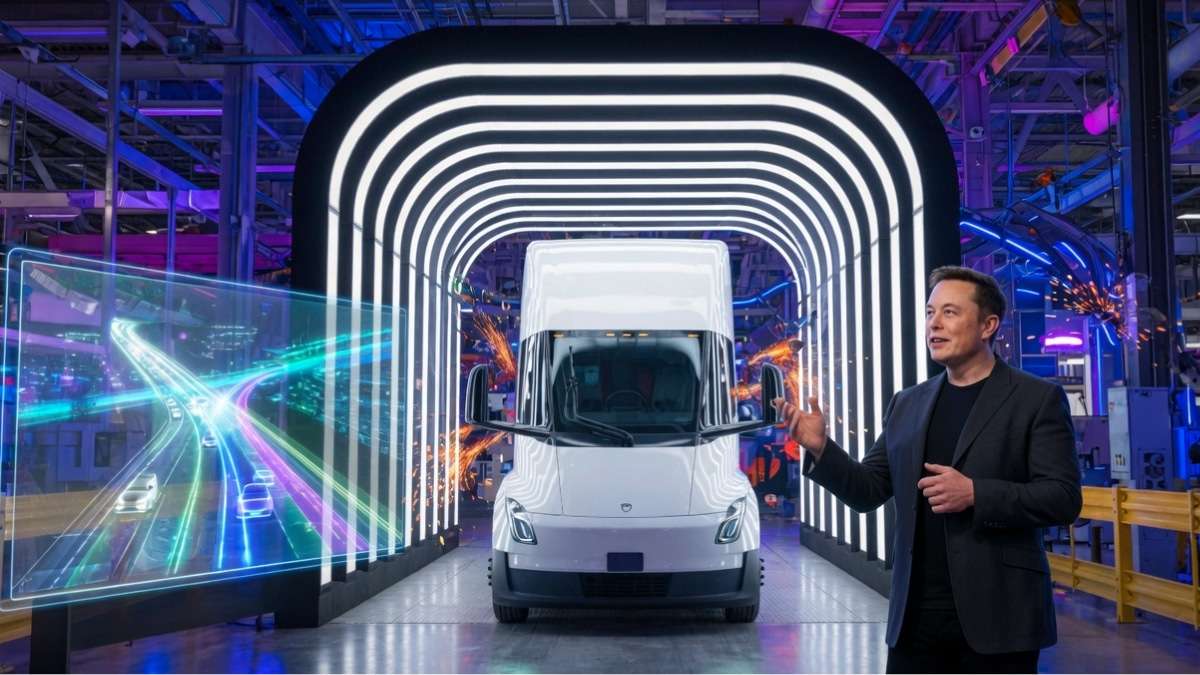

How do you teach an 80,000-pound Tesla Semi electric truck to drive itself? Not on a computer. Not in a simulator. And definitely not overnight.
Here's a question worth sitting with as you read this: if Tesla is still working out the kinks in Full Self-Driving for a car that weighs 4,000 pounds, how does it plan to hand the wheel over to a rig that weighs twenty times that much? Keep that in your head as we go, because the answer is not what most people expect, and I want to hear your take on it in the comments once you're done.
Musk Finally Puts A Date On It
During Wednesday's Tesla Q2 2026 earnings call, an analyst asked Elon Musk when the company would start looking seriously at autonomy for the Semi. For the first time, Musk gave something close to a real answer instead of a vague nod toward "someday." He said self-driving on the Tesla Semi should start working around the end of this year or early next year, which lines up with the 2027 window a lot of us in the industry have been penciling in.
Musk framed the delay as a matter of priority, not capability. Tesla's autonomy team right now is stretched across Model 3, Model Y, and the new Cybercab rollout, and those programs are eating most of the engineering bandwidth. The Semi is next in line, not stuck at the back of the room.
Why Trucking Is The Shortage Nobody Talks About
Musk didn't dance around the real motivation here. "There is a really serious shortage of truckers," he told investors on the call. He said there simply are not enough people who want to drive trucks anymore, even though trucking is the backbone of how goods move across this country.
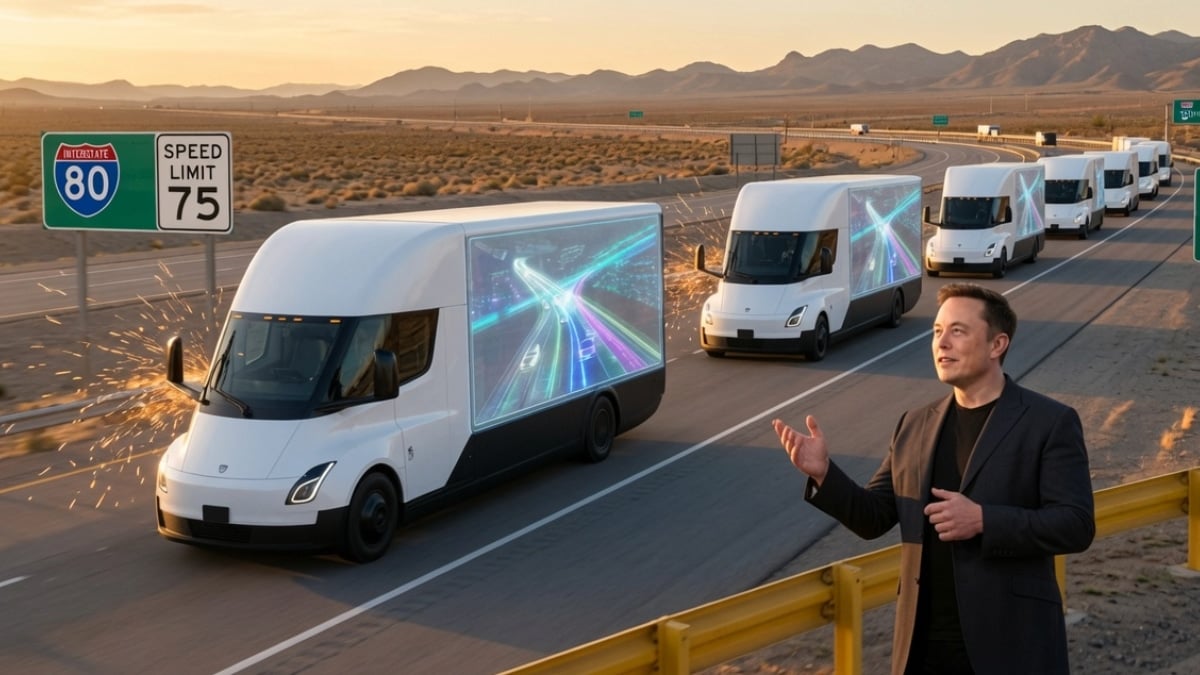
That is not a small problem. Freight companies have been sounding the alarm on driver shortages for years, long before Tesla ever built a Semi prototype. If Tesla can get self-driving trucking to work reliably, it is not just a tech flex. It is a genuine answer to an industry-wide staffing crunch that has been driving up shipping costs for everyone, including the price of the parts sitting on your local dealer's shelf.
Tesla Isn't Starting From Zero
Here is the part that I think gets lost in the headlines. Tesla is not building Semi autonomy from scratch. Every mile logged by Tesla's Full Self-Driving Supervised system in Model 3s, Model Ys, and Cybertrucks feeds the same neural network. That means years of real-world driving data, from highway merges to construction zones to sudden lane closures, are already baked into the system the Semi will eventually inherit.
Tesla says FSD Supervised still requires a human behind the wheel, ready to take over at any moment. But the underlying vision-based approach, the one that reads the road with cameras instead of leaning on expensive lidar, is the same architecture Tesla plans to scale up for its 80,000-pound trucks.
We have already seen Tesla Semi units spotted with extra validation equipment mounted on the cab. That is usually a telltale sign that a company is collecting sensor data and comparing it against what the software thinks it sees, which is exactly the groundwork you would expect before flipping on any driver-assist feature for a truck that size.
Highway Miles Are The Easy Mode
There is a reason Tesla, and honestly most of the autonomous trucking industry, keeps circling back to highway driving first. Interstate miles are about as predictable as driving gets. Fixed lanes, gentle curves, no pedestrians darting between parked cars, no four-way stops where everyone is guessing who goes first.
Compare that to downtown traffic, where a Tesla robotaxi has to read cyclists, jaywalkers, and delivery vans double-parked in the middle of the road. Long haul trucking strips a lot of that chaos out of the equation. That is exactly why it makes sense as the first real proving ground for Semi autonomy, long before anyone lets a driverless truck navigate a warehouse loading dock.
The Hardware Still Has To Show Up First
Software timelines only matter if the trucks themselves exist in enough numbers to test on. Tesla's Q2 shareholder letter confirmed that construction on the Semi factory in Nevada is complete, and the plant has now moved into the commissioning phase, with production targeted to begin by the end of 2026.
Musk pointed to 4680 battery cell production as the bottleneck holding back both Semi and Cybercab output. Tesla's 4680 line at Gigafactory Texas has crossed a 40 gigawatt-hour annual run rate, which is a meaningful jump, but it still has to keep climbing to support three vehicle programs at once. A 2027 software timeline gives the autonomy team room to keep training the system while the battery and production side catches up behind it.
This Is Not A Promise Of A Driverless Truck Next Year
I want to be straight with you here, because it is easy to read "early 2027" and picture a Semi rolling down I-80 with an empty driver's seat. That is not what was said. Musk described a system that starts working, similar to how FSD Supervised still needs a human ready to grab the wheel in passenger cars today.
Regulatory approval for autonomous trucking is its own separate mountain to climb, state by state, and Tesla has not cleared that yet. Companies like Teslarati have pointed out that this timeline tracks with Tesla's production reality rather than a hard commitment to full autonomy. Software readiness and legal readiness are two very different racetracks.
What This Means If You Run A Fleet
If you are a fleet operator watching this space, the math is still evolving. Tesla Semi's cost-per-mile advantage over diesel trucks already looks compelling on paper, and adding a driver-assist layer that reduces fatigue-related incidents could tighten insurance costs even further. But nobody should be restructuring a logistics operation around a driverless truck that does not exist yet. Watch the hardware ramp first. The software follows the trucks, not the other way around.
The Moral Of The Story
Big promises in this industry tend to arrive well before the technology that backs them up. Tesla has a real head start here, because it is not inventing a new driving brain for the Semi. It is teaching an existing one a new job. That is a smarter path than starting over, but it still has to survive contact with an 80,000-pound reality, and reality does not care about a keynote slide.
So here is what I want to know from you. Do you think a truck this heavy should be held to a stricter self-driving standard than a passenger car, or should the same rules apply across the board? And would you trust an autonomous Semi sharing the interstate with your family's SUV once this actually rolls out? Drop your thoughts in the comments. I read every one of them.
Return tomorrow, or check our Torque News Home Page for more interesting automotive news articles.
About The Author
Armen Hareyan is the founder and Editor-in-Chief of Torque News and an automotive journalist with over 15 years of experience writing car reviews and industry news. Now based in the Charlotte region (Indian Land, SC, he founded Torque News in 2010, which since then has been publishing expert news and analysis about the automotive industry. He can be reached at Torque News on X, Linkedin, Facebook, and Youtube. Armen holds three Masters Degrees, including an MBA, and has become one of the known voices in the industry, specializing in the landscape of electric vehicles and real-world stories of actual car owners. Armen focuses on providing readers with transparent, data-backed analysis bridging the gap of complex engineering and car buyer practicality. Armen frequently participates in automotive events throughout the United States, national and local car reveals and personally test-drives new vehicles every week. Armen has also been published as an automotive expert in publications like the Transit Tomorrow, discussing how will autonomous vehicles reshape the supply chain, and emerging technologies in vehicle maintenance.
Set Torque News as Preferred Source on Google
Follow us today...