
In my decades of analyzing the intersection of consumer technology and automotive engineering, I have watched legacy automakers repeatedly stumble over their own shoelaces when trying to transition to electric vehicles. They often build cars that are either too expensive, too compromised, or simply lack the software sophistication required to compete with native tech companies. But every so often, a traditional manufacturer hits the exact right note at the exact right time.
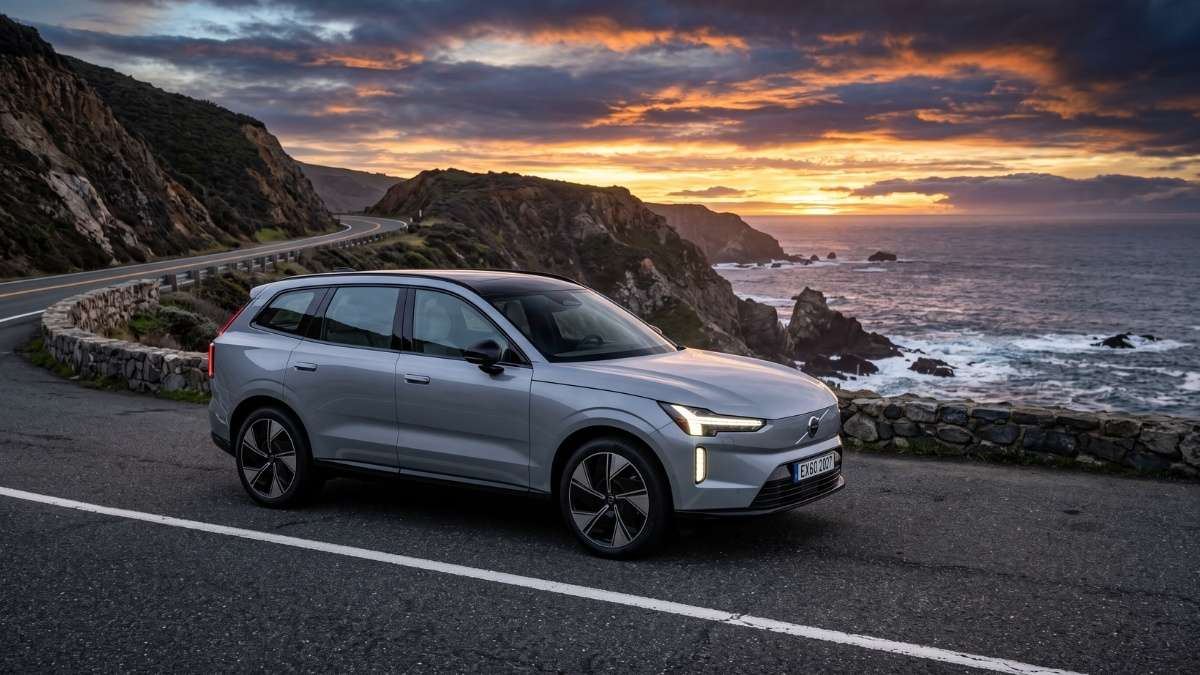
Volvo has just done precisely that. According to recent industry confirmations, including a detailed breakdown from Electrek noting that Volvo’s midsize EV SUV delivers more range than expected, the 2027 EX60 P10 AWD has officially secured a 330-mile EPA rating. This dramatically beats the internal estimates that hovered around the 300-mile mark. More importantly, it instantly crowns the EX60 as the longest-range electric vehicle in Volvo’s current lineup, eclipsing even the flagship EX90. Let's break down exactly why this specific metric matters so much, how it reshapes the midsize luxury EV segment, and why this vehicle might just be the cornerstone of Volvo’s entire electrification strategy.
The Psychology of Range Anxiety and the Magic Number
If you want to understand why mainstream buyers hesitate to adopt electric vehicles, you have to understand human psychology. Range anxiety is rarely about actually needing to drive 300 miles without stopping. The average American drives fewer than 40 miles a day. But consumers buy cars for the exception, not the rule. They buy for the hypothetical holiday road trip, the unexpected medical emergency in the next state over, or the weekend getaway to a cabin without charging infrastructure.
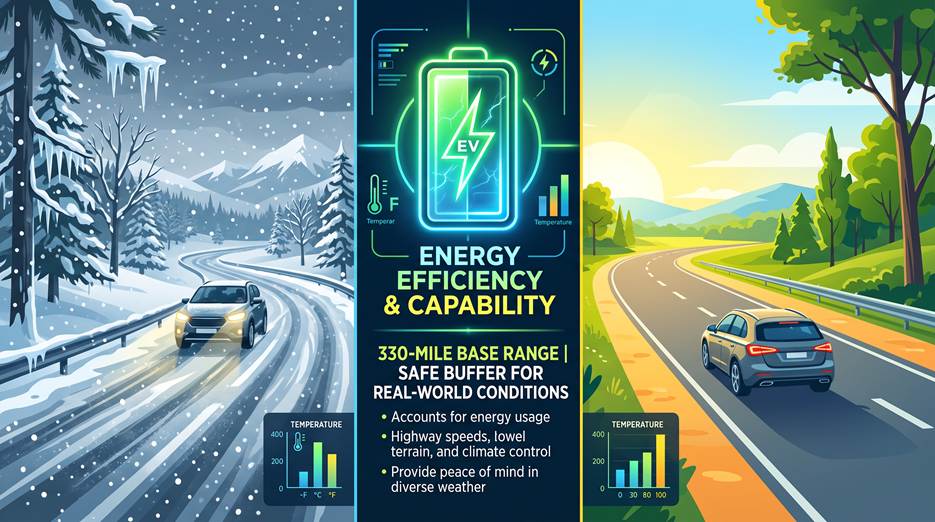
A 330-mile EPA rating fundamentally changes the math in the consumer’s head. When a vehicle crests the 300-mile barrier, it transitions from a "city car" to an "anywhere car." But there is a technical reality backing up this psychological comfort. Due to the physics of lithium-ion batteries, owners are generally advised to keep their daily charge between 20 percent and 80 percent to prolong battery health, as noted by consumer protection experts at Consumer Reports.
When you apply that 60 percent usable window to a 250-mile EV, you only have 150 miles of daily practical range. Apply that same window to the EX60 P10’s 330-mile range, and you suddenly have nearly 200 miles of daily usability—even before factoring in the inevitable 10 to 20 percent range loss experienced during harsh winter weather. By delivering 330 miles, Volvo isn’t just giving drivers more distance; they are providing a massive buffer against battery degradation, cold weather, and highway driving inefficiencies. It is the ultimate cure for range anxiety.
Crushing the Midsize Class Competition
To truly appreciate what Volvo has accomplished, we must look at the battlefield. The midsize premium EV SUV segment is arguably the most cutthroat category in the automotive industry right now. This is where the volume is, and this is where the profits are.
When you stack the EX60 P10 AWD against its direct rivals, the 330-mile figure looks even more impressive. The undisputed volume leader, the Tesla Model Y Long Range, currently offers an EPA-estimated 310 miles. The newly introduced Audi Q6 e-tron manages around 307 miles, while the much more expensive Porsche Macan EV squeaks by with just over 300 miles in its base configuration.
Volvo has historically struggled to beat Tesla on sheer efficiency, often relying on their reputation for safety and Scandinavian design to move units. But the EX60 utilizes a heavily optimized version of Volvo's next-generation scalable platform, featuring vastly improved aerodynamic drag coefficients and a more energy-dense battery pack. By officially beating the Model Y’s range, Volvo has stripped away one of the primary reasons a pragmatic buyer might have defected to Tesla. For the first time in years, Volvo has a spec-sheet advantage in the most critical column of the EV wars.
Strategic Pricing in a Cutthroat Market
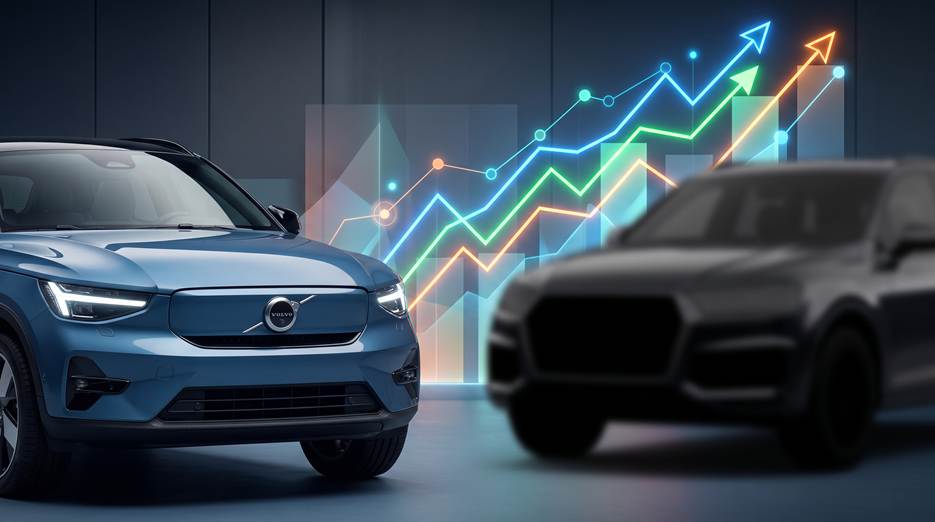
Of course, range is only half the equation; the other half is what you have to pay for it. Based on early pricing strategies for the 2027 model year, Volvo is positioning the EX60 P10 AWD incredibly aggressively. While it sits at a premium over the mass-market Tesla Model Y, it heavily undercuts the German luxury stalwarts.
We are looking at a vehicle that offers superior range and arguably a more refined, luxurious interior than the Model Y, but priced thousands below the BMW iX3 and the Audi Q6 e-tron. This is a classic "Goldilocks" pricing strategy. Volvo is capturing the buyers who have aged out of their Model 3s or Model Ys and want something with better build quality and quieter cabins, but who aren't willing to pay the massive "badge tax" associated with a Porsche or a high-end Mercedes-Benz EQE SUV.
By pegging the EX60 P10 in this accessible luxury sweet spot, Volvo ensures high volume. This pricing strategy proves that Volvo understands the current economic climate, where even luxury buyers are highly sensitive to interest rates and monthly payments, as outlined by automotive market analysts at Edmunds.
Sibling Rivalry: EX60 P10 vs. EX60 P12
One of the smartest moves Volvo made with this rollout is clearly delineating its trim levels, specifically the choice between the EX60 P10 AWD and the higher-tier EX60 P12.
The P10 is the smart buyer's vehicle. It utilizes a dual-motor all-wheel-drive setup that provides more than enough torque for passing and merging, but its software and gear ratios are tuned explicitly for efficiency. This is how it achieves that staggering 330-mile rating.
The EX60 P12, on the other hand, is Volvo’s answer to the Tesla Model Y Performance and the Macan Turbo. It features high-output motors and a more aggressive suspension tune, shaving roughly a full second off the 0-60 mph time. However, that performance comes at a steep cost to efficiency. The P12’s larger, stickier tires and performance-mapped inverters drop its EPA rating down to an estimated 285 miles.
In my view, the P10 is the objectively superior vehicle for 95 percent of buyers. The obsession with sub-3.5 second 0-60 times in 5,000-pound family SUVs is a marketing gimmick that has outlived its usefulness. The P10 offers smooth, quiet, competent power while retaining the 330-mile range that actually improves the owner's quality of life. The P12 exists mostly so Volvo can win magazine drag races, but the P10 is the vehicle that will win the market.
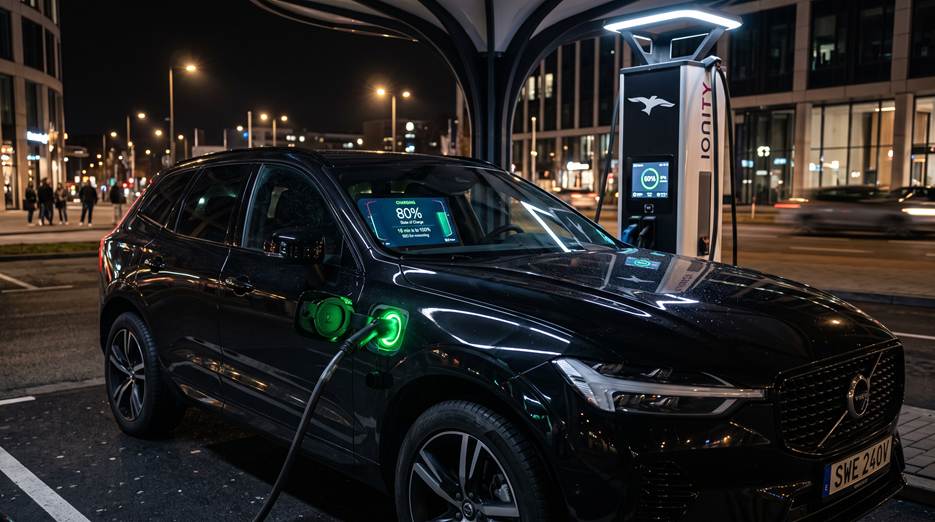
Charging Speed: The Other Half of the Equation
You cannot talk about range without talking about how fast you can replenish it. A massive battery is a liability if it takes an hour to charge at a DC fast charger. Volvo has historically been somewhat conservative with their charging curves, prioritizing battery longevity over blistering charging speeds.
However, the EX60 P10 AWD shows significant improvement. Utilizing advanced thermal management, the EX60 can pull peak speeds in the neighborhood of 200 to 250 kW. While it doesn't utilize the ultra-fast 800-volt architecture found in the Hyundai Ioniq 5 or the Porsche Macan—which can go from 10 to 80 percent in under 18 minutes—the EX60 holds a steady, flat charging curve that allows for a 10 to 80 percent charge in roughly 26 minutes.
While not the absolute fastest in the industry, this is perfectly competitive. When you combine a 330-mile starting range with a 26-minute fast charge, road trips become effortless. By the time a family unplugs, walks into a rest stop, uses the restroom, grabs a coffee, and returns to the vehicle, the car is ready for another two and a half hours of highway driving. Furthermore, Volvo's integration with the North American Charging Standard (NACS) means EX60 drivers will have seamless access to the Tesla Supercharger network, utilizing the most reliable charging infrastructure on the continent as detailed by the Department of Energy’s Alternative Fuels Data Center.
Securing Volvo’s Future in the EV Wars
To understand the gravity of the EX60 P10, we have to look at Volvo’s recent history. The brand has boldly claimed it will be a fully electric company by 2030. However, the path there has been incredibly rocky. The flagship EX90 was plagued by software delays that pushed its launch back by nearly a year. The excellent entry-level EX30 has faced massive geopolitical headwinds and tariff issues that complicated its rollout in North America.
Volvo desperately needed a win. They needed a vehicle sitting squarely in the middle of the market, launching on time, and over-delivering on its promises. The EX60 is that vehicle.
This SUV is the financial and strategic bridge that will carry Volvo through the turbulent second half of this decade. By offering 330 miles of range, they have created a vehicle that requires absolutely no lifestyle compromise from the buyer. They have built a car that appeals not just to early adopters and tech enthusiasts, but to pragmatic suburban families who simply want a safe, reliable, and premium vehicle that happens to be electric. The EX60 improves Volvo's market position from being a niche, design-focused alternative to being a mainstream, spec-leading powerhouse.
Wrapping Up
The automotive industry is currently littered with electric vehicles that are impressive engineering exercises but terrible consumer products. The 2027 Volvo EX60 P10 AWD is the rare opposite. By focusing on aerodynamic efficiency and battery optimization to achieve a staggering 330-mile EPA rating, Volvo has directly attacked the final psychological barrier to EV adoption: range anxiety.
When you combine that class-leading range with aggressive mid-tier pricing, sensible fast-charging capabilities, and the brand’s legendary focus on safety and interior minimalism, you have a recipe for immense market success. The P12 might grab the performance headlines, but the P10 is the strategic masterstroke. Volvo didn't just build a better electric vehicle; they built exactly the vehicle the market has been waiting for. In a year where many legacy automakers are scaling back their EV ambitions out of fear, Volvo just slammed the accelerator to the floor, and their competitors should be terrified.
Disclosure: Images rendered by Artlist.io
Rob Enderle is a technology analyst at Torque News who covers automotive technology and battery developments. You can learn more about Rob on Wikipedia and follow his articles on TechNewsWord, TGDaily, and TechSpective.
Set Torque News as Preferred Source on Google
Follow us today...