
There is a recurring flaw in Western corporate governance that I have spent decades analyzing: the tendency to mistake temporary market friction for a structural dead end. Right now, the automotive sector is suffering an epidemic of strategic cold feet. From Detroit to Stuttgart, legacy automakers are frantically watering down their electrification timelines, blaming a "cooling" market while flooding dealerships with complex, low-margin hybrid stopgaps.
But true market leadership isn’t built on reactionary pivots; it is forged through unwavering commitment. While its peers spend millions rewriting press releases to justify retreat, Volvo Cars is quietly executing a masterclass in market resilience.
According to the latest Q2 2026 data published by Motor Trade News, Volvo’s global sales dipped a minor 5.6% due to shifting macro conditions in China, yet its fully electric vehicle (EV) deliveries surged by a spectacular 14% year-on-year. Electrified models, including battery electrics (BEVs) and plug-in hybrids, now command an astounding 52% share of Volvo’s total global output. In Europe, that figure shoots up to 62%, with pure EV deliveries climbing 25%.
This isn't an accident. It is the direct consequence of Volvo refusing to flinch. As detailed by CleanTechnica, Volvo remains intensely focused on its 100% electric trajectory, even if the rest of the world drags its feet. In an industry defined by herd mentality, Volvo’s stubbornness is turning out to be its greatest competitive asset.

Why the EX60 Shakes the Premium Foundation
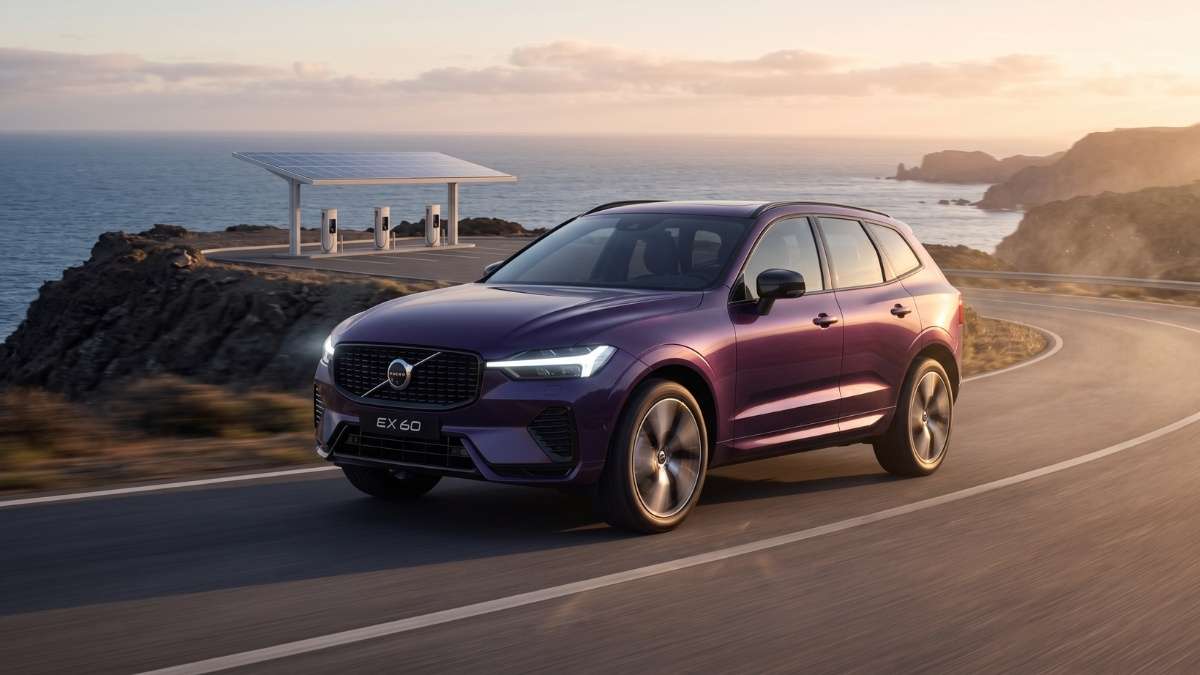
To understand why Volvo is winning where others are whining, look no further than its product architecture and pricing strategy—specifically, the highly anticipated 2026 Volvo EX60. Positioned directly in the high-volume midsize premium segment, the EX60 is engineered to go straight for the throat of established EV pure plays.
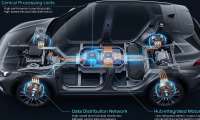
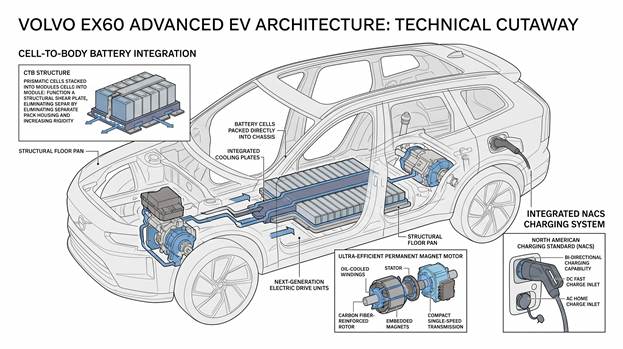
The vehicle leverages cutting-edge cell-to-body battery technology, a structural advancement that reduces weight, maximizes interior space, and slashes manufacturing costs. Offering an aggressive estimated starting price hovering around $60,000, three advanced powertrain options (ranging from 369 to 670 horsepower), and an EPA-estimated range of up to 400 miles on its highest trim, the EX60 represents a massive headache for the competition. Furthermore, its integration of next-generation "Breathe Charge" software allows for 30% faster fast-charging times in cold weather, neutralizing one of the primary lingering anxieties of premium car buyers.
By pricing the EX60 competitively against internal combustion engines and older electric models alike, Volvo isn’t treating EVs as an elite novelty. It is scaling them as the new default. European order books for the EX60 have already outpaced the record-shattering launch of the smaller EX30. When you offer a superior product at a fair price without changing your story every quarter, consumers reward you with their wallets.
The Western Retreat Versus Volvo’s Surge
Volvo’s 14% Q2 EV growth looks impressive in a vacuum, but it becomes extraordinary when contrasted against the broader Western automotive landscape. Look at Ford, which has incurred staggering losses on its Model e EV division and delayed its next-generation electric trucks to push more hybrids. Look at General Motors, which repeatedly misses its EV production targets and backtracks on near-term electrification mandates. Even European giants like Volkswagen are facing severe union blowback and factory underutilization as they struggle to sell high-priced, uninspired electric platforms.
Volvo’s performance exposes the fundamental error of these legacy strategies. Companies like Ford and GM treated EVs as a secondary compliance sandbox rather than an existential evolution. When early-adopter demand normalized, they panicked.
Volvo, by contrast, treated its EV transition as an architectural rewrite. By systematically rolling out the EX30, EX40, EX90, and now the EX60, Volvo has created a continuous, laddered product portfolio that addresses multiple price brackets and consumer needs. While the competition waits for the "perfect" market conditions, Volvo is actively shaping them.
The Secret Weapon Known as Geely
Of course, Volvo does not fight this war alone. Its single greatest strategic advantage is its deep corporate and technological relationship with its parent company, China’s Zhejiang Geely Holding Group.
As Western regulators frantically erect tariff walls—such as the recent U.S. and Canadian crackdowns on Chinese-manufactured connected vehicles—the broader industry is attempting to pivot blind. Western OEMs are forced to build supply chains for lithium, cobalt, and battery cells entirely from scratch, a process that takes years and billions of dollars.
Volvo, through Geely, possesses an institutional backdoor to the world's most mature EV ecosystem. It benefits from Geely’s massive economies of scale, shared platform architectures (like the Sustainable Experience Architecture), and advanced battery supply relationships.
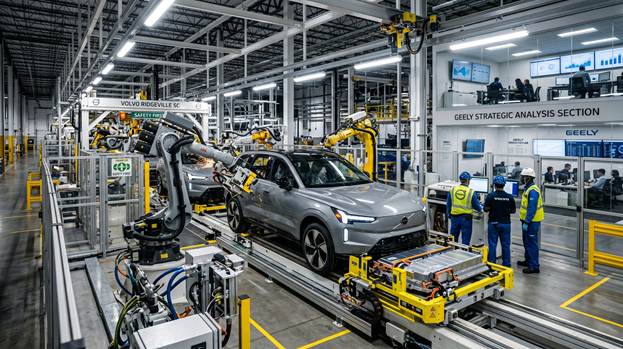
Crucially, Volvo has navigated the complex geopolitics of Western trade barriers far better than its stablemates. For instance, while its sister brand Polestar faces severe headwinds in the U.S. due to ownership and supply chain structures, Volvo successfully negotiated governance and data-security measures with the U.S. Department of Commerce. By consolidating North American production of its flagship EX90 at its $1.3 billion Ridgeville, South Carolina facility and adjusting assembly locations for the EX30, Volvo enjoys Chinese supply-chain efficiencies without getting locked out of Western showrooms. It is the ultimate hybrid corporate structure: European premium brand heritage on the outside, hyper-efficient Chinese supply chain muscle on the inside.
What It Takes to Dethrone Tesla and BYD
Despite this momentum, Volvo cannot afford a victory lap. Growing 14% is a triumph, but taking on the absolute titans of the EV industry—Tesla and BYD—requires an entirely different level of execution. Tesla commands massive brand equity and manufacturing scale, while BYD dominates the global volume market with vertical integration that even Geely struggles to match.
If Volvo wants to transcend its status as a highly successful premium niche player and become a dominant global EV force, it must address three critical pillars:
- Software Independence and Stability: Volvo’s early EX90 rollout was famously plagued by software delays. In the modern automotive landscape, a vehicle is a rolling smartphone. Volvo must eliminate these software bottlenecks entirely, ensuring that its user interfaces, over-the-air updates, and autonomous driving features are flawless from day one.
- Aggressive Infrastructure Integration: While the EX60's transition to integrated North American Charging Standard (NACS) ports grants access to Tesla’s Supercharger network, Volvo needs to follow the lead of heavy-duty commercial networks by investing in branded high-power destination charging hubs to elevate the premium ownership experience.
- Rapid Scale of the Entry-Level Segment: The EX30 has been an unmitigated hit in Europe because it is affordable. Volvo must rapidly scale its global assembly footprint to circumvent tariffs, allowing budget-conscious buyers in North America and across Asia to access its entry-level EVs without prohibitive import penalties.
Wrapping Up
Volvo’s stellar Q2 2026 performance is a ringing endorsement of strategic clarity over corporate cowardice. While rival automakers hedge their bets and retreat into the familiar, temporary comfort of combustion technology, Volvo’s 14% EV delivery growth proves that a committed, focused transition is not only possible but highly profitable. By leveraging its brilliant EX60 pricing strategy, exploiting its deep technological alliance with Geely, and successfully navigating Western regulatory minefields, Volvo has transformed itself from a traditional Swedish luxury brand into a formidable vanguard of the electric age. The road ahead requires absolute perfection in software and global manufacturing scale, but one thing is certain: Volvo isn't backing down, and the rest of the industry is running out of excuses.
Disclosure: Images rendered by Artlist.io
Rob Enderle is a technology analyst at Torque News who covers automotive technology and battery developments. You can learn more about Rob on Wikipedia and follow his articles on TechNewsWord, TGDaily, and TechSpective.
Set Torque News as Preferred Source on Google
Follow us today...