
In my garage sits a 1970 Jaguar E-Type. It is a mechanical masterpiece, entirely devoid of silicon, and when you put fuel in it, the transaction is strictly physical and analog. Contrast that with the public electric vehicle charging experience over the last decade, which has often felt less like a seamless transportation revolution and more like beta-testing a buggy corporate IT network. We have spent years debating battery sizes and range anxiety, but the data shows that range is no longer the primary issue—charging anxiety is.
According to the latest J.D. Power U.S. Electric Vehicle Experience Public Charging Study, 14% of all EV owners reported visiting a public charger without successfully charging their vehicle. While that represents a slight improvement from previous years, a failure rate exceeding one-in-ten remains catastrophic for mainstream consumer adoption.
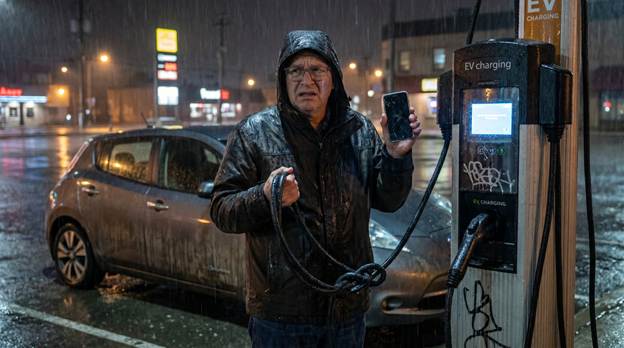
The friction is palpable. When my wife Mary—who spent years analyzing user experiences as a Creative Director for Intel—and I take our dogs, Winston and Raven, on a road trip out of Bend, Oregon, the absolute last thing we want is to leave the dogs pacing in the back seat while I stand in the freezing rain trying to troubleshoot a payment terminal. The sheer mental load of juggling half a dozen smartphone apps, swiping credit cards on broken NFC readers, dealing with network timeouts, and managing various RFID tags is actively depressing EV customer satisfaction. Volvo has recognized that this broken user experience is the true barrier to scaling EV adoption, and they are moving aggressively to fix it.
Why Plug & Charge is a Game Changer
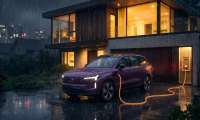
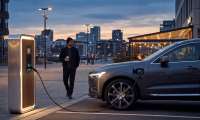
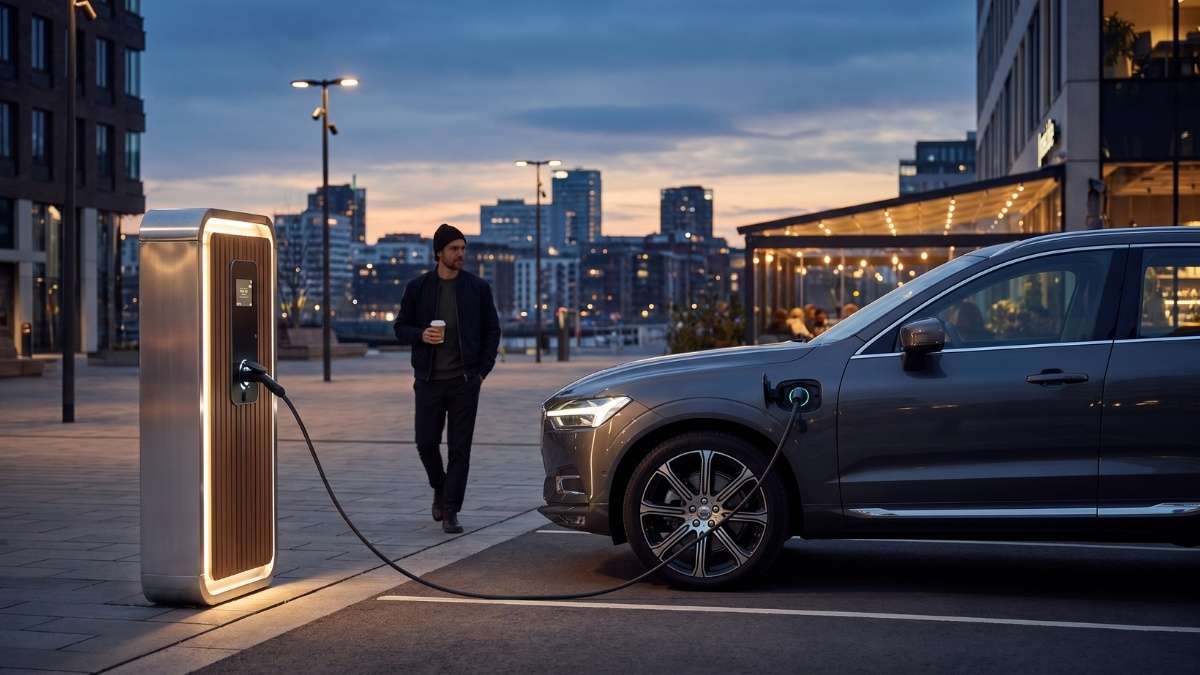
Enter Plug & Charge capability. At its core, this technology—built around the international ISO 15118 standard—allows the vehicle and the charging station to authenticate, authorize, and bill a charging session automatically. You park, you plug the cable into the car, and you walk away. There are no apps to open, no screens to tap, and no credit cards to swipe. The communication stack establishes a secure, local IPv6 network over the charging cable the moment it connects, instantly handling identity, billing data, and grid constraints.
Volvo is rolling this out for the flagship EX90 and the upcoming EX60, granting drivers immediate, frictionless access to over 35,000 fast chargers in the U.S., including the sprawling Tesla Supercharger and Ionna networks. But what fascinates me as a technology analyst is the underlying silicon required to make this seamless.
The cryptographic handshake that makes Plug & Charge possible relies on secure, hardware-level execution. Much like the hardware-enforced defense strategies I consistently advocate for in the enterprise space with solutions like HP Wolf Security, you cannot simply fake this authentication with a superficial software patch. You need the right compute hardware on board to manage the Public Key Infrastructure (PKI) validations instantly.
Because of this rigid requirement for local hardware processing, early owners of the model year 2025 EX90 will require a complimentary NVIDIA DRIVE Orin core computer upgrade for Plug & Charge to function. Volvo is wisely providing this hardware and software upgrade via a scheduled service center visit, acknowledging that the latest software updates demand processing power beyond the original configuration. The MY2026 vehicles and the upcoming EX60 will ship with this Nvidia silicon straight from the factory, ensuring the hardware is perfectly mated to the software demands from day one.
Addressing the Skeptics and the Frustrated
This deployment addresses two distinct demographics: the skeptical non-EV owner and the deeply frustrated current EV owner.
For buyers who have yet to make the jump from internal combustion, the public charging network is a terrifying unknown. They don't necessarily fear running out of battery; they fear being stranded at a broken station in a desolate parking lot at midnight, trying to download a proprietary charging app with zero bars of cellular service. By automating the entire payment and handshake process, Volvo removes the operational friction that makes these buyers hesitate. The vehicle handles the complexity, presenting the user with an experience as simple as plugging a toaster into a wall outlet.
For veteran EV owners, the frustration is entirely different. We have the apps. We know how the networks operate. But we deeply resent the unnecessary cognitive load. If you are driving an $80,000 luxury SUV, you rightfully expect a luxury experience. Volvo’s integration leverages the built-in Android Automotive operating system to change the paradigm. The native Google Maps continuously calculates your route based on your state of charge, preconditions the battery upon approach to maximize charging speeds, and guides you to a compatible Plug & Charge station. The car handles the logistics; the driver just handles the plug.
How This Competes With Tesla’s Ironclad Advantage
For over a decade, Tesla’s ultimate competitive moat has not been its vehicle designs or its controversial driver-assistance software; it has been the Supercharger network. Tesla pioneered the "plug it in and walk away" experience. It was a closed ecosystem, much like Apple’s walled garden, and because they controlled both the car and the charger, it worked flawlessly. That ease of use is what kept consumers fiercely loyal to the brand, forgiving other quality issues simply because the charging experience was unmatched.
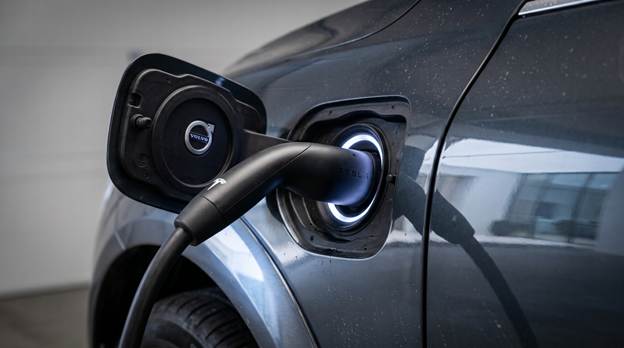
Volvo is now actively neutralizing that advantage. By gaining access to the Supercharger network via standard protocols and integrating Plug & Charge with a native NACS port, a Volvo driver gets the vaunted Tesla charging experience without needing a Tesla vehicle. But here is where Volvo takes a decisive lead: the hardware architecture.
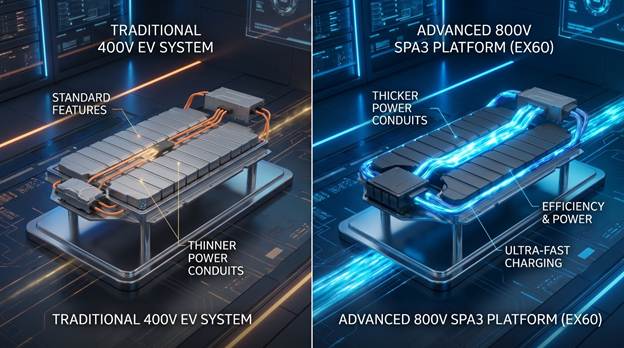
The upcoming Volvo EX60 is built on the advanced 800-volt SPA3 platform, and it is an absolute powerhouse. According to Volvo's specifications, the EX60 is capable of charging at a staggering maximum rate of 370 kilowatts. To put that in perspective, the top-spec EX60 P12 AWD can add up to 173 miles of range in just 10 minutes at a 400-kW charger, going from 10% to 80% in a blistering 19 minutes. Tesla's current vehicle lineup, constrained by an aging 400-volt architecture, simply cannot match that physical electrical throughput.
When you combine industry-leading 800V charging speeds with the zero-click authentication of Plug & Charge, Volvo isn't just matching the Tesla experience; they are arguably surpassing it. They are pairing a superior charging curve with the exact same frictionless payment experience that Tesla drivers have enjoyed for years.
The Importance of Ease of Use to EV Buyers
Why is this specific software improvement so critical? Because in the modern automotive market, luxury is defined by the absence of friction.
You can wrap an interior in the finest sustainable materials, install an exquisite Bowers & Wilkins sound system, and tune the suspension to perfection, but if refueling the vehicle is a miserable, convoluted chore, the luxury illusion shatters instantly. Time is the ultimate luxury for premium buyers. What good is an engineering marvel that can accept a 10-minute ultra-fast charge if it takes the driver five minutes just to get the payment terminal to authorize the session?
By eliminating the manual authentication process, Volvo ensures that the driver actually benefits from the high-performance charging hardware they paid for. The vehicle and the charger talk to each other in milliseconds, initiating the high-voltage transfer before the driver even walks away from the vehicle. Ease of use is no longer a "nice to have" feature; it is a foundational requirement for brand loyalty in the EV era. When the charging process is transparent, owners stop thinking about the car as a battery on wheels and start enjoying it as a premium transportation solution.
The Timetable for Universal Ease of Use
How long will it take for this frictionless experience to become the universal standard for all electric vehicles? Looking at the realities of infrastructure deployment, we are likely facing a three-to-five-year transition window.
The bottleneck isn't just the vehicles; it is the physical chargers in the ground. While major automakers are rapidly adopting standard hardware and integrating the necessary onboard compute power, there are still tens of thousands of legacy public charging stalls that lack the secure network connectivity or internal hardware to support encrypted Plug & Charge digital certificates.
However, regulatory pressure is accelerating this timeline. The National Electric Vehicle Infrastructure (NEVI) Formula Program, which provides funding to states to strategically deploy EV charging infrastructure, dictates strict operational standards. Chargers funded through NEVI must ensure long-term data sharing, high uptime reliability, and open-access payment methods. As older EVs without this required silicon age out of the primary fleet, and as federal NEVI funding forces the upgrade of public charging stations to modern operational standards, we will hit a tipping point. I project that by 2028 or 2029, pulling out a smartphone or a credit card to charge an EV will feel as archaic as writing a physical paper check at the grocery store. Until then, automakers who aggressively push this technology will hold a massive competitive advantage.
Why Volvo is Aggressively Pushing This Improvement
Volvo’s urgency in deploying this technology is not accidental. The initial launch of the flagship EX90 was heavily criticized by the automotive press for software delays and missing features at delivery. In today's market, your car is essentially a highly mobile server rack. When the software fails or is incomplete, the brand suffers immediate reputational damage that cannot be fixed by physical aesthetics.
As reported by InsideEVs on the Plug & Charge rollout, bringing this crucial feature online represents a significant milestone for the EX60 and EX90 platforms. Volvo knows they need a decisive, highly visible win to restore consumer trust and re-establish their reputation for flawless Scandinavian engineering. By moving aggressively to deploy Plug & Charge, upgrading early EX90s with new Nvidia chips at their own expense, and ensuring the EX60 launches with this capability out of the gate, they are protecting their premium positioning. They are proving to the market that they can successfully execute on the software-defined vehicle concept.
This commitment to marrying high-performance hardware with frictionless software is exactly why I am pivoting my next vehicle purchase and planning to pre-order the Volvo EX60 P12 the moment the pre-order window opens. The hardware specifications - the 370 kW peak charging, the 19-minute charge times, the 800V architecture - are phenomenal, but it is this precise software execution that actually seals the deal. I want a vehicle that handles the backend complexity so I don't have to.
Wrapping Up
The integration of native Plug & Charge into the Volvo EX90 and EX60 is a masterclass in understanding what the modern driver actually values. We are finally moving past the experimental era where driving an electric vehicle required you to be an amateur IT troubleshooter just to get home.
By marrying the raw, physical electrical throughput of an 800V architecture with the secure, invisible software handshake facilitated by Nvidia silicon, Volvo is demonstrating exactly what the next generation of electric mobility must look like. They have recognized that the best technology is the kind that disappears entirely, allowing the driver to simply enjoy the drive. By eliminating the authentication friction that has plagued public networks for a decade, Volvo isn't just improving their cars—they are helping to save the EV charging experience itself. This shift from manual frustration to automated convenience will do more for EV adoption over the next five years than any marginal increase in battery range ever could.
Disclosure: Images rendered by Artlist.io
Rob Enderle is a technology analyst at Torque News who covers automotive technology and battery developments. You can learn more about Rob on Wikipedia and follow his articles on TechNewsWord, TGDaily, and TechSpective.
Set Torque News as Preferred Source on Google
Follow us today...