

When analyzing the trajectory of the electric vehicle market, we consistently see automakers struggling to balance three competing variables: performance, range, and technological integration. Most platforms force buyers to compromise, offering either blistering acceleration that drains the battery in a few hours or an ultra-efficient, sluggish commuter that maximizes range at the cost of driving dynamics. However, the introduction of the 2026 Volvo EX60—specifically the P12 AWD configuration -changes the paradigm entirely.
By deploying next-generation e-motors, advanced cell-to-body battery packaging, and a highly sophisticated AI-driven software layer, Volvo has created an electric SUV that refuses to compromise. For those of us who scrutinize technology trends and evaluate automotive architectures, this specific variant represents a definitive target. Let us dive into why the 670-horsepower, 400-mile range P12 variant represents the absolute sweet spot for early adopters looking to lock in a pre-order, and how its underlying technology fundamentally shifts the competitive landscape.
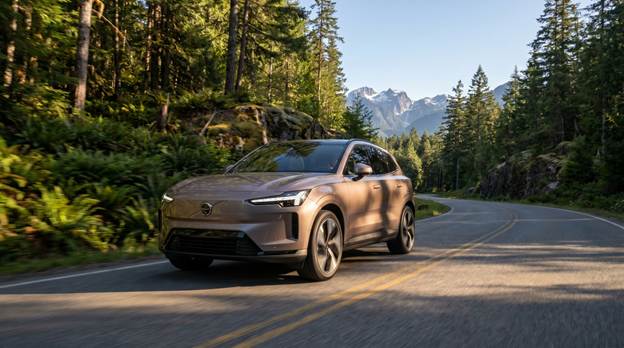
The P12 AWD Difference: Power Meets Practicality
To understand why the P12 configuration is the undisputed pinnacle of the EX60 lineup, we have to look at the numbers and the engineering behind them. The EX60 platform will be offered in several variations, starting with the P6 (which targets a 310-mile range) and the P10 AWD (targeting 503 horsepower and a 320-mile range). While both of those options represent solid engineering, the P12 AWD spec pushes the boundaries of what a midsize electric SUV can achieve.
Generating a staggering 670 horsepower, the P12 variant delivers acceleration rates that firmly place it in supercar territory, boasting zero-to-sixty times that rival the most aggressively tuned combustion engines on the market. Yet, what makes this configuration truly exceptional is that this performance does not come at a penalty to endurance. According to early platform details circulating in EV engineering communities, the P12 achieves an estimated 400-mile driving range.
This dual achievement of maximum power and maximum range is not a minor engineering feat. It requires an optimized synergy between the battery chemistry, the thermal management system, and motor efficiency. Volvo leverages a new battery cell design and cell-to-body technology, which effectively makes the battery pack a structural component of the vehicle. This reduces overall weight, increases rigidity, and allows for greater energy density within the same physical footprint. When you evaluate performance metrics, combining 670 horsepower with 400 miles of range creates an unprecedented sweet spot. You get the raw, visceral thrill of instant electric torque without constantly watching the battery percentage drop.
Targeting the Early Adopter: Why This is the Configuration to Buy
Early adopters in the technology and automotive sectors are a discerning group. They are not simply looking for basic transportation; they demand hardware that represents the leading edge of innovation, and they are willing to invest in premium configurations to avoid buyer’s remorse. The P12 AWD appeals directly to this demographic.
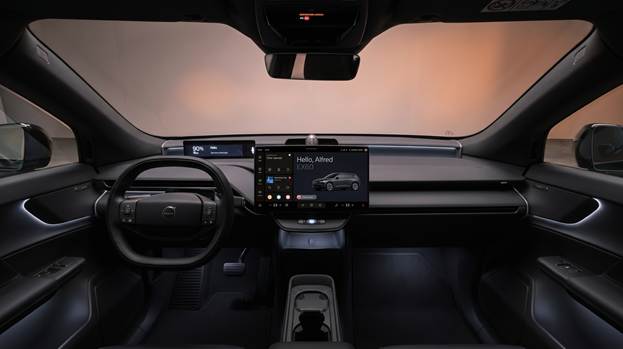
The ideal buyer for the P12 is someone who appreciates the intersection of luxury, high-performance computing, and automotive engineering. This is the buyer who understands that a vehicle is no longer just a mode of transport, but a rolling data center. With the NVIDIA-powered HuginCore processing system providing a no-lag, highly intuitive infotainment and autonomous driving experience, the vehicle behaves much like a high-end personal computer. The inclusion of Google Gemini as an in-car AI assistant further cements this, allowing natural language commands that integrate seamlessly with daily digital workflows.
Because of this unparalleled combination of specs, the P12 is the exact configuration I am currently trying to order. When I evaluate my own needs for a primary vehicle - balancing highway range, adverse weather capability in places like Bend, Oregon, and a desire for zero-compromise acceleration - the P12 stands alone. Pivoting a pre-order to this specific trim ensures that the vehicle will remain technologically relevant and highly capable for years, avoiding the rapid obsolescence that plagues lesser EV trims.
Availability: The European Advantage and the U.S. Wait
Currently, the EX60 P12 platform is already generating massive excitement in Europe, where buyers are taking full advantage of the order banks for Volvo's latest electric iteration. However, the vehicle is not yet available to order in the United States. This staggered rollout strategy is common in the automotive industry, but it can be intensely frustrating for eager U.S. consumers ready to configure their P12 variants.
The delay for the U.S. market stems from a combination of factors. First, homologation and rigorous EPA testing cycles require specific validation, particularly to officially certify that impressive 400-mile range and the safety ratings of world-first technologies like the multi-adaptive safety belt. Second, supply chain logistics and production phasing dictate that European markets - where EV adoption rates and regulatory pressures are higher - often receive priority allocations. Furthermore, integrating the vehicle's complex software layers and localized services for the North American market takes additional time to perfect.
Based on industry trends and direct dealer communications, I expect pre-ordering for the P12 configuration to open for U.S. customers in late spring of the upcoming year, with actual deliveries commencing in the summer. For those tracking the Volvo EX60 release schedule, staying in close contact with local dealerships is critical to securing an early build slot once the allocation books officially open.
Shattering the Range Anxiety Myth
One of the most persistent hurdles to widespread electric vehicle adoption is range anxiety—the fear that the vehicle will run out of power before reaching a charging station, leaving the driver stranded. While early EVs with sub-200-mile ranges justified this fear, a 400+ mile range functionally eliminates the problem for all but the most extreme use cases.
Consider the reality of highway driving. At 70 miles per hour, 400 miles equates to nearly six hours of continuous driving. Human physiology dictates that a driver will need to stop for food, rest, or a bathroom break long before the battery is depleted. Furthermore, the 400-mile benchmark provides a massive buffer for real-world variables. We know that cold weather, high speeds, and steep elevation changes degrade battery performance. If an EV has a maximum range of 250 miles, a 20% penalty for winter driving creates a genuine problem. When you start with 400 miles in the P12, that same penalty still leaves you with well over 300 miles of usable range - more than enough to confidently reach your destination.
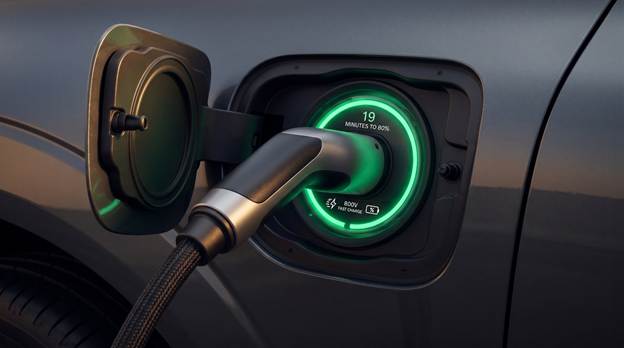
Additionally, range is only half of the anxiety equation; the other half is charging infrastructure. The EX60 solves this by integrating a native North American Charging Standard (NACS) port, granting drivers direct, seamless access to the vast and highly reliable Tesla Supercharger network without needing cumbersome adapters. Coupled with Volvo's sophisticated charging software- which monitors the battery in real-time, learns driving patterns, and dynamically pre-conditions the battery to accept ultra-fast DC currents - the P12 can charge from 10% to 80% in well under 20 minutes. This combination of massive onboard capacity and rapid, reliable replenishment thoroughly dismantles anxiety.
Benchmarking the P12 Technology Against the Competition
To truly appreciate the P12 AWD, we must evaluate it against its peers. When we look at vehicles known for excellent range, models like the Lucid Air and the Hyundai Ioniq 6 immediately come to mind. I have spent significant time analyzing the 800V architectures and efficiency metrics of these specific competitors. While the Lucid Air offers astonishing range figures and the Ioniq 6 delivers remarkable charging speeds via its advanced platform, the Volvo EX60 P12 introduces a unique value proposition through its holistic software and hardware integration.
The Lucid Air is a phenomenal engineering achievement, offering an EPA-estimated range of up to 512 miles in its Grand Touring trim. However, it sits in the luxury sedan category with a footprint and price tag that reflects its flagship, low-volume status. The EX60 brings top-tier efficiency into the highly desirable, highly practical midsize SUV segment. The flat interior floor, enabled by the cell-to-body construction, offers superior rear legroom and versatile cargo capacity that a sedan simply cannot match.
Compared to the Hyundai Ioniq 6, which relies heavily on its 800V architecture to achieve fast charging times (capable of adding roughly 68 miles of range in just 5 minutes under optimal conditions), the Volvo EX60 utilizes an incredibly intelligent thermal management system to optimize charging curves dynamically in diverse weather conditions. While Hyundai’s approach focuses on raw charging velocity, Volvo's reliance on intelligent, AI-driven software optimization represents a more adaptive approach to battery management over the life of the vehicle, ensuring long-term battery health is protected even during frequent DC fast charging.
Furthermore, Volvo’s implementation of the NVIDIA-powered HuginCore places the EX60 at the forefront of automotive computing. Many competitors still suffer from sluggish infotainment systems and disjointed driver assistance features. By utilizing centralized, high-performance computing, Volvo ensures that the AI assistant, the built-in route planner, and the multi-adaptive safety systems operate with the fluidity of a modern high-end workstation. This hardware-enforced reliability and seamless execution create a superior user experience that distinguishes the P12 from its rivals.
Wrapping Up
The automotive industry is currently in a transitional phase where software-defined vehicles and advanced battery chemistries are redefining what is possible on the road. The 2026 Volvo EX60 P12 AWD configuration stands as a testament to this evolution. By delivering an astonishing 670 horsepower alongside an estimated 400-mile range, it successfully marries supercar performance with long-distance practicality.
For early adopters and technology enthusiasts, the P12 is the definitive target. It addresses the core barriers of EV ownership by functionally eliminating range anxiety through massive battery capacity, intelligent fast-charging technology, and native NACS integration that unlocks the industry's most reliable charging network. As we await the opening of the U.S. pre-order window late this spring, it is clear that Volvo has not just built another electric SUV; they have engineered a comprehensive computing and transportation platform that sets a new benchmark for the industry.
Disclosure: Images rendered by Artlist.io
Rob Enderle is a technology analyst at Torque News who covers automotive technology and battery developments. You can learn more about Rob on Wikipedia and follow his articles on TechNewsWord, TGDaily, and TechSpective.
Set Torque News as Preferred Source on Google
Follow us today...