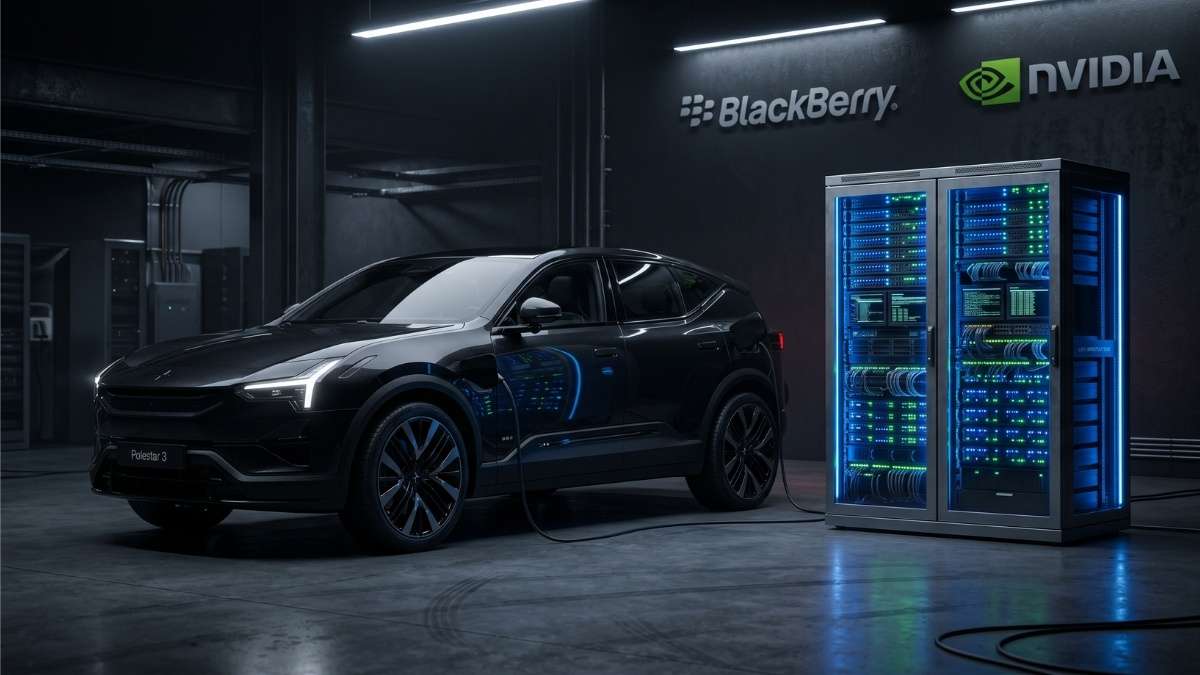

The automotive industry is no longer just about bending metal; it is fundamentally about software, data sovereignty, and national security. We are currently witnessing the messy collision of these forces with the recent US government restrictions on Chinese-connected vehicle software, which has effectively halted the sale of new Polestar vehicles in the United States.
To the casual observer, the situation looks like a fatal blow to the Geely-backed EV brand. However, those of us who track the underlying enterprise software markets know that this is a resolvable engineering problem, not a permanent death sentence. In fact, due to the temporary market dislocation, this geopolitical regulatory hurdle has created one of the most compelling buyer's markets in the history of the EV space. As recently highlighted by Electrek, Polestar 4s are an incredible deal at $25K off right now, presenting a massive opportunity for consumers who understand the technological backstops the company has at its disposal.
Let's break down exactly why Polestar found itself in the crosshairs, why its sister company Volvo escaped unharmed, how Polestar can engineer its way out of this using trusted platforms like BlackBerry QNX or NVIDIA DRIVE, and what other automakers must learn from this geopolitical software crisis.
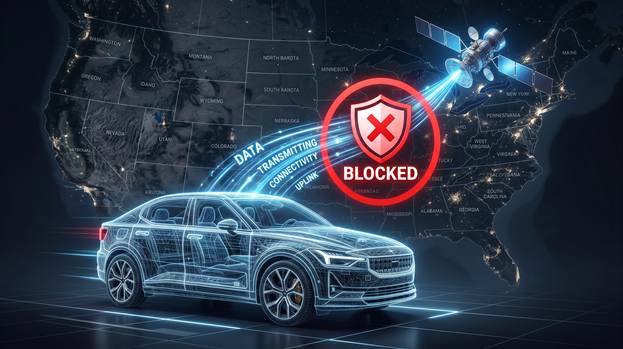
The Connected Car Cold War And Polestar's Misstep
To understand the ban, we have to look at how modern vehicles operate. A contemporary EV is essentially a massive, rolling edge-computing node. It collects gigabytes of data per hour, utilizing high-definition cameras, LiDAR, and telematics systems to map its environment and monitor its occupants. The US Department of Commerce and various national security agencies have rightfully identified that if this data is processed by software stacks rooted in adversarial nations, it poses a significant surveillance and infrastructure threat.
Polestar, despite its Swedish heritage and headquarters, relies heavily on the supply chain and software architecture of its parent company, the Chinese automotive giant Geely. While Polestar utilizes Android Automotive for its infotainment, the underlying vehicle control units (VCUs), over-the-air (OTA) update gateways, and lower-level telematics layers share deep DNA with Geely's domestic Chinese platforms. The US regulators didn't ban the hardware; they banned the potential data exfiltration vectors embedded in the car's foundational software tier.
Why Volvo Escaped The Regulatory Guillotine
A glaring question for many consumers and investors is why Volvo—which is also owned by Geely—is continuing to sell cars in the US without facing the same software embargo. The answer lies in enterprise architecture, corporate governance, and supply chain decoupling.
When Geely acquired Volvo, it was highly strategic about maintaining Volvo's European engineering autonomy. While the two companies share physical platforms (like the SEA architecture), Volvo proactively ring-fenced its software and data management systems for Western markets. Volvo heavily localized its data centers, utilizing trusted US-based cloud providers for its Western fleet, and engineered its telematics modules to utilize software verified by European and American cybersecurity firms.
Volvo essentially proved to US regulators that its software stack was decoupled from Beijing's data mandates. They created an auditable air-gap between their Western operations and Geely’s Chinese infrastructure. Polestar, being a newer and more agile spin-off, leveraged Geely’s shared software services to accelerate its time-to-market. That shortcut was a brilliant financial move five years ago, but it became a critical vulnerability under the new regulatory regime.
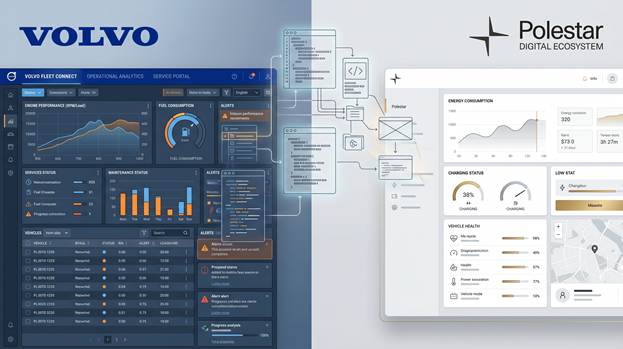
Path One: Porting The Volvo Software Stack
So, how does Polestar get out of this? The most immediate, though technically complex, solution is to borrow from its sibling. Polestar can theoretically rip and replace its Geely-derived telematics and OTA software layers with the fully vetted, US-approved software stack currently utilized by Volvo.
Because Polestar and Volvo share foundational vehicle architectures, the hardware abstraction layers are highly compatible. Moving Polestar to Volvo’s trusted stack would instantly satisfy US regulators, as the data governance models would be identical to those already approved for Volvo’s domestic US sales. The primary challenge here is validation and testing. You cannot simply flash a new foundational OS onto a car overnight without extensive safety validation. However, because Geely has a massive financial incentive to reopen the US market for Polestar, reallocating engineering resources to force this integration is highly probable.
Path Two: The BlackBerry QNX Safe Harbor
If utilizing Volvo's stack proves too politically complex within the Geely ecosystem, Polestar has a formidable enterprise alternative: moving its foundational vehicle architecture to BlackBerry QNX.
For those who only remember BlackBerry as a smartphone maker, you are missing one of the greatest pivot stories in tech history. Today, BlackBerry QNX is the gold standard for secure, safety-certified embedded operating systems in the automotive industry. It is used by BMW, Ford, General Motors, and dozens of others. QNX is a microkernel operating system, meaning its core processes are deeply isolated from one another. If one system is compromised, the rest of the car remains secure.
More importantly, BlackBerry is a Canadian company deeply embedded in the trusted North American tech ecosystem. If Polestar were to announce a strategic partnership to replace its contested Geely telematics software with a foundational QNX architecture, the US national security concerns would evaporate almost instantly. QNX is already cleared for the highest levels of secure transport and government use. Adopting BlackBerry’s platform would not only solve the regulatory ban, but it would also provide Polestar with a massive upgrade in inherent cybersecurity and system stability.
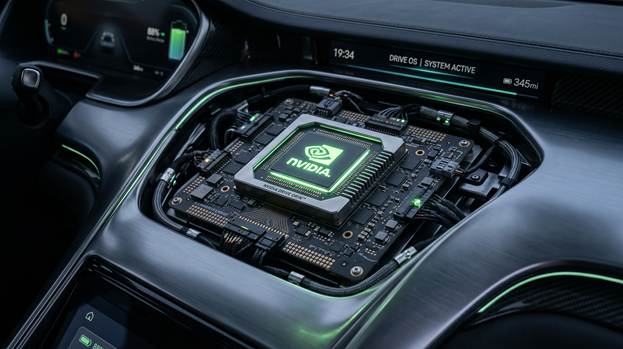
Path Three: Aggressive Transition to NVIDIA DRIVE
The third, and perhaps most forward-looking, workaround is to accelerate a transition to NVIDIA's DRIVE OS platform. Polestar is already working with NVIDIA for its advanced driver assistance systems (ADAS), utilizing NVIDIA's powerful system-on-a-chip (SoC) hardware.
NVIDIA DRIVE is an end-to-end platform that handles everything from sensor processing to the foundational operating system that manages the vehicle's compute capabilities. NVIDIA is the crown jewel of American AI and silicon dominance. If Polestar were to strip out the controversial Chinese software elements and hand the keys to NVIDIA—running the entire vehicle compute stack on NVIDIA DRIVE OS—it would be impossible for the US Commerce Department to maintain the ban without subsequently banning America's own leading technology provider.
NVIDIA’s architecture is designed specifically for software-defined vehicles, providing a secure, sandboxed environment for OTA updates and data management. By leaning entirely into the NVIDIA ecosystem, Polestar would transform a massive regulatory vulnerability into a profound marketing advantage, positioning itself as a cutting-edge, AI-native vehicle secured by the world's most valuable tech company.
Guidance For Global OEMs Navigating The Tech Cold War
The Polestar ban should serve as a stark warning to any global automaker, particularly those operating out of China or the US, trying to sell across contested borders. The era of the globally unified, homogenously coded vehicle platform is over. Software sovereignty is the new reality.
To avoid similar bans in the future, OEMs must adopt a strategy of "Platform Hardware, Localized Software." You can build the chassis, the batteries, and the motors wherever it is most cost-effective, but the silicon and the software that govern data collection must be localized and verifiable by the host nation.
First, automakers must ensure that their vehicle architectures support containerized software. This means the infotainment, the ADAS, and the core vehicle control units should be cleanly separated. Second, OEMs must establish localized data residency. If you are selling in the US, the data cannot ping a server in Shenzhen, even for a millisecond. Finally, automakers need to aggressively partner with trusted regional infrastructure providers—using AWS or Azure for cloud connectivity in the West, and trusted local OS providers like BlackBerry QNX, Google, or NVIDIA for the in-car operating systems. Transparency and audibility by third-party security firms will be the cost of entry for international automotive trade for the next decade.
Why Polestar Is The Best Buy On The Market Right Now
This brings us to the consumer perspective. When a government bans a vehicle, the immediate public reaction is to treat the brand as toxic. Consequently, inventory stacks up, and dealers slash prices to move metal. As the aforementioned Electrek article highlighted, the $25,000 discounts on the Polestar 4 make it one of the most astonishing deals in the EV market today.
But is it a risky buy? The data suggests the risk is remarkably low. First, Geely is a massive, well-capitalized conglomerate that is deeply committed to the global market. They cannot afford to let the Polestar brand collapse, nor can they afford to cede the US market to Tesla and legacy automakers.
Second, the hardware is not fundamentally flawed; this is purely a software and data routing issue. The cars sitting on dealer lots are mechanical and electrical marvels. Geely and Polestar have multiple viable, proven pathways to compliance—whether through Volvo, BlackBerry, or NVIDIA. Once the software stack is patched, updated, or re-certified to meet US commerce guidelines, the ban will be lifted, and the vehicle you bought at a steep discount will function exactly as intended, fully supported by the manufacturer.
Buying a banned Polestar right now is akin to buying blue-chip tech stock during a temporary regulatory panic. The underlying asset is excellent, the parent company has the resources to fix the compliance issue, and the market is irrationally mispricing the vehicle due to short-term fear.
Wrapping Up
The US ban on Polestar is a pivotal moment in the automotive industry, marking the undeniable intersection of vehicle manufacturing and global cybersecurity policy. While the optics are currently challenging for the brand, the reality is that this is an entirely fixable software routing and architecture problem. Because Polestar operates under the umbrella of Geely—with direct access to Volvo's pre-approved, localized software stack—and has easy enterprise off-ramps available through trusted North American partners like BlackBerry QNX and NVIDIA, their path to regulatory redemption is clear.
For the broader automotive industry, this is a wake-up call to decouple data architecture from hardware manufacturing when crossing geopolitical lines. But for the savvy consumer, this temporary bureaucratic standoff has birthed an incredible financial opportunity. Polestar will patch the software, the ban will eventually lift, and those who took advantage of the current $25,000 discounts will be driving one of the best-engineered EVs on the road for a fraction of its true value.
Disclosure: Images rendered by Artlist.io
Rob Enderle is a technology analyst at Torque News who covers automotive technology and battery developments. You can learn more about Rob on Wikipedia and follow his articles on TechNewsWord, TGDaily, and TechSpective.
Set Torque News as Preferred Source on Google
Follow us today...