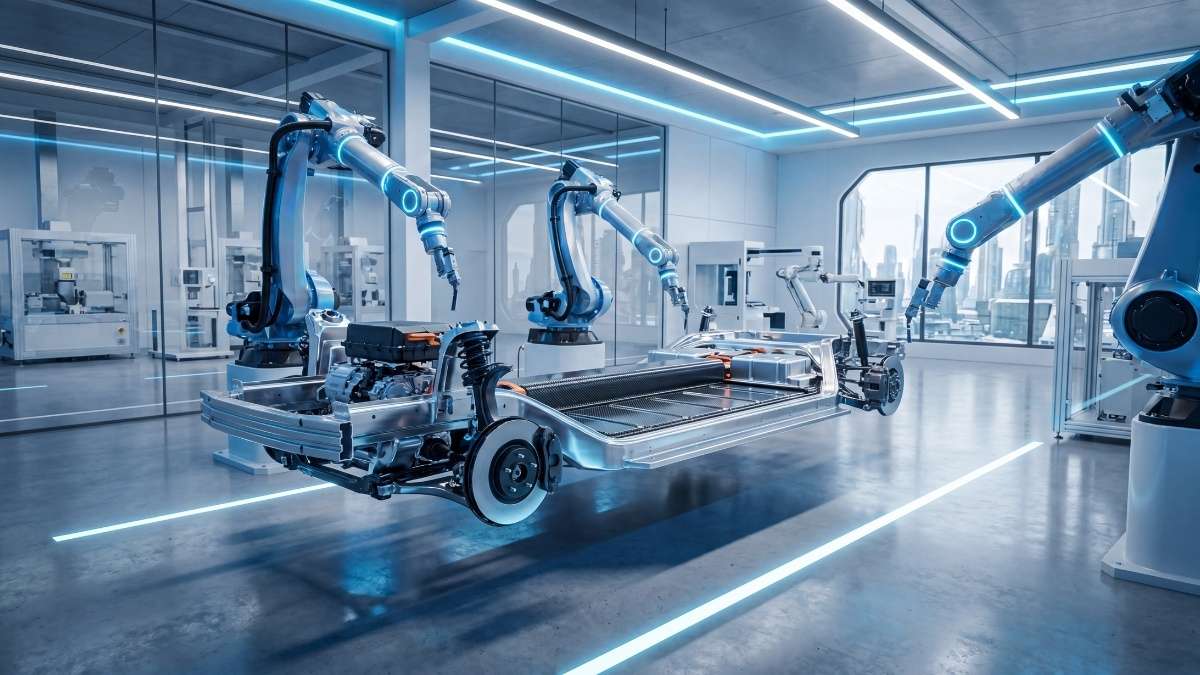

For decades, the automotive industry has been doing something that, frankly, borders on the absurd. If you want to understand why legacy automakers have struggled to match the profit margins of newer EV players or why reducing the carbon footprint of car production has been so agonizingly slow, you have to look closely at the factory floor. We have spent a century perfecting an inherently flawed system: taking massive rolls of sheet metal, stamping them into hundreds of tiny pieces, tossing half the material into a scrap bin, and then spending billions of dollars on robotic arms to weld those pieces back together.
It is a logistical nightmare masquerading as modern manufacturing. But we are currently witnessing a seismic shift that is completely rewriting the rules of automotive engineering. I am talking about zero-waste megacasting, a process that does not just simplify assembly lines but fundamentally transforms the carbon economics of building a modern automobile.
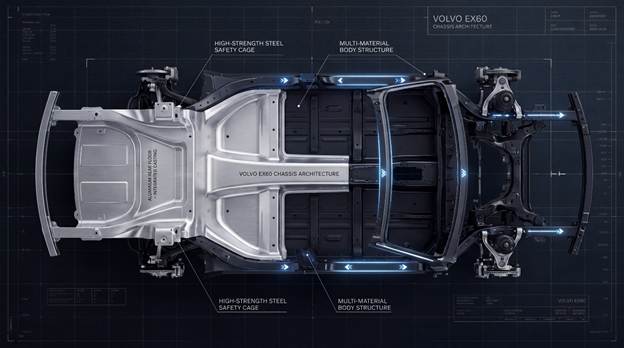
At the forefront of this European manufacturing revolution is the upcoming Volvo EX60, a vehicle that proves legacy automakers can pivot hard into sustainable, hyper-efficient production. Instead of relying on complex supply chains for hundreds of individual parts, the EX60's aluminum offcuts go straight back into the on-site melt chain, drastically shrinking the vehicle's carbon footprint before it even hits the road.
The Madness of Legacy Automotive Manufacturing
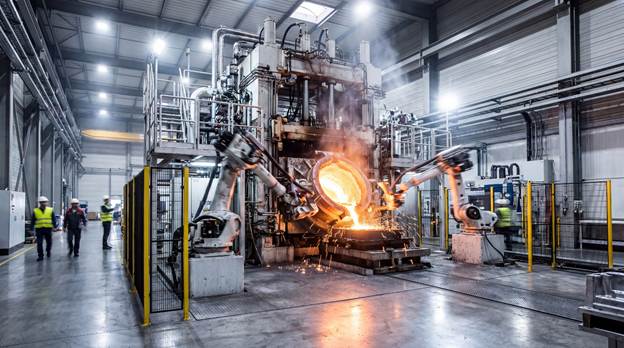
To truly appreciate the elegance of zero-waste megacasting, you first have to understand the sheer madness of the legacy approach. Traditional car manufacturing is an exercise in managed chaos. A typical vehicle’s rear floor structure—the foundation upon which the back half of the car rests—is traditionally assembled from anywhere between 60 to 100 individual stamped steel components.
Think about the sprawling supply chain required to make that happen. Each of those 100 components requires its own heavy stamping die. Each part is manufactured, sometimes across different tier-1 and tier-2 supplier facilities, packaged, and shipped on diesel-burning trucks to the final assembly plant. Once there, they are fed into an expansive body-in-white facility where hundreds of robots perform thousands of spot welds, apply structural adhesives, and insert rivets to hold the puzzle together. Every single weld is a potential failure point. Every truck movement burns fossil fuels. Every stamped part creates scrap metal that must be handled.
This legacy process is inherently wasteful. Traditional stamping can waste up to 50% of each flat metal blank. While the industry prides itself on recycling this scrap, the recycling process itself is highly carbon-intensive. Shipping scrap steel back to a foundry, melting it down using massive amounts of external grid energy, and rolling it back into usable sheets creates a hidden carbon footprint that legacy automakers rarely talk about. It is an unsustainable model for a world transitioning to electric vehicles, where lifecycle emissions are scrutinized by both regulators and intelligent consumers.
Understanding Zero-Waste Casting and the Circular Loop
This brings us to zero-waste casting, a process that effectively renders the traditional automotive body shop obsolete. Megacasting (or gigacasting) utilizes massive, high-pressure die-casting presses—often weighing upwards of 6,000 to 9,000 tons. Instead of welding 100 parts together, molten aluminum is injected into a gigantic mold in a fraction of a second. The machine opens, and a complete, single-piece rear or front underbody emerges.
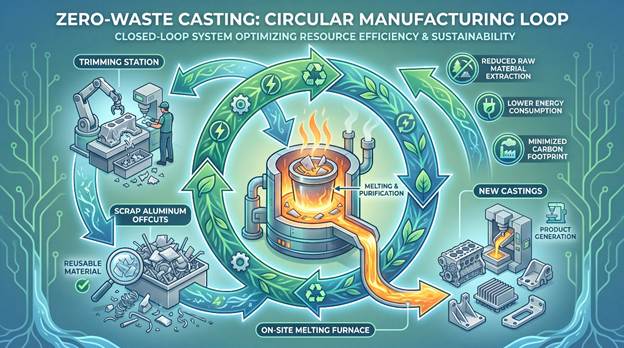
But the true genius of this methodology, and the reason it is a competitive game-changer, lies in the "zero-waste" circular manufacturing loop. In any casting process, you inevitably end up with excess material: the sprue, the flashing along the seam lines, and overflow wells designed to ensure the mold fills completely. In a traditional supply chain, this excess material would be collected in bins, stored, loaded onto a truck, and sold back to an external recycler.
In a zero-waste megacasting facility, the process is relentlessly circular. As the massive aluminum part is extracted from the press, automated trimmers shear off the excess aluminum. Because the foundry is located directly on the factory floor, these offcuts are immediately conveyed straight back into the on-site melt chain.
This is a critical strategic distinction. The offcuts are still hot. By feeding them directly back into the holding furnace situated mere feet away, the factory reclaims the thermal energy already present in the metal. It takes significantly less energy to melt hot aluminum offcuts than it does to melt cold, externally sourced scrap. There are no diesel trucks hauling scrap away, no secondary processing facilities, and nearly 100% material utilization. It is a closed-loop system that drastically reduces the embedded carbon of the vehicle structure. It is lean manufacturing taken to its absolute logical extreme.
The Volvo EX60 Megacasting Breakthrough
While some American and Chinese upstarts grabbed the early headlines, Volvo is currently demonstrating how a heritage brand executes this transition with precision. The upcoming Volvo EX60 SUV represents a monumental leap forward for European automotive manufacturing. Volvo is completely replacing the traditional welded steel rear floor structure with a single megacast aluminum component at their Torslanda plant in Gothenburg, Sweden, utilizing advanced Carat 840 die-casting cells capable of immense locking force.
What fascinates me about Volvo's approach is their explicit focus on the sustainability metrics of the cast. As detailed in a comprehensive report, Volvo EX60 shows the way for megacasting from Chalmers University of Technology, this shift is not just about buying a bigger press. Megacasting places incredibly high demands on materials science, structural simulation, and thermal dynamics.
Volvo is leveraging its deep ties with institutions like Chalmers to develop advanced, circular material solutions that allow for a much higher percentage of recycled aluminum in high-performance structural products. By perfecting the metallurgy, Volvo ensures that the single-piece casting isn't just lighter and cheaper to produce, but also dramatically lowers the environmental footprint. The EX60 is proving that by combining localized, zero-waste melt chains with advanced aluminum alloys, automakers can achieve a massive reduction in the vehicle's lifecycle emissions. It is a masterclass in aligning corporate sustainability goals with hard-nosed manufacturing economics.
How Other Automakers Are Utilizing Megacasting
Of course, Volvo is not the only player realizing that the old way of building cars is dead. The entire industry is currently scrambling to adopt this technology, driven largely by the first-mover advantage established by Tesla. By utilizing mammoth presses, Tesla replaced hundreds of parts with just two castings on the Model Y, reportedly slashing the manufacturing cost of their rear underbody. While Tesla has recently scaled back its most experimental ambitions for single-piece vehicle architectures in favor of a more stable three-piece approach, the disruption they caused is permanent.
The competitive pressure has forced the rest of the market to wake up. Ford is aggressively pursuing its own variation of this technology to simplify its next-generation electric vehicle platforms. By reducing part counts, Ford aims to shrink its factory footprints and vastly improve assembly ergonomics.
Even Toyota, the undisputed king of the traditional lean assembly line, has recognized that megacasting is an evolutionary necessity. They have already demonstrated a prototype production line capable of fabricating the rear third of a unibody in mere minutes, ensuring their future electric platforms remain cost-competitive. Meanwhile, Chinese manufacturers are pushing the envelope even further, deploying incredibly powerful presses to cast even larger sections of their vehicles in a single shot.
The benefits across the board are undeniable. Replacing dozens of welded joints with a continuous piece of aluminum enhances the structural rigidity of the vehicle, improving both handling and crash performance. Furthermore, the massive reduction in weight—often up to 20% for the specific structural component—translates directly into extended battery range. In the EV market, where battery costs dictate profitability, using a zero-waste casting to drop weight and extend range is the ultimate competitive advantage.
The Perspective on Sustainable Manufacturing
From an industry analysis perspective, evaluating these manufacturing shifts is highly revealing. The expertise required to execute megacasting successfully is immense. It requires a fundamental shift from mechanical engineering (stamping and welding) to materials science and fluid dynamics (managing the flow, pressure, and cooling of molten aluminum in mere milliseconds).
Automakers who master this are establishing a new level of authoritativeness in the market. When Volvo claims their vehicles are sustainable, consumers and industry watchdogs can look at their factory floors and see tangible, trustworthy proof. A zero-waste, on-site circular melt chain is not corporate greenwashing; it is a hard, physical reality that eliminates thousands of tons of supply chain CO2. Automakers that continue to rely on sprawling, high-waste legacy supply chains will increasingly find their sustainability claims viewed with skepticism. True trustworthiness in the EV era demands transparency and radical efficiency from the foundry all the way to the dealership.
Wrapping Up
The shift toward zero-waste megacasting is easily one of the most consequential developments in automotive manufacturing since the invention of the moving assembly line. We are moving away from an era defined by extreme complexity, sprawling logistics, and inherent material waste, and entering an era of profound production minimalism.
By integrating the melt chain directly into the factory floor and continuously recycling aluminum offcuts, automakers are proving that economic efficiency and environmental sustainability are not mutually exclusive. The Volvo EX60 is a brilliant execution of this philosophy, demonstrating that an established brand can successfully rewrite its production playbook. The vehicles of tomorrow will be lighter, safer, and vastly cleaner to produce. For the automakers willing to invest the capital and expertise into zero-waste casting, the future is incredibly bright. For those who refuse to adapt, the legacy of a hundred stamped and welded parts will become an anchor they simply cannot afford to drag into the electric age.
Disclosure: Images rendered by Artlist.io
Rob Enderle is a technology analyst at Torque News who covers automotive technology and battery developments. You can learn more about Rob on Wikipedia and follow his articles on TechNewsWord, TGDaily, and TechSpective.
Set Torque News as Preferred Source on Google
Follow us today...