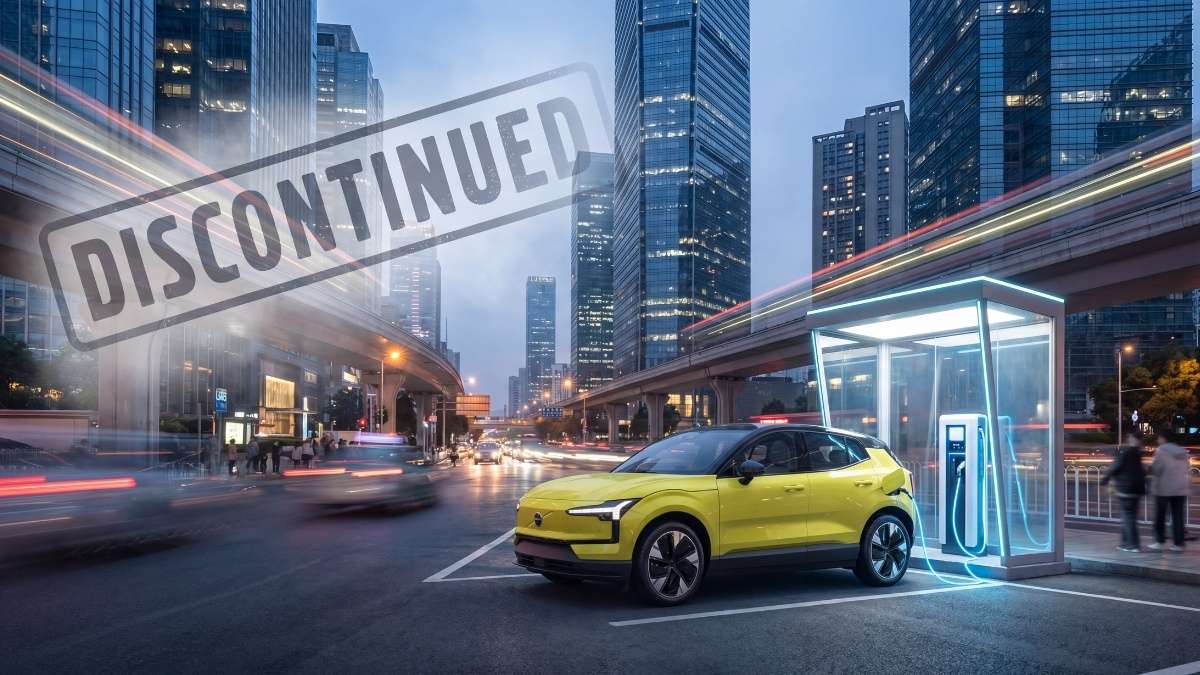

When observing the intersection of the technology sector and the traditional automotive industry, I frequently look at how perfectly a new product aligns with the macroeconomic realities of its time. When Volvo first pulled the wraps off the EX30, the vehicle looked like a masterful stroke of product strategy and corporate synergy. It was a handsome, hyper-quick, and surprisingly affordable electric vehicle designed specifically to hook younger, tech-savvy buyers into the broader Volvo ecosystem. Yet, here we are in 2026, marking the final model year for the EX30 in the United States.
To understand why a vehicle that was universally praised by early critics is now unceremoniously exiting the US market, you have to look well beyond the handsome sheet metal. You have to evaluate fragile global supply chains, ambitious software architectures, and the brutal reality of international trade wars. The death of the EX30 in America is a masterclass in how external forces and geopolitical shifts can shatter even the most meticulously crafted product roadmap. Volvo did almost everything right in the design phase, but in the execution phase, the market conditions shifted fundamentally beneath their feet.
Decoding the Volvo EX30
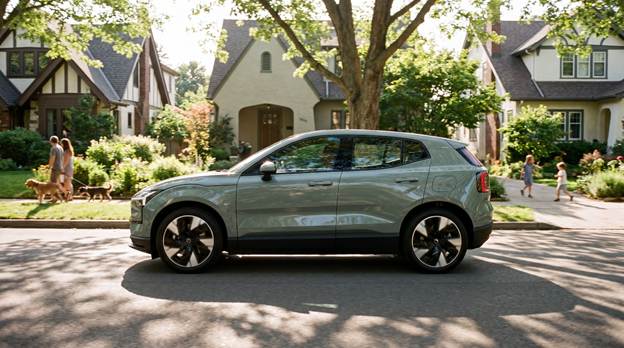
To properly grasp what the American market is losing, we first have to accurately describe what the EX30 actually represents from an engineering standpoint. Built on parent company Geely’s highly modular Sustainable Experience Architecture (SEA), the EX30 was Volvo’s smallest SUV ever. The SEA platform was envisioned as a highly flexible, almost open-source chassis that could underpin everything from budget subcompacts to high-end performance cars, significantly driving down development costs through economies of scale.
Leveraging this architecture, Volvo stripped the EX30's interior down to its absolute bare essentials, applying Scandinavian minimalism to ruthless cost-cutting. Instead of a traditional instrument cluster behind the steering wheel and complex door-mounted speakers, the EX30 utilized a single central touchscreen and a dashboard-spanning Harman Kardon soundbar. By relocating the audio components to the base of the windshield and removing physical switches from the doors, Volvo vastly reduced wiring complexity, saved weight, and streamlined the manufacturing process on the assembly line.
It was a true software-defined vehicle, relying almost entirely on a Google-powered infotainment system to manage everything from side mirror adjustments to glovebox access. On the performance front, it was an absolute rocket. The Twin Motor Performance variant offered an astonishing 422 horsepower, rocketing this tiny urban commuter to 60 mph in a blistering 3.4 seconds. In its single-motor guise, it offered a highly respectable 275 miles of range. It was, for all intents and purposes, the perfect entry-level luxury EV on paper - a consumer electronics device you could drive.
The Urban EV Buyer Persona
So, who was actually buying this unique piece of hardware? In my ongoing analysis of EV adoption curves, it is clear that the EX30 targeted a highly specific and vital demographic. This was decidedly not a vehicle for the suburban family of five taking cross-country road trips with a week's worth of luggage.
The primary EX30 buyer was the affluent urbanite, the young tech professional, or the empty-nester looking to downsize their physical footprint without downgrading their badge. These buyers wanted a vehicle that was effortless to park in cramped city garages and narrow urban streets, but they did not want to compromise on premium build quality or brand prestige. They were early adopters who appreciated the iPhone-like simplicity of the cabin. To this demographic, moving physical buttons to a central touchscreen was not an annoyance; it was a natural extension of how they already interact with the digital world. The EX30 appealed immensely to buyers who value seamless tech integration, rapid acceleration, and sustainable materials over traditional automotive metrics like maximum cargo volume or rear-seat legroom.
The Fierce Subcompact Battlefield
The EX30 did not exist in a vacuum, and it faced a unique, highly competitive set of rivals from the moment it launched. Because of its aggressively low starting price - initially promised to sit around the $35,000 mark before supply chain realities and inflation set in—it straddled a very thin line between mainstream volume vehicles and premium luxury cars.
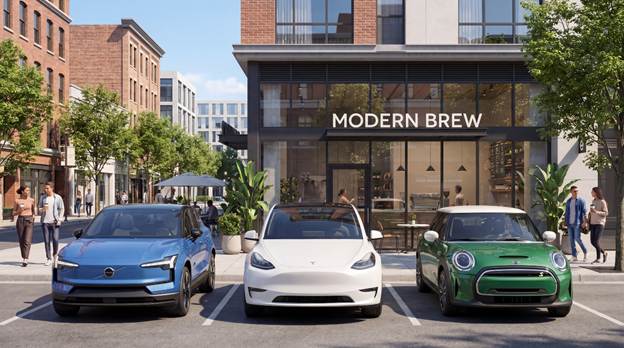
Its most direct mainstream competitors included the Hyundai Kona Electric and the Kia Niro EV, both of which offered more interior passenger space but entirely lacked the premium badge cachet of the Swedish marque. On the luxury side of the ledger, it sparred directly with the electric Mini Cooper SE, though the Volvo offered vastly superior range and straight-line performance. However, its most dangerous competitor was the ubiquitous Tesla Model Y. Despite being a significantly larger class of vehicle, the Model Y often overlapped with the EX30 in out-the-door pricing due to Tesla's aggressive price cuts and access to heavy federal EV tax incentives. The EX30 was a niche, specialized player fighting in a broader segment that increasingly demanded zero compromises from consumers.
Early Triumphs and Software Stumbles
When the EX30 was first announced to the world, the market response was overwhelmingly positive. Pre-orders surged, and the global automotive press lauded Volvo for finally bringing a truly affordable, highly desirable premium EV to the masses. However, as is incredibly common with first-generation, highly computerized products in the tech hardware space, the final execution left much to be desired.
The EX30 was plagued by significant software glitches straight out of the gate. In a modern vehicle where the user interface is as critical to operation as the transmission, the EX30 suffered from unexpected screen blackouts, driver-assist system failures, and charging communication errors. The situation was so severe that Volvo had to pause deliveries globally in early 2024 to physically patch the code at dealerships.
When an automaker builds a car that relies on a single central screen for everything—including the mandatory speedometer - a software crash is not merely an inconvenience; it becomes a critical safety hazard. While Volvo eventually stabilized the system through patches, the initial reputational damage among early-adopter buyers was already done. In the technology space, you rarely get a second chance to make a first impression, and these software stumbles stifled the strong word-of-mouth marketing required to sustain long-term sales momentum for a new nameplate.
Why The EX30 Met Its End in America
Despite overcoming the initial software woes, the vehicle's ultimate undoing in the US market was completely divorced from engineering; it was purely geopolitical and financial. Originally, Geely and Volvo designed the EX30 to be manufactured exclusively in Zhangjiakou, China. This was a deliberate strategy to leverage heavily localized battery supply chains, lower labor costs, and massive manufacturing scale to hit that elusive $35,000 entry price point.
However, the macroeconomic environment shifted violently. The Biden administration's imposition of 100% tariffs on Chinese-made electric vehicles fundamentally destroyed the EX30’s business case in America overnight. The math was inescapable: a 100% tariff meant an EX30 arriving at a US port was immediately priced entirely out of its competitive set, transforming an affordable entry-level EV into an overpriced oddity.
Volvo management quickly scrambled to adapt, pivoting to shift production of European and US-bound EX30 units to its historic plant in Ghent, Belgium. But by the time the European assembly lines were retooled with hundreds of millions of euros in fresh investments, the cost of production in Belgium proved to be significantly higher than in China. Volvo simply could not achieve the margins required to justify shipping and selling a low-cost, low-margin subcompact in the US - a market that historically heavily favors massive, high-margin SUVs. Consequently, Volvo made the harsh but necessary corporate decision to axe the EX30 from the US lineup following the 2026 model year, dedicating its costly Ghent production capacity entirely to the booming European Union market where compact EVs remain in exceptionally high demand.
Volvo’s 2026 Realignment: What Replaces the EX30?
With the EX30 officially exiting stage left from American dealerships, what fills the massive void at the bottom of Volvo's lineup? The company is decidedly not abandoning the electric vehicle market; rather, it is restructuring its product footprint to better align with North American consumer tastes and the new realities of tariff-compliant manufacturing.
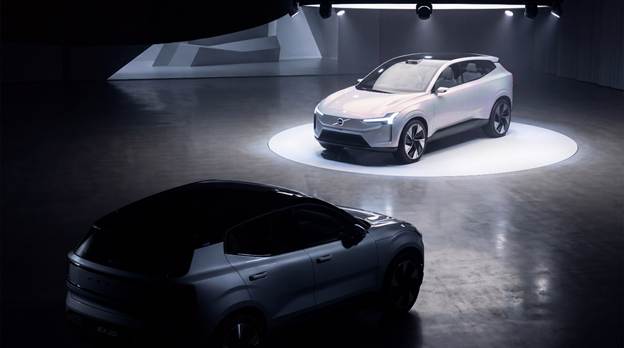
According to a comprehensive breakdown of the brand's pivot detailed in CarBuzz's analysis of the 2026 Volvo electric car lineup, the immediate replacement serving as the new entry-level model will be the EX40. Formerly known under the XC40 Recharge moniker, the newly rebranded EX40 is a slightly larger, more traditional compact crossover. It purposefully lacks the radical interior minimalism or the blistering straight-line acceleration of the EX30, but it compensates by offering significantly more rear cargo space, physical window switches, a dedicated driver instrument cluster, and a generally more conventional user experience. This design philosophy appeals much more broadly to traditional American automotive sensibilities.
Furthermore, Volvo is actively focusing its heavy engineering artillery on the upcoming EX60, a premium mid-size electric crossover designed from the ground up to directly combat segment leaders like the Tesla Model Y and the Porsche Macan EV. Built on Volvo's next-generation SPA3 architecture, the EX60 represents the brand's true technological future in the States, promising vast improvements in software stability, computing power, and localized manufacturing integration.
Is The Replacement Worth Waiting For?
For consumers standing at the precipice of a luxury EV purchase in 2026, a critical strategic question remains: Do you scramble to a dealership to secure one of the last remaining US-market EX30s, or do you exercise patience and wait for the EX40 and EX60 to fully mature?
In my view, unless you are absolutely constrained by tight urban parking spaces and are hopelessly enamored with the EX30's specific brand of hyper-minimalist aesthetic, you should wait. The EX30 is destined to become an orphan product in the United States. While Volvo is a reputable company that will undoubtedly honor warranties and provide over-the-air updates for the foreseeable future, long-term parts availability and dedicated service expertise for a low-volume, single-generation vehicle could easily become a headache over the next decade.
The EX40 is a far more practical, proven commodity that functions beautifully as a daily driver without the steep technology learning curve. Moreover, if your household budget allows, the upcoming EX60 represents Volvo's true next-generation leap. The EX60 will feature advanced computing power and sensor suites that far exceed what the EX30 was equipped with, making it a considerably smarter long-term technological investment as autonomous driving features and AI integrations continue to mature in the latter half of the decade.
Wrapping Up
The sudden discontinuation of the Volvo EX30 in America after 2026 stands as a stark, unavoidable reminder of exactly how fragile global automotive hardware strategies can be in the modern era. It was undeniably the right vehicle engineered for the right demographic, but it was launched at exactly the wrong time. Caught in the brutal crossfire of international trade tariffs and suffering from early-stage software architecture growing pains, the EX30 simply could not survive the leap across the Atlantic.
Its departure leaves a distinct, measurable gap in the entry-level luxury EV market - a rare space where true affordability, exhilarating performance, and premium Scandinavian design briefly intersected. However, Volvo's rapid pivot toward the rebadged EX40 and the upcoming, highly advanced EX60 proves that the automaker is adapting swiftly and decisively to American market realities. While enthusiasts and urbanites can rightfully mourn the loss of this brilliantly designed electric rocket, the vehicles stepping up to replace it are ultimately far better suited to the heavy, space-demanding, and digitally complex reality of the modern American highway system.
Disclosure: Images rendered by Artlist.io
Rob Enderle is a technology analyst at Torque News who covers automotive technology and battery developments. You can learn more about Rob on Wikipedia and follow his articles on TechNewsWord, TGDaily, and TechSpective.
Set Torque News as Preferred Source on Google
Follow us today...