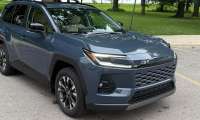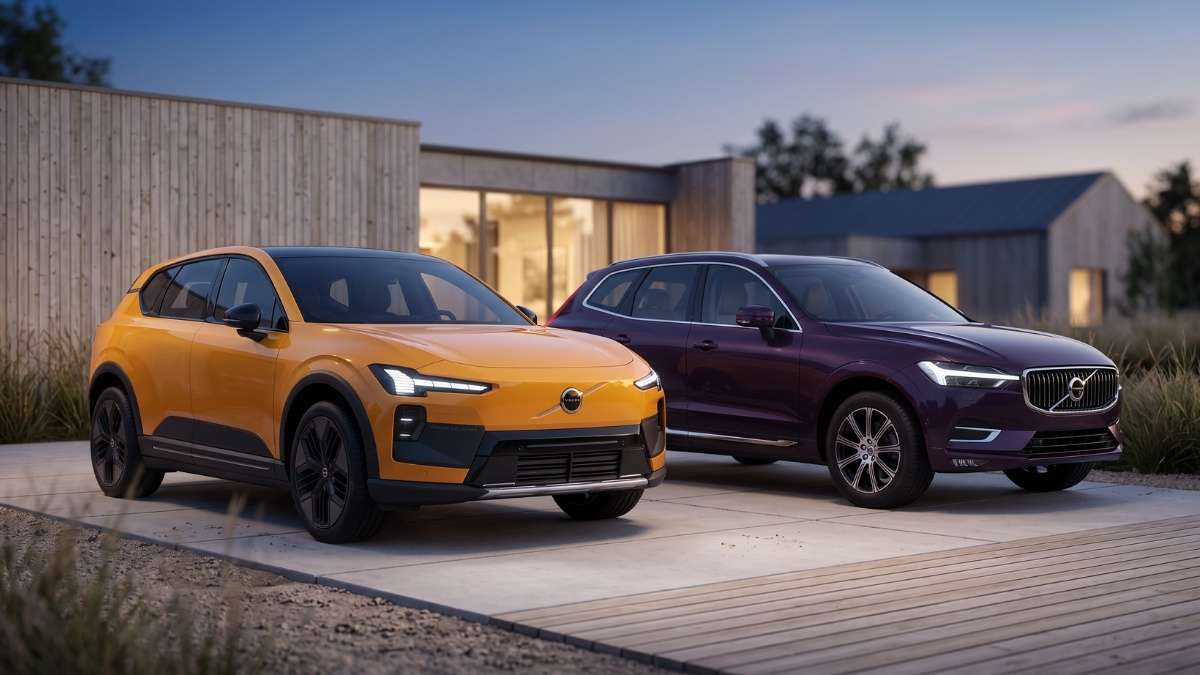

For the past decade, the global transition to electric vehicles has operated under a heavily subsidized illusion. Governments worldwide threw billions of dollars in tax credits, point-of-sale rebates, and corporate incentives at the automotive market to bridge the massive manufacturing cost gap between internal combustion engine (ICE) vehicles and their battery-electric counterparts. But as macroeconomic realities shift and those government subsidies dry up across major global markets, the automotive industry is facing a brutal and unavoidable reality check. Mainstream buyers, battered by lingering inflation and higher interest rates, are simply not willing to pay a ten- to fifteen-thousand-dollar premium just to plug in their cars, regardless of how much they might personally value environmental stewardship or the refinement of silent electric powertrains.
This is why Volvo’s recent strategic maneuvering with the upcoming EX60 is nothing short of revolutionary for the automotive sector. By aggressively targeting and achieving absolute price parity with its ICE stablemate, the venerable and highly successful XC60, Volvo is essentially rewriting the rules of modern automotive retail. They are definitively proving that a legacy automaker can transition an entire consumer base to a purely electric architecture without punishing the consumer's wallet. This column explores how Volvo accomplished this pricing miracle, why it is critical for the survival of the broader EV market, and how the EX60 is perfectly positioned to become the most disruptive vehicle of the decade.
Why Post-Subsidy Price Parity is the Holy Grail
When you forcefully remove government intervention from the equation, the electric vehicle market becomes an incredibly harsh and brutally competitive environment. Over the last several years, we have watched affluent early adopters eagerly pay the so-called "EV premium," driven by a desire for cutting-edge technology, instant torque, and the social cachet of driving a green vehicle. However, as any seasoned technology analyst will tell you, the early adopter phase of the EV market is officially over. We are now traversing the chasm of mainstream adoption, where the typical buyer makes a highly pragmatic, mathematical decision based on monthly payments, insurance rates, and pure daily utility.
If an electric SUV costs significantly more than the exact same size and class of a combustion SUV sitting right next to it on the very same dealer lot, the mainstream buyer will choose combustion almost every time. The psychological barrier of a massive price premium is simply too high to overcome with long-term promises of lower charging costs and reduced maintenance, especially when mainstream consumers remain deeply skeptical about the reliability of public charging infrastructure.
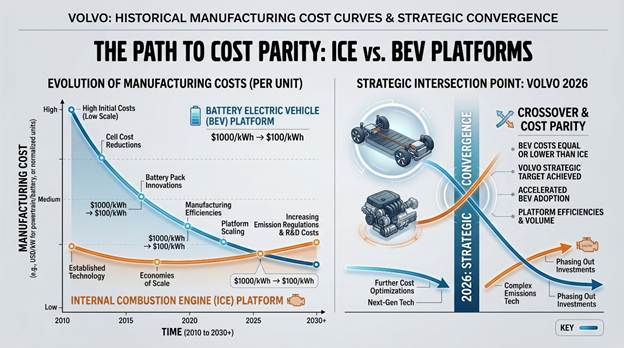
Achieving true price parity without the artificial crutch of government subsidies has long been considered the holy grail for legacy automakers. It proves that the underlying technology - battery cell manufacturing, electric motor efficiency, thermal management, and software-defined platforms - has finally reached genuine economies of scale. When ICE and EV stablemates have identical or near-identical pricing, it completely removes the financial friction from the purchase decision. The conversation on the showroom floor shifts fundamentally from "Can I afford to take a financial risk on going electric?" to "Which powertrain actually fits my daily lifestyle better?"
This psychological shift is monumental. It normalizes the electric vehicle, transforming it from a luxury niche into a standard, everyday consumer choice. Furthermore, matching the XC60's price point protects Volvo's critical market share in the premium mid-size SUV segment, which constitutes the absolute core of their global sales volume and long-term profitability.
Volvo’s EV Leadership and the Competitive Landscape
Has any other legacy automaker successfully matched the sticker price of a dedicated EV with its direct ICE equivalent without resorting to massive, margin-destroying backend discounts? The short answer is no, at least not reliably in premium Western markets.
Tesla, of course, currently dictates broader EV pricing trends and has aggressively cut prices to defend its market share against a sagging U.S. EV market. However, Tesla lacks internal combustion counterparts to compare against; they are competing only against themselves and the broader market. Furthermore, years of relentless price slashing have created a brutal depreciation problem for Tesla owners, forcing the company to pilot Guaranteed Future Value programs just to keep nervous buyers at the table.
Legacy automakers like Ford and General Motors have also struggled immensely with this financial transition. The Ford Mustang Mach-E, while a genuinely successful and competent vehicle, initially commanded a notable premium over comparable gas-powered Ford Escapes or Edges. Consequently, heavily subsidized lease deals and backend factory incentives have been routinely required to keep EV inventory moving off the lots.
German rivals have largely maintained a rigid pricing hierarchy where electric models sit a full tier above their gas-powered siblings in the pricing structure. As someone who personally drives and manages the software updates on a Daytona Gray 2022 Audi E-Tron GT, I deeply appreciate premium EV performance and 800-volt charging architectures. However, I also clearly see the massive financial premium the Volkswagen Group and others place on their electric architectures compared to their ICE equivalents. It remains an exclusive club.
Volvo, conversely, has been methodically setting the stage for a democratic electric transition. Under their ambitious electrification timeline, they committed early to overhauling their manufacturing footprint, forcing them to aggressively optimize their supply chains and platform architectures. By utilizing advanced scalable architectures and leveraging parent company Geely’s massive battery procurement power, Volvo has driven down the bill of materials for the EX60 to a point where they can confidently price it against the XC60.
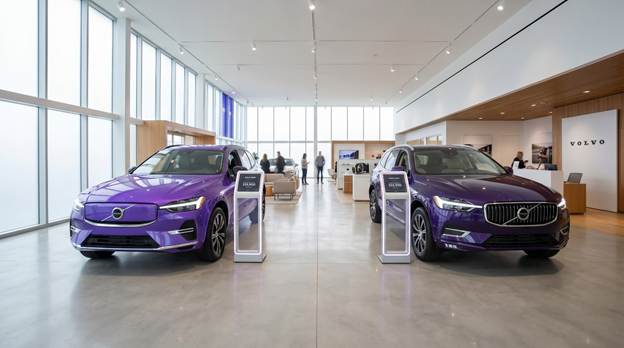
This leadership position forces the rest of the industry into a highly defensive posture. If a buyer can walk into a Volvo showroom and choose a next-generation electric SUV for the exact same price as the gas version, competitors who still demand a five-figure premium for their EVs will find their electric models stranded on the lot collecting dust.
The Seven-Variant Strategy and the Ultimate EX60 Bargain
Volvo is executing this market parity through what industry insiders are recognizing as a highly calculated Seven-Variant Strategy. Rather than offering a one-size-fits-all electric vehicle that compromises on features to hit a single marketing price target, Volvo is establishing a broad, comprehensive lineup of the EX60 to cover the entire spectrum of the mid-size luxury SUV market.
This expansive strategy involves offering various battery chemistries and motor configurations. By utilizing highly cost-effective Lithium Iron Phosphate (LFP) battery packs and efficient single-motor rear-wheel-drive configurations for their entry-level variants, Volvo can perfectly match the base XC60 pricing. This secures the mainstream, budget-conscious premium buyer. Meanwhile, upper-tier variants equipped with energy-dense Nickel Manganese Cobalt (NMC) battery packs, advanced 800-volt charging capabilities, and high-output dual-motor all-wheel drive capture the traditional luxury performance buyer. The higher margins generated on these premium upper-tier trims effectively subsidize the aggressive parity pricing of the entry-level models, allowing the entire lineup to achieve financial viability without sacrificing quality.
This strategy culminates in making the EX60 an absolute bargain in the modern automotive landscape. Consider my own garage for context: I currently own a 2021 Volvo XC60. It has been a phenomenal, highly reliable vehicle, but I intentionally chose not to upgrade to a newer plug-in hybrid replacement when my usual refresh window approached. I have been waiting patiently for a pure electric platform that delivers true flagship specifications without forcing a compromise in utility or demanding an absurd luxury markup. The EX60 is exactly that vehicle.
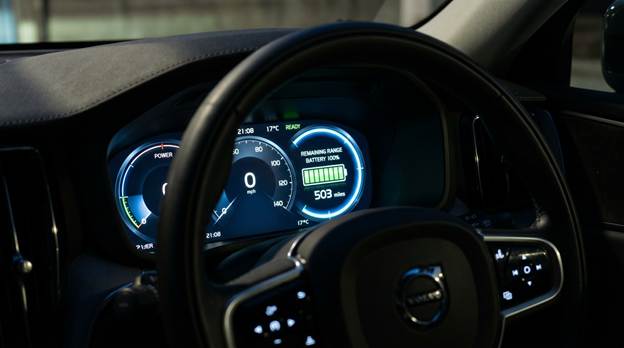
According to recent delivery reports, Volvo is shipping the EX60 with an unprecedented 503-mile range. Getting over 500 miles on a single charge in a premium mid-size SUV that is priced at parity with a standard combustion vehicle is completely unheard of in today's market. It effectively eliminates range anxiety for good, makes long-distance cross-country road trips entirely trivial, and renders the premium pricing models of competitors entirely obsolete.
The value proposition here is staggering. Buyers are getting flagship-level electric range, a next-generation software-defined chassis, and premium Scandinavian build quality, all for the exact price of a traditional, fossil-fuel commuting appliance.
Beyond Price: How Volvo Continues to Stand Out
While aggressive, disruptive pricing is what ultimately gets buyers in the door, a vehicle must deliver a demonstrably superior ownership experience to secure long-term brand loyalty. Volvo is strategically deploying several distinct features to stand out against an increasingly crowded field of electric competitors, ensuring the EX60 is far more than just a good financial deal.
First and foremost is their uncompromising heritage of active safety and structural integrity. The automotive supply chain is notoriously volatile, and while Volvo recently made the pragmatic decision to drop standard Luminar LiDAR from their 2026 models due to supplier risk exposure, they haven't compromised their overarching safety architecture. While competing automakers dangerously strip out crucial hardware like ultrasonic sensors to save pennies - relying solely on highly flawed, camera-based vision systems that fail in poor weather - Volvo maintains a robust sensor fusion approach. They utilize high-definition radar, advanced optics, and ultrasonics to ensure they remain the undisputed leader in crash avoidance and occupant protection. When families are cross-shopping SUVs, Volvo's tangible safety reputation remains a trump card that competitors simply cannot replicate with flashy marketing campaigns.
Secondly, Volvo has fully embraced a highly intuitive, Google-integrated infotainment ecosystem. Instead of forcing users into a clunky, proprietary walled garden that feels outdated the moment the car leaves the lot, Volvo utilizes an operating system that natively understands natural language and seamlessly integrates with the digital lives of its users. This avoids the "tech for the sake of tech" trap that has plagued competitors who prioritize complicated, buried touch-screen interfaces over fundamental usability.
Finally, there is a deep corporate commitment to sustainable luxury. Volvo is leading the charge in developing premium interior materials that do not rely on animal products or high-carbon manufacturing processes. Their innovative Nordico interior utilizes bio-attributed PVC, recycled PET bottles, and tailored wool blends. This approach provides a tactile, high-end environment that aligns perfectly with the environmental ethos of an electric vehicle buyer. They are conclusively proving that you do not need traditional leather and heavy burled walnut to create a truly luxurious, whisper-quiet cabin experience.
Wrapping Up
The global transition to electric mobility over the last decade has been remarkably chaotic, largely defined by wild price swings, unstable government subsidies, and compromised early platform architectures. With the launch of the EX60, Volvo is definitively signaling the end of the experimental phase of the EV market. By leveraging a highly complex seven-variant strategy and immense manufacturing scale to achieve strict post-subsidy price parity with the legendary XC60, Volvo is removing the absolute last significant barrier to mass EV adoption.
When a mainstream consumer can walk into a dealership and purchase a beautifully designed, exceptionally safe electric SUV featuring over 500 miles of range for the exact same price as its combustion alternative, the debate over the financial viability of EVs is officially over. Volvo has not just created a compelling new vehicle; they have established a rigorous new baseline for the entire automotive industry. Legacy automakers who fail to quickly match this combination of aggressive price parity, extreme range, and premium execution will find themselves rapidly relegated to the history books.
Disclosure: Images rendered by Artlist.io
Rob Enderle is a technology analyst at Torque News who covers automotive technology and battery developments. You can learn more about Rob on Wikipedia and follow his articles on TechNewsWord, TGDaily, and TechSpective.
Set Torque News as Preferred Source on Google
Follow us today...