
The automotive industry is currently navigating one of the most turbulent transition periods in its history, and the casualties of this shift are becoming increasingly visible. For over a decade, Western automakers viewed domestic production in China as the ultimate golden goose—a necessary footprint to capture the explosive growth of the world's largest automotive market. But the tide has aggressively turned against those who failed to keep pace with localized technological innovation.
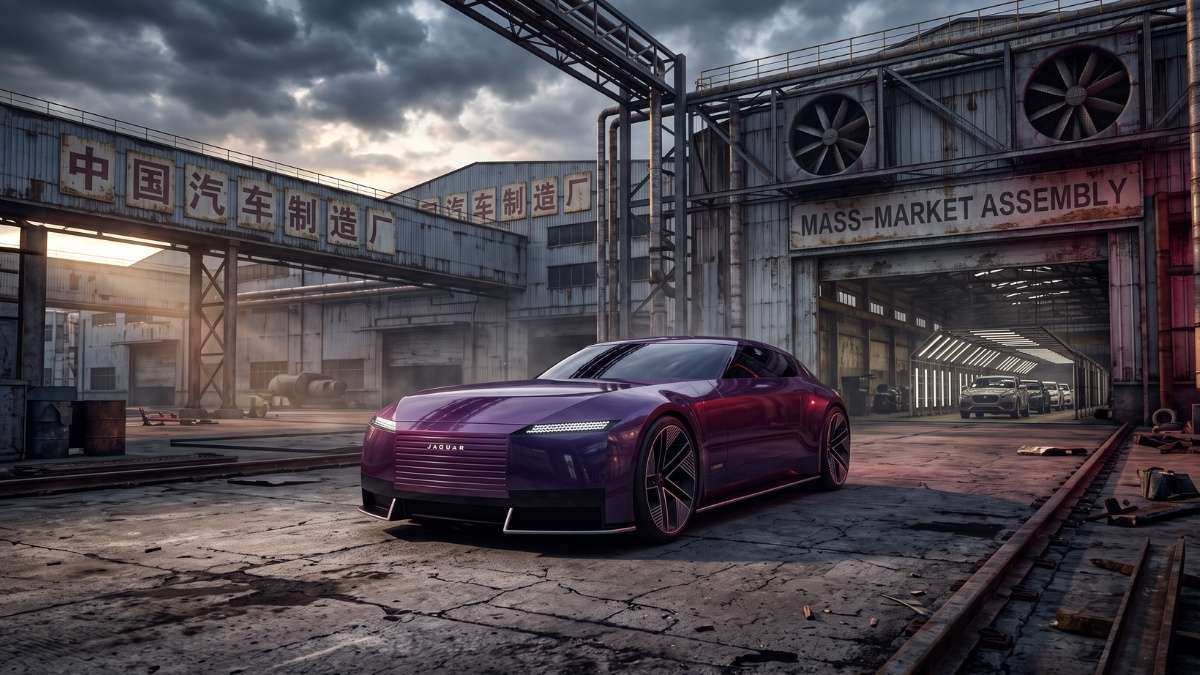
Recently, it was revealed that Jaguar Land Rover (JLR) has officially ceased its local manufacturing operations in China. As detailed in a comprehensive report, Jaguar Land Rover stopped all China production ahead of the Freelander 8 debut, marking the end of a 14-year production run under its joint venture with Chery.
For a company desperately trying to reinvent itself, closing up shop in the world’s most critical electric vehicle market feels counterintuitive to the casual observer. However, as a technology analyst who watches architectural shifts, silicon integration, and market dynamics closely, I view this as a necessary, albeit painful, amputation. JLR is bleeding, and to save the global organism - specifically the struggling Jaguar brand—they had to stop the hemorrhaging in China to focus their remaining capital on a highly risky, ultra-luxury electric rebirth.
Understanding Why Jaguar Fled Chinese Production
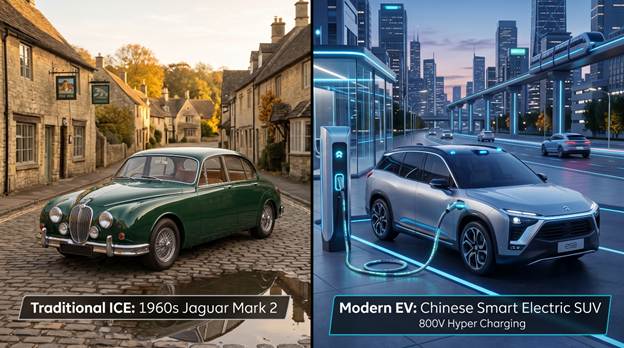
To understand why JLR is completely repurposing its Changshu plant and abandoning its localized manufacturing strategy, you have to look at the brutal realities of the modern Chinese auto market. When JLR first entered its joint venture with Chery in 2012, the playbook was simple: build European luxury cars locally to avoid steep import tariffs and sell them to a rapidly expanding Chinese middle and upper class that heavily favored Western badging.
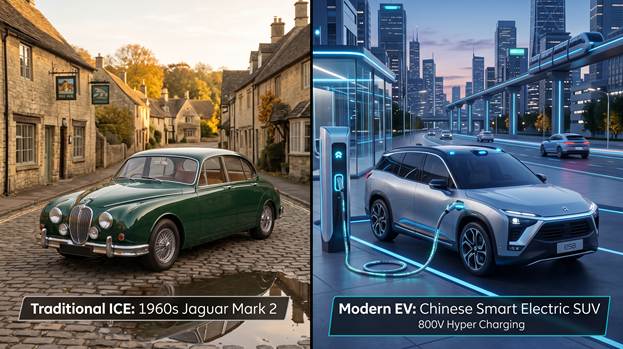
That playbook is now entirely obsolete. The Chinese domestic market has experienced a hyper-accelerated evolution, driven by aggressive government subsidies, rapid technological iteration, and a ruthless domestic price war. Companies like BYD, Nio, Li Auto, and XPeng are no longer producing budget knock-offs; they are producing highly advanced, software-defined vehicles built on superior architectures.
Jaguar and Land Rover simply could not compete on pace or price. The localized products they were offering were built on aging legacy platforms that lacked the advanced driver-assistance systems (ADAS), deep infotainment integration, and rapid charging capabilities that Chinese consumers now view as baseline requirements for premium vehicles. The financial toll was staggering. According to recent market data, JLR's sales in China plummeted from a high of 146,400 vehicles in 2017 to approximately 26,000 units in 2025. In fact, the final locally produced vehicle, a Range Rover Evoque L, was forced into clearance sales at massive discounts, reportedly dropping to less than 180,000 yuan (roughly $25,100) just to move the inventory off dealership lots.
Furthermore, the Chery joint venture is pivoting sharply away from British engineering. Instead of building JLR vehicles, the facility is being retooled to produce a new line of electric vehicles under the resurrected "Freelander" nameplate, utilizing Chery’s EV architecture. Essentially, JLR has admitted defeat on the hardware and platform engineering front in China, opting instead to license a Chinese platform to stay tangentially relevant. For Jaguar, a brand that prides itself on bespoke British engineering, continuing to build outdated internal combustion or first-generation EV platforms in a market moving at lightspeed was a recipe for financial ruin.

The Immediate Impact on Jaguar's China Sales
When analyzing what this production halt will do to Jaguar’s sales in China, we have to look at the raw numbers and the broader market context. Let's be incredibly clear: Jaguar’s market share in China has already been effectively reduced to a rounding error.
While Land Rover -specifically the Range Rover and Defender lines - maintains a degree of lucrative, high-margin appeal for wealthy buyers looking for off-road prestige as imported models, Jaguar has been in a prolonged death spiral. Before this production halt, Jaguar accounted for a drastically shrinking fraction of JLR's overall Chinese volume, heavily propped up by the aforementioned brand-damaging dealer discounts where dealers were forced to buy locally produced vehicles at a loss just to secure profitable imports.
By cutting localized production, Jaguar vehicles sold in China will once again become pure imports. This subjects them to import duties, making them significantly more expensive in a market where they are already viewed as technologically inferior to local alternatives. The localized competitors have eclipsed JLR in the silicon department. For instance, the upcoming Chery-JLR Freelander 8 will feature Huawei's Qiankun ADS 5 assisted-driving system, an 896-channel LiDAR setup, and Qualcomm's cutting-edge Snapdragon 8397 automotive-grade chip. Jaguar's older, locally produced lineup had absolutely nothing to counter that level of computing power.
The immediate result? Jaguar’s mainstream sales in China will plunge to near zero. They will effectively vanish from the volume luxury conversation, transitioning into a microscopic niche brand for idiosyncratic buyers who explicitly want a British import and are willing to ignore the superior localized technology of the competition. If Jaguar had a fraction of a percent of market presence before, expect it to drop even further. From a volume perspective, Jaguar is effectively exiting the Chinese market.
Does Retreating Help or Hurt the Jaguar Turnaround?
On the surface, retreating from the largest automotive market in the world looks like a catastrophic failure that will severely hurt the brand's global turnaround. However, in the high-stakes game of corporate survival, retreating from an unwinnable battle is often the only way to save the war.
In my strategic assessment, this move absolutely helps Jaguar's turnaround efforts.
Jaguar’s fundamental problem over the last twenty years was trying to be a volume player. They tried to fight BMW, Mercedes-Benz, and Audi on their own turf -building compact executive sedans and mid-sized SUVs to chase mass-market numbers. It failed miserably. They diluted their brand prestige and never achieved the scale required to make the margins work.
Jaguar’s corporate leadership has instituted a radical new strategy: they are moving Jaguar aggressively upmarket. They intend to transform Jaguar into an ultra-luxury, low-volume, high-margin brand competing with the likes of Porsche and Bentley. This transition is being spearheaded during a period of executive turnover, with Tata Motors CFO P.B. Balaji stepping in as the new CEO following the departure of Adrian Mardell at the end of 2025. Balaji is tasked with guiding the brand through its most precarious chapter yet.
You cannot execute an ultra-luxury pivot while simultaneously fighting a localized, bloody price war in China with aging, discounted inventory. By shutting down Chinese production, JLR cuts the massive capital expenditure and operational losses associated with running that factory for dwindling returns. It stops the brand dilution of heavy discounting. Most importantly, it frees up critical capital and engineering resources that Jaguar desperately needs to fund its upcoming, make-or-break global EV platform.
How Jaguar Can Dig Out of This Deep Hole
Stopping the bleeding in China is merely a defensive maneuver; it does not guarantee future success. Jaguar is currently in one of the deepest holes in the automotive industry. They have paused new vehicle development for years, their current lineup is stale, and their brand identity is incredibly muddled. To dig themselves out, they must execute a flawless, paradigm-shifting product launch starting in late 2026 and moving into 2027.
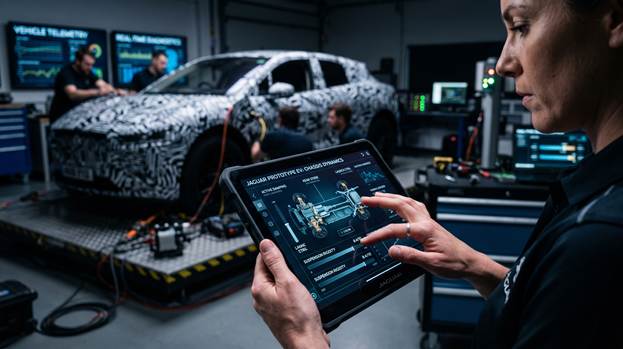
First, they must deliver a state-of-the-art electric architecture. Jaguar’s upcoming dedicated EV platform - known as the Jaguar Electric Architecture (JEA) - cannot be a half-measure. As an analyst who tracks grid infrastructure and silicon deployment, I know that if Jaguar launches a new ultra-luxury EV that relies on outdated 400V architecture, they are dead on arrival. Fortunately, the JEA platform represents a massive technological leap, abandoning the supercharged V8s of the past to embrace a tri-motor, 800-volt backbone. This 800V architecture utilizes a fast-switching silicon-carbide inverter that reduces energy loss and enables hyper-fast 350 kW DC charging speeds. They must also ensure genuine bidirectional charging (V2G) integration and highly efficient thermal management. They are asking consumers to pay roughly $130,000 for these new vehicles; the underlying technology must mathematically justify that immense price tag.
Second, they have to solve their software and reliability demons. Historically, JLR has suffered from notorious electrical and software reliability issues, which consistently placed them near the bottom of quality rankings. In the era of the software-defined vehicle, a glitchy infotainment system or a failing over-the-air (OTA) update is unacceptable. Jaguar's JEA platform utilizes a centralized compute module that governs advanced systems like torque vectoring, monitoring wheel slip 1,000 times per second. To ensure this silicon foundation is bulletproof, Jaguar needs to partner effectively - perhaps deepening relationships with tech giants or leaning harder on Tier-1 suppliers - to guarantee their digital experience is as luxurious and flawless as their leather and wood trims.
Finally, they need a polarizing, breathtaking design language. Jaguar cannot build another generic aerodynamic jellybean. To command Bentley prices, the cars must look like nothing else on the road. The upcoming Type 01 has already proven polarizing, abandoning a traditional grille for angled ultra-thin slits and utilizing a panoramic digital camera system instead of rear glass. The design must do the heavy lifting of convincing wealthy buyers to take a chance on a struggling brand rather than defaulting to a safe Porsche Taycan.
The 2030 Deadline and Tata's Ultimatum
We cannot discuss Jaguar's future without addressing the elephant in the room: Tata Motors. The Indian conglomerate purchased JLR from Ford in 2008. For a time, it was a wildly successful acquisition that provided Tata with immense global prestige. However, for the better part of the last decade, Land Rover has been the financial engine keeping the lights on, while Jaguar has been a financial anchor dragging the company down.
Tata has shown remarkable, almost uncharacteristic patience with Jaguar. But that patience is finite. The upcoming relaunch of Jaguar as an ultra-luxury EV brand under the guidance of P.B. Balaji is the ultimate "Hail Mary" pass.
If this reboot fails to gain market traction, if the cars are plagued by software bugs, or if wealthy consumers simply refuse to accept Jaguar at a $130,000+ price point, the repercussions will be swift and devastating. How likely is it that Tata closes Jaguar down by 2030? In my estimation, the likelihood is exceedingly high - perhaps around 75% - if this next generation of vehicles flops on arrival.
Tata Motors is a pragmatic, profit-driven enterprise. They are currently investing billions into their own domestic EV capabilities in India and aggressively expanding Range Rover's electric footprint globally. They will not continue to subsidize a vanity project indefinitely. If Jaguar cannot prove it can stand on its own two feet and generate a sustainable profit margin by 2028 or 2029, Tata will almost certainly shutter the brand, or perhaps sell the nameplate to a Chinese automaker looking for heritage credibility. The 2030 timeline is not just a guess; it is the logical expiration date for Tata's financial tolerance.
Wrapping Up
The decision to halt all JLR manufacturing in China after 14 years is a jarring headline, but it is the absolute correct strategic move for a company fighting for its life. By abandoning the unwinnable volume war in a market dominated by highly advanced, lower-cost domestic EVs, Jaguar is cutting its losses and protecting its remaining capital.
This retreat will effectively wipe out Jaguar's mainstream sales footprint in China, reducing them to a tiny fraction of their former presence. Yet, this aggressive contraction is entirely necessary to execute their ambitious pivot toward low-volume, ultra-luxury electric vehicles. To survive, Jaguar must now deliver flawless 800-volt architectures, overcome their historical software reliability issues with robust compute modules, and present a breathtaking design language that justifies a massive premium over their competition. The clock is ticking loudly. Tata Motors has bankrolled this final attempt at resurrection, but if Jaguar fails to capture the market's imagination with its upcoming EV launch, it is highly likely that Tata will close the historic British brand for good before the decade concludes.
Disclosure: Images rendered by Artlist.io
Rob Enderle is a technology analyst at Torque News who covers automotive technology and battery developments. You can learn more about Rob on Wikipedia and follow his articles on TechNewsWord, TGDaily, and TechSpective.
The automotive industry is currently navigating one of the most turbulent transition periods in its history, and the casualties of this shift are becoming increasingly visible. For over a decade, Western automakers viewed domestic production in China as the ultimate golden goose—a necessary footprint to capture the explosive growth of the world's largest automotive market. But the tide has aggressively turned against those who failed to keep pace with localized technological innovation.
Recently, it was revealed that Jaguar Land Rover (JLR) has officially ceased its local manufacturing operations in China. As detailed in a comprehensive report, Jaguar Land Rover stopped all China production ahead of the Freelander 8 debut, marking the end of a 14-year production run under its joint venture with Chery.
For a company desperately trying to reinvent itself, closing up shop in the world’s most critical electric vehicle market feels counterintuitive to the casual observer. However, as a technology analyst who watches architectural shifts, silicon integration, and market dynamics closely, I view this as a necessary, albeit painful, amputation. JLR is bleeding, and to save the global organism - specifically the struggling Jaguar brand—they had to stop the hemorrhaging in China to focus their remaining capital on a highly risky, ultra-luxury electric rebirth.
Understanding Why Jaguar Fled Chinese Production
To understand why JLR is completely repurposing its Changshu plant and abandoning its localized manufacturing strategy, you have to look at the brutal realities of the modern Chinese auto market. When JLR first entered its joint venture with Chery in 2012, the playbook was simple: build European luxury cars locally to avoid steep import tariffs and sell them to a rapidly expanding Chinese middle and upper class that heavily favored Western badging.
That playbook is now entirely obsolete. The Chinese domestic market has experienced a hyper-accelerated evolution, driven by aggressive government subsidies, rapid technological iteration, and a ruthless domestic price war. Companies like BYD, Nio, Li Auto, and XPeng are no longer producing budget knock-offs; they are producing highly advanced, software-defined vehicles built on superior architectures.
Jaguar and Land Rover simply could not compete on pace or price. The localized products they were offering were built on aging legacy platforms that lacked the advanced driver-assistance systems (ADAS), deep infotainment integration, and rapid charging capabilities that Chinese consumers now view as baseline requirements for premium vehicles. The financial toll was staggering. According to recent market data, JLR's sales in China plummeted from a high of 146,400 vehicles in 2017 to approximately 26,000 units in 2025. In fact, the final locally produced vehicle, a Range Rover Evoque L, was forced into clearance sales at massive discounts, reportedly dropping to less than 180,000 yuan (roughly $25,100) just to move the inventory off dealership lots.
Furthermore, the Chery joint venture is pivoting sharply away from British engineering. Instead of building JLR vehicles, the facility is being retooled to produce a new line of electric vehicles under the resurrected "Freelander" nameplate, utilizing Chery’s EV architecture. Essentially, JLR has admitted defeat on the hardware and platform engineering front in China, opting instead to license a Chinese platform to stay tangentially relevant. For Jaguar, a brand that prides itself on bespoke British engineering, continuing to build outdated internal combustion or first-generation EV platforms in a market moving at lightspeed was a recipe for financial ruin.

The Immediate Impact on Jaguar's China Sales
When analyzing what this production halt will do to Jaguar’s sales in China, we have to look at the raw numbers and the broader market context. Let's be incredibly clear: Jaguar’s market share in China has already been effectively reduced to a rounding error.
While Land Rover -specifically the Range Rover and Defender lines - maintains a degree of lucrative, high-margin appeal for wealthy buyers looking for off-road prestige as imported models, Jaguar has been in a prolonged death spiral. Before this production halt, Jaguar accounted for a drastically shrinking fraction of JLR's overall Chinese volume, heavily propped up by the aforementioned brand-damaging dealer discounts where dealers were forced to buy locally produced vehicles at a loss just to secure profitable imports.
By cutting localized production, Jaguar vehicles sold in China will once again become pure imports. This subjects them to import duties, making them significantly more expensive in a market where they are already viewed as technologically inferior to local alternatives. The localized competitors have eclipsed JLR in the silicon department. For instance, the upcoming Chery-JLR Freelander 8 will feature Huawei's Qiankun ADS 5 assisted-driving system, an 896-channel LiDAR setup, and Qualcomm's cutting-edge Snapdragon 8397 automotive-grade chip. Jaguar's older, locally produced lineup had absolutely nothing to counter that level of computing power.
The immediate result? Jaguar’s mainstream sales in China will plunge to near zero. They will effectively vanish from the volume luxury conversation, transitioning into a microscopic niche brand for idiosyncratic buyers who explicitly want a British import and are willing to ignore the superior localized technology of the competition. If Jaguar had a fraction of a percent of market presence before, expect it to drop even further. From a volume perspective, Jaguar is effectively exiting the Chinese market.
Does Retreating Help or Hurt the Jaguar Turnaround?
On the surface, retreating from the largest automotive market in the world looks like a catastrophic failure that will severely hurt the brand's global turnaround. However, in the high-stakes game of corporate survival, retreating from an unwinnable battle is often the only way to save the war.
In my strategic assessment, this move absolutely helps Jaguar's turnaround efforts.
Jaguar’s fundamental problem over the last twenty years was trying to be a volume player. They tried to fight BMW, Mercedes-Benz, and Audi on their own turf -building compact executive sedans and mid-sized SUVs to chase mass-market numbers. It failed miserably. They diluted their brand prestige and never achieved the scale required to make the margins work.
Jaguar’s corporate leadership has instituted a radical new strategy: they are moving Jaguar aggressively upmarket. They intend to transform Jaguar into an ultra-luxury, low-volume, high-margin brand competing with the likes of Porsche and Bentley. This transition is being spearheaded during a period of executive turnover, with Tata Motors CFO P.B. Balaji stepping in as the new CEO following the departure of Adrian Mardell at the end of 2025. Balaji is tasked with guiding the brand through its most precarious chapter yet.
You cannot execute an ultra-luxury pivot while simultaneously fighting a localized, bloody price war in China with aging, discounted inventory. By shutting down Chinese production, JLR cuts the massive capital expenditure and operational losses associated with running that factory for dwindling returns. It stops the brand dilution of heavy discounting. Most importantly, it frees up critical capital and engineering resources that Jaguar desperately needs to fund its upcoming, make-or-break global EV platform.
How Jaguar Can Dig Out of This Deep Hole
Stopping the bleeding in China is merely a defensive maneuver; it does not guarantee future success. Jaguar is currently in one of the deepest holes in the automotive industry. They have paused new vehicle development for years, their current lineup is stale, and their brand identity is incredibly muddled. To dig themselves out, they must execute a flawless, paradigm-shifting product launch starting in late 2026 and moving into 2027.
First, they must deliver a state-of-the-art electric architecture. Jaguar’s upcoming dedicated EV platform - known as the Jaguar Electric Architecture (JEA) - cannot be a half-measure. As an analyst who tracks grid infrastructure and silicon deployment, I know that if Jaguar launches a new ultra-luxury EV that relies on outdated 400V architecture, they are dead on arrival. Fortunately, the JEA platform represents a massive technological leap, abandoning the supercharged V8s of the past to embrace a tri-motor, 800-volt backbone. This 800V architecture utilizes a fast-switching silicon-carbide inverter that reduces energy loss and enables hyper-fast 350 kW DC charging speeds. They must also ensure genuine bidirectional charging (V2G) integration and highly efficient thermal management. They are asking consumers to pay roughly $130,000 for these new vehicles; the underlying technology must mathematically justify that immense price tag.
Second, they have to solve their software and reliability demons. Historically, JLR has suffered from notorious electrical and software reliability issues, which consistently placed them near the bottom of quality rankings. In the era of the software-defined vehicle, a glitchy infotainment system or a failing over-the-air (OTA) update is unacceptable. Jaguar's JEA platform utilizes a centralized compute module that governs advanced systems like torque vectoring, monitoring wheel slip 1,000 times per second. To ensure this silicon foundation is bulletproof, Jaguar needs to partner effectively - perhaps deepening relationships with tech giants or leaning harder on Tier-1 suppliers - to guarantee their digital experience is as luxurious and flawless as their leather and wood trims.
Finally, they need a polarizing, breathtaking design language. Jaguar cannot build another generic aerodynamic jellybean. To command Bentley prices, the cars must look like nothing else on the road. The upcoming Type 01 has already proven polarizing, abandoning a traditional grille for angled ultra-thin slits and utilizing a panoramic digital camera system instead of rear glass. The design must do the heavy lifting of convincing wealthy buyers to take a chance on a struggling brand rather than defaulting to a safe Porsche Taycan.
The 2030 Deadline and Tata's Ultimatum
We cannot discuss Jaguar's future without addressing the elephant in the room: Tata Motors. The Indian conglomerate purchased JLR from Ford in 2008. For a time, it was a wildly successful acquisition that provided Tata with immense global prestige. However, for the better part of the last decade, Land Rover has been the financial engine keeping the lights on, while Jaguar has been a financial anchor dragging the company down.
Tata has shown remarkable, almost uncharacteristic patience with Jaguar. But that patience is finite. The upcoming relaunch of Jaguar as an ultra-luxury EV brand under the guidance of P.B. Balaji is the ultimate "Hail Mary" pass.
If this reboot fails to gain market traction, if the cars are plagued by software bugs, or if wealthy consumers simply refuse to accept Jaguar at a $130,000+ price point, the repercussions will be swift and devastating. How likely is it that Tata closes Jaguar down by 2030? In my estimation, the likelihood is exceedingly high - perhaps around 75% - if this next generation of vehicles flops on arrival.
Tata Motors is a pragmatic, profit-driven enterprise. They are currently investing billions into their own domestic EV capabilities in India and aggressively expanding Range Rover's electric footprint globally. They will not continue to subsidize a vanity project indefinitely. If Jaguar cannot prove it can stand on its own two feet and generate a sustainable profit margin by 2028 or 2029, Tata will almost certainly shutter the brand, or perhaps sell the nameplate to a Chinese automaker looking for heritage credibility. The 2030 timeline is not just a guess; it is the logical expiration date for Tata's financial tolerance.
Wrapping Up
The decision to halt all JLR manufacturing in China after 14 years is a jarring headline, but it is the absolute correct strategic move for a company fighting for its life. By abandoning the unwinnable volume war in a market dominated by highly advanced, lower-cost domestic EVs, Jaguar is cutting its losses and protecting its remaining capital.
This retreat will effectively wipe out Jaguar's mainstream sales footprint in China, reducing them to a tiny fraction of their former presence. Yet, this aggressive contraction is entirely necessary to execute their ambitious pivot toward low-volume, ultra-luxury electric vehicles. To survive, Jaguar must now deliver flawless 800-volt architectures, overcome their historical software reliability issues with robust compute modules, and present a breathtaking design language that justifies a massive premium over their competition. The clock is ticking loudly. Tata Motors has bankrolled this final attempt at resurrection, but if Jaguar fails to capture the market's imagination with its upcoming EV launch, it is highly likely that Tata will close the historic British brand for good before the decade concludes.
Disclosure: Images rendered by Artlist.io
Rob Enderle is a technology analyst at Torque News who covers automotive technology and battery developments. You can learn more about Rob on Wikipedia and follow his articles on TechNewsWord, TGDaily, and TechSpective.
Set Torque News as Preferred Source on Google
Follow us today...