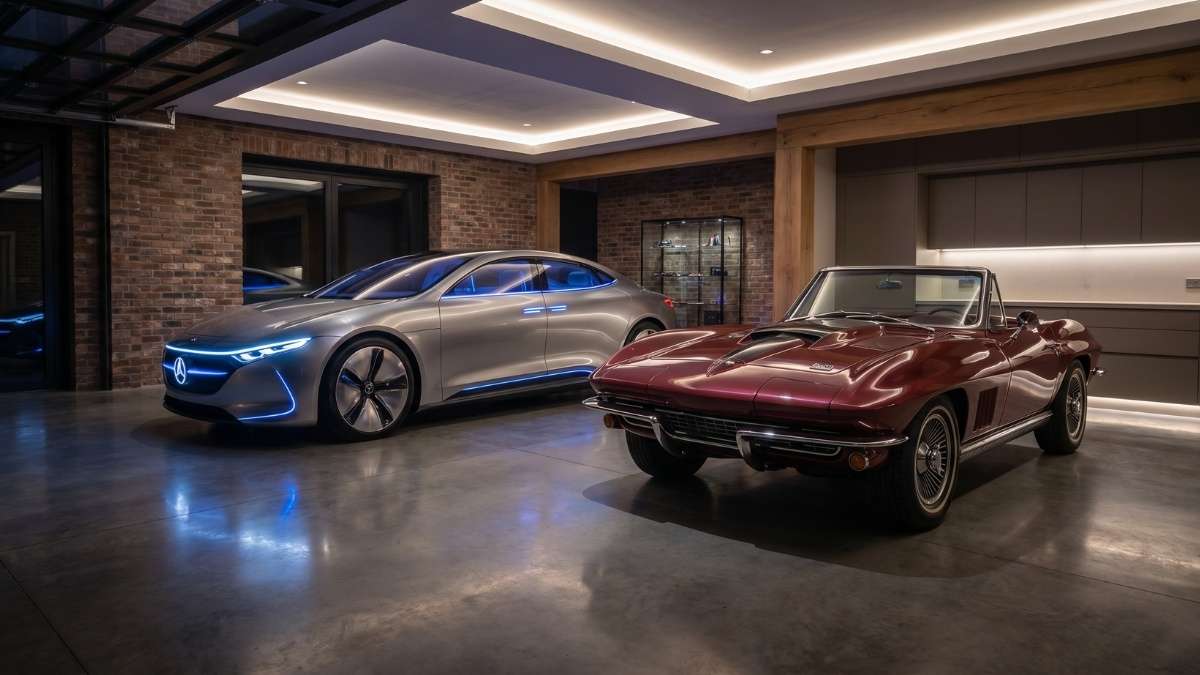

There is a fundamental rule in the luxury automotive market that should never be ignored by any competent executive board: people do not spend half a million dollars on a vehicle because they need reliable daily transportation; they spend it because they desperately want a moving piece of art that makes them feel something. Historically, legacy brands like Ferrari, Mercedes-AMG, and Jaguar have understood this psychological dynamic perfectly. They built massive global empires on the back of stunning silhouettes, aggressive stances, and visceral emotional appeal.
Yet, we are currently witnessing a bizarre and unprecedented phenomenon in the auto industry. Not just one, but three of the world’s most storied luxury automakers have simultaneously released electric vehicles that can objectively be described as visually challenging—if not outright ugly. The Ferrari Luce looks less like a prancing horse and more like an overgrown, sterilized Apple Magic Mouse. The Mercedes-AMG GT 4-Door Coupe Electric has traded the menacing, muscular proportions of its beloved V8 predecessor for an aerodynamically obsessed blob. And then there is the Jaguar Type-01, the production realization of their widely mocked concept, which entirely abandons decades of graceful feline curves for a brutalist, cyberpunk refrigerator aesthetic.
It is rare enough for a single top-tier automaker to completely miss the mark on design in a given decade. The fact that Ferrari, Mercedes-AMG, and Jaguar have all committed this massive, unforced error at the exact same time points to a systemic failure in how these firms are navigating the electric vehicle transition. They have allowed the underlying technology to completely override the emotional core of their brands, resulting in multi-million-dollar mistakes that will cost them dearly in both revenue and reputation.

Diverging From the Core Customer Base
How did this happen across three completely separate corporate entities? It boils down to a classic case of corporate groupthink diverging violently from the actual desires of the core customer base. When an executive board finally decides to pivot to electric vehicles, they frequently bring in outside perspectives to signify a "new era."
Take Ferrari, for example. Instead of relying on their legendary in-house aerodynamicists or historic partners like Pininfarina to shape the future, they brought in former Apple design chief Jony Ive and his firm LoveFrom. As widely discussed by automotive critics, the result is a massive, five-seat pod that looks incredibly bland from a distance. The traditional Ferrari buyer wants aggression, sharp aerodynamic fins, wide rear hips, and a design that screams speed and danger even when parked in Monaco. They absolutely do not want an automotive iPad. Ive’s philosophy of minimizing visceral engagement works brilliantly for consumer electronics, but it is fundamentally antagonistic to the soul of a Ferrari.
Similarly, Jaguar’s loyal customer base has historically valued the brand's mantra of "grace, space, and pace." Their cars, from the iconic E-Type to the modern F-Type, have been undeniably beautiful works of flowing sculpture. But the new Type-01 leans into a design philosophy Jaguar executives call "Exuberant Modernism." This is nothing more than boardroom marketing speak for throwing out everything the customer actually likes in favor of a shock-value rebrand.
For Mercedes-AMG, the problem is an overriding obsession with aerodynamic efficiency and technology over raw emotion. The core AMG buyer loves the physical rumble of a thunderous V8 and a car that looks like a high-dollar European muscle car. The new GT 4-Door EV offers staggering performance—launching to 62 mph in just over two seconds—but wraps it in a shape dictated entirely by a wind tunnel, going so far as to pump fake V8 noises through the interior speakers. It is a profound misunderstanding of their core demographic. Buyers want genuine, authentic character, not a simulated driving experience wrapped in a sterile, slippery package.
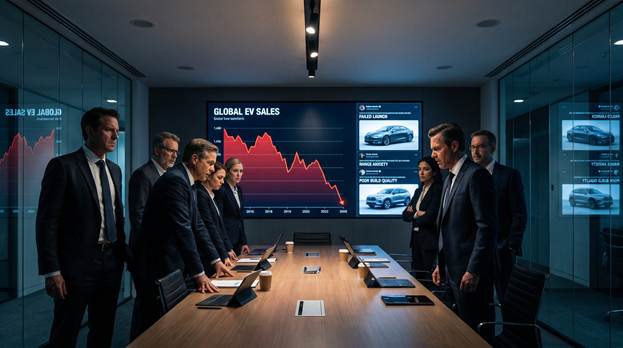
The Brutal Brand Damage Occurring Right Now
The immediate fallout from these misaligned design efforts is severe and measurable brand damage. In the modern, hyper-connected world, automotive prestige is incredibly fragile.
Ferrari saw its stock dip almost immediately in premarket trading following the Luce's unveiling. Across social media platforms, the car has been ruthlessly mocked, with users comparing it to a Waymo robotaxi or jokingly asking if it was purchased on a discount app. This is catastrophic for a legacy brand built entirely on exclusivity, prestige, and envy. When the general public laughs at your $640,000 hyper-EV, the people who actually have the money to buy it suddenly think twice. High-net-worth individuals do not spend half a million dollars to be the butt of an internet joke.
Jaguar’s brand damage might be even more terminal. The internet frenzy surrounding their Type 00 concept and subsequent Type-01 name reveal has been overwhelmingly negative. Jaguar is currently trying to execute an incredibly difficult upmarket pivot to compete with Bentley and Porsche, but you cannot successfully execute an upmarket move while simultaneously alienating your entire existing fan base. By declaring they are "a copy of nothing," they inadvertently copied the worst, most alienating instincts of tech-startup vaporware.
Mercedes-AMG is suffering from a rapid dilution of its legendary badge. When you slap the hallowed AMG letters on a car that lacks a mechanical soul, you teach the market that AMG simply means "a fast electric car" rather than a bespoke, hand-crafted monster. The incredible brand equity painstakingly built in Affalterbach over decades is being systematically squandered in the name of EV platform sharing.
How to Better Assure Acceptance of New Drive Technology
If a company wants a customer base to accept a massive, foundational shift in underlying technology—like moving from internal combustion engines to electric axial-flux motors—they must anchor the consumer with something deeply familiar and beloved. You do not change the powertrain and the design language at the exact same time. This is a basic rule of product transition that all three companies failed to grasp.
The most successful technological transitions in automotive history have occurred when the new tech was hidden beneath a universally loved exterior. If Ferrari wanted to assure their buyers that an electric future was bright, they should have designed a car that was undeniably, breathtakingly beautiful in the traditional Ferrari sense. It should have possessed the razor-sharp lines of an SF90 or the elegant curves of a Roma. If the car looks like an Italian masterpiece, the buyer will eventually forgive the lack of a screaming exhaust note.
Instead of fighting the inherent nature of EVs, automakers need to quietly lean into their unique packaging advantages without abandoning their established brand identity. You can easily have a low center of gravity and a spacious cabin without making the car look like a bar of soap. Porsche managed this quite well with the Taycan; it clearly looks like a Porsche, drives like a Porsche, and doesn't aggressively alienate the traditional 911 buyer. Ferrari, Mercedes-AMG, and Jaguar failed to learn this crucial lesson, choosing revolution over evolution, and they are now paying the price in massive pushback.
What Marketing Needs to Do to Build Advocacy
When you have a product that the market is inherently skeptical of, traditional top-down marketing will fail spectacularly. Pompous press releases touting "Exuberant Modernism" or Jony Ive’s "shell-like form" only make the company look hopelessly out of touch with reality. Marketing needs to pivot immediately to grassroots advocacy and experiential proof.
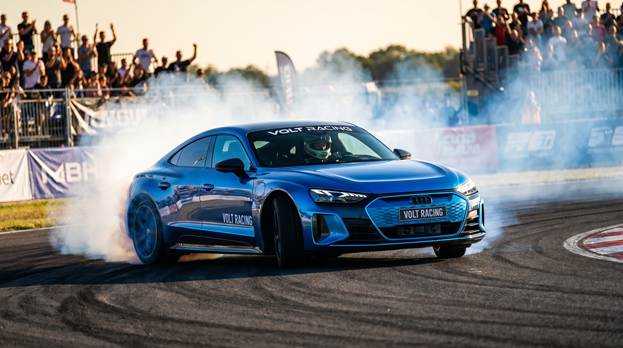
First, they must completely stop trying to sell the car on its underlying technology. Nobody buying a $640,000 Ferrari cares about the intricacies of an 800-volt architecture or the fact that it has over 60 new patents. They care strictly about how it makes them feel behind the wheel. Marketing must focus heavily, if not exclusively, on the driving dynamics. Get the cars out of the sterile auto show studios and put them on the track where they belong. Show the tires smoking; show the aggressive torque vectoring in action.
Second, the use of influencers must be heavily recalibrated. These companies cannot rely on Silicon Valley tech YouTubers to review these cars; that only reinforces the negative stereotype that these are just expensive, disposable gadgets. Instead, they need to put these vehicles in the hands of respected, hardcore automotive purists. Give the AMG GT EV to legendary racing drivers and let them visibly sweat while trying to tame its 1,000+ horsepower. If a skeptical, old-school car enthusiast influencer gets out of the Ferrari Luce with shaking hands and a massive grin, admitting that it still genuinely feels like a real Ferrari, that authentic reaction will do more to quiet the critics than a hundred-million-dollar ad campaign.
What These Companies Must Do Now
To reverse this disastrous trend and stop the bleeding, each of these automakers must take immediate, decisive, and humbling action.
For Ferrari, the software issues widely reported in their early Luce prototypes must be fixed flawlessly before the final consumer launch. A Ferrari cannot have buggy infotainment like a mainstream startup EV. Furthermore, Ferrari needs to immediately offer aggressive, track-focused visual packages—think an "Assetto Fiorano" aerodynamic kit that adds massive carbon-fiber splitters, imposing rear wings, and aggressive louvers to break up the smooth, pod-like shape and forcibly reconnect the car to its motorsport heritage.
For Mercedes-AMG, the absolute priority must be abandoning the cheap gimmicks. Turn off the fake, artificially pumped-in V8 noises that only serve to constantly remind the driver of what is missing. Instead, tune the electric motors to have their own distinct, authentic mechanical whine. Visually, they need to implement a mid-cycle refresh much faster than usual to square off the front fascia, give it a more menacing, aggressive grille area (even if it is blanked off for aero), and deliberately distance it from the rounded EQ-series aesthetic that buyers are already rejecting en masse.
For Jaguar, the path forward is easily the most difficult because their initial pivot was the most extreme. The Type-01 needs to be aggressively softened before it hits the showrooms in 2027. Jaguar must find a way to urgently incorporate some semblance of their heritage - perhaps reintroducing subtle muscular haunches or a more elegant, swooping roofline. If they stubbornly stick entirely to their brutalist script, they risk total market rejection. They must humbly accept that being a "copy of nothing" isn't a virtue if nobody actually wants to buy the original.
Wrapping Up
The electric vehicle transition was always going to be an uphill battle for heritage luxury brands, but Ferrari, Mercedes-AMG, and Jaguar have made it infinitely harder on themselves by completely abandoning the legendary design languages that made them icons in the first place. By confusing Silicon Valley minimalism and aerodynamic anonymity with luxury, they have alienated their most loyal core buyers and inflicted significant damage to their brand equity.
However, this is not an unrecoverable death spiral. By anchoring their future marketing in raw, visceral driving emotion, leveraging the right authentic advocates instead of tech reviewers, and rapidly tweaking their designs to reintroduce traditional aggressiveness and beauty, these companies can still save their electric flagships. The business lesson here is simple but profoundly unforgiving: technology should always serve the brand's soul, not overwrite it. If you forget what your customers actually love about you, the free market will aggressively, and expensively, remind you.
Disclosure: Images rendered by Artlist.io
Rob Enderle is a technology analyst at Torque News who covers automotive technology and battery developments. You can learn more about Rob on Wikipedia and follow his articles on TechNewsWord, TGDaily, and TechSpective.
Set Torque News as Preferred Source on Google
Follow us today...