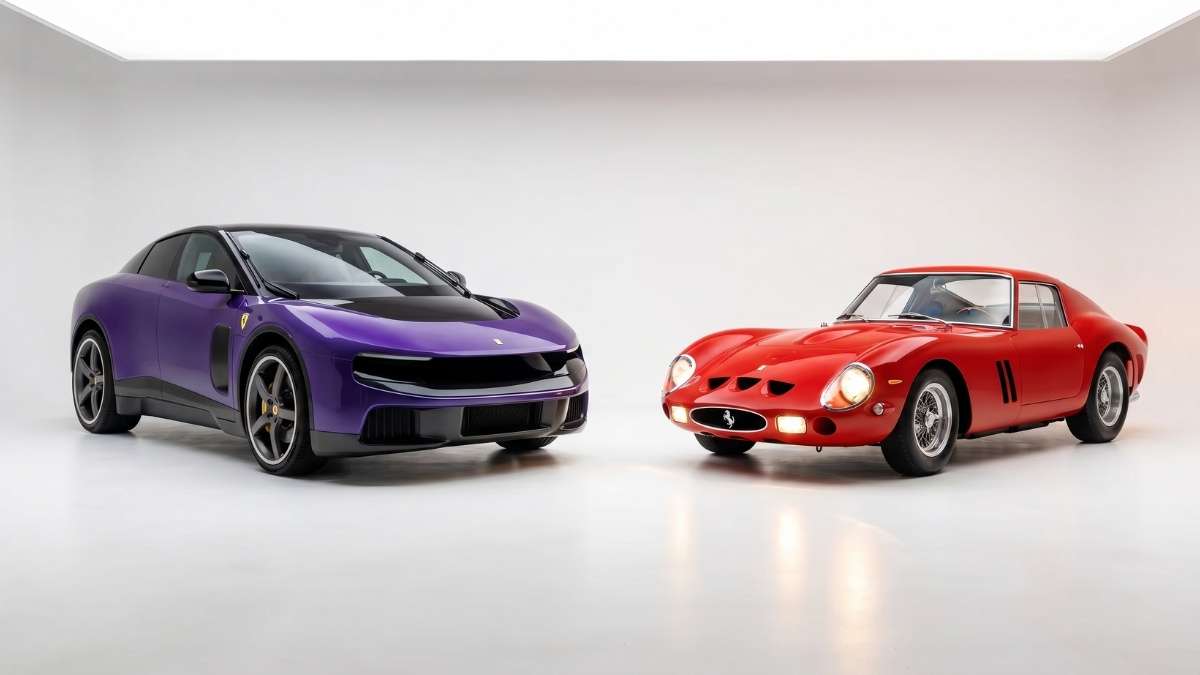

The automotive industry is currently navigating one of the most treacherous technological transitions in its century-long history, shifting from internal combustion to full electrification. For mainstream commuters, this is merely a swap of propulsion methods. For heritage supercar brands, it is a high-stakes existential crisis. Ferrari has finally entered the fray with the 2027 Ferrari Luce, a vehicle that attempts to redefine what a prancing horse can be in the battery-electric era. Featuring an 800-volt architecture, a massive 122-kWh structural battery pack, and a staggering 1,035 horsepower delivered through a quad-motor system, the engineering underlying the Luce is undeniably brilliant. Living with an 800-volt EV platform on a daily basis - my 2022 Audi e-tron GT serves as a fantastic, dynamic daily driver - I am intimately familiar with the packaging benefits, immense instant torque, and low center of gravity these modern electric architectures provide. The hardware in Maranello’s first EV is world-class.
However, a supercar is not just a collection of motors and batteries; it is a profoundly emotional purchase driven by aesthetics, aggression, and historical continuity. As Alistair Charlton noted recently in Forbes, the Luce isn't aimed at the traditional buyer, and he argues that this departure is acceptable. I strongly disagree. By handing the aesthetic reins to an external consumer products design firm, Ferrari has engineered a profound disconnect between what the car is and what the brand means, risking the very loyalty that has sustained them for decades.

The Apple Consumer Electronics Mistake
To shape the Luce, Ferrari outsourced the exterior and interior design to LoveFrom, the creative collective led by legendary former Apple designer Jony Ive and his collaborator Marc Newson. On paper, to a corporate board, this might have looked like a masterstroke. Ive is a visionary who gave the world the iMac, the iPod, and the iPhone. He understands how to make technology feel seamless, premium, and desirable. But consumer electronics and exotic supercars are fundamentally different disciplines governed by entirely different emotional drivers.
Apple’s design language is defined by reduction. It is about stripping away the unnecessary, rounding off the harsh edges, and hiding the mechanical complexity behind a flawless pane of glass or a bead-blasted aluminum shell. A Ferrari, conversely, is about expressing mechanical violence. It is about wide stances, aggressive aerodynamic intakes, sculpted haunches, and a visceral visual threat. The Luce looks like a smooth, oversized Apple Magic Mouse. The retractable door handles and the hidden taillights that disappear into a black void when the car is turned off are clever party tricks, but they sterilize the vehicle.
Using a consumer products designer, no matter how good, was a catastrophic mistake without explicitly pairing him with a traditional Ferrari designer for continuity. Left to their own devices, the LoveFrom team applied the ethos of a smartphone to a 5,000-pound grand tourer. If Ferrari had embedded someone like Flavio Manzoni or a senior traditionalist from the Ferrari Centro Stile to guide the project, they could have balanced this modernist minimalism with the aggressive, muscular DNA that buyers expect. Instead, we have a vehicle that feels alien, entirely divorced from the aggressive passion that built the brand.
The Power of Continuity in Design Language
In the high-end luxury market, continuity in design language is not just a preference; it is the foundational bedrock of brand equity. When consumers spend upwards of $600,000 on a vehicle, they are not merely buying transportation; they are buying into an exclusive club with a recognizable visual legacy. Major pivots that abandon this legacy often end disastrously, confusing the market and alienating the core demographic.
Consider the infamous redesign of the Ford Taurus in 1996. Ford took the best-selling car in America and completely abandoned its grounded, familiar design for a radical, ovoid aesthetic. As detailed in historical accounts of Ford's Taurus relaunch failures, the market rejected it immediately, and Ford lost its dominance to the Toyota Camry, a mistake that cost the company billions. Or look at BMW’s radical "Bangle-butt" era in the early 2000s under Chris Bangle. As documented by automotive journalists reviewing the legacy of Chris Bangle's controversial choices, the abrupt departure from their classic, shark-nosed proportions caused immense backlash and severely alienated purists for a generation.
For Ferrari, the stakes are even higher. A brand built on the racetrack relies on a visual through-line that connects today's hypercars to the legends of the 1960s. The Luce completely severs this connection. When an automaker shifts its powertrain technology so radically—moving from screaming internal combustion engines to silent electric motors—the design language must work twice as hard to reassure the buyer that the soul of the machine remains intact. By completely changing both the powertrain and the design language simultaneously, Ferrari has created a vehicle that demands buyers abandon everything they love about the brand in a single leap.
Starting With The Dino: A Missed Opportunity
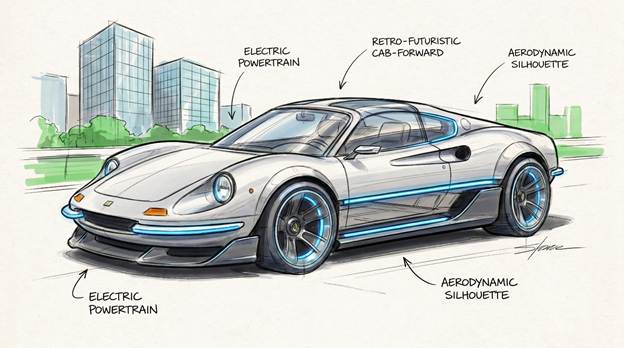
If Ferrari wanted to build an electric vehicle that looked different but remained unequivocally tied to their heritage, they didn't need to look to Silicon Valley; they just needed to look at their own historic archives. A dedicated EV skateboard architecture—where the heavy battery packs are situated low in the floor—naturally pushes the cabin forward, eliminating the need for a long hood to house a massive internal combustion engine.
Ferrari has historically tackled cab-forward proportions beautifully. They should have likely started with the Ferrari Dino design. The Dino, with its mid-engine layout, required the cabin to sit further forward, resulting in a distinct, swooping, aggressive stance that was different from the front-engine V12s but still entirely recognized as a Ferrari. By modernizing the Dino’s voluptuous front fenders, compact greenhouse, and wide rear track, they could have built an EV that capitalized on the packaging benefits of electric motors while thrilling the purists. It would have been a respectful nod to the past, acknowledging that while the heart of the car had changed from gasoline to electrons, the muscular, sculptural Italian soul was fully preserved.
The Ultimate Miss: The 250 GTO Reimagined
Alternatively, if Ferrari truly wanted to make a statement with their first electric offering, they should have looked to the absolute pinnacle of their historical portfolio. The Ferrari 250 GTO is widely considered the most iconic and valuable design in automotive history. I’ve always wanted one and have lusted after replicas for years, captivated by the absolute perfection of its proportions, its prominent rear haunches, and the aggressive yet elegant flow of its bodywork.
Imagine the impact if Ferrari had taken the 250 GTO and updated it for the modern electric age. While adapting a long-hood design to an EV platform is a packaging choice rather than a necessity, doing so would have instantly validated the electric vehicle to the most hardened skeptics. By translating those legendary 250 GTO proportions—the sweeping hood, the aggressive air vents, the iconic Kamm tail—into a modern electric grand tourer, Ferrari would have created an instant classic. It would have communicated that an electric Ferrari is still a Ferrari first and an EV second. Instead, by opting for the Luce's appliance-like aesthetic, they missed the opportunity to create a timeless halo car that seamlessly bridged the gap between the internal combustion past and the electric future.
Learning from Jaguar and the Type-01
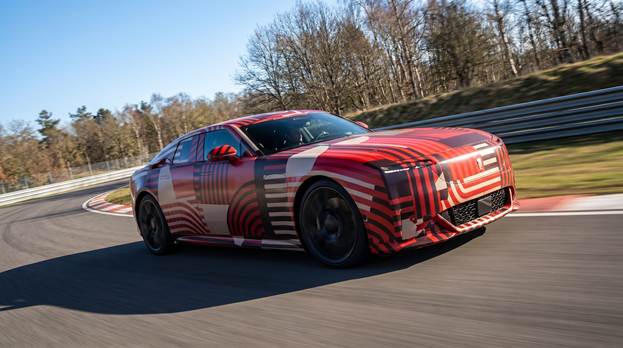
Ferrari’s misstep becomes even more glaring when you compare it to how other heritage brands are handling the transition. Look at Jaguar. They are currently executing a complete brand reset, shifting entirely to electric vehicles. However, they intimately understand that they cannot simply abandon their history. As they prepare to launch their new luxury four-door GT, officially named the Type-01, they are heavily leaning into their legacy.
While Jaguar describes their new design philosophy as "exuberant modernism," they explicitly chose the "Type" naming convention to reference their legendary predecessors, the Le Mans-winning C-Type and the breathtaking E-Type. Much like Ferrari should have started with the E-Type's spiritual successor, Jaguar clearly understands that the E-Type is their design North Star. You can see this visual bridge highlighted directly in their recent Type 01 Concept And Name Reveal video broadcast, which outlines their new era. The Type-01 promises a tri-motor setup with nearly 1,000 horsepower, pushing the boundaries of modern technology, but the marketing and the visual cues are desperate to assure buyers that the soul of Coventry remains intact. Jaguar recognizes that when you strip away the familiar sound of a roaring engine, the visual design must carry the full emotional weight of the brand's heritage. Ferrari, blinded by the allure of Silicon Valley minimalism, has forgotten this cardinal rule.
Wrapping Up
The automotive industry’s shift to electrification is fraught with peril for legacy supercar manufacturers. Success requires a delicate balancing act: embracing the bleeding edge of battery and motor technology while fiercely protecting the emotional, aesthetic legacy that justifies a half-million-dollar price tag. The 2027 Ferrari Luce succeeds wildly on the engineering front, delivering staggering power and advanced 800-volt charging capabilities. But by handing the exterior design to Jony Ive and LoveFrom without the strict oversight of a traditional Maranello stylist, Ferrari has built a vehicle that feels fundamentally disconnected from its badge.
Design continuity is the lifeblood of luxury automotive brands. Major aesthetic pivots, especially those that trade aggressive passion for sanitized consumer electronics minimalism, historically end in alienated customers and lost market share. Ferrari possessed the perfect historical blueprints to bridge this gap, whether through the cab-forward brilliance of the Dino or the unparalleled, breathtaking proportions of the 250 GTO. Instead, they opted for an Apple-inspired glass house that abandons the very heritage that made the brand legendary. If automakers want their buyers to follow them into the electric future, they must ensure the vehicles waiting for them still look like the cars they’ve spent their lives dreaming about.
Disclosure: Images rendered by Artlist.io
Rob Enderle is a technology analyst at Torque News who covers automotive technology and battery developments. You can learn more about Rob on Wikipedia and follow his articles on TechNewsWord, TGDaily, and TechSpective.
Set Torque News as Preferred Source on Google
Follow us today...