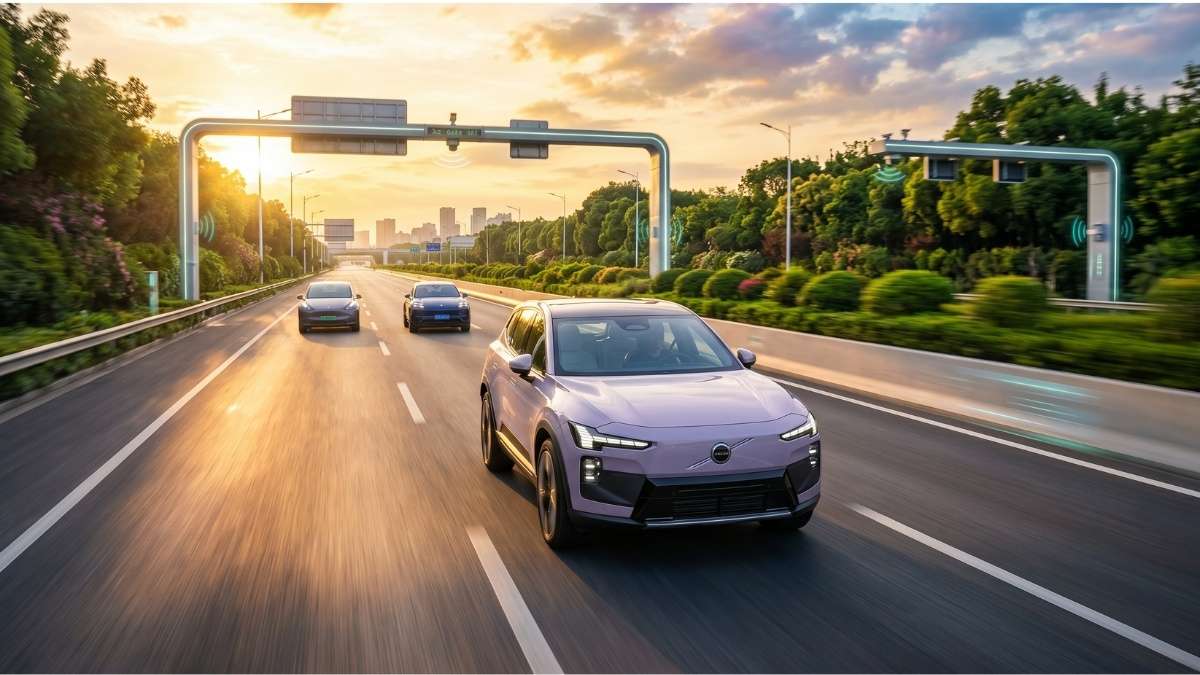

The electric vehicle market has officially crossed a major threshold in the summer of 2026, shifting from the early adopter phase into a ruthless battle for mainstream dominance. For years, the industry has been chasing the holy grail of EV adoption: price parity, bulletproof software, and a range that completely neutralizes driver anxiety. With customer deliveries of the Volvo EX60 finally underway, we are seeing a vehicle that doesn’t just meet these criteria; it aggressively resets the baseline for the entire premium mid-size SUV segment.
In the tech industry, we often talk about "category killers"—products that execute on their core promises so effectively that they instantly make the current market leaders look obsolete. In the automotive world, the EX60 is shaping up to be exactly that. The delay in its release, driven by Volvo’s insistence on perfecting its core computing architecture and LiDAR integration, has proven to be a strategic masterstroke rather than a stumble. Let’s break down why this 500-mile powerhouse is the most important vehicle of the year and what it means for the rapidly shifting power dynamics between heritage automakers, Chinese conglomerates, and Tesla.
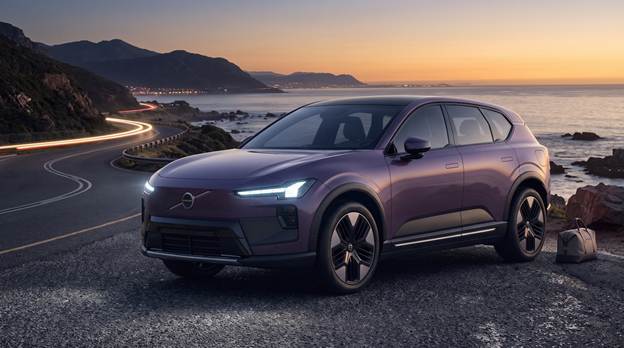
Setting The Ultimate Benchmark For Electric Vehicles
If you want to understand market shifts, you have to look at the metrics that actually change consumer behavior. For years, consumers have cited range anxiety as the primary barrier to EV adoption. Automakers responded with 300-mile vehicles, which, in real-world winter highway driving, often translate to 220 miles. Volvo has completely circumvented this psychological barrier.
As reported in industry tracking data, Volvo Begins EX60 Deliveries With 503-Mile Range, setting an entirely new standard for mid-size family SUVs. Achieving over 500 miles on a single charge is not merely an incremental update; it is a disruptive leap. This isn’t achieved by simply cramming a heavier, massive battery into the chassis, which historically ruins driving dynamics and efficiency. Instead, Volvo has leveraged Geely’s cutting-edge structural battery pack technology, highly optimized silicon carbide power inverters, and a class-leading drag coefficient to squeeze every ounce of utility out of the platform.
But the EX60 is a benchmark in more than just range. It represents the maturation of the software-defined vehicle (SDV). Powered by centralized NVIDIA core computing and Snapdragon digital chassis technology, the EX60 operates more like a rolling supercomputer. Its standard roof-mounted LiDAR ensures that its advanced driver assistance systems (ADAS) are gathering high-fidelity, real-time spatial data, avoiding the phantom-braking pitfalls of camera-only systems. Volvo isn't just selling a car; they are selling a highly upgradable hardware platform that will improve over its lifecycle, much like a premium smartphone.
Sizing Up The Fresh Competition
The EX60 does not exist in a vacuum. It arrives just as several other highly anticipated EVs in its class are finally hitting driveways, making for a brutal competitive landscape.
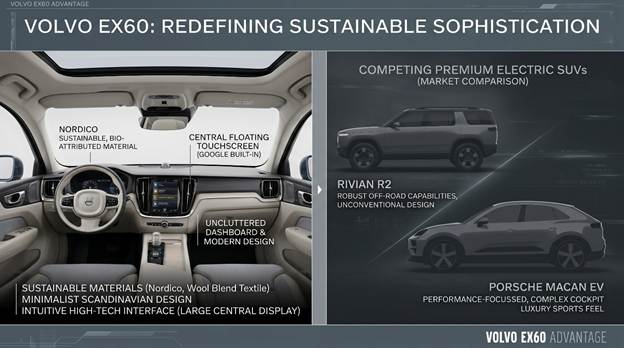
Consider the Rivian R2, which just began volume deliveries this quarter. The R2 is an exceptional vehicle, but its boxier, adventure-focused design inherently limits its aerodynamic efficiency, capping its range well below the EX60’s 503 miles. Rivian captures the outdoor lifestyle demographic beautifully, but Volvo is targeting the much larger, affluent suburban family demographic that values safety, quiet luxury, and road-trip capability over off-road prowess.
Then there is the Porsche Macan EV and the Audi Q6 e-tron, both built on the Volkswagen Group’s Premium Platform Electric (PPE). While the Macan delivers blistering performance and the Audi offers striking design, both have struggled with software integration delays and max out their ranges in the high 300s. In the tech sector, we see this often: a legacy company builds a beautiful piece of hardware but gets bogged down by legacy software architecture. Volvo, by completely overhauling its software stack after the lessons learned from the EX90, has delivered a user interface and operating system in the EX60 that rivals Tesla’s fluidity, while decisively beating Porsche and Audi on pure endurance.
Volvo’s Strategic Armor In The US And Western Europe
To truly appreciate the EX60, you have to look beyond the sheet metal and understand the geopolitical chessboard. In 2026, the automotive market is heavily defined by protectionism. The US has maintained 100% tariffs on Chinese-made EVs, and Western Europe has implemented significant tariff walls to protect legacy automakers like Volkswagen and Stellantis from a flood of low-cost Chinese imports.
This is where Volvo’s unique corporate structure provides an unparalleled strategic advantage. Volvo is fully integrated into the massive supply chain and R&D engine of Geely, a Chinese powerhouse. This gives Volvo access to tier-one battery pricing, rapid software iteration, and component scale that Western automakers simply cannot match.
However, because Volvo is a heritage Swedish brand with massive global manufacturing footprints—including its major facility in Ridgeville, South Carolina, and its European plants in Torslanda and Ghent—it can effectively bypass these geopolitical roadblocks. Volvo can manufacture the EX60 in the US for American buyers and in Europe for European buyers, entirely avoiding the tariffs that are currently locking pure Chinese brands like BYD and Nio out of the US market. Volvo acts as a Trojan horse: it delivers the cost-efficiency and technological supremacy of the Chinese EV supply chain wrapped in a trusted, premium, Western-manufactured brand. This localized manufacturing capability is the tactical armor that ensures the EX60 will not be priced out of the market by aggressive trade policies.
The State Of The Geely And Volvo Juggernaut
Volvo’s execution with the EX60 reflects the overall health of its business and that of its parent company. Volvo Cars has successfully navigated the margin-crushing EV transition better than almost any legacy automaker. By leaning heavily into sustainable luxury and safety, they have maintained strong pricing power. Their profit margins on EVs are now rivaling their legacy internal combustion engine (ICE) vehicles, a threshold that companies like Ford and GM are still struggling to cross reliably.
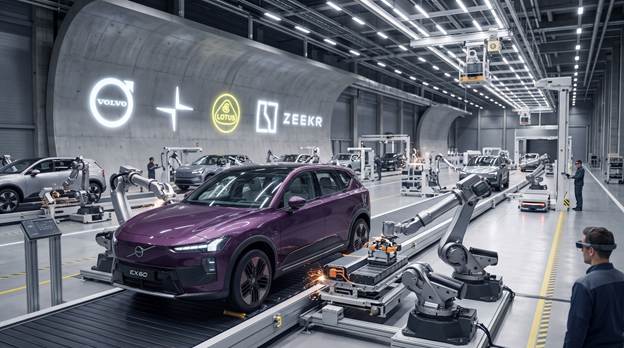
Geely, meanwhile, has quietly become the Volkswagen Group of the electric era. Geely’s strategy relies on a shared modular architecture (like the Sustainable Experience Architecture) applied across a vast portfolio of distinct brands. You have Zeekr targeting the tech-forward premium buyer, Polestar attacking Porsche in the performance sector, Lotus handling hyper-luxury, and Volvo anchoring the massive global premium family market.
This multi-brand, shared-platform strategy drastically reduces Geely’s R&D costs per vehicle while maximizing market coverage. Geely's business is fundamentally robust because they are not reliant on a single demographic. If the performance EV market softens, Polestar might hurt, but Volvo’s family SUVs will carry the load. This diversified portfolio makes Geely one of the most resilient automotive conglomerates in the world right now.
Will Geely Eventually Pass Tesla?
This brings us to the ultimate industry question: Is Geely on track to pass Tesla as the world’s most dominant EV manufacturer?
If you view this through a purely analytical lens, the trajectory favors Geely. Tesla’s fundamental weakness in 2026 is product velocity. Tesla operates much like Apple: a highly curated, very limited portfolio. The Model Y, while still a massive global seller, is aging. The Cybertruck remains a polarizing, niche product primarily confined to North America. Tesla’s insistence on a monolithic product strategy leaves massive swaths of the market unserved.
Geely operates more like Android. By utilizing an ecosystem approach, they are launching dozens of models across multiple brands at a staggering pace. Product velocity is the ultimate weapon in a fast-moving tech market. By the time Tesla refreshes one model, Geely has introduced three entirely new vehicles across different segments.
The EX60 is the perfect example of this threat. The Tesla Model Y cannot compete with the EX60’s 503-mile range, its premium interior materials, or the fail-safe redundancy of its LiDAR-backed ADAS. Tesla’s reliance on purely vision-based autonomy has alienated a segment of safety-conscious buyers - buyers who are the exact target demographic for Volvo.
While BYD currently battles Tesla for sheer volume at the lower end of the market, Geely is executing a pincer movement on Tesla’s highly profitable premium segments. With Volvo’s localized manufacturing protecting it from tariffs, and Geely’s backend scale driving down costs, Geely has the infrastructure, the capital, and the product velocity to surpass Tesla’s global market share by the end of the decade. The EX60 isn’t just a new car; it is a critical piece of the broader strategic offensive designed to dethrone the king.
Wrapping Up
The launch of the Volvo EX60 is a watershed moment for the automotive industry in 2026. By finally breaking the 500-mile range barrier in a premium, mass-market SUV, Volvo has effectively eliminated the last remaining arguments against EV ownership for the affluent family demographic.
The EX60 justifies its delayed arrival by delivering a zero-compromise vehicle equipped with future-proof computing, unmatched safety hardware, and a range that reshapes travel habits. More importantly, it highlights the immense strategic power of the Volvo-Geely alliance. By combining Chinese supply-chain efficiency with localized Western manufacturing and a trusted legacy brand, Volvo is perfectly positioned to navigate the geopolitical turbulence that is currently hindering other automakers. As the EX60 hits the roads, it serves as a stark warning to Tesla and legacy automakers alike: the era of early-adopter forgiveness is over, and the era of flawless execution has begun.
Disclosure: Images rendered by Artlist.io
Rob Enderle is a technology analyst at Torque News who covers automotive technology and battery developments. You can learn more about Rob on Wikipedia and follow his articles on TechNewsWord, TGDaily, and TechSpective.
Set Torque News as Preferred Source on Google
Follow us today...