
This morning Ford and Apple made a big announcement, which sounds backwards at first. Ford's cheapest new electric vehicle in years is going to run some of the most expensive software money can buy. Apple Maps is coming to the $30,000 Universal EV Platform, and it is going to power everything from turn by turn directions to the next generation of BlueCruise hands free driving. If you have been wondering how Ford plans to make a budget EV feel like a $60,000 vehicle, this is your answer, and it changes the conversation about what "affordable" actually means in 2027.
Ford And Apple Just Redefined What A $30,000 EV Can Offer
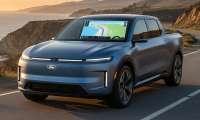
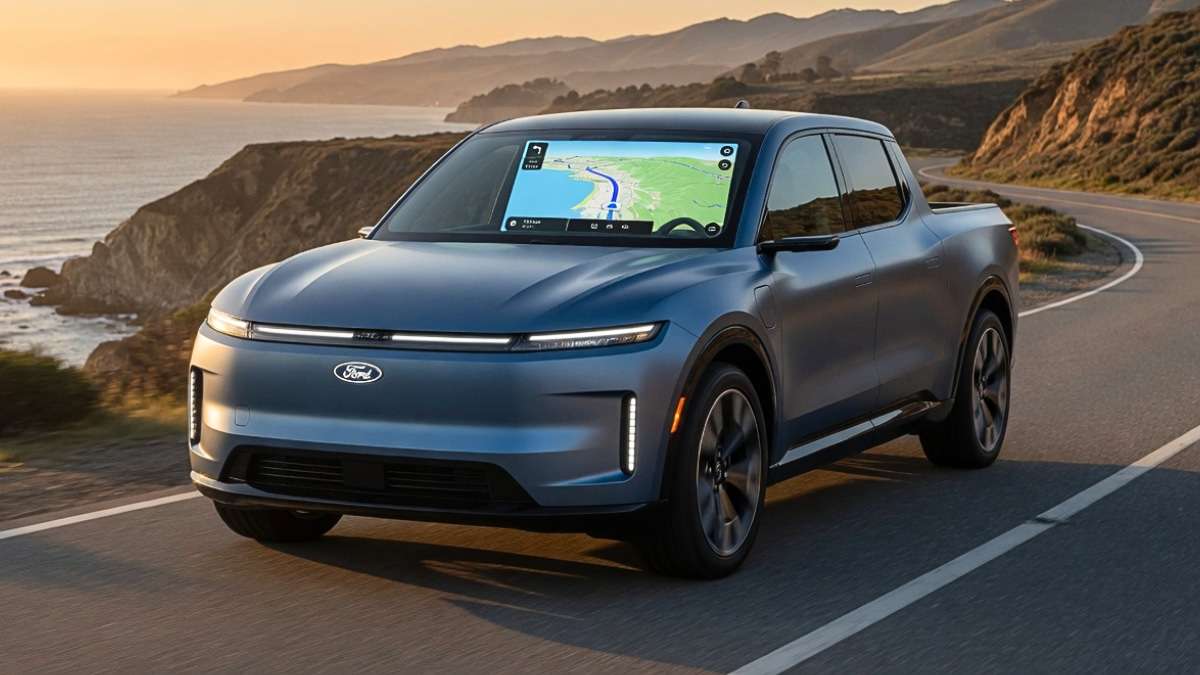
Ford and Apple made it official today. Apple Maps will be built directly into Ford's Universal Electric Vehicle Platform through Apple's new MapKit for Automotive SDK, and it debuts in 2027 on Ford's upcoming midsize electric vehicle, the same one Torque News has been tracking since the company first revealed its race car inspired design philosophy for the platform. This is not a simple CarPlay mirroring trick. Apple's mapping technology is being woven straight into the vehicle's displays, which means drivers get turn by turn directions using natural language, live traffic and incident alerts, and detailed place cards without ever pulling out a phone.
Apple's senior vice president of Services and Health, Eddy Cue, called it a way of bringing Maps "further into drivers' daily lives," giving people an accurate and easy to use navigation system built directly into Ford vehicles.
For readers who followed our coverage of Ford's second attempt at an affordable electric pickup after the F-150 Lightning stumbled, this partnership fills in one of the biggest missing pieces. Ford has the hardware story figured out. Now it has a software story that can actually compete with Tesla.
Jim Farley's Full Statement On The Apple Maps Partnership
Two hours ago, Ford CEO Jim Farley posted his own explanation on LinkedIn, and it is worth reading in full because it tells you exactly how Ford is thinking about this vehicle.
"Technology is at its best when it feels simple, intuitive and genuinely useful. That's the idea behind our new midsize electric vehicle, the first on our Universal Electric Vehicle Platform. To give Ford Motor Company customers the ultimate driving experience, we're proud to be working with Apple to embed Apple Maps, a world class product, directly into the vehicle. Apple Maps' navigation and mapping technology will be embedded directly into our Universal Electric Vehicle Platform, giving customers the ultimate navigation experience, alongside a full suite of software, and next generation hands free driving with BlueCruise and an entirely new zonal architecture. Just as importantly, we're designing all of this to be more affordable, with pricing around $30,000 for our new midsize electric vehicle. I can't wait to share more about this vehicle with you soon!"
That is not a throwaway marketing line. It is a direct answer to a question we have been asking since Ford first floated a $30,000 electric truck built at its Kentucky plant. How do you keep costs low without making the interior feel cheap? Ford's answer is to stop building its own mapping software from scratch and instead borrow the best mapping product on the planet.
Why Apple Maps Matters More Than It Sounds Like
Here is the part casual readers might skip past. Apple Maps inside the UEV Platform is not just about pretty navigation graphics. It is also going to support intelligent EV routing, including battery preconditioning, which means the car will start warming or cooling its battery before a charging stop so the session goes faster. It is the kind of quiet, practical feature that actually matters when you are driving a $30,000 EV on a road trip instead of a $60,000 luxury sedan. When Ford's EV truck buyers purchase the truck under $30K with an Apple Map in it, they are going to think "this truck looks like a $60,000 luxury EV truck."
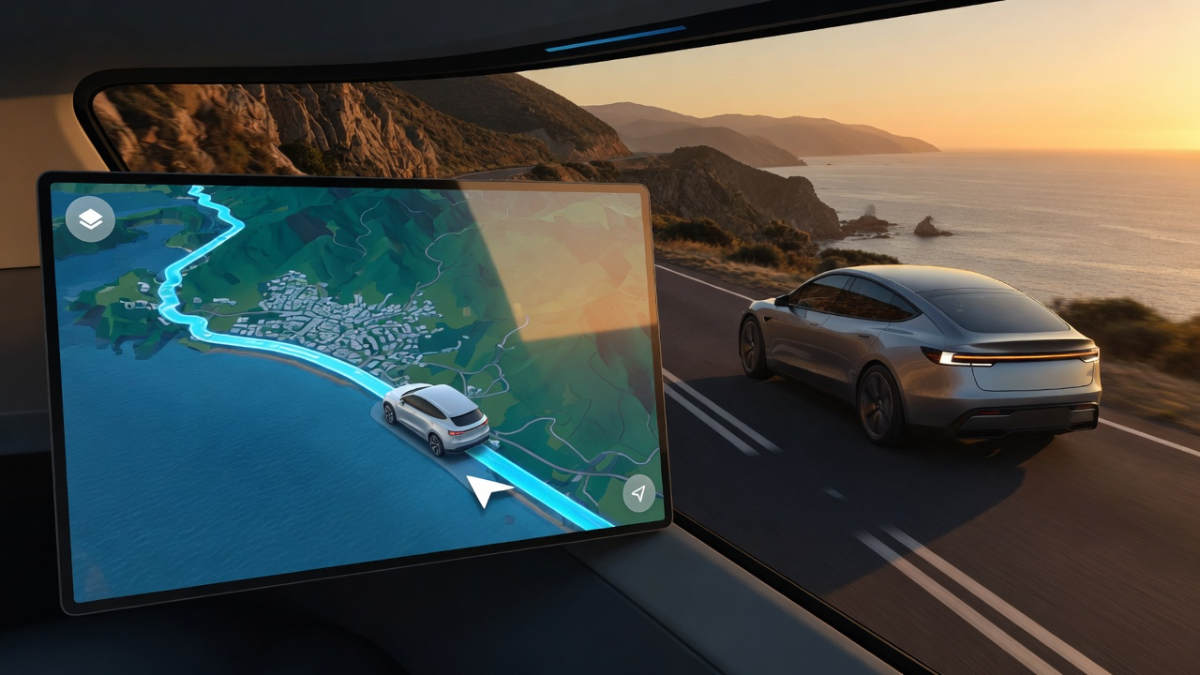
Road level mapping data from Apple will also feed Ford's next generation BlueCruise system, the hands free highway technology Torque News has tracked since its earliest rollout on the F-150 and Mustang Mach-E back in 2021. Ford's stated goal is a more seamless "on ramp to off ramp" hands free experience, and better maps are a core ingredient in getting there. It is worth noting that Ford has spent years building a reputation around BlueCruise reliability that has actually outscored competing systems in independent testing, so adding better maps to that foundation is a meaningful upgrade rather than a marketing bullet point.
The Bigger Industry Story Hiding Inside Ford/Apple Announcement
This deal lands at an interesting moment. General Motors has been pulling away from Apple CarPlay entirely in favor of its own subscription based software, a move that has drawn plenty of criticism from owners who simply want their phone to talk to their car. Ford is walking in the opposite direction, doubling down on the idea that automakers should treat Apple and Google as partners rather than rivals if they want to stay relevant in a software defined vehicle world.
Under Jim Farley, Ford has repeatedly framed the UEV Platform as the company's answer to Tesla and to rising Chinese competition, a theme we explored in depth in our piece on Ford's last best hope to outrun China and GM. Bringing in Apple Maps is one more way Ford is trying to make sure this vehicle does not just compete on price. It has to compete on the total experience, the same way the Model Y and Model 3 have set the bar for what buyers expect from a modern EV interior.
What The LinkedIn Comment Section Got Right Under Jim Farley's Statement
Farley's post drew some sharp reactions worth passing along to Torque News readers, because the smartest commentary on car news does not always come from journalists.
Logan F, a dealer development and national sales manager, wrote: "The $30K price point is the real story here. Building a 'universal' platform that can hit that number while still supporting premium software partnerships (Apple, hands-free driving) is a serious manufacturing and supply chain bet. I've seen the same tension play out at a much smaller scale before, the hardest thing isn't building the premium version, it's engineering the affordable one without cutting the experience that makes people buy. Curious how this changes the conversation at the dealer level once it's on lots."
Management consultant Hammad Khalid framed it as a business model shift rather than a tech story: "The real innovation here may not be Apple Maps itself, it is the business model behind it. The next generation of automotive leaders will compete through platforms and ecosystems rather than standalone products. As software, AI, and connected services become central to the ownership experience, partnerships like these become strategic capabilities, not just supplier relationships. In many industries, the future competitive advantage will belong to companies that can integrate the best technologies faster than others can build them."
And independent observer Arun Sharma summed up the optimism many buyers are feeling: "Congratulations Jim Farley and Ford Team. A bold step toward making EVs smarter, simple and more affordable. The Apple Maps integration next gen software, roughly $30k pricing, could accelerate mass EV adoption worldwide. Wishing Ford great success."
He added a line that stuck with us. It is really good to see a sub $30,000 tier taking shape in the U.S. again, and what stands out is that the number appears to work without leaning on the federal tax credit to prop it up, which is not where most industry watchers expected this to land twelve months ago.
How This Compares To What Other Outlets Are Saying
Electrek has been tracking the Universal EV Platform closely since Ford's original reveal, and its reporting has consistently focused on how many details Ford still has not shared, including range, battery size, and charging speed. That skepticism is healthy. Ford has a habit of announcing bold visions years before the vehicle actually reaches a driveway, and the Apple Maps integration is a software promise layered on top of a platform that is still mostly a set of press releases and prototype sightings, including the one Torque News covered when the $30,000 truck was spotted testing openly in Long Beach.
Why This Matters For Everyday Buyers
Strip away the corporate language and here is what this actually means if you are cross shopping affordable EVs in 2027. You are not just getting a cheap electric vehicle. You are getting Apple's mapping engine, EV specific routing with battery preconditioning, and a hands free highway system built on some of the best road level data available, all in a vehicle priced closer to a loaded Toyota RAV4 than a luxury EV. That combination has not really existed at this price point before, and it is a direct shot at the idea that affordable has to mean stripped down.
Ford has made plenty of promises about this platform, from its gigacasting manufacturing approach to its efficiency targets, and now the software side of that promise has a name attached to it. Apple Maps is not a small partner. It is one of the most used navigation products in the world, and putting it at the center of a $30,000 EV is a statement about where Ford thinks the real battle for buyers will be fought.
The lesson here is a simple one. Price gets people into the showroom, but experience is what keeps them loyal, and Ford seems to finally understand that the two do not have to be in conflict.
Now let's have a conversation please.
Would embedded Apple Maps and next generation BlueCruise be enough to get you into a $30,000 Ford EV, or does the platform still need to prove itself on range and real world reliability first? And if you already drive a Ford with BlueCruise or CarPlay today, how has that software experience shaped your loyalty to the brand? Let us know in the comments below.
Return tomorrow, or check our Torque News Home Page for more interesting automotive news articles.
About The Author
Armen Hareyan is the founder and Editor-in-Chief of Torque News and an automotive journalist with over 15 years of experience writing car reviews and industry news. Now based in the Charlotte region (Indian Land, SC, he founded Torque News in 2010, which since then has been publishing expert news and analysis about the automotive industry. He can be reached at Torque News on X, Linkedin, Facebook, and Youtube. Armen holds three Masters Degrees, including an MBA, and has become one of the known voices in the industry, specializing in the landscape of electric vehicles and real-world stories of actual car owners. Armen focuses on providing readers with transparent, data-backed analysis bridging the gap of complex engineering and car buyer practicality. Armen frequently participates in automotive events throughout the United States, national and local car reveals and personally test-drives new vehicles every week. Armen has also been published as an automotive expert in publications like the Transit Tomorrow, discussing how will autonomous vehicles reshape the supply chain, and emerging technologies in vehicle maintenance.
Set Torque News as Preferred Source on Google
Follow us today...