
Ford is writing down about seven billion dollars in charges because of changes in its EV programs. Ford already canceled the slow-selling Ford Lightning pickup, but the automaker is racing ahead with plans for more affordable electric vehicles. One of its most important projects is a $30,000 midsize pickup that is promised for 2027. Ford is building a new Universal EV platform that should eventually underpin several different vehicles. One of the key ways Ford is shaving time off of development for the EV truck is learning from its Formula 1 team.
Improving EV Dynamics
The best way to increase performance on any vehicle is to improve its aerodynamics. Decades ago, automotive genius Bob Lutz regaled automotive journalists with stories about GM’s groundbreaking Chevrolet Volt. Lutz said the Volt’s original design was beautiful, but it performed better going through the wind tunnel backwards than forward.
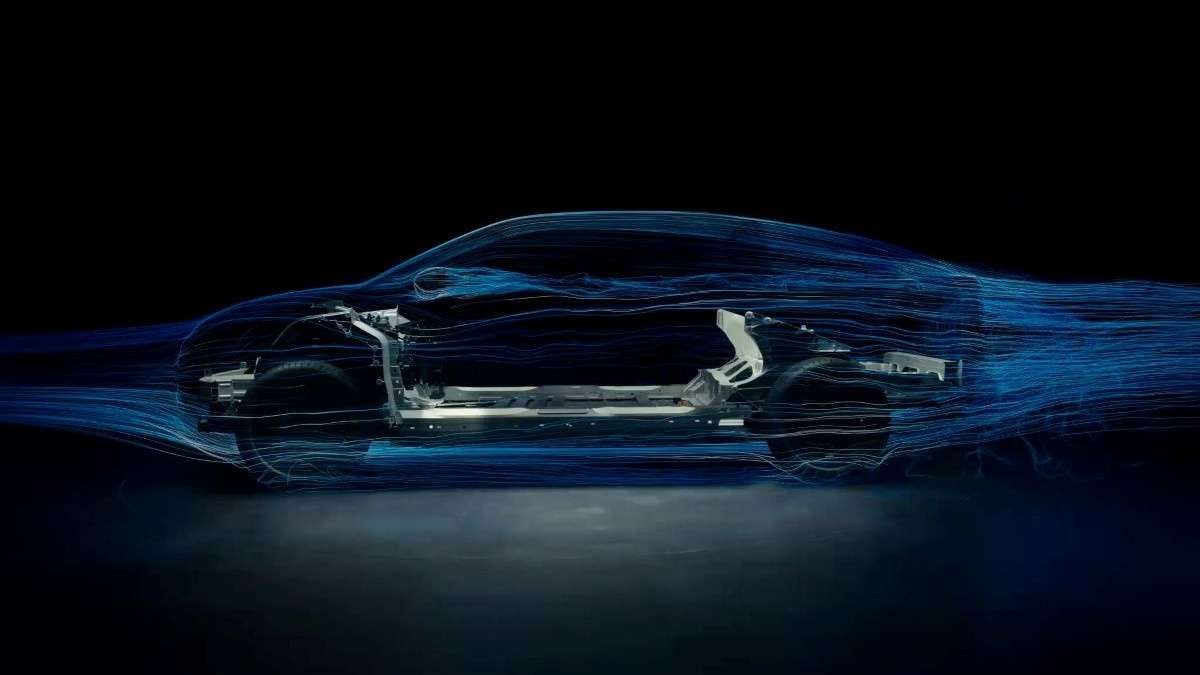
Ford is using an aerodynamics team that spent a lot of time on F1 racing to help with its new truck’s aerodynamics. When it comes to wind resistance and vehicle performance, every curve and every millimeter matters. Ford says the team’s precision helped it make the new mid-size electric truck’s aerodynamic efficiency more than 15% better than any other pickup truck on the market today and will ultimately result in longer range and lower cost for customers. Chevrolet and Cadillac have for years been adapting technology used by its racing teams. The sleek Corvette and Cadillac V models are all examples of improvements refined by time on the racetrack.
Ford is Speeding Up Development Timelines
Ford says that to speed up the midsize truck’s development they started looking at the racetrack. “By adapting a Formula 1-inspired development cycle, we shifted our focus toward a "fail fast, learn faster" mentality.”
“Historically, wind tunnels are used at the end of a project to validate a design and when little can be changed. We flipped that. We used the wind tunnel as a development tool as designers were just starting to put pen to paper, operating with the urgency of a race team pit crew.”
Ford also started testing with 3D printed parts to speed its development process along. I remember the old days when designers used clay models and fabricated parts to determine how vehicles could be built. Computers and 3D printers have made the process infinitely faster.
Ford started using what it calls a modular "LEGO-like" build for the test truck. This allowed engineers to swap 3D-printed and machined parts in minutes rather than days or weeks. Ford tested thousands of 3D-printed components, including versions of the suspension and drive units that didn't even exist as functional prototypes yet. Ford measured the forces that would change as a result in the vertical, longitudinal, and lateral directions on a car-sized treadmill that matched the air speed at 87 mph. The new testing environment allowed designers and engineers to test things like under-body shields, front bumpers and suspensions without losing the huge amounts of time usually required to make new experimental parts.
Ford Entering a New Era of AI-Aided Design
Ford says that testing faster is only half the battle; they also must think faster. To measure all of the new data, it had to rebuild its digital toolkits from the ground up. They needed all of the engineers and designers to be able to access the data at the same time. Everyone, whether in Michigan or California, could see the wind tunnel data streaming in real time and compare it to simulations.
The new digital tools are laying the foundation for future AI-driven design. They allow engineers to pinpoint exactly which changes can have the biggest impact on battery cost and range.
By applying the F1-inspired toolkit, they were able to find aerodynamic gains in places others might overlook.
Key Ways the New Approach Helped Shape Ford’s New EV Truck
Ford shaped the new truck's roofline to be more aerodynamic. High-speed air extends over the truck bed. This allows the air to skip over the truck bed entirely. The smooth, new silhouette means the truck will be more efficient and will use less energy.
Ford used the new data driven system to simplify some functions. Instead of using separate motors for glass adjustment in the side mirrors and power-folding, the team was able to merge the functions. The team was able to shrink the mirror housing by 20 percent. The reduction made the truck more aerodynamic, adding an estimated 1.5 miles of range. Again, every additional improvement helps the vehicle get better range.
Ford also patterned the underside of the truck like a race car. Instead of the typical truck body, they made bolts and protrusions flush to the floor. Engineers designed the underbody to guide air around the front tires and suspension. They guided the front tire wake directly toward the rear tires, effectively "hiding" the rear wheels. By improving alignment and air flow, the team gained an additional 4.5 miles of range.
Ford’s New Design Approach
Ford determined that it couldn’t just use an existing truck body, it was important to build this one from the ground up. To deliver on range and affordability for the customer, the body had to be meticulously sculpted from day one. Many people still doubt the possibility of a $30,000 midsize EV truck. Ford has hit it out of the park with its small Maverick truck. Hopefully, the Blue Oval will have similar results with the EV truck promised for 2027. Ford has just started real-world testing on tracks and city streets to make sure the truck performs as promised. Ford believes its midsize EV truck will help the company perfect its new production plans and guide the next generation of vehicles on its Universal EV Platform.
Ford admitted that it lost money on every Ford Lightning the company sold. Ford also tried upfitting some of its small Ford Focus vehicles with EV powertrains decades ago. I’m pleased to see that this time engineers have developed a dedicated platform what should help it be successful. It only makes sense that Ford is leaning on its racing design teams to perfect aerodynamics. Why reinvent the wheel when you already own it.
Ford Photo
Mary Conway is a professional automotive journalist and has decades of experience specializing in automotive news analysis. She covered the Detroit Three for more than twenty years for the ABC affiliate, in Detroit. Her affection for the Motor City comes naturally. Her father ran a gas station while Mary was growing up, in Wisconsin.
Follow Mary Conway at @MaryConwayMedia and send her car news tips for future stories.
Set Torque News as Preferred Source on Google
Follow us today...