
If the last few years were defined by the promise of "all-in" electrification and a period of "wait and see," 2026 will be remembered as the moment the Ford Motor Company fundamentally redefined the electric truck. The industry is vibrating with the news that the Blue Oval has officially pivoted. The all-electric F-150 Lightning as we knew it is being replaced by a beast of a different nature: the F-150 Lightning EREV (Extended-Range Electric Vehicle).
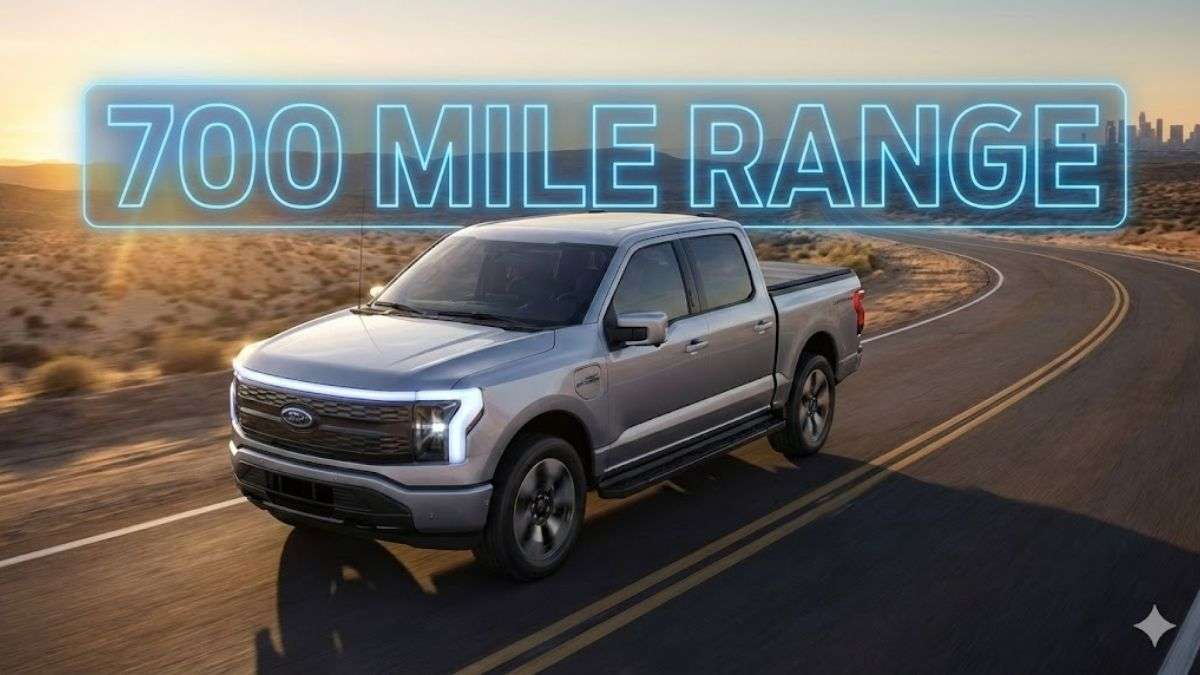
For those who followed the headlines late last year, the signals were there. Ford halted production of the original battery-electric vehicle (BEV) Lightning and scrapped the highly anticipated "T3" pure-EV successor. Many critics claimed Ford was retreating. They were wrong. As Jim Farley and Doug Field have now made clear, Ford wasn’t retreating—it was reloading. By targeting a staggering 700-mile total range, Ford hasn't just improved the Lightning; they have arguably fixed the "unsolvable" math of the electric pickup truck.

What Exactly is an Extended-Range EV (EREV)?
To understand why this is a pivot and not a retreat, we have to look under the hood. There is a common misconception that an EREV is just a fancy name for a standard plug-in hybrid (PHEV). It isn’t.
In a traditional hybrid, like the F-150 PowerBoost, both the gasoline engine and the electric motor are physically connected to the transmission to turn the wheels. In an EREV, the wheels are 100% driven by electric motors. There is no mechanical link between the internal combustion engine and the wheels. Instead, the gasoline engine acts as a "power plant on wheels"—a high-efficiency generator that exists solely to dump juice back into the battery or provide direct current to the motors when the battery is low.
The 700-Mile Game Changer: Solving the Towing Crisis
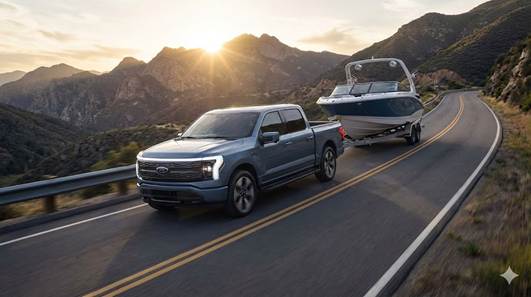
The "Achilles' heel" of the original F-150 Lightning wasn't its speed or its tech—it was the physics of towing. While a standard Lightning could go 300+ miles empty, hanging a heavy trailer off the back could slash that range by 50% or more. For a "Work-Ready" truck, that was a dealbreaker.
A 700-mile range changes the conversation entirely. Even if heavy towing reduces that efficiency by 50%, you are still left with 350 miles of usable range—the equivalent of a full tank of gas in a traditional ICE truck. This "range buffer" is the psychological and practical wall that has kept millions of truck buyers on the sidelines.
Ford’s Competitive Counterstrike: Taking on Ram and Tesla
Ford isn't the first to this party—Stellantis made waves with the Ram 1500 Ramcharger, their own EREV solution. However, Ford’s latest pivot signals that they are ready to fight for the "Best-in-Class" title in this new sub-segment.
By moving away from the "all-battery" approach of the Chevrolet Silverado EV (which requires a massive, heavy, and expensive 200+ kWh battery to hit 400 miles), Ford is playing a smarter economic game. Smaller batteries mean lighter trucks, lower MSRPs, and more profitable margins.
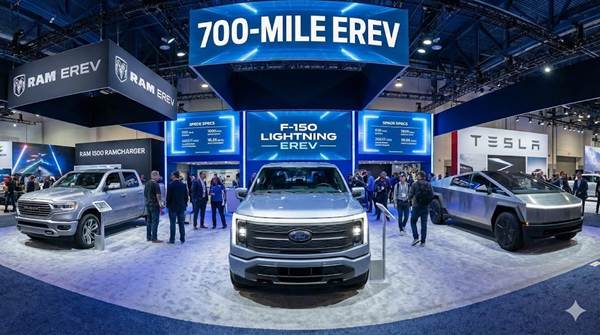
Ford’s competitive position is strengthened by its ability to leverage its existing Ford Pro ecosystem. Fleet owners don't care about 0-60 times as much as they care about uptime. An EREV that can run 24/7 by simply refueling at a standard gas station—while still offering "Pro Power Onboard" to run saws, drills, and even entire job sites—is a value proposition that no pure BEV can currently match.
Wrapping Up: The Pragmatic Leader
Is this a betrayal of the "Electric Future"? Hardliners might say yes, but the market says otherwise. Ford’s goal is to reach a 50% electrified mix by 2030, and the EREV is the bridge that gets them there.

By offering a truck that behaves like an EV 90% of the time but acts like a traditional F-150 when the going gets tough, Ford is positioning itself as the "pragmatic leader" of the industry. This range increase will likely force competitors to rethink their "BEV-only" strategies for heavy-duty applications. We are seeing a shift where the "Electric Vehicle" is no longer defined by the absence of a tailpipe, but by the presence of an electric drivetrain.
The shift to EREV technology marks the end of the "Early Adopter" era for electric trucks and the beginning of the "Mass Market" era. By targeting a 700-mile range, Ford has addressed the two biggest hurdles to EV adoption: charging infrastructure and towing degradation. The F-150 Lightning EREV isn't just a new model; it’s a strategic admission that for the American truck buyer, flexibility is the ultimate luxury.
Disclosure: Images rendered by Artlist.io
Rob Enderle is a technology analyst at Torque News who covers automotive technology and battery developments. You can learn more about Rob on Wikipedia and follow his articles on Forbes, X, and LinkedIn.
Set Torque News as Preferred Source on Google
Follow us today...