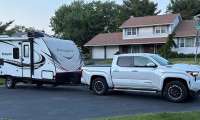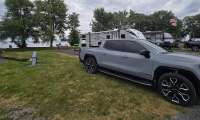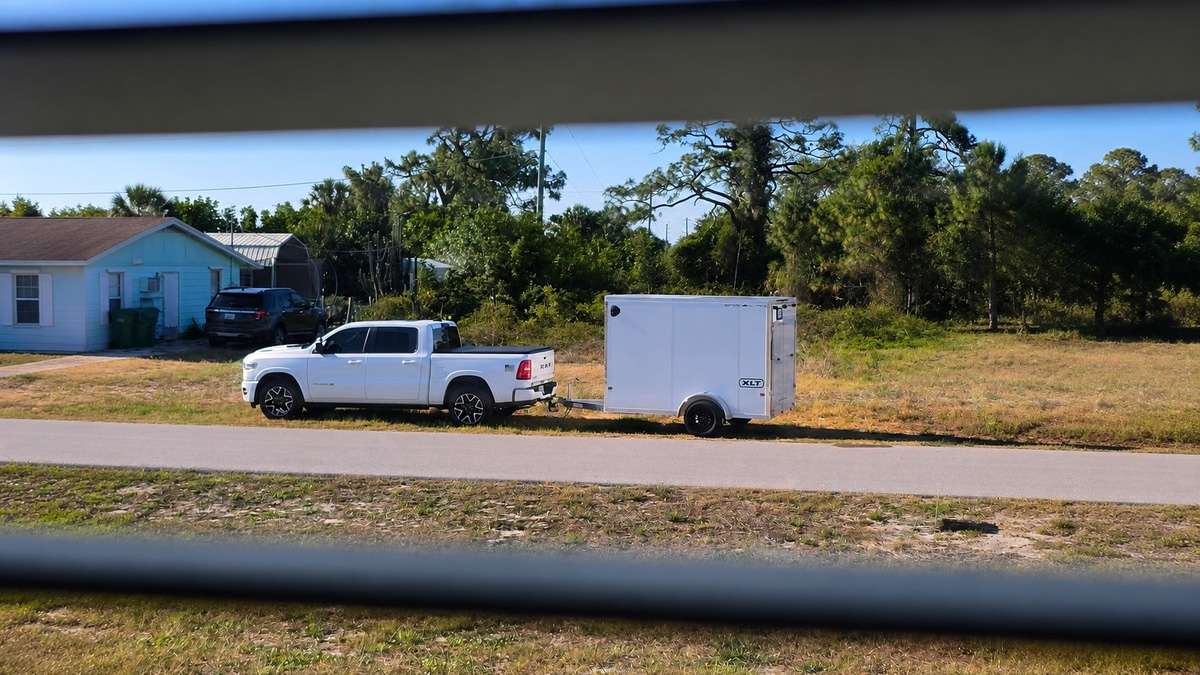

A fully loaded 2025 Ram 1500 Laramie had covered approximately 11,000 trouble-free miles before it suddenly began behaving as though an invisible trailer was tugging against it.
Gregory Ronald Cox first noticed the problem during a family trip on Interstate 75 while traveling at approximately 75 to 80 mph.
“I kept feeling a jerk at high speed as if I was pulling a trailer and it was pulling back every so often,” Cox wrote in a Ram 1500 owner group.
The problem continued at lower speeds, where he said the transmission began jerking hard enough to make it feel as though different parts of the truck were no longer communicating properly.
The Ram dealer found no diagnostic trouble codes. According to Cox, the transmission fluid showed no signs of overheating or metal contamination. The dealer reprogrammed something, although Cox was apparently not told which control module or software update was involved, and returned the truck to him.
For half a day, the Ram drove normally.
Then the jerking gradually returned.
The most troubling event happened at approximately 50 mph. Cox said the truck suddenly applied its brakes, displayed a braking warning and began jerking again before returning to normal.
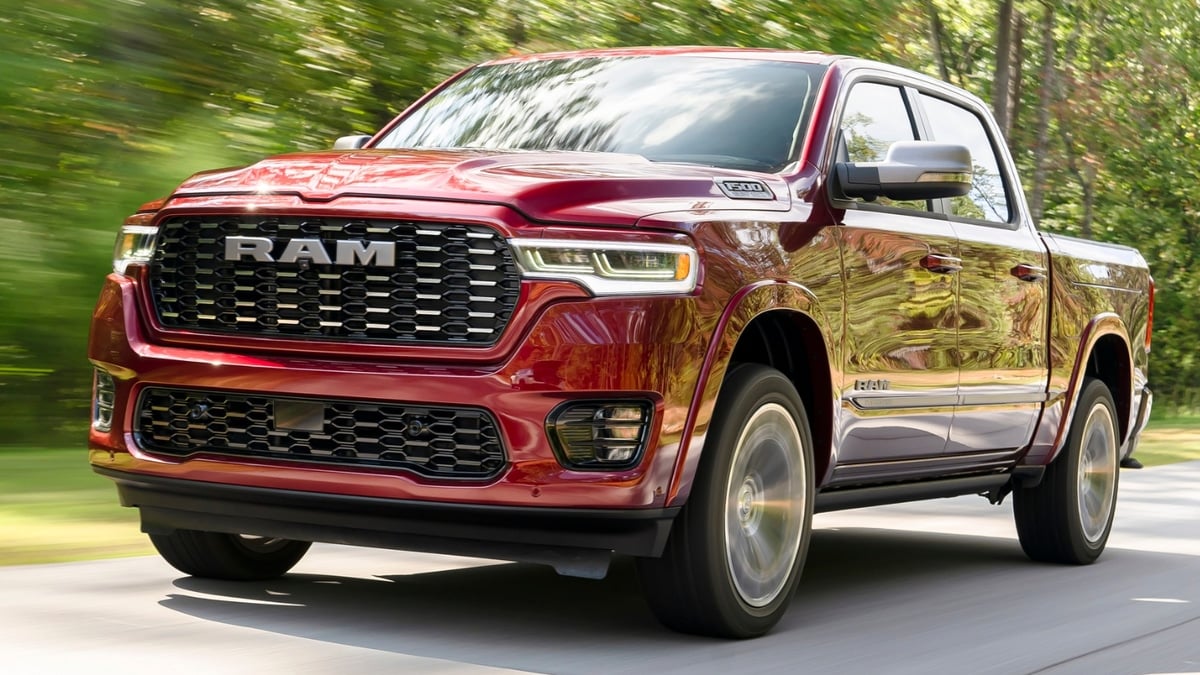
It is tempting to treat this as one mysterious transmission problem. Ram’s own documentation points toward at least two diagnostic paths: transmission control software and the truck’s forward-collision or adaptive-cruise systems.
The dealer’s report that there were “no codes” does not close either path.
Ram Has a Transmission Bulletin for Some Hurricane-Powered 1500s
Cox’s truck uses the standard-output 3.0-liter Hurricane engine, an eight-speed automatic transmission, 3.92 gearing and the factory tow package.
Ram rates the standard-output Hurricane at 420 horsepower and 469 pound-feet of torque in the 2025 Ram 1500. The company’s 2025 fleet guide also lists Full-Speed Forward Collision Warning Plus and Adaptive Cruise Control with Stop and Go among the truck’s driver-assistance equipment.
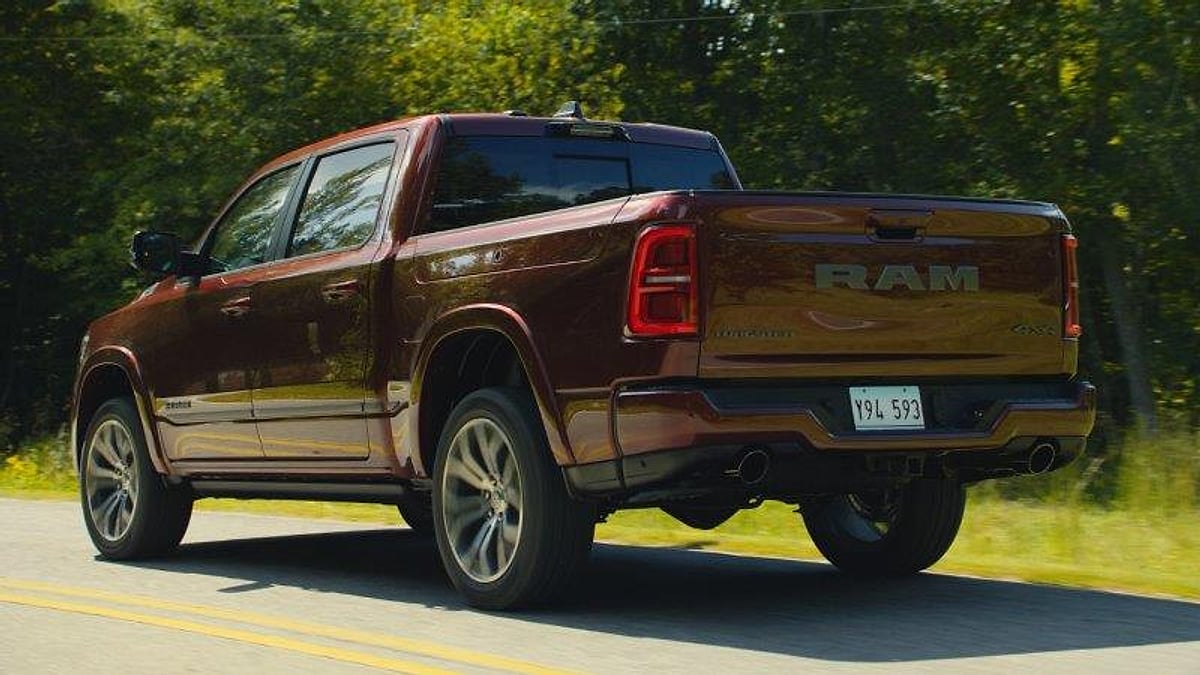
A Stellantis technical service bulletin issued on February 5, 2025, covers certain 2025 Ram 1500 trucks equipped with the 8HP75 transmission and either version of the Hurricane engine.
TSB 21-015-25 applies to vehicles built on or before November 20, 2024. It describes several possible complaints, including a bump or jerk, tip-in downshift concerns, inappropriate gear selection under certain conditions, and other transmission drivability complaints. Stellantis identifies transmission control module software as the cause and instructs technicians to reprogram the TCM with updated software.
That bulletin is relevant to Cox’s complaint, although it is not proof that his truck falls within it.
His build date has not been provided. Some of the bulletin’s symptoms are also more specific than the repeated highway tugging and braking event he described. The dealer may have already performed this update, but “we reprogrammed it” is too vague to establish that.
Cox should ask for the repair order and the exact answers to three questions:
- Which control module was reprogrammed?
- What software version was installed?
- Was TSB 21-015-25 specifically performed?
The truck driving correctly for half a day after reprogramming leaves the transmission software path open. That temporary improvement does not identify the cause by itself.
The “BRAKE” Warning Opens a Separate Diagnostic Path
The later braking event changes the case.
Ram’s 2025 owner’s manual says Forward Collision Warning with Mitigation uses forward-looking sensors and the truck’s electronic brake controller to estimate the probability of a collision.
The system can issue audible and visual warnings, produce what Ram calls a “brake jerk,” and provide limited active braking if the driver does not respond. Ram also warns that the system may react to objects such as guardrails or road signs based on its predicted path.
That description is unusually close to one part of Cox’s account. He reported a braking warning, a sudden deceleration and additional jerking.
It still does not prove the collision system applied the brakes.
Ram’s manual specifically cautions that the red “BRAKE!” message is a request for the driver to respond and does not, by itself, establish that the truck is autonomously braking. The dealer needs vehicle data from the incident, rather than an interpretation of the dashboard message after the fact.
One missing detail could substantially narrow the diagnosis: Was adaptive cruise control operating when the truck began tugging at highway speed or when it braked at 50 mph?
When adaptive cruise is active, the truck can automatically change speed and apply braking to maintain its selected distance. Ram’s manual also warns that vehicles traveling offset from the Ram’s path can produce unexpected braking or acceleration under certain conditions.
If adaptive cruise was active, the dealer should investigate what target the system believed it was following and whether the radar or camera momentarily classified something in the truck’s path.
If adaptive cruise was off, Forward Collision Warning, Automatic Emergency Braking and the transmission remain separate possibilities.
Cleaning the Sensor Is Reasonable. Calling It Fixed Is Not.
Several Ram owners responding to Cox recommended cleaning the front sensor, inspecting it for damage or misalignment, and temporarily turning off automatic braking to see whether the behavior changes.
Those suggestions are directionally useful.
Ram instructs owners to keep the windshield, cameras and relevant sensor areas clear. Dirt, ice, heavy rain, fog, damage and other visibility problems can restrict the operation of driver-assistance systems. A persistent warning or malfunction requires dealer inspection.
Stellantis also issued a March 2025 STAR Online case addressing an adaptive-cruise sensor adjustment code on some Ram 1500s. The document tells technicians to inspect the ACC bracket, verify that the module is seated correctly, and look for damaged or loose components.
However, that case concerns DTC C14A4-00. Cox was reportedly told that his truck had no codes, so the STAR case is not a direct match. It does show that sensor mounting and alignment deserve a physical inspection rather than another scan alone. Stellantis also states that the STAR case does not establish a root cause.
Turning off automatic braking could be used as part of a controlled diagnostic process. It should not become the permanent repair for a truck that may be braking unexpectedly.
The safety system would be unavailable when switched off, and Ram says some collision-warning settings return when the vehicle is restarted. More importantly, asking an owner to reproduce an unexplained braking event at highway speed is a poor substitute for an instrumented dealer road test.
“No Codes” Is a Scan Result, Not a Root Cause
A control module stores a trouble code when it recognizes a condition that its programming defines as a fault.
An unwanted event does not always fit that definition.
The collision system could respond to an input that it considers legitimate, even when the driver sees no valid obstacle. The transmission could also exhibit one of Stellantis’ software-related drivability symptoms without leaving behind a straightforward mechanical failure code.
That is why another code scan followed by another software flash would be an incomplete response.
The dealer needs to capture what the truck is doing while the problem occurs.
A useful road test should record, at minimum:
- The commanded and actual transmission gear
- Torque-converter clutch activity
- Engine torque requests and reductions
- Individual wheel-speed signals
- Brake-pedal position and commanded brake pressure
- Forward Collision Warning and Automatic Emergency Braking status
- Adaptive-cruise status and detected target information
- Relevant camera, radar and body-control communications
The dealer should also document Cox’s exact build date, scan all modules for current and stored history codes, inspect the forward sensor and bracket, verify camera and radar calibration, and identify every software update already performed.
Cox should record the road and weather conditions if it happens again, along with whether adaptive cruise was active, whether another vehicle was ahead, whether he was approaching a curve, guardrail or sign, and the exact wording displayed in the instrument cluster.
The Dealer Should Find the Command Before Returning the Truck
Cox’s Facebook post does not establish a widespread defect in every 2025 Ram 1500.
It does establish a serious unresolved complaint involving repeated driveline jerking and one reported brake application at approximately 50 mph.
Ram’s documents support a transmission-software investigation. They also support an investigation into the forward-collision and adaptive-cruise systems. Neither document proves which system caused Cox’s incident, and it remains possible that two different problems are being experienced as one.
He is right to leave the truck with the dealer.
Before this Laramie is returned again, the dealership should be able to explain which module requested the braking event, what input caused that request, which module was previously reprogrammed, and whether his build falls under Ram’s Hurricane transmission bulletin.
If the dealer cannot reproduce or identify the safety-related behavior, Cox can submit a complaint to the National Highway Traffic Safety Administration and include the repair orders, mileage, dates, and a precise description of the braking event. NHTSA uses owner complaints to identify possible defect patterns, and owners should also check their VIN for any open recalls rather than relying only on general model-year information.
“No codes” may accurately describe what appeared on the diagnostic scanner.
It does not explain why a nearly new Ram 1500 reportedly jerked at 80 mph and then applied its brakes at 50.
One image by Gregory Ronald Cox
About The Author
Noah Washington is an automotive journalist based in Atlanta, Georgia, covering sports cars, luxury vehicles, and performance culture. His reporting focuses on explaining the engineering, design philosophy, and real-world ownership experience behind modern vehicles.
Noah has been immersed in the automotive world since his early teens, attending industry events and following the enthusiast communities that shape how cars are built and driven today. His work blends industry insight with enthusiastic storytelling, helping readers understand not just what a car is, but why it matters.
Noah is also a member of the Southeast Automotive Media Association (SAMA), a professional organization for automotive journalists and industry media in the Southeast.
His coverage regularly explores sports cars, luxury vehicles, and performance-driven segments of the automotive industry, including the evolving culture surrounding Formula Drift and enthusiast builds.
Read more of Noah's work on his author profile page.
You can also follow Noah here:
Set Torque News as Preferred Source on Google
Follow us today...