
Toyota’s mid-engine test car has been treated as another step toward a revived MR2. Its documented origin points somewhere stranger: Toyota’s chief engineer still describes it as part of the GR Yaris family and wants any eventual road car within reach of a GR Yaris buyer willing to stretch.
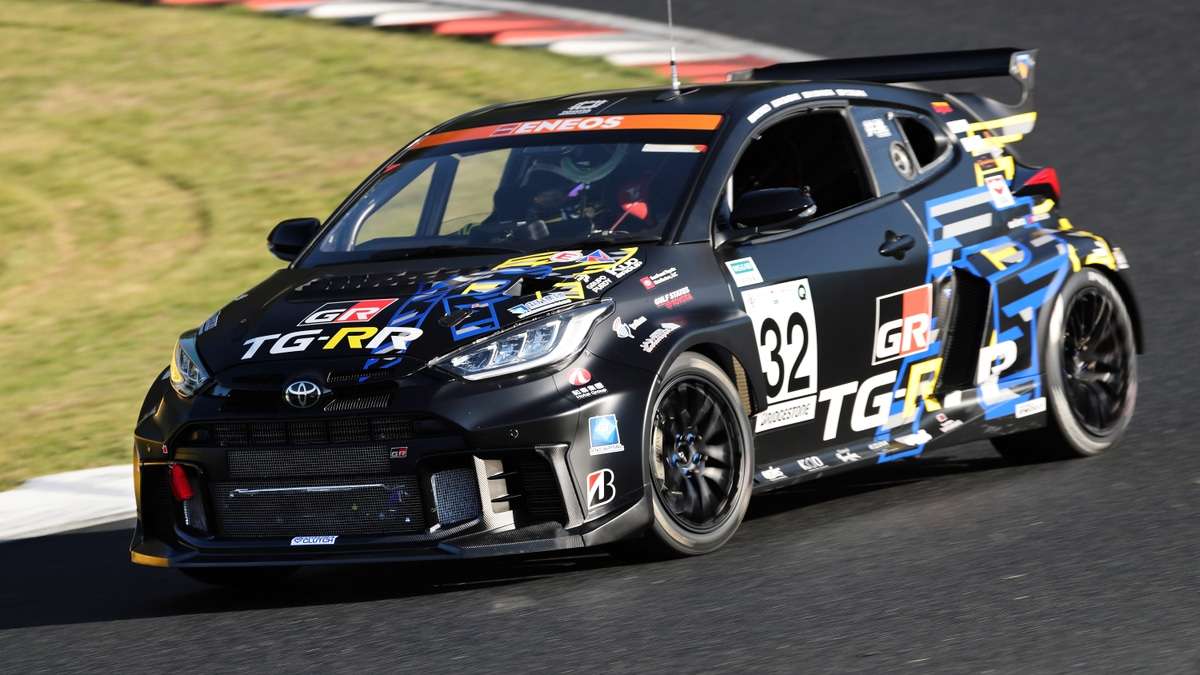
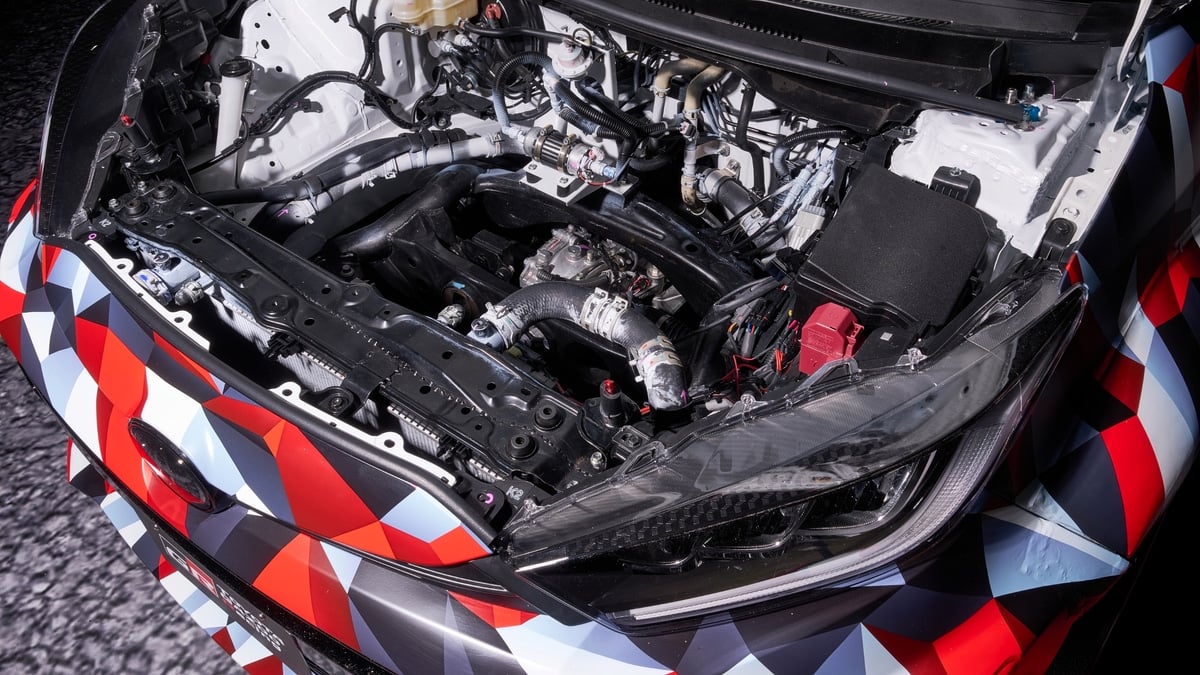
A patched-together Toyota prototype appeared at Fuji Speedway this week with GR Yaris bodywork, a massive front radiator and enough openings behind the doors to ventilate a small factory.
The conclusion arrived almost immediately. Toyota was testing its next MR2.
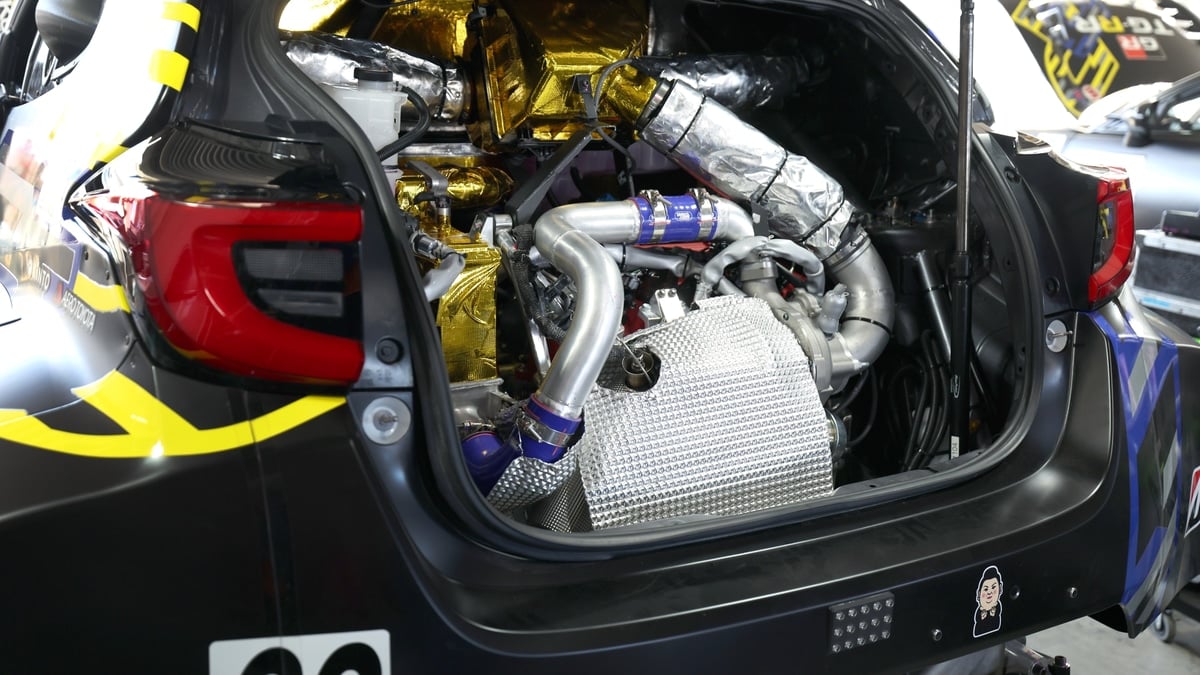
Car and Driver described the car as the possible seventh iteration of Toyota’s presumed MR2 development program. That interpretation is understandable. The engine sits behind the driver, the car uses Toyota’s new G20E 2.0-liter turbocharged four-cylinder, and Toyota has spent years leaving breadcrumbs around an MR2 revival.
Toyota’s own account of the program begins somewhere else.
The company says the M Concept was created because Akio Toyoda and his engineers had reached the limit of what they could change within the GR Yaris’s front-engine layout.
The MR2 could still be one destination for this hardware. Toyota has not settled the production body, specifications, or model name.
For now, Toyota continues to call the machine a GR Yaris M Concept, and its chief engineer still places it inside the GR Yaris family.
The Question That Put the M Concept Back in the GR Yaris Family
Japanese automotive journalist Shinya Yamamoto drove two versions of the M Concept at Toyota’s Shimoyama Technical Center in May.
He drove the original 1.6-liter prototype on gravel and rode in a later G20E-powered version on Toyota’s high-speed test course. Afterward, Yamamoto joined other journalists, engineers and development drivers in a wide-ranging discussion about what a production version could become.
One reporter asked the question hanging over the entire program: Was this the rumored sports car everyone already had in mind?
According to Yamamoto’s account of the conversation, GR chief engineer Naohiko Saito replied that the car remained part of the GR Yaris family.
The question mattered because it gave Saito an opportunity to define the project in Toyota’s own terms. His answer leaves room for an eventual MR2 badge, a dedicated sports-car body or another production identity. It also establishes that, as of May, the chief engineer still described the prototype through its GR Yaris lineage.
The discussion continued through the car’s missing luggage space, the lower height expected of a dedicated sports car and the possibility that the hardware could produce something new. Toyota has not frozen the production body, specifications or model name.
Yamamoto followed with a pricing question. If Toyota commercialized the car, could a GR Yaris owner who needed to stretch financially still afford it?
Saito said that was exactly what he wanted.
That remains an aspiration rather than a confirmed price. Toyota has announced no market, production volume or MSRP. Still, Saito’s answer pushes against the assumption that this hardware must become an exotic priced far beyond the enthusiasts who already buy the GR Yaris.
A mid-engine, turbocharged, AWD GR Yaris sounds absurd.
So did the original GR Yaris before Toyota built it.
Toyota Created the M Concept to Solve a Yaris Problem
The M Concept’s origin is much clearer than its future badge.
The current GR Yaris carries its engine, transmission and much of its mass over the front wheels. During braking, cornering and acceleration, the front tires must manage nearly everything the car is trying to do.
On a racetrack, Toyota says the front tires may require replacement three times as often as the rears. At the limit, reduced front grip can also produce understeer, leaving the driver waiting for the car to respond.
Toyoda calls that delay “time to pray to God.”
Toyota kept revising the GR Yaris body, suspension and GR-FOUR system, but Saito told Yamamoto that the existing front-engine layout eventually created a wall the development team could not cross.
The proposal was radical: move the engine behind the driver and start again.
Toyota’s own January 2025 announcement said the M Concept was created to “further explore the potential of the GR Yaris.” Toyota presented it as GR Yaris development rather than announcing an MR2 program.
In October, Toyota provided the engineering sequence. The team began with the GR Yaris’s front-tire loading and understeer, reconsidered the car’s structure and weight distribution, and produced a mid-engine AWD GR Yaris.
Toyota also defines the M specifically. It stands for Midship and Morizo, Toyoda’s racing name.
That definition does not determine the car’s eventual production badge. It does remove one popular assumption: Toyota has never said the M stands for MR2.
The First Prototype Predates the G20E Story
The timeline reinforces the GR Yaris origin.
The first prototype was completed in January 2023, only three months after the team decided to attempt the layout. It retained the GR Yaris’s 1.6-liter G16E three-cylinder, while its visible dimensions remained close to the production hatchback.
Toyota did not publicly unveil the G20E engine until its Multipathway Workshop in May 2024.
The program was already underway before the G20E became part of Toyota’s public performance-car story. Engineers began with a mid-engine GR Yaris using the powertrain they already had.
The project became more ambitious as it advanced.
By the fifth prototype, Toyota had installed the 2.0-liter G20E, moved to a water-cooled intercooler, changed the rear suspension, and substantially altered the wheelbase and track. The sixth version became Toyota’s endurance-racing car.
The newest Fuji prototype may be iteration seven.
Toyota plans at least 20 iterations, and approximately 500 Gazoo Racing employees have contributed to the program. That is an extraordinary investment for an engine test bed wearing disposable bodywork.
It also explains why the cars look increasingly strange. Toyota is changing the architecture before deciding what the finished vehicle should look like.
Toyota Has Already Discussed Selling It
The program has no final production approval. Saito made that clear during the May prototype drive.
Toyota has also described commercialization as the ultimate objective.
During the M Concept’s first endurance race, Toyota Gazoo Racing President Tomoya Takahashi discussed future customers following the car’s public development and eventually feeling that they had participated in its creation. Toyota Times later stated that commercialization was the program’s intended destination, although no release date had been established.
Development driver Masahiro Sasaki has gone further. He said that if Toyota mass-produces the car, he wants it positioned above the GR86 and current GR Yaris in driver difficulty. It would reward someone who had learned to control both cars and wanted the next challenge.
That creates a driver-skill progression:
GR86, then GR Yaris, then M Concept.
Toyota has not confirmed a matching product or pricing ladder.
The MR2 may eventually occupy that position. Toyota could transfer the engine, AWD system and cooling work into a lower, dedicated sports-car body. Its reported GR MR2 and GR MR-S trademark filings keep that outcome alive.
The evidence still does not support treating it as automatic.
The Latest Mule Keeps the Question Open
After three years, at least six confirmed iterations and a possible seventh, Toyota is still developing the car through a GR Yaris body.
That body is becoming more specialized rather than less.
Toyota has extended the wheelbase, widened the track, redesigned the cooling paths, moved the entire drivetrain behind the front seats, and developed an AWD system capable of sending all available torque rearward or as much as half to the front.
The body may ultimately be temporary, but the program’s GR Yaris identity has endured far longer than the camouflage alone would suggest.
The GR Yaris M could become the road-going answer to the problem that created it. Imagine a modern interpretation of the Renault 5 Turbo or Clio V6, developed with Toyota’s GR-FOUR experience, endurance-racing program and a new turbocharged engine producing more than 400 horsepower.
Its chief engineer still considers it part of the GR Yaris family. He wants the eventual price within reach of someone who can afford a GR Yaris and stretch for more.
Those details give Toyota’s next move a different shape.
A new MR2 remains possible. The evidence now requires treating a production GR Yaris M as a serious possibility too.
Toyota may have been developing the world’s wildest hot hatch in public while most of us waited for it to turn into a coupe.
Would you rather see Toyota release the M Concept as a mid-engine GR Yaris, or move its hardware into a lower, two-seat MR2?
About The Author
Noah Washington is an automotive journalist based in Atlanta, Georgia, covering sports cars, luxury vehicles, and performance culture. His reporting focuses on explaining the engineering, design philosophy, and real-world ownership experience behind modern vehicles.
Noah has been immersed in the automotive world since his early teens, attending industry events and following the enthusiast communities that shape how cars are built and driven today. His work blends industry insight with enthusiastic storytelling, helping readers understand not just what a car is, but why it matters.
Noah is also a member of the Southeast Automotive Media Association (SAMA), a professional organization for automotive journalists and industry media in the Southeast.
His coverage regularly explores sports cars, luxury vehicles, and performance-driven segments of the automotive industry, including the evolving culture surrounding Formula Drift and enthusiast builds.
Read more of Noah's work on his author profile page.
You can also follow Noah here:
Set Torque News as Preferred Source on Google
Follow us today...