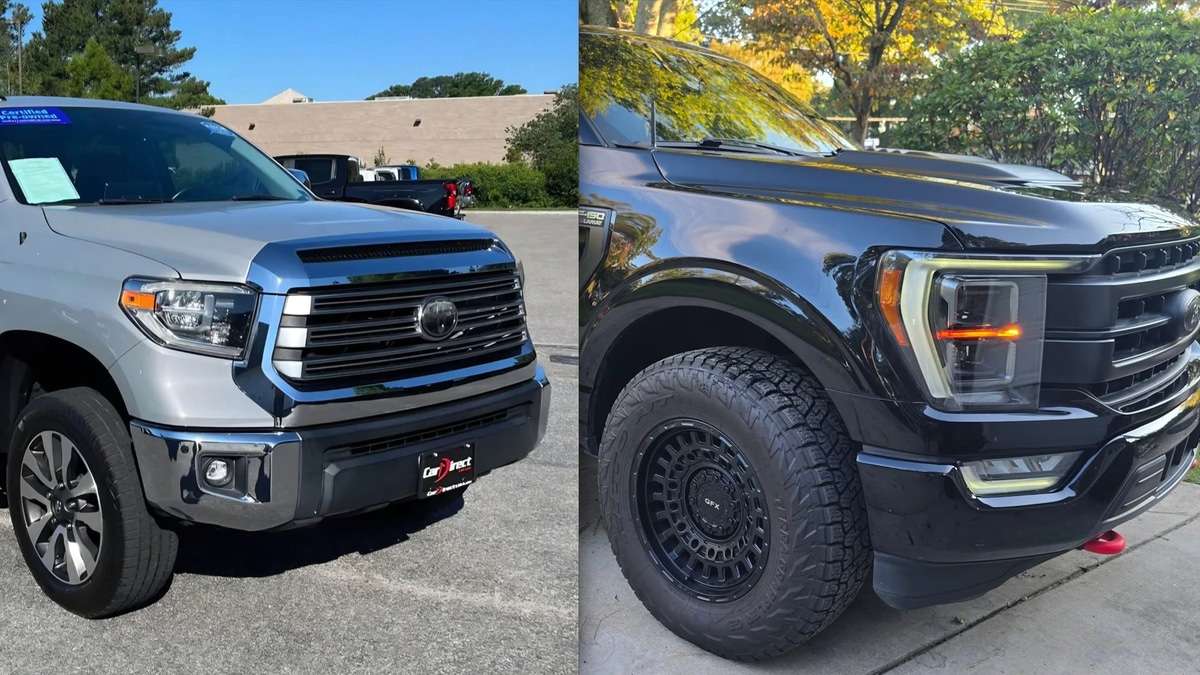

The Heavyweight Defection
Kyle Hedges finally reached his breaking point with the blue oval.
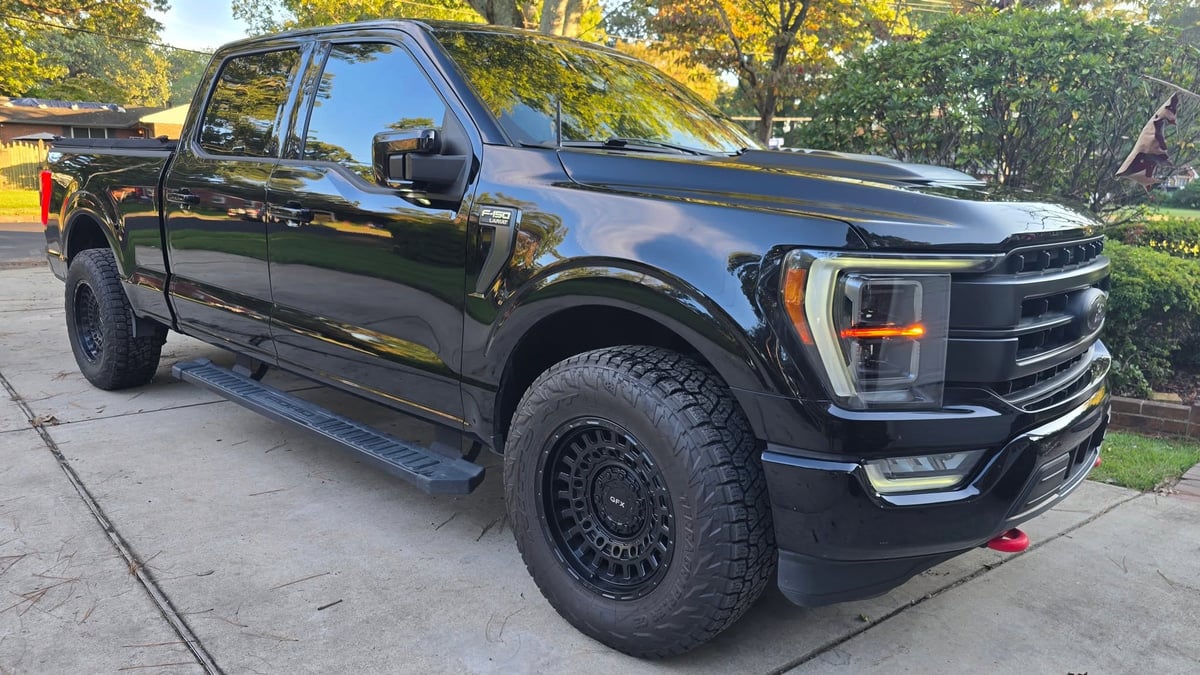
Facing a second transmission failure at just 73,000 miles and a web of ghost-in-the-machine electrical issues, the Bellevue, Michigan resident dumped his 2021 Ford F-150 Lariat.
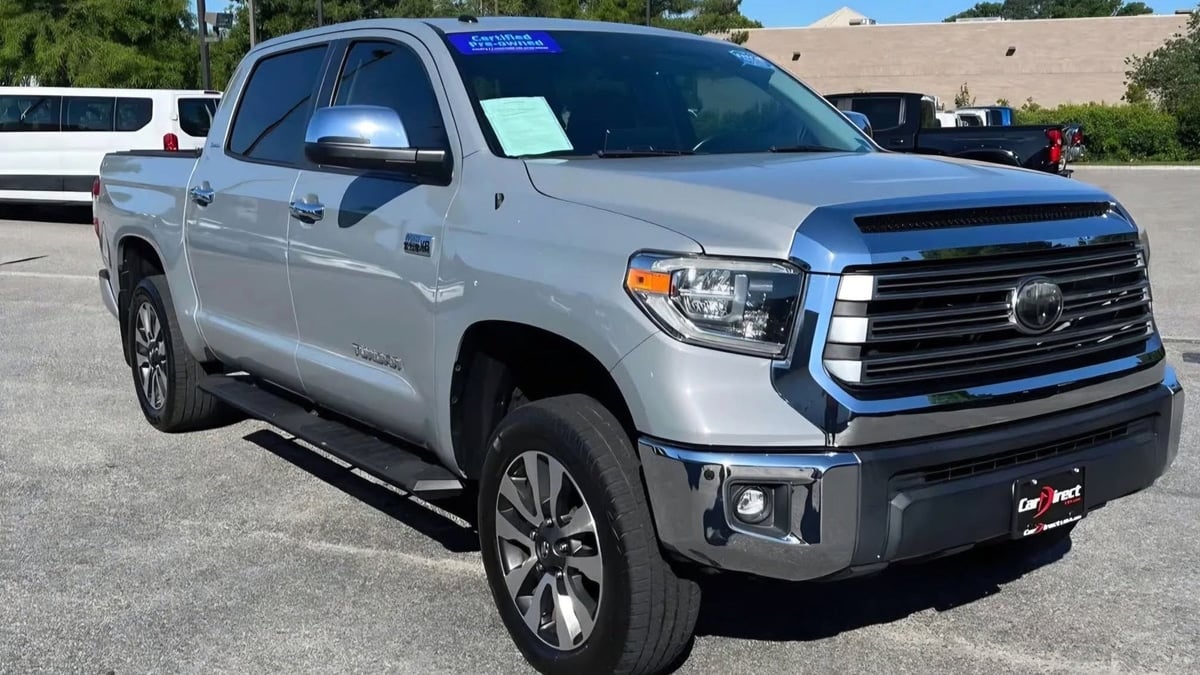
He didn't just switch brands; he went hunting for a legendary, bulletproof powertrain: the last of the naturally aspirated 5.7L V8 Toyota Tundras.
It is a story I am seeing more frequently as an automotive journalist covering the industry's shift toward hyper-complex drivetrains. Modern trucks are becoming rolling supercomputers, and for many owners, the trade-off for tech-heavy features is an increasingly fragile ownership experience.
What the Owner Had to Say
It’s rare to find a post that so perfectly encapsulates the current sentiment of the used-truck market. Here is the reality of the situation in Hedges' own words, which he shared on the Ford F-150 5.0 Owners Facebook community page:
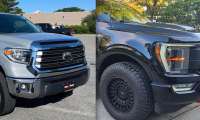
"I got out of my 2021 Ford F-150 Lariat. I couldn't keep dealing with its unreliability and the fact that it was on its 2nd transmission at 73k miles. And electrical issues that Ford can't figure out. I went and got the longest-lasting, most reliable motor we have ever made, and also made in America. A 2021 Toyota Tundra 5.7L 4x4. Now time to take all the ugly chrome off and build it up like my Ford was."
When the Innovation Becomes an Obstacle
In my years of industry consulting, I’ve watched the "race to the top" on spec sheets often overshadow the fundamental "do-not-fail" requirement of a work truck.
As noted by the experts at Pickup Truck + Talk, the 2021–2024 Ford F-150 has faced significant scrutiny over the 10-speed transmission’s performance, with many owners reporting harsh shifting and delayed engagement that feels far from the "Built Ford Tough" standard.
When your truck spends more time in the service bay than on the job site, the allure of 10-speed efficiency vanishes. The reality for owners like Hedges is that even a well-intentioned vehicle can become a liability when the electronic architecture simply refuses to cooperate.
The Ghost in the Machine
The electrical gremlins Hedges described- intermittent warnings, failing modules, and parasitic battery drains are not just anecdotal "bad luck." Independent repair experts often point to the complexity of the F-150’s integrated network.
As highlighted in a Lemon Law Claims technical report, the root cause of these 10R80 transmission issues often ties back to internal hydraulic failures that cascade into software-driven "limp modes."
These aren't just minor inconveniences; they are systemic challenges that dealers struggle to diagnose. As I’ve covered extensively in my own technical reporting, the hidden driver behind these early-mileage disasters is a structural manufacturing defect within the 10R80 main control valve body casting that triggers absolute drivetrain shutdowns.
Industry-wide reliance on these razor-thin hydraulic tolerances means standard software recalibrations do absolutely nothing to remedy a porous aluminum casting or an internally misaligned wiring harness.
A Return to the "Golden Age" of Iron
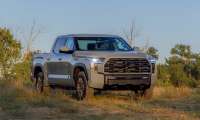
Hedges' move to the 2021 Toyota Tundra 5.7L V8 is a calculated bet on proven, old-school engineering. The 3UR-FE engine represents the end of an era: naturally aspirated, over-engineered, and devoid of the turbo-charging complexities that define the current landscape.
I have long argued in my own investigative columns that the older truck's platform lacks the complex maintenance burdens of newer models, proving that while modern twin-turbo V6 swaps are technically superior, they lack the massive "zero-failure" margin that made the 5.7L V8 a legend.
Buyers are increasingly willing to sacrifice cutting-edge fuel mapping if it means securing a powertrain capable of hitting 300,000 miles with little more than basic oil changes.
The Colorado Perspective on Reliability
Living here in Colorado, where I spend my weekends hiking the Rockies and pushing vehicles through high-altitude terrain, I see this shift every day. Our mountain passes aren't kind to fragile cooling systems or erratic transmission logic.
A truck that struggles with electrical sensors at sea level becomes an absolute nightmare when you’re towing over a 10,000-foot pass in the heat of July. Owners are trading in their high-tech, high-strung commuters for "dinosaur" V8s because, in the Rockies, "bulletproof" isn't a marketing slogan; it’s a survival requirement.
Is the "Tech-First" Era Over?
The massive success of the 2021 Tundra on the used market shows we are reaching a peak "complexity fatigue." When a vehicle's infotainment system crashes, or its adaptive shifting logic starts "learning" bad habits, the owner’s trust is permanently broken.
Data from organizations like iSeeCars consistently validate this, showing the Tundra is one of the few trucks that regularly crosses the 300,000-mile mark without a major drivetrain surgery. For someone who relies on their truck as a primary tool, that peace of mind is worth more than any fancy "smart" feature.
Why This Matters for Your Next Buy
We are seeing a trend in which the "last of the naturally aspirated" trucks are appreciating in value, while the complex, early-generation turbo trucks are experiencing steeper depreciation due to looming repair costs. If you are shopping for a used truck in 2026, the 2021 Tundra 5.7L isn't just an old truck; it's a financial hedge against the rising cost of complex diagnostics.
The Next Step for Truck Buyers
Are you wondering if the newer twin-turbo Tundras have solved the reliability woes that drove Hedges back to the V8? The short answer is that the industry is still in a "wait and see" phase as the newest third-gen models rack up the high-mileage data that the 5.7L V8 already proved years ago.
A Final Look at the Road Ahead
The automotive industry is in the midst of a massive identity crisis between what the engineers want to build and what the owners actually want to drive. While tech features make for great brochures, there is no replacement for a drivetrain that you can trust to get you home at the end of the day.
It's Your Turn: It is clear that Hedges chose longevity over the latest gadgets, and he’s not the only one voting with his wallet in this direction. How about you? Are you willing to sacrifice the newest tech for the sake of long-term mechanical peace of mind? Tell us what you think and leave a comment in the red “Add new comment” link below.
There’s More… Also check out my Torque News Home Page for more of my informative Ford F-150 & Toyota Tundra news articles.
About The Author
Denis Flierl is a 14-year Senior Reporter at Torque News and a member of the Rocky Mountain Automotive Press (RMAP) with 30+ years of industry experience. Explore his full investigative reporting archives and technical guides at DenisFlierl.com.
Based in Parker, Colorado, Denis leverages the Rockies' high-altitude terrain as a rigorous testing ground to provide "boots-on-the-ground" analysis for readers across the Rocky Mountain region, California EV corridors, the Northeast, Texas truck markets, and Midwest agricultural zones.
A former professional test driver and consultant for Ford, GM, Ram, Toyota, and Tesla, he delivers data-backed insights on reliability and market shifts. Denis cuts through the noise to provide national audiences with the real-world reporting today’s landscape demands.
Connect with Denis: Find him on LinkedIn, X @DenisFlierl, @WorldsCoolestRides, Facebook, and Instagram.
Photo credit: Denis Flierl via Kyle Hedges
Set Torque News as Preferred Source on Google
Follow us today...