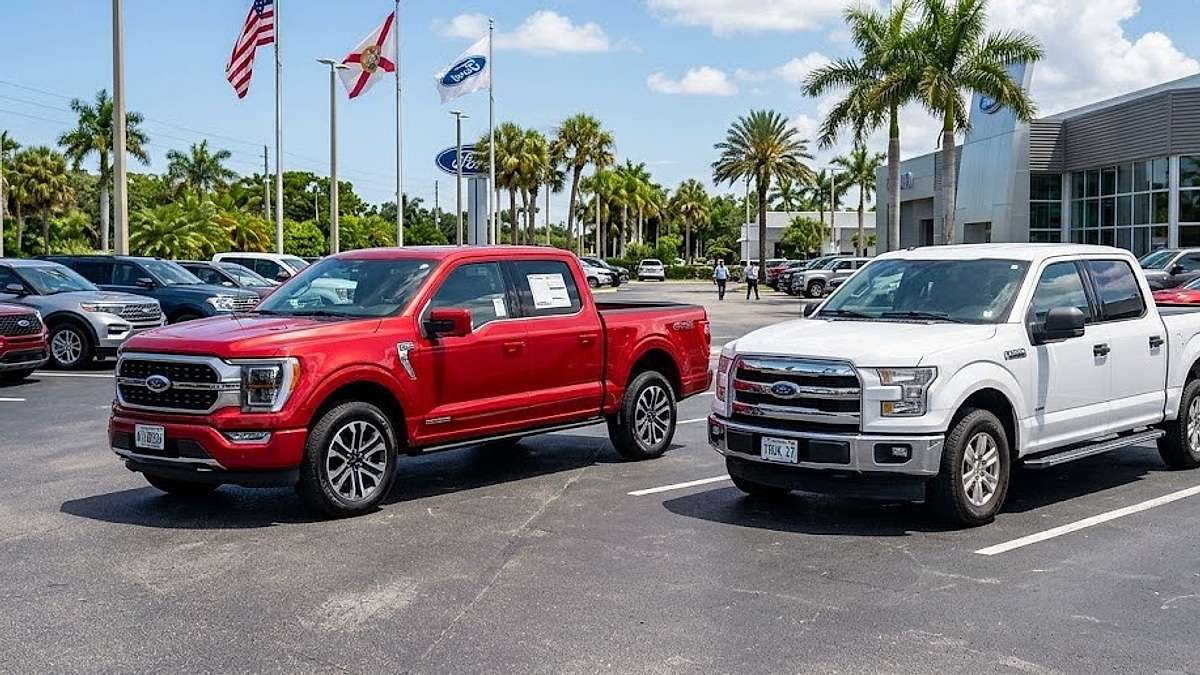

The high-tech cabin of a 2025 Ford F-150 was supposed to represent the future of American trucking.
Instead, the brand's aggressive push into generative AI software and over-the-air updates has driven one veteran Florida owner to completely dump his new vehicle.
He is willingly giving up his modern keys to go back to a 2017 model, and he is far from the only truck buyer hitting the brakes on over-automated software.
The Breaking Point on the Information Highway
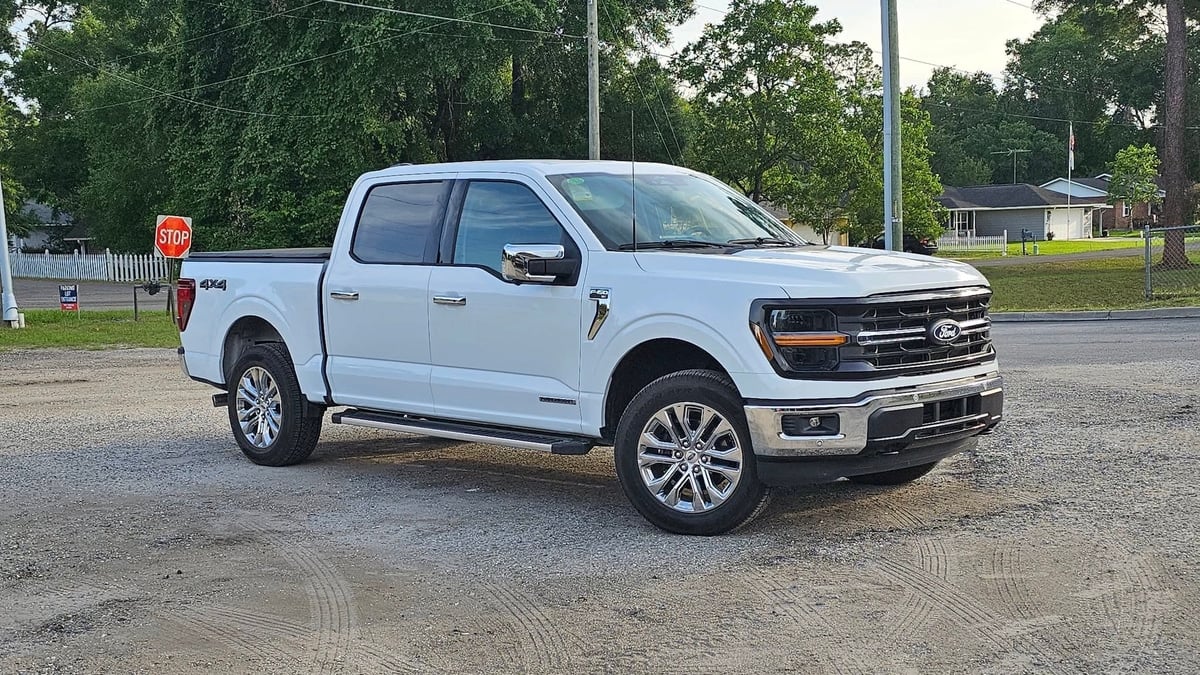
A fascinating rebellion is brewing at the grassroots of American truck ownership, far from the glossy executive boardrooms in Dearborn. Steven Davis from High Springs, Florida, recently took to the Ford F-150 Owners Facebook page to voice a frustration that is rapidly spreading through the heartland.
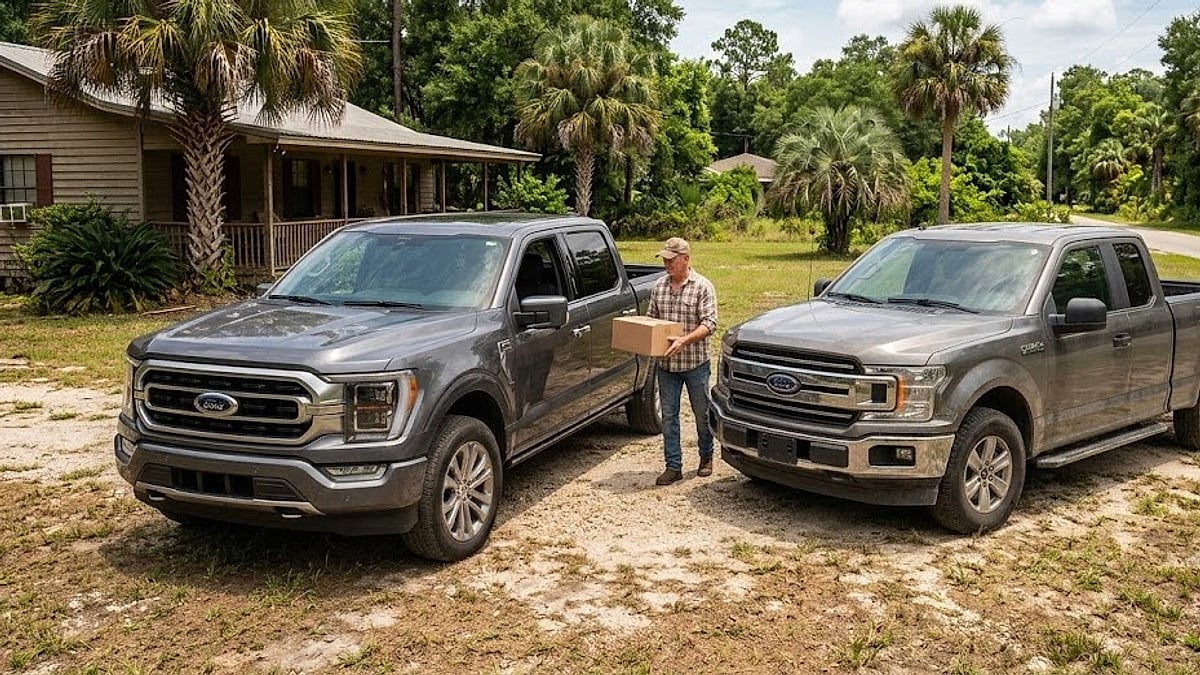
“Who is fed up with Ford’s CEO? Personally, I will never own another Ford product again, nor will I own any other brand with AI software,” Davis stated bluntly. “I’m going back to 2017 after my 2025 Ford F-150 truck.”
This isn't just an isolated case of buyer's remorse, but rather a direct symptom of a massive operational disconnect between corporate tech goals and real-world utility. When you dive under the hood of recent vehicle complaints, the hidden story isn't about mechanical parts wearing out, but rather software code locking owners out of their own trucks.
The Core Technical Root Cause Behind the Digital Backlash
Why are modern truck buyers looking to the past for reliability? According to the definitive J.D. Power 2026 U.S. Vehicle Dependability Study, over-the-air (OTA) software updates have driven long-term dependability problems to new industry highs. In fact, their research reveals that wireless OTA updates resulted in a staggering 14% increase in reported digital problems this year alone.
The technical root cause lies in modern centralized computing architectures such as Ford's FNVA (Fully Networked Vehicle Architecture). Instead of dedicated mechanical relays, a single gateway module processes everything from the climate controls to complex predictive AI driving algorithms.
When a single cloud-sent update contains a minor syntax error, it doesn't just crash the navigation system. It cascades across the entire Controller Area Network (CAN bus), causing critical system overloads.
This algorithmic vulnerability aligns with broader network patterns; in my investigative look, I highlight that a Ford F-150 transmission software flash masks destructive hardware defects rather than properly fixing the underlying physical failure points.
Why a 2017 Baseline Is the New Consumer Sanctuary
To understand why a consumer would swap a new platform for a nearly decade-old truck, you have to look at how vehicle wiring changed after 2018. A 2017 F-150 relies on localized, hardwired modules that only communicate basic, predictable telemetry parameters. If a radio glitch occurs in a 2017 model, your powertrain remains completely unaffected.
Compare that to the 2025 model year, in which the federal government recently stepped in due to severe technological integration failures.
The National Highway Traffic Safety Administration published NHTSA Recall 26V104000, noting that the integrated trailer module software can completely lose communication with the vehicle, knocking out trailer brakes and turn signals.
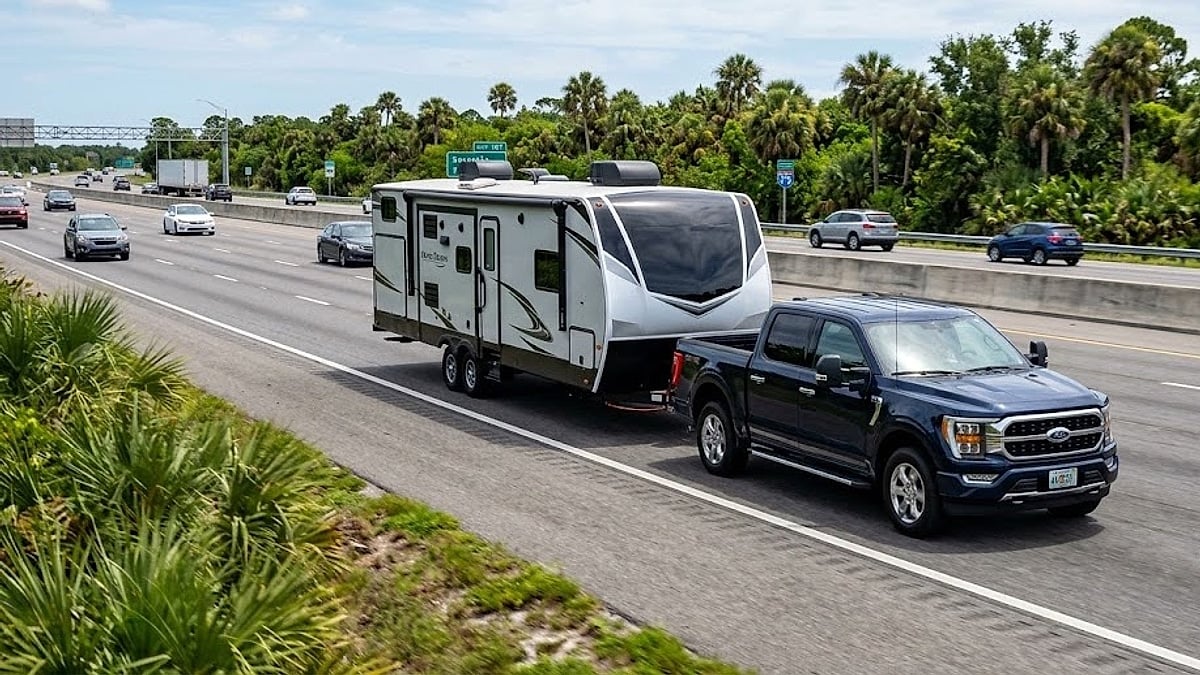
When a truck can no longer reliably perform the simple mechanical act of towing without a data module crashing, the value proposition of "smart" software completely evaporates.
From the Front Range to the Everglades: A Nationwide Tech Fatigue
This software friction shifts dramatically when you move into rugged geographic environments. Out here in Parker, Colorado, and across the challenging terrain of the Rocky Mountains, the stakes of a digital system failure become incredibly high very quickly.
When you are climbing a steep mountain pass or navigating a heavy payload through freezing conditions along the Cherry Creek Trail corridor, a sudden dashboard blackout is a major safety hazard. Lemon Law Experts say dealership technicians frequently try to resolve these issues by simply resetting the digital instrument cluster, claiming it was merely "overloaded" by background cloud data processes.
But out in the field, a truck that requires a hard software reboot just to display its speedometer is fundamentally broken from a utility perspective.
The Growing Gap Between Corporate Visions and Real Utility
Automotive executives continue to pitch AI software as a revolutionary premium feature designed to optimize efficiency and predict maintenance needs. In many cases, these rapid computational adjustments create significant drivability friction, which I note can trigger abrupt shifts, unexpected hesitation, and severe gear hunting when navigating changing road conditions.
Yet, consumer data platforms show that 58% of car owners perceive absolutely no noticeable benefit after a manufacturer performs a digital update.
This creates a severe "substance gap" where buyers are forced to pay premium prices for background computational infrastructure they never asked for. Truck owners want durable mechanical leverage, not a rolling smartphone that can be altered overnight by a remote engineering team.
By retreating to the stable architecture of a 2017 model, drivers are reclaiming permanent physical ownership over their vehicles, free from subscription paywalls and unverified cloud software updates.
Next Question: Can Automakers Reverse the Software Gridlock?
With consumer frustration reaching a boiling point, the ultimate question is whether manufacturers will simplify future cabin layouts or double down on digital automation. Industry trends suggest that brands must decouple essential safety systems from the primary infotainment architecture, or risk losing an entire demographic of traditional truck buyers to the secondary market.
The Verdict
The modern push toward AI-driven vehicle architecture is officially clashing with the basic practical needs of everyday truck owners who value mechanical certainty over digital novelty. If automakers fail to respect this boundary, more buyers will follow this path, voting with their wallets by returning to older, more stable model years.
Tell Us What You Think: How about you? Would you willingly trade a brand-new 2025 pickup truck for a clean 2017 model just to completely escape screen glitches and mandatory wireless software updates? Please leave your thoughts and experiences in the red "Add new comment" link below.
There’s More Coming Tomorrow… Also check out my Torque News Home Page for more of my informative Ford F-150 news articles.
About The Author
Denis Flierl is a 14-year Senior Reporter at Torque News and a member of the Rocky Mountain Automotive Press (RMAP) with 30+ years of industry experience. Explore his full investigative reporting archives and technical guides at DenisFlierl.com.
Based in Parker, Colorado, Denis leverages the Rockies' high-altitude terrain as a rigorous testing ground to provide "boots-on-the-ground" analysis for readers across the Rocky Mountain region, California EV corridors, the Northeast, Texas truck markets, and Midwest agricultural zones.
A former professional test driver and consultant for Ford, GM, Ram, Toyota, and Tesla, he delivers data-backed insights on reliability and market shifts. Denis cuts through the noise to provide national audiences with the real-world reporting today’s landscape demands.
Connect with Denis: Find him on LinkedIn, X @DenisFlierl, @WorldsCoolestRides, Facebook, and Instagram.
Photo credit: Denis Flierl via Steven Davis
Set Torque News as Preferred Source on Google
Follow us today...