
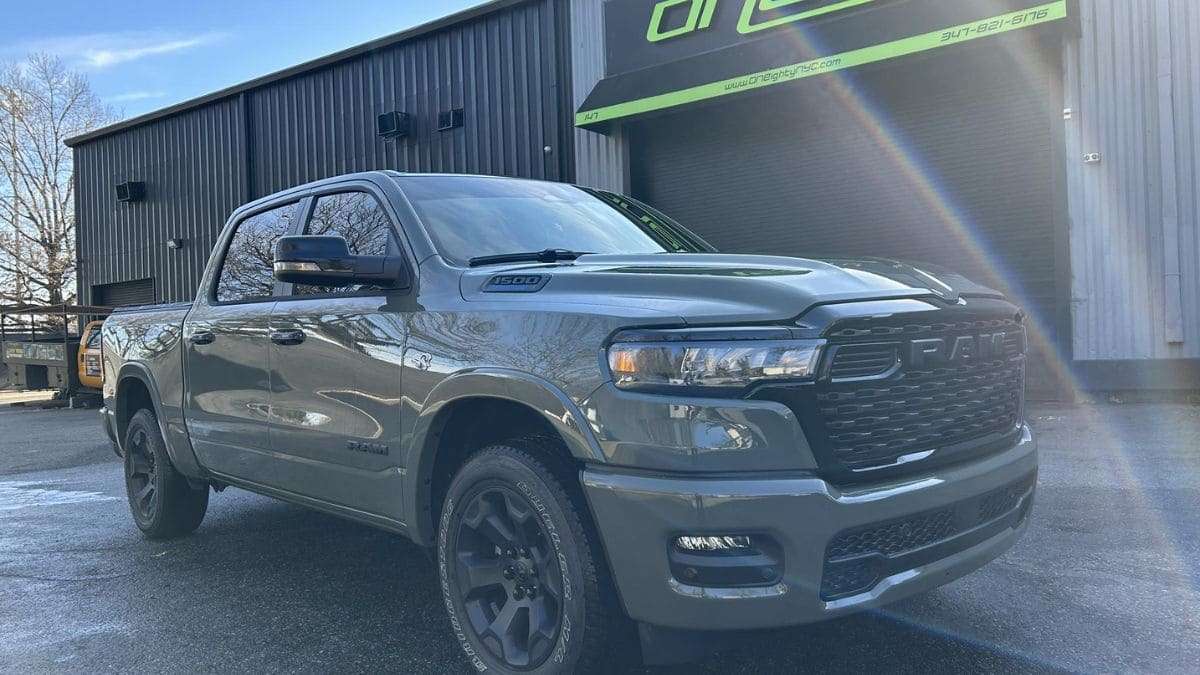

Electric trucks and modern full-size pickups have become incredibly refined over the last decade, but that refinement has also brought complexity. Today’s transmissions are smarter, more adaptive, and more software-driven than ever before. For most owners, that means smoother shifts and better efficiency over time. For others, it means noticing behaviors that feel unfamiliar, especially when compared to older models that seemed more predictable straight out of the gate.
That tension between expectation and reality is exactly what one longtime Ram owner recently highlighted in the “6th Gen Ram 1500's (2024+)” Facebook group. Alessandro Cerciello shared that his brand-new 2026 Ram 1500 with the HEMI V8 has been showing a subtle but noticeable jerky downshift when slowing to a stop in city traffic, something he says never stood out on his previous Rams. Even though other owners with 2025 Hurricane and 2026 HEMI models have told him the behavior tends to smooth out as the transmission adapts, he’s now 2,100 miles in and questioning whether this is normal learning behavior or a sign of a calibration change worth paying attention to.
“So this is my 4th brand new Ram Hemi in a row. Something I’m noticing with this 2026 model and what a bunch of other people on here have confirmed the same thing with ‘25 Hurricanes and ‘26 Hemi’s since it was new: When coming to a slow stop, like a light or a stop sign at 15 mph and less or in stop and go city traffic which I do a lot, sometimes you get a jerky down shift almost like you down shifted a manual transmission but not as intense and very minor but noticeable. Most people would not notice but I'm not most people. Then I hear that the transmission is a learning transmission and it’s gonna adapt and smooth out over time after a few thousand miles. I spoke to a lot of guys saying they could confirm theirs got better. I'm at 2,100 miles now. I had a 2017, 2020, and 2022 and never noticed it on them. Has anyone else experienced this? And yes, I have the most recent update on the TCM.”
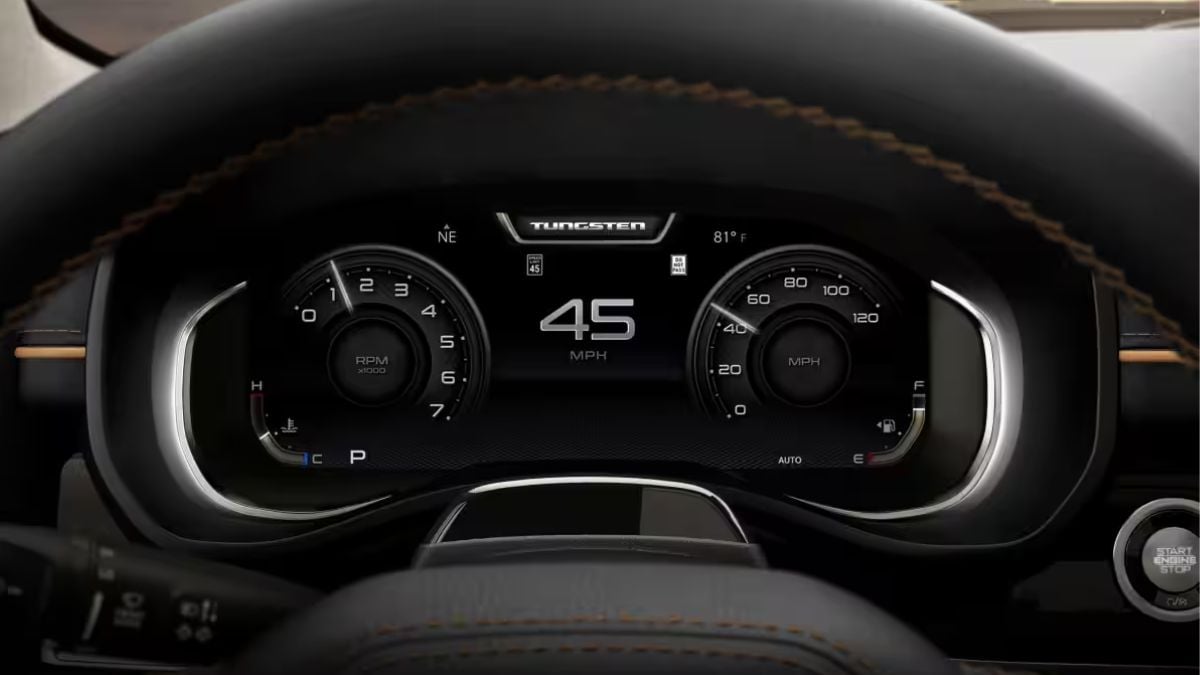
Why Low-Speed Behavior Stands Out More Than Anything Else
Low-speed driving is where modern automatic transmissions are most exposed. At highway speeds, gear changes are spread out and less noticeable. In stop-and-go traffic, however, the transmission is constantly deciding whether to hold a gear, downshift early, or prepare for acceleration again. That split-second decision-making can sometimes translate into sensations that feel abrupt, even if nothing is technically “wrong.”
What makes Alessandro’s experience noteworthy is not just the behavior itself, but his point of comparison. He has owned multiple Ram trucks across several generations and says this is the first time he has noticed this kind of low-speed downshift feel. That raises a fair question about whether calibration strategies have changed as Ram balances emissions, drivability, and fuel efficiency across both the HEMI and Hurricane platforms.
We have seen other Ram owners raise broader concerns about software-driven behavior and reliability in newer trucks, including one owner wondering what might come next after a 2025 Ram 1500 first lost dashboard power and then triggered a check engine light. In those cases, the concern is not always outright failure, but how much modern trucks rely on software decisions that drivers can feel but not fully control.
The Learning Transmission Explanation
Several commenters responded to Alessandro by pointing out that Ram’s transmissions are designed to adapt to individual driving styles. In theory, that means smoother shifts over time as the truck learns braking habits, throttle input, and typical traffic conditions. This idea of a “learning” transmission is not new, but it can feel unsettling for owners who expect consistency from day one.
Alessandro noted that multiple owners told him the behavior improved after a few thousand miles. Still, at just over 2,100 miles, he is in that gray area where the truck should be partially adapted, yet the sensation remains noticeable. That creates a natural tension between patience and concern, especially for drivers who spend a lot of time in city traffic where this behavior shows up most often.
What Other Owners Are Experiencing
The comments under Alessandro’s post added valuable context and helped shape the conversation beyond a single experience.
Jesse McCollum shared, “I currently have a 2026 Hemi as a loaner and yes, I definitely notice this. I describe it as feeling like the engine wants to cut off before you completely stop, like the auto start/stop is coming on too soon.”
Jesse’s description is interesting because it highlights how easily this sensation can be mistaken for something else. Even when auto start-stop is not actively engaging, the timing of downshifts and deceleration can mimic that feeling. That overlap can make drivers question whether what they’re feeling is normal transmission behavior or a system stepping in earlier than expected.
Hunter Page added another layer, writing, “Ok, I’m glad I’m not the only one. Mine does downshift a little rough sometimes. But when you accelerate, it’s smooth as butter. I figured it was a break in period since I’ve never had a new truck.”
Hunter’s comment reinforces the idea that this behavior is highly situational. Under acceleration, the truck feels refined and confident. It is only during deceleration that the roughness appears. That distinction suggests calibration rather than mechanical failure, but it does not necessarily make the experience easier to ignore.
Adam Rhodes offered a longer-term perspective, saying, “Keep driving it. Mine was really tight and jerky when it was new. At 6,600 miles, I seldom notice it now. I drive a lot in freeway traffic and it drove me nuts. I just drove from Seattle to Portland today and never noticed it once.”
Adam’s experience may be the most reassuring for concerned owners. It suggests that mileage and consistent driving conditions can genuinely smooth things out. However, it also implies that some owners may need to live with the behavior longer than they expect before seeing meaningful improvement.
Is This a HEMI Issue, a Hurricane Issue, or Just a Modern Truck Reality?
One of the more interesting aspects of Alessandro’s post is that owners of both HEMI and Hurricane-powered trucks are reporting similar behavior. That points away from engine-specific issues and more toward shared transmission logic. As Ram continues transitioning between powertrains, the transmission becomes the common denominator.
At the same time, owner sentiment around these newer trucks has been mixed in other areas as well. Some drivers have expressed frustration with changes they feel prioritize efficiency and compliance over feel, such as one 2025 Ram 1500 Rebel owner who said the experience made them wish they never got rid of their HEMI due to massive disappointments with the trucck. Others, however, have had more positive outcomes after working through early issues.
We have also seen examples where patience and dealer intervention paid off, including an owner who absolutely loves their 2025 Ram 1500 Bighorn after three dealership visits resolved transmission-related concerns. These contrasting stories show that outcomes can vary widely depending on usage, updates, and individual expectations.
It's Too Early in the Production Cycle to Draw Conclusions
I think this story sits right at the intersection of progress and frustration. Modern trucks are objectively more capable and more efficient than ever before, but they also ask owners to trust systems that adapt over time rather than delivering a finished feel immediately. For drivers like Alessandro, who have a strong baseline from past ownership, those changes stand out more sharply.
What stands out to me is not that the truck is jerky, but that so many owners are noticing the same behavior and describing it in nearly identical terms. That consistency suggests intent rather than defect. Still, intent does not always align with driver preference. Ram may have tuned these transmissions to meet broader goals, but that does not mean every owner will love the result, especially early on.
At the same time, stories from owners who say the behavior fades with mileage cannot be ignored. This feels less like a red flag and more like a reminder that buying a brand-new vehicle today sometimes means living through a longer adaptation phase than it did a decade ago. Whether that is acceptable comes down to personal tolerance and driving style.
Important Takeaways
• Low-speed drivability matters more than peak performance. Many owners judge their truck not by how fast it accelerates, but by how smooth it feels in daily traffic.
• Learning transmissions require patience. Adaptive systems may genuinely improve over time, but the early miles can feel unsettling.
• Shared behavior across engines points to calibration. When both HEMI and Hurricane trucks show similar traits, software becomes the likely factor.
• Community feedback is valuable. Hearing from owners at different mileage points helps set realistic expectations.
• Modern refinement comes with tradeoffs. Smoother long-term performance sometimes means less immediate predictability.
What Do You Think?
Have you noticed any low-speed downshift behavior in your newer Ram? Did it improve as you put more miles on it?
And if you’ve owned older Rams, do you feel the newest generation drives smoother overall? Or do you miss the more straightforward feel of previous models?
Aram Krajekian is a young automotive journalist bringing a fresh perspective to his coverage of the evolving automotive landscape. Follow Aram on X and LinkedIn for daily news coverage about cars.
Image Sources: The “6th Gen Ram 1500's (2024+)” public Facebook group and Ram’s gallery, respectively.
Set Torque News as Preferred Source on Google
Follow us today...




Comments
Is it a torque converter…
Permalink
Is it a torque converter issue? Torque converter clunks happen at low speeds.
About your site’s 2022+ Tundra articles. Some of your articles call them dependable. That’s false. With their large number of engine failures and engine replacements I don’t believe that they are in any sense reliable. 2021 and previous year Tundra’s are very reliable.