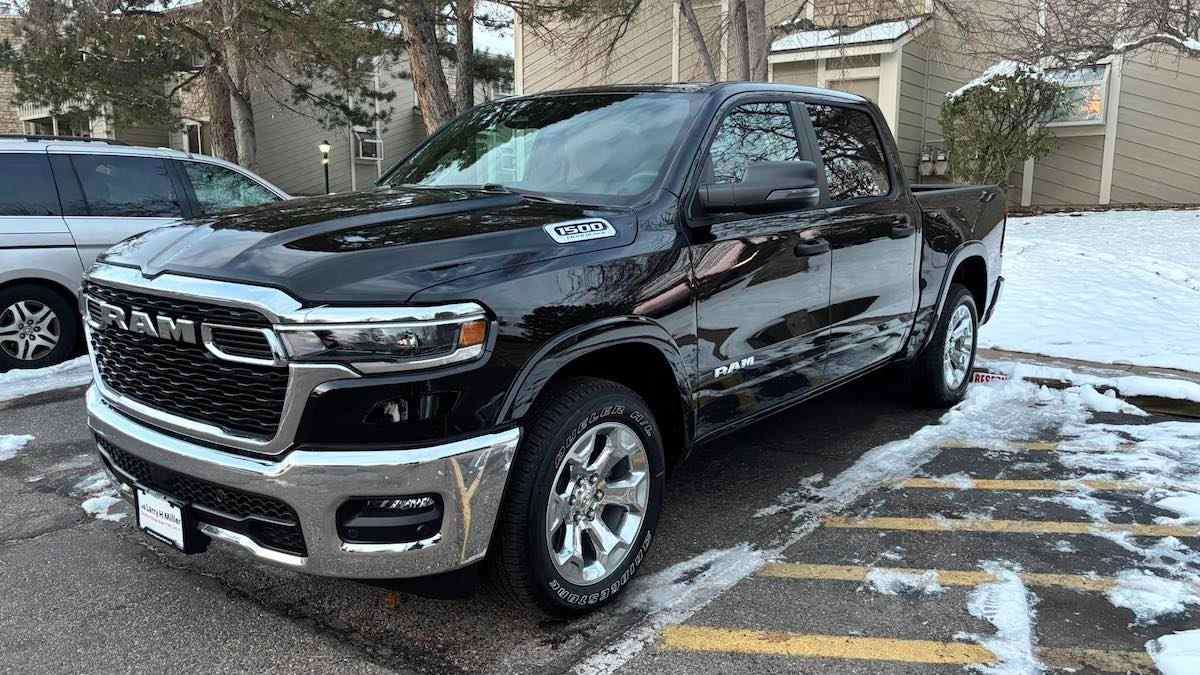

When a manufacturer’s top executive admits they can’t fix your $60,000 Ram truck, you aren't just facing a repair; you’re facing a corporate cover-up.
Imagine buying a brand-new $60,000 Ram 1500 Bighorn in December, only to have it spend more time on a dealer lift than in your driveway while a corporate VP admits they can’t fix it. After six failed attempts to resolve a total tech blackout and body defects, the manufacturer’s only "solution" is for you to trade it in and swallow the loss on a defective nightmare.
In my research into the reliability hurdles facing the new 6th Generation Ram 1500, I found a recent post shared in a Facebook community of Ram truck enthusiasts. Justin Moore highlighted growing concerns about the build quality of the 2026 models, detailing a scenario where his brand-new Bighorn was pushed all the way to a corporate-level ultimatum after repeated failures.
Justin says,
“I took my 2026 Ram 1500 Bighorn into dealer because the screen was not working, it has been in the dealer now six times since the day I bought it for paint issues and so many other issues. I bought it on December 4, 2025, and now they tell me the VP of the company said it might be best to just trade it in. Yes, it went that high. Has anyone ever had to do this before or dealt with the situation? I’m refusing the offer on this nightmare. I don’t want to get screwed over.”
From My View
From my perspective, Justin’s December 4th purchase date adds an element of investigative drama because that is the exact day dealers were officially notified of major instrument cluster recalls. Industry experts at RepairPal have confirmed the severity of this situation, noting that an instrument panel display that fails to display critical information increases the risk of a crash.
Having tracked these mechanical shifts for decades, my reporting has consistently warned that the modern digital gauge cluster has evolved far beyond a simple display; it is now a foundational operating component that, upon failure, can effectively brick the entire vehicle.
In my recent investigation into the spiraling costs of Mopar maintenance, I highlighted how even a well-loved truck can become a financial liability, noting that an owner put between $7,000 and $11,000 into my Ram 1500 just to fix it and make things right, a reality that many 2026 owners are now facing much sooner than expected.
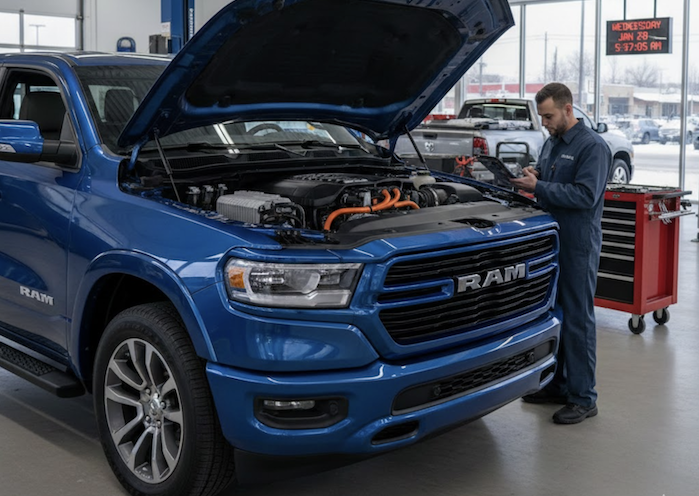
The reality is that this "six-visit" benchmark isn't just a string of bad luck; it is a statistical anomaly that suggests the Bighorn's quality control is hitting a new low for the 6th Gen platform. CarBuzz recently analyzed this trend, noting that more than 72,000 nearly-new Ram trucks could be affected by these software-related cluster failures.
In my experience, these 6th Gen "teething" issues are becoming a pattern, and as I recently reported, the 2026 Ram runs on the new "Atlantis" electrical architecture, which governs everything from safety sensors to infotainment, often leaving owners stranded.
My Take
My take on the VP’s "trade-in" advice is that it serves as a smoking gun for an industry admission. In the automotive world, telling a customer to trade in a new vehicle still under warranty is often a quiet admission that the "Atlantis" software-hardware architecture is fundamentally broken beyond a dealer's pay grade.
This architecture has led to Recall #25V826 for blank instrument clusters, a known conflict that dealers are currently struggling to patch effectively.
Furthermore, this "Trade-In" strategy is a massive financial red flag. When a VP suggests a trade-in, it is often a tactic to avoid a Lemon Law Buyback. A trade-in keeps the "Lemon" title off the vehicle's history, whereas a buyback forces the manufacturer to brand the title, significantly hurting their resale data and corporate reliability metrics.
If Justin trades the truck, he likely loses thousands in depreciation; if he wins a Lemon Law Buyback, the manufacturer must pay him back every cent. Justin is 100% right to refuse to get "screwed over.”
Don’t Let a “Trade-In” Offer Pick Your Pocket
If you are facing a nightmare similar to Justin’s, you need to recognize a "trade-in" offer for what it truly is: a corporate exit strategy designed to save the manufacturer money at your expense. When a brand executive suggests you trade in a defective 2026 Ram, they aren't doing you a favor; they are trying to bypass the Lemon Law.
1. The Trap: Trade-In vs. Buyback
In a standard trade-in, the dealer appraises your truck as a used vehicle. Because of the immediate depreciation hit new vehicles take, you could easily lose $10,000 to $15,000 the moment you sign that deal. Conversely, a Lemon Law Buyback (or repurchase) forces the manufacturer to refund your full purchase price, including taxes, registration, and even finance charges, minus a small "usage fee" based on your mileage at the first repair attempt.
2. How to Fight Back and Win
- Reject the "Gentle Suggestion": If a dealer or VP mentions a trade-in, simply state: "I am not interested in a trade-in that costs me equity. I am seeking a formal repurchase under state and federal warranty laws."
- The "Paper Trail" Power: Your strongest weapons are your service invoices. Ensure every "ghost in the machine" or paint defect is documented. If the dealer says "could not replicate," don't leave until they note your specific complaint on the RO (Repair Order).
- Invoke Recall #25V826: Explicitly link your screen failures to the federal safety recall. Manufacturers are legally obligated to fix safety defects; if they admit they can't, they have effectively met the criteria for a "buyback."
- Consult a Professional: Most Lemon Law attorneys work on a contingency basis, meaning their fees are paid by the manufacturer, not you. Don't try to out-negotiate a corporate VP on your own.
Remember, a trade-in protects the manufacturer's "clean title" history. A buyback protects your bank account. Don't settle for anything less than being made whole.
What Ram Owners Are Saying
The frustration is boiling over in the community. One Reddit user noted the severity of the situation, stating, "I'm really thinking about doing a buy back, this is not making me feel good about ram right about now," which echoes the sentiment of many early 2026 adopters.
Another owner highlighted the technical helplessness many feel, mentioning, "There are too many possibilities this can or will happen... it's either a software thing or they replace the whole thing," found in a discussion about the dreaded "black screen of death."
Key Takeaways for My Readers
- Lemon Law vs. Trade-In: Never accept a trade-in offer on a defective vehicle without consulting a Lemon Law attorney; a buyback is almost always better for your wallet.
- The 6-Visit Rule: Once a vehicle has been in the shop four to six times for the same issue, you are likely in Lemon Law territory.
- Recall #25V826: If your 2025 or 2026 Ram screen goes blank, it is a federal safety violation, not just a minor glitch.
- Document Everything: Keep every service ticket, especially if the dealer claims they "couldn't replicate" the problem.
Where's the Transparency?
The "Information Gap" here is terrifying: if a VP is telling one owner to walk away from their vehicle, how many thousands of other 2026 Rams are sitting on lots with the same "unfixable" ghost in the machine? Owners deserve transparency, not a trade-in offer that shifts the financial burden of a manufacturing error onto the consumer.
It's Your Turn: Have you dealt with a "unfixable" tech issue on your new truck? Would you take the trade-in or fight for a buyback? Please leave a comment in the red “Add new comment” link below.
Next Up: In my next report, I dive into why some owners are choosing the older powertrain over the new options. Check out my analysis here: Why I’m Losing Confidence In My Ram 1500 After 66K Miles.
Denis Flierl is a 14-year Senior Reporter at Torque News and a member of the Rocky Mountain Automotive Press (RMAP) with 30+ years of industry experience. Based in Parker, Colorado, Denis leverages the Rockies' high-altitude terrain as a rigorous testing ground to provide "boots-on-the-ground" analysis for readers across the Rocky Mountain region, California EV corridors, the Northeast, Texas truck markets, and Midwest agricultural zones.
A former professional test driver and consultant for Ford, GM, Ram, Toyota, and Tesla, he delivers data-backed insights on reliability and market shifts. Denis cuts through the noise to provide national audiences with the real-world reporting today’s landscape demands.
Connect with Denis: Find him on LinkedIn, X @DenisFlierl, @WorldsCoolestRides, Facebook, and Instagram.
Photo credit: Denis Flierl via Justin Moore
Set Torque News as Preferred Source on Google
Follow us today...