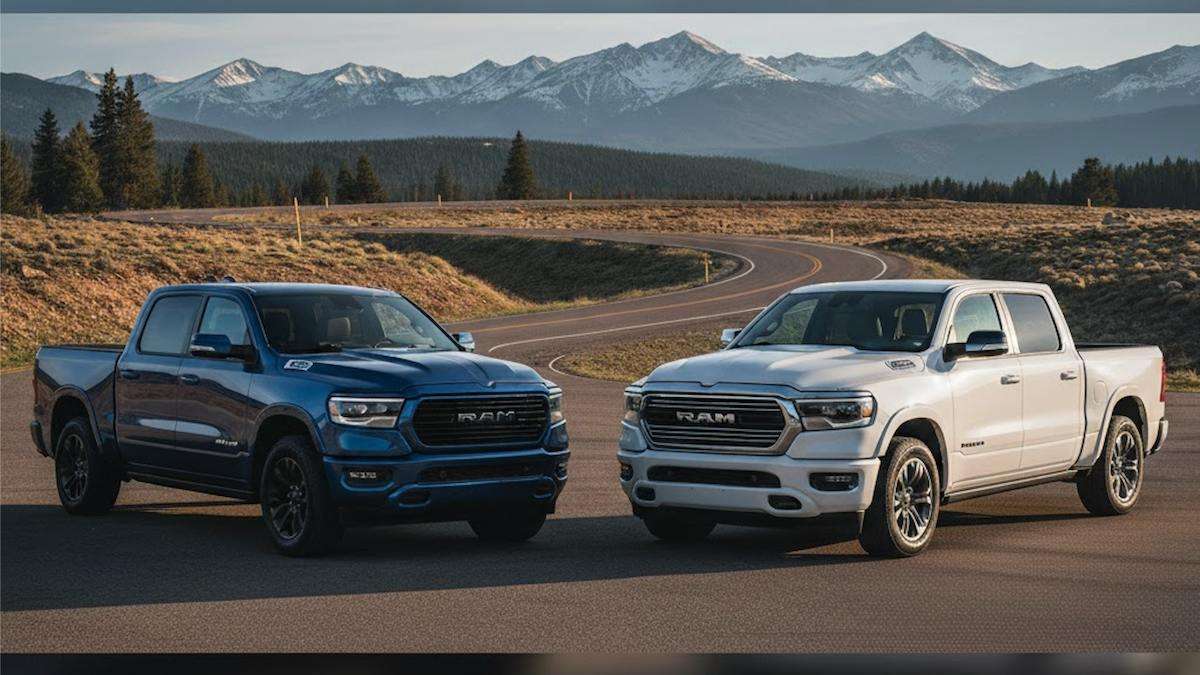

An 8-time Ram 1500 owner and current Chrysler employee explains why the new 2025 refresh is actually a step backward for loyal truck buyers.
In my research on the latest Stellantis ownership trends, I found a recent post shared in a Facebook community of Ram enthusiasts where Mike Thomson from New Jersey exposed the frustrating reality of the 2025 refresh and the hidden technical reasons why newer isn't always better.
Mike says, “This is my 2025 '5th' gen Ram 1500 with a 3.6 “ that I wish I never bought.” Pictured is also the 2021 Ram that I should have kept. I have worked for Chrysler for 8 years now and have owned many Ram 1500s. I’ve had a 2009, 2014, 2019, 2021, 2022, and a 2023 built to serve, and now this turd of a 2025. The 2025 and 2026 are still 5th gen “DT” body code trucks that got a mild refresh the same way “DS” (4th gen) did in 2013 when Fiat purchased Chrysler and became FCA.”
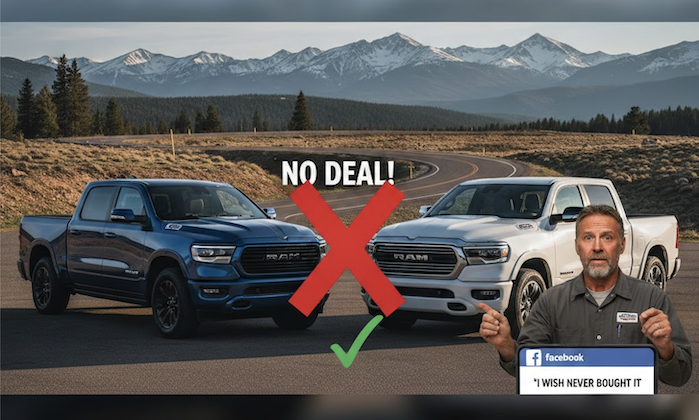
From My View
After 30 years in the automotive industry, I have seen every major manufacturer go through what I call the “Identity Crisis Refresh.” It’s that moment when a brand tries to convince you they’ve built a brand-new truck when, in reality, they’ve just slapped a new face on an old problem. Mike Thomson’s story isn’t just a rant; it is a technical warning from someone who has been on the Chrysler assembly and service side for nearly a decade.
Mike’s frustration stems from a 2025 Ram 1500 equipped with the 3.6L Pentastar V6, a truck he explicitly calls a “turd” compared to his beloved 2021 model. For those of us who live and breathe truck data, this hits hard because 2021 was widely considered a high-water mark for the “DT” body code. I’ve spent years tracking these shifts, often reporting on how the Ram 1500 engine lineup has transitioned away from the legendary HEMI, and Mike’s experience confirms my suspicion that the 2025 “refresh” may have introduced more bugs than it fixed.
My Take:
To understand why a Chrysler veteran would turn on his own brand, we have to look at who is being affected, how the engineering failed them, and why this is happening now.
Who is affected? It’s the loyalists. Mike has owned a 2009, 2014, 2019, 2021, 2022, and a 2023 "Built to Serve" edition. He knows the DNA of these trucks. When an owner with that much equity in the brand says he should have kept his 2021, we need to listen.
How did it fail? The 2025 and 2026 models are technically still the "DT" body code, but they’ve undergone a mid-cycle refresh. According to experts at Lemberg Law, who have been investigating widespread engine misfire problems, many 2025 Ram 1500 owners are reporting random cylinder misfires and check engine lights as early as 200 miles into ownership.
Why is this happening? It is a classic case of pushing old architecture to meet new standards. I’ve covered this extensively, noting that many Ram 1500 owners are facing significant reliability hurdles with the eTorque system, which is standard on Mike’s 3.6L V6.
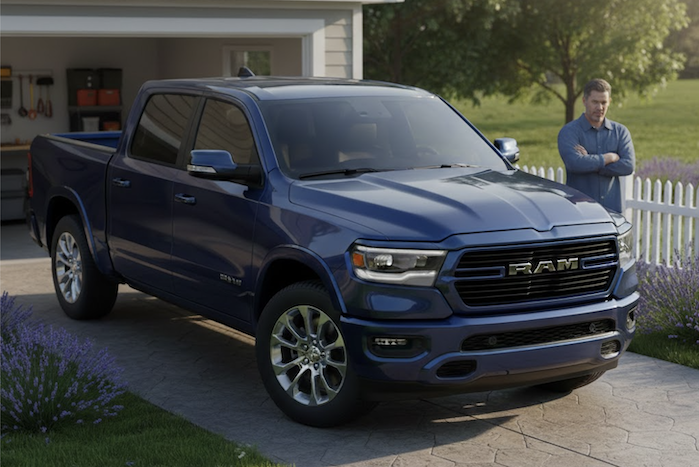
3 Key Insights
1. Software over Hardware: Most 2025 "mechanical" issues are actually software calibration failures in the Transmission Control Module (TCM).
2. Body Code Confusion: The 2025 is not a "6th Gen" truck; it is a 5th Gen (DT) with a facelift, which has led to mismatched owner expectations.
3. The "3.6L Trap": While the Pentastar is a workhorse, the 2025 emissions tuning has led to "rough idle" and "hesitation" complaints that weren't as prevalent in 2021.
The Technical Truth: DS vs. DT
Mike pointed out a crucial detail that most dealerships won't tell you. He compared the current 2025 refresh to how the 4th Gen "DS" body code was handled in 2013, when Fiat purchased Chrysler. It is a strategy of "polishing the stone" rather than carving a new one. This matters because while the 2025 looks sleeker, the underlying electronics are being asked to do more with less support.
I recently investigated the mounting transmission problems in recent Ram models, and Mike’s description of his 2025 as a "turd" aligns with reports of "clunky" downshifting. Even recognized industry experts at Car and Driver have noted that while the new Hurricane engines are the stars, the returning base V6 eTorque setup feels less refined than the competition's hybrid offerings.
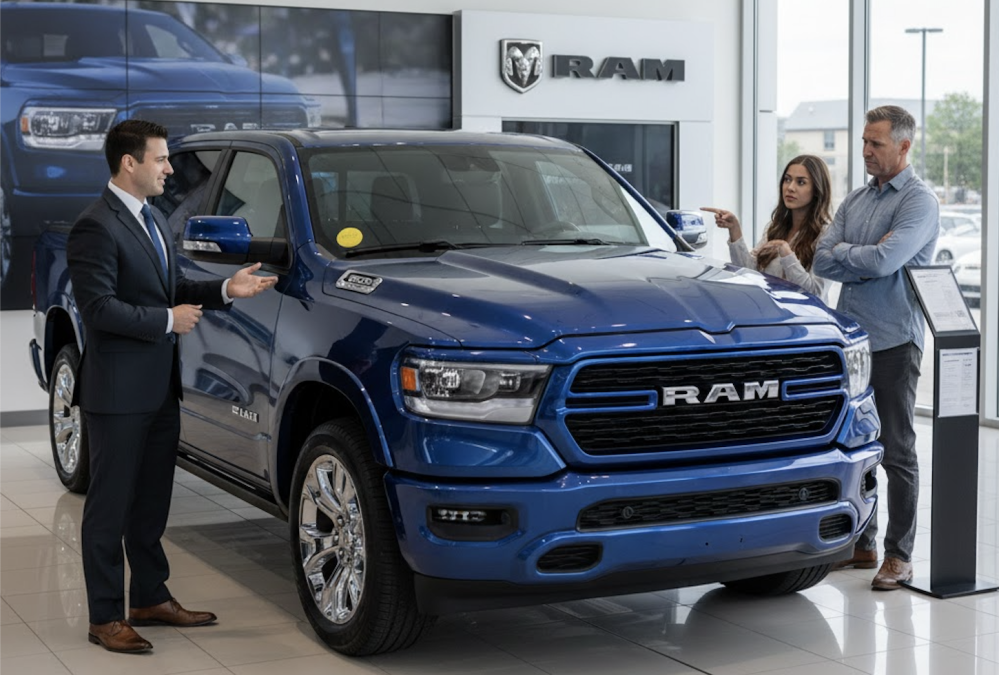
Community Technical Feedback
The community sentiment is shifting rapidly. One user on Reddit noted the severity of the situation, stating, "I have lunging issues with my 2025 3.6 etorque, among a myriad of others like uncurable p0300 codes," which you can read in the full discussion here.
Another owner highlighted the vulnerability of the new design, mentioning, "I picked it up on June 30, 2025, and within two days and less than 900 miles on the truck, it was already in the shop—and now needs a full engine replacement," found in this Reddit thread.
These aren't isolated incidents. They represent a growing trend of "Day 1" failures that I’ve been tracking for months. I wrote a piece recently about why some 2025 Ram owners are already looking for buybacks, and Mike’s "I wish I never bought it" sentiment is the heartbeat of that report.
Key Takeaways for Potential Buyers
- The 2021 Sweet Spot: If you currently own a 2021 or 2022 Ram 1500 with low mileage, think twice before trading up. You likely have the most stable version of the DT platform.
- Avoid the First Batch: As with any refresh, the first six months of production for the 2025 model year are seeing the highest TSB (Technical Service Bulletin) counts.
- Verify the Generation: Don't let a salesperson tell you the 2025 is a "6th Gen." It is a facelifted 5th Gen.
My Recommendations
If you find yourself in Mike’s shoes, stuck with a 2025 that feels like a "turd," here is what I recommend:
- Document the "Cold Start": Many of these 3.6L misfires happen during the first start of the day. Record it on your phone.
- Push for TCM Updates: There is a specific TSB regarding the Transmission Control Module for the 2025 models built before November 2024. Demand your dealer checks for "Flash" updates.
- Compare Octane: While the 3.6L says it runs on 87, I have seen data suggesting that mid-grade 89 fuel reduces the "lunge" sensation some owners report during eTorque transitions.
Don't Walk Away
The 2025 Ram 1500 isn't a bad truck for everyone, but for a Chrysler veteran like Mike Thomson, it represents a decline in the "built-to-serve" ruggedness that made the brand famous. If an insider with 30 years of experience tells you to keep your 2021, you don't walk away from that advice; you run.
It’s Your Turn
Are you an owner who traded in a reliable 2021 or 2022 model for the 2025 refresh, only to miss your old truck? Whether you are a Chrysler insider like Mike or a long-time enthusiast, I want to hear about your experience with the 3.6L Pentastar or the new Hurricane engine lineup. Does your new Ram live up to the legacy, or do you feel like you bought into a "facelift" that didn't go deep enough?
Leave your thoughts and owner stories in the red “Add new comment” link below.
About The Author
Denis Flierl is a 14-year Senior Reporter at Torque News and a member of the Rocky Mountain Automotive Press (RMAP) with 30+ years of industry experience. Based in Parker, Colorado, Denis leverages the Rockies' high-altitude terrain as a rigorous testing ground to provide "boots-on-the-ground" analysis for readers across the Rocky Mountain region, California EV corridors, the Northeast, Texas truck markets, and Midwest agricultural zones.
A former professional test driver and consultant for Ford, GM, Ram, Toyota, and Tesla, he delivers data-backed insights on reliability and market shifts. Denis cuts through the noise to provide national audiences with the real-world reporting today’s landscape demands.
Connect with Denis: Find him on LinkedIn, X @DenisFlierl, @WorldsCoolestRides, Facebook, and Instagram.
Photo credit: Denis Flierl via Mike Thomson
Set Torque News as Preferred Source on Google
Follow us today...