
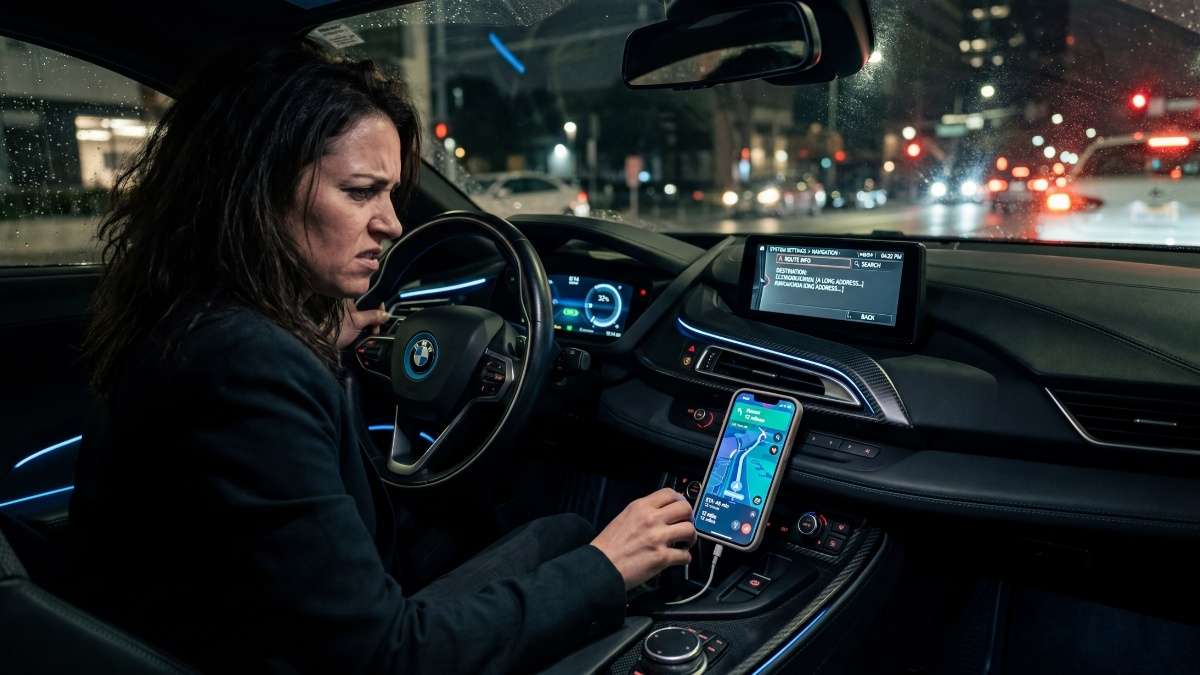

The automotive industry is currently standing at a precarious crossroads, and frankly, many of the world’s oldest OEMs are about to drive straight off a cliff. For decades, car companies have struggled with a fundamental truth: they are excellent at bending metal and managing supply chains, but they are generally mediocre—at best—at developing software. When Apple CarPlay and Android Auto arrived, it was a peace treaty that benefited everyone. Drivers got the familiar, high-performance interface of their smartphones, and car makers didn't have to worry about building a world-class UI.
However, a new and dangerous trend is emerging. Led by giants like General Motors, several OEMs are beginning to sever ties with Apple and Google, opting instead for "native" software environments. They claim this allows for better integration of EV-specific data, like battery pre-conditioning and charging station routing. But beneath the marketing gloss lies a more cynical reality: a desperate grab for subscription revenue and user data. In doing so, these companies are ignoring the basic usability requirements of their customers and are fast-tracking their own obsolescence.
The Familiarity Trap and the Value of the Digital Life
The modern consumer does not view their car as an isolated mechanical island; they view it as an extension of their digital life. We live in our ecosystems. Whether you are deeply embedded in the Apple "walled garden" or the flexible Google environment, you have spent years—and likely thousands of dollars—curating your digital experience. This includes your music playlists, your preferred navigation apps like Waze, your contacts, and your podcasts.
When an OEM like GM decides to remove CarPlay, they aren't just changing a menu layout; they are effectively telling the customer that their previous digital investments are no longer welcome in the cabin. This creates immediate friction. A driver who has spent a decade using Siri to send hands-free messages or Spotify to manage their commute does not want to learn a clunky, proprietary system designed by a committee in Detroit.
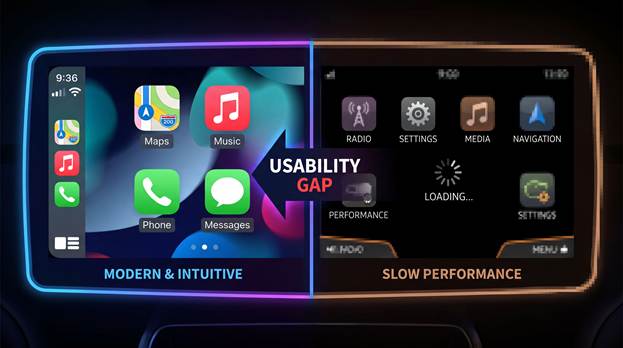
[Image Prompt 1: A split-screen graphic showing a high-resolution, vibrant Apple CarPlay interface on the left versus a cluttered, laggy-looking proprietary OEM dashboard on the right, highlighting the "Usability Gap."]
The Great Disconnect in Software Competence
The primary reason drivers prefer smartphone mirroring is reliability. Tech giants like Apple and Google employ thousands of the world’s best software engineers who iterate on mobile operating systems daily. Your phone is updated constantly. In contrast, automotive software development cycles are tied to the slow, agonizing pace of vehicle manufacturing.
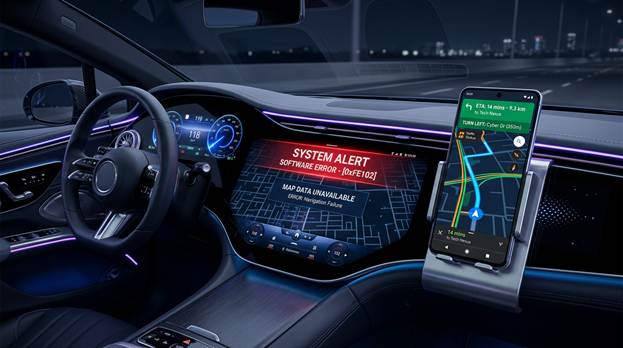
When a car maker insists on "Native EV Software," they are promising a level of technical excellence they have historically failed to deliver. We have seen countless reports of native systems lagging, crashing, or requiring hard reboots while the car is in motion. This isn't just a nuisance; in a vehicle, a software failure is a safety issue. By locking out the established, stable interfaces of Apple and Google, OEMs are forcing customers to act as beta testers for half-baked software.
As noted in this detailed industry analysis, the shift away from standard interfaces often results in a "closed nature" that prioritizes the car maker's business model over the driver’s experience. These companies want to sell you a data plan or a monthly subscription for heated seats and advanced navigation—features you already have on your phone for free.
Driving Buyers Toward the Competition
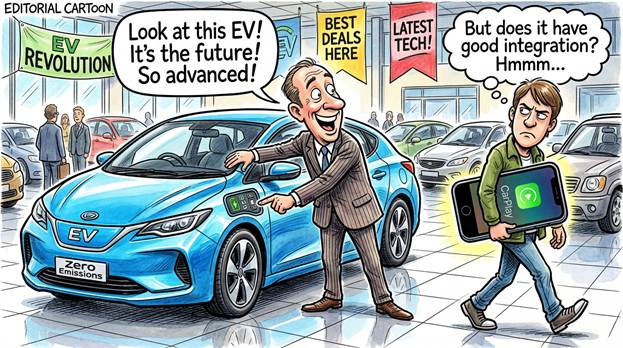
The arrogance of assuming a brand name is enough to keep a customer captive is a classic "Innovator's Dilemma" symptom. Recent surveys indicate that a significant percentage of EV buyers consider CarPlay or Android Auto a non-negotiable feature. If a buyer is choosing between a Chevrolet Blazer EV and a Ford Mustang Mach-E (which continues to support CarPlay), the software experience will increasingly be the tie-breaker.
By removing these features, OEMs are creating a "churn" event. They are giving their most loyal customers a reason to look elsewhere. Rivian and Tesla have managed to avoid this because they built their brands on a "tech-first" foundation, but even they face constant criticism for their lack of smartphone mirroring. For a legacy brand like GM or Volkswagen to try this move is far riskier; they don't have the "cult of personality" software prestige to back it up.
The Road to Obsolescence and the Usability Failure
The refusal to adopt industry standards is a hallmark of a dying business model. Imagine if a TV manufacturer decided you could no longer plug in a Roku or an Apple TV because they wanted you to use their own proprietary streaming service. That manufacturer would be out of business in a year.
Automakers are currently failing to understand the "Usability Requirements" of the 2020s. A car is now a mobile computer. If the computer’s operating system is inferior to the one in the user’s pocket, the user will feel downgraded. The "closed nature" of these new systems prevents third-party innovation. While Apple can update the "Maps" app overnight to include new features, an OEM might take years to push an Over-the-Air (OTA) update that fixes a simple UI bug.
This path leads to a future where legacy cars become "bricks" the moment the manufacturer decides to stop supporting the software. A car should last fifteen years; proprietary software rarely remains functional for five. By shunning the tech giants, OEMs are essentially building planned obsolescence into their vehicles, and savvy consumers are starting to notice.
Wrapping Up
The battle for the dashboard is about more than just icons on a screen; it is about who owns the relationship with the consumer. Automakers are making a massive strategic error by viewing Apple and Google as enemies rather than essential partners. By forcing native, subpar software on drivers, they are ignoring the usability standards that have become second nature to the modern world.
If car companies want to survive the transition to a software-defined vehicle future, they must prioritize the user experience over the potential for incremental subscription revenue. Failing to do so doesn't just make their cars less attractive—it makes them irrelevant. The market has already spoken: drivers want their digital lives to follow them into their vehicles. The brands that try to block that path will eventually find themselves parked permanently in the past.
Set Torque News as Preferred Source on Google
Follow us today...






