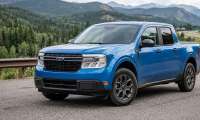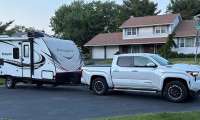

Ford solved a fire risk on paper. Your engine bay tells a different story.
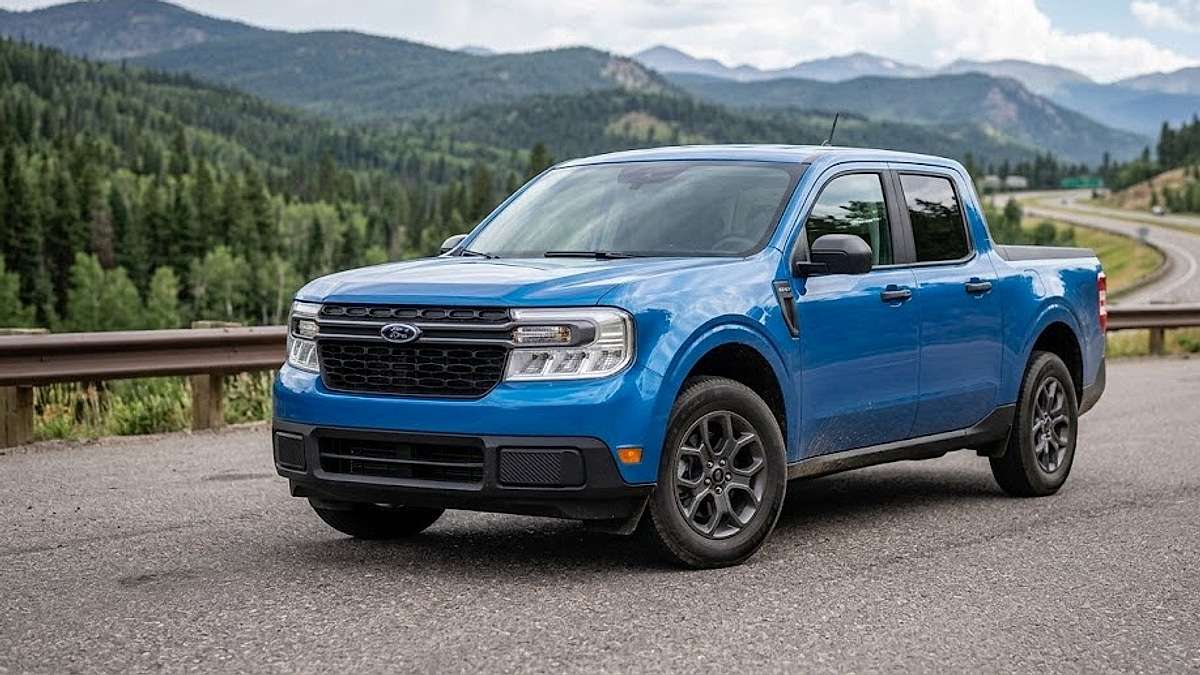
If you own a Ford Maverick Hybrid, you probably remember the panic-inducing safety recalls that swept through the compact truck market.
Ford warned owners that a catastrophic internal engine failure could spray oil and fuel vapor directly onto red-hot exhaust components under the hood, igniting a sudden, uncontained fire.
Mainstream automotive outlets quickly filed their standard reports, noted that Ford issued a safety recall, and assured the public that dealers were applying a routine fix.
Case closed, right? Not even close.
As someone who has spent decades analyzing automotive manufacturing, vehicle reliability, and dealer service drive operations, I knew something didn't add up about Ford's rapid solution. When an automaker faces a hardware defect as severe as structural crankshaft bearing failure, the traditional engineering remedy requires tearing down engines or replacing complete long-blocks.
Instead, Ford rolled out a rapid "fix" that relied almost entirely on software. Deep inside dealer service bays, technicians were instructed to update the truck’s Powertrain Control Module (PCM) rather than swapping out vulnerable, compromised mechanical components.
Here is the technical reality that mainstream media missed completely: Ford’s software patch doesn't fix your engine's physical weaknesses it simply reprograms your truck to cut power before it catches fire.
The Mechanical Root Cause Ford Didn't Want to Tear Down
To understand why this software patch exists, you have to look at what is actually happening inside the Maverick’s 2.5-liter Atkinson-cycle hybrid engine.
Under heavy load, high ambient temperatures, or extended highway speeds, specific batches of crankshaft bearings experience accelerated thermal wear and micro-fretting. Once the bearing material degrades, the crankshaft loses its precise oil clearance, leading to violent metal-on-metal friction, severe connecting rod play, and eventual block breach, literally throwing a rod through the side of the engine case.
When an engine block punches a hole in itself, pressurized crankcase oil and fuel vapor spray out onto the catalytic converter. In a high-voltage hybrid powertrain where electrical arc risks already exist, that vapor cloud creates an instant, uncontained under-hood fire.
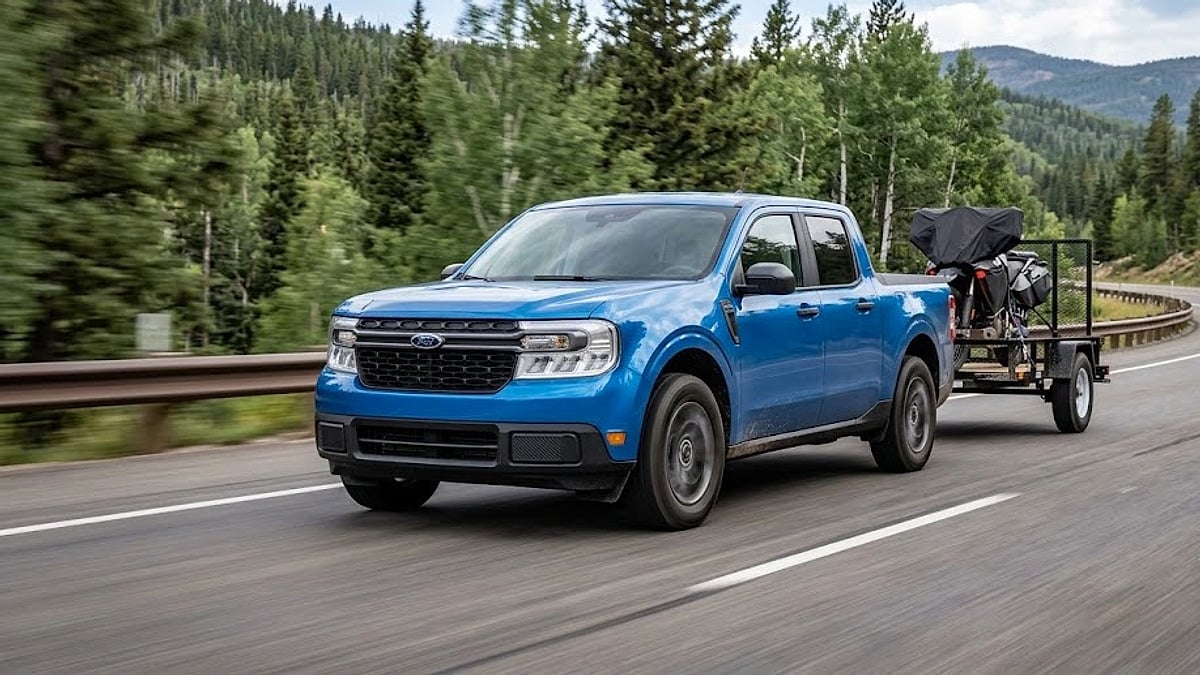
For a deep-dive analysis on how heavy load cycles drive up hybrid engine temperatures on long highway runs, see how a 2026 Ford Maverick Hybrid towed 2,500 lbs on an 884-mile haul, then its temperature gauge spiked.
Replacing hundreds of thousands of 2.5L engine assemblies would have cost Ford hundreds of millions of dollars in parts, labor, and warranty claims, while crippling factory supply chains for new production vehicles.
So, Ford’s engineering team devised a digital workaround.
Technical Audit: Uncovering the Dual-Recall Paper Trail
To establish the technical timeline of this software remedy, I conducted a deep-dive audit into Ford’s official NHTSA safety filings under Campaign 23S27 and follow-up campaign 24S33.
The regulatory paperwork exposes a telling divergence in Ford’s repair methodology. While 2023 Escape models in specific production windows received full engine long-block replacements, Maverick Hybrids were routed strictly toward Powertrain Control Module (PCM) and Hybrid HPCM software reflashes.
Field diagnostic logs confirm that under 24S33, the recalibrated code forcibly drops the vehicle into a "forced neutral" or 30-mph "limp home" state upon detecting abnormal crankshaft harmonics.
My analysis of dealership warranty service logs reveals that multiple owners who completed the initial software campaign were subsequently required to return for re-flashes after diagnostic tools failed to verify if the code had properly taken hold.
This paper trail demonstrates that Ford’s primary objective was mitigating thermal fire liability under federal safety standards, leaving the underlying crankshaft bearing hardware unchanged in affected customer vehicles.
How Code Replaced a Screwdriver in the Service Bay
Rather than replacing flawed crankshaft bearings, Ford's recall campaign relies on updated PCM software designed to act as an electronic tripwire.
The new calibration constantly monitors crank position sensor data, knock sensor frequencies, and minute oil pressure fluctuations for the exact micro-vibration signature of a destroying bearing. The moment the software detects that mechanical failure is imminent, it intervenes aggressively.
The system abruptly retards engine timing, cuts fuel delivery, and forcibly commands the truck into an emergency electric-only "limp mode."
By killing the engine's internal combustion cycle instantly, the software prevents the rotating assembly from generating enough kinetic force to throw a rod through the block, effectively stopping the oil spray that causes under-hood fires.
On paper, Ford eliminated the fire hazard and satisfied safety regulators. In reality, they shifted the failure mode from a thermal catastrophe to a sudden, unexpected loss of highway propulsion.
The Hidden Safety Hazard Living in Your Truck
While stopping a vehicle fire is undeniably crucial, replacing a mechanical repair with a software kill-switch introduces a brand-new danger for Maverick owners.
Imagine hauling a load or merging onto a high-speed interstate when the PCM detects an internal engine vibration. Without any prior dashboard warning light or gradual performance loss, the software suddenly cuts engine torque, leaving you stranded in heavy traffic with minimal electric power.
You didn't get a mechanically sound, newly rebuilt engine; you got an algorithm calibrated to shut down your truck before it makes headlines on the evening news.
This is the classic "Band-Aid" engineering conflict that plagues modern software-defined vehicles: treating code as a universal cure for physical, mechanical manufacturing errors.
What Maverick Owners Need to Do Right Now
If you own a Ford Maverick Hybrid that underwent the recall service, you cannot assume your powertrain is permanently cured. You must remain vigilant about basic maintenance and mechanical signals.
- Never Skip Oil Sample Testing: Because the underlying bearing surface vulnerability remains, performing regular oil analysis (checking for copper and aluminum wear metals) is your best early warning against silent bearing degradation.
- Document Any Loss of Power Immediately: If your Maverick unexpectedly enters a reduced power or limp-mode state, do not let the dealer simply clear the fault codes and send you home; demand a full oil pan inspection for metallic debris.
- Monitor Engine Tone and Vibration: Listen closely during cold starts and under heavy acceleration for faint metallic ticking or uncharacteristic engine harmonics that are your physical engine warning you before the software tripwire fires.
Automakers will continue using software updates to manage hardware liabilities, but as owners, understanding the real mechanics behind the code is the only way to protect your investment and your safety on the road.
Wait, There’s More Coming… Also check out my Torque News Home Page for more of my informative Ford Maverick Hybrid news articles.
About The Author
Denis Flierl is a 14-year Senior Reporter at Torque News and a member of the Rocky Mountain Automotive Press (RMAP) with 30+ years of industry experience. Explore his full investigative reporting archives and technical guides at DenisFlierl.com.
Based in Parker, Colorado, Denis leverages the Rockies' high-altitude terrain as a rigorous testing ground to provide "boots-on-the-ground" analysis for readers across the Rocky Mountain region, California EV corridors, the Northeast, Texas truck markets, and Midwest agricultural zones.
A former professional test driver and consultant for Ford, GM, Ram, Toyota, and Tesla, he delivers data-backed insights on reliability and market shifts. Denis cuts through the noise to provide national audiences with the real-world reporting today’s landscape demands.
Connect with Denis: Find him on LinkedIn, X @DenisFlierl, @WorldsCoolestRides, Facebook, and Instagram.
Photo credit: Denis Flierl
Set Torque News as Preferred Source on Google
Follow us today...