
Drivers have been skeptical since Ford announced in February plans to build a $30,000 EV truck. As my colleague, Armen Hareyan reported at the time, “Ford revealed its Universal Electric Vehicle platform via livestream, starting with a mid-size pickup truck priced around $30,000 for U.S. deliveries in 2027. Built from scratch at the Louisville, Kentucky plant, it features a structural LFP battery from Michigan, gigacastings that slash parts by 20%, and Formula 1-inspired aerodynamics for 15% better efficiency than any current pickup. CEO Jim Farley called it the company's most audacious project, with a 'no part' mantra, zonal electronics, and targets like 4.5-second 0-60 acceleration and more passenger space than a Toyota RAV4. The platform scales to subcompacts and vans, aiming to deliver affordable EVs through smarter design.
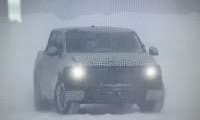
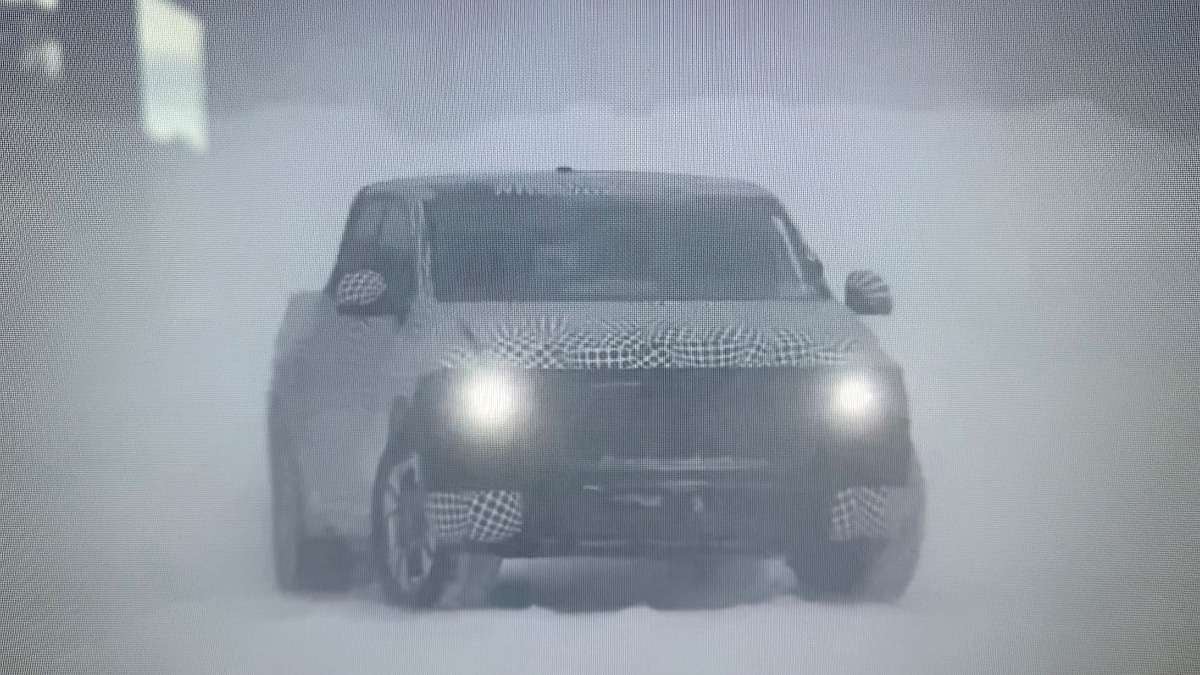
It appears that Ford’s audacious project is coming to fruition, as the automaker has created a website with video showing the disguised truck testing around the country. Narrated by Alan Clarke, who works on the Universal EV Platform, the website promises an insider’s look at how Ford is building an EV that is “Accessible and Exciting, one innovation at a time.” The video is entitled, “You Spotted a Unicorn”. On the website it congratulates the viewer for spotting a Unicorn and promises “We’re testing this prototype early. The herd arrives next year.”
Small Truck Spotted Testing in Long Beach
Just three weeks ago, TorqueNews Editor-in-Chief Hareyan published another article about the truck being spotted in Long Beach, California. Witnesses said the truck was tiny compared to a full-size F150. It appears to be the size of the incredibly popular Ford Maverick. Ford has already posted video of the truck snow-drifting the EV truck in Michigan's upper peninsula. “The prototype appeared to have a camera and radar sensors up front, a NACS charging port, and a 48-volt auxiliary architecture, while the traction battery will remain 400-volt class. Those are not small details. The NACS port means every Tesla Supercharger in America is available to this truck's owner on day one, which is a charging network advantage that no affordable EV from any legacy automaker has ever launched with. The prototype's low ride height and roofline, combined with aero wheel covers and what are almost certainly low-rolling-resistance tires, make clear that Ford is chasing maximum efficiency rather than hardcore off-road capability.”
I would expect that several of the trucks are testing in California, because much of the truck’s development is being driven by Ford’s top-secret Electric Vehicle Development Center in Long Beach, California. Earlier, Ford CEO referred to the people working at the center as Ford’s “Skunk Works team”.
I reported earlier on some of the racing technology that will help keep the small truck light enough for maximum efficiency. Ford says that to speed up the midsize truck’s development they started looking at the racetrack. “By adapting a Formula 1-inspired development cycle, we shifted our focus toward a "fail fast, learn faster" mentality.”
“Historically, wind tunnels are used at the end of a project to validate a design and when little can be changed. We flipped that. We used the wind tunnel as a development tool as designers were just starting to put pen to paper, operating with the urgency of a race team pit crew.”
Ford also started testing with 3D printed parts to speed its development process along. I remember the old days when designers used clay models and fabricated parts to determine how vehicles could be built. Computers and 3D printers have made the process infinitely faster.
Ford started using what it calls a modular "LEGO-like" build for the test truck. This allowed engineers to swap 3D-printed and machined parts in minutes rather than days or weeks. Ford tested thousands of 3D-printed components, including versions of the suspension and drive units that didn't even exist as functional prototypes yet. Ford measured the forces that would change as a result in the vertical, longitudinal, and lateral directions on a car-sized treadmill that matched the air speed at 87 mph. The new testing environment allowed designers and engineers to test things like under-body shields, front bumpers and suspensions without losing the huge amounts of time usually required to make new experimental parts.
Ford has not yet released the name of the small EV truck. Many are betting that Ford will bring back the Ranchero name. The original Ranchero was part car and part truck, similar to Chevrolet's El Camino.
The website invites people who are interested in the affordable EV truck to follow along as the truck prepares for launch. Ford isn’t taking reservations yet, but I bet it isn’t far off.
Image and video by Ford
About the Author
Mary Conway is a professional automotive journalist and has decades of experience specializing in automotive news analysis. She covered the Detroit Three for more than twenty years for the ABC affiliate, in Detroit. Her affection for the Motor City comes naturally. Her father ran a gas station while Mary was growing up, in Wisconsin. Follow Mary at @MaryConwayMedia on X and on Facebook, and send her car news tips for future stories. Mary Conway is an esteemed automotive and business reporter who was inducted into the Michigan Journalism Hall of Fame in 2019. Mary is a member of the Automotive Press Association, Rocky Mountain Automotive Press, Society of Professional Journalists, and NATAS.
Set Torque News as Preferred Source on Google
Follow us today...