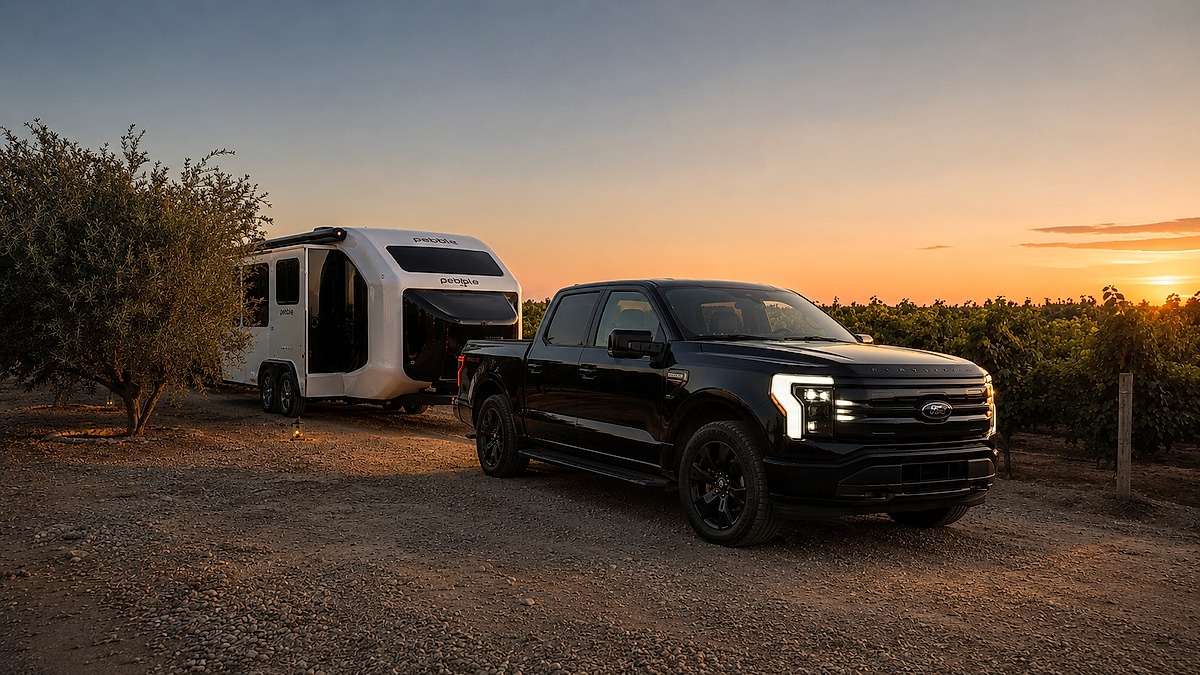

The first tow home is where confidence usually go to end.
A new trailer. A long interstate run. Mountain crossings. Bad routing. Stop-and-go traffic. An electric pickup with a range estimate that suddenly has to account for several thousand pounds of camper behind it.
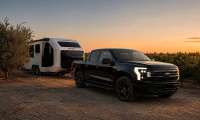
This F-150 Lightning owner picked up his Pebble Flow in Fremont, California, and headed back toward San Diego. The drive up, without the trailer, produced about 1.9 to 2.0 mi/kWh. With the Pebble attached, he expected something close to 1.0 mi/kWh.
He saw 1.5 mi/kWh, according to the Reddit post.
That is a strong number for a full-size electric pickup towing a 24-foot-8-inch travel trailer with a 6,800-pound GVWR.
- The Pebble Flow’s Active Tow Assist effectively shifts part of the propulsion load off the truck, which means the Lightning’s efficiency number alone doesn’t tell the full story; real-world range depends on how much energy the trailer contributes during the trip.
- Route choice matters more than most owners expect; climbing over Pacheco Pass instead of staying on flatter highways introduces elevation changes that can swing efficiency significantly, especially when towing something this large.
- Even with a modified Lightning running less efficient tires and suspension, the setup still outperformed expectations, suggesting that trailer aerodynamics and assist systems can outweigh typical efficiency penalties from aftermarket changes.
It also needs one important note: the Pebble Flow is no passive camper.
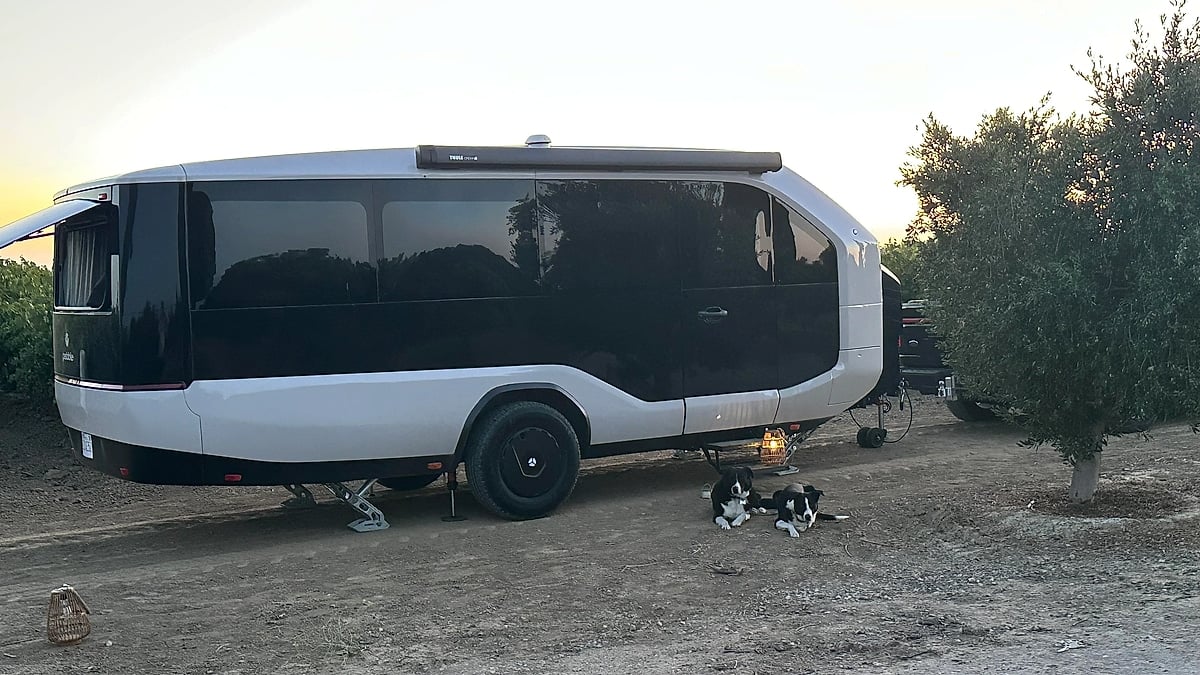
This trailer has its own 45-kWh LFP battery and, with the Magic Pack, a dual-motor Active Tow Assist system. The Lightning’s dashboard reported the truck’s side of the trip. The trailer was helping pay the energy bill from its own battery.
The Truck Number Was Good, The Full Energy Ledger Is Bigger
At 1.5 mi/kWh, the Lightning used about 667 Wh per mile from the truck’s battery.
That is far better than the owner’s feared 1,000 Wh per mile. It also compares well against many conventional travel-trailer reports from Lightning owners, where boxy campers often land near 1.0 to 1.2 mi/kWh depending on speed, wind, tires, terrain, and trailer shape.
The Pebble’s active assist changes the interpretation.
A normal camper forces the tow vehicle to provide nearly all propulsion energy. A Pebble Flow can add torque through its own motors and reduce the load felt by the tow vehicle. The Lightning’s efficiency number improves because part of the towing work is moved into the trailer’s battery.
The correct trip record has two columns:
- Lightning energy used.
- Pebble energy used.
Without both numbers, the post tells us how the truck felt and how far it could go between charging stops. It does not tell us the total system efficiency.
That is the next data point I want from Pebble owners. Start the trip with both batteries documented. End the leg with both batteries documented. Track Active Tow Assist mode, trailer state of charge, route, wind, speed, elevation, and whether Recharge Mode was used on descents.
That would give EV campers something far better than a vague range report.
It would show where the energy actually went.
What 1.5 mi/kWh Means For Lightning Owners
The Lightning’s useful towing range depends on which battery is in the truck.
At 1.5 mi/kWh, a 131-kWh extended-range pack has a mathematical full-to-empty range near 196 miles. A 123-kWh pack lands around 185 miles. A driver using a practical 70-percent battery window has roughly 130 to 140 miles before needing another stop.
That is a usable EV towing rhythm.
It is not diesel-truck freedom. It is also not the grim 80-mile trailer panic story people love to repeat.
The owner’s route made the number more credible because the first tow did not happen on a perfect flat loop. ABRP routed him from Fremont through San Jose, over toward Pacheco Pass on Highway 152, then past San Luis Reservoir and toward I-5. He described traffic backed up through the stop-sign stretch out of Gilroy and over the pass, with the whole section taking hours.
That is an ugly first date with a new camper.
Slow traffic can improve aero consumption, but grades, stops, heat, and nerves punish the experience. The fact that he still came away happy with 1.5 mi/kWh says the Pebble’s assist system was doing real work.
He also learned to turn the assist off downhill because the truck and trailer did not need help descending. That is exactly the kind of owner behavior these active trailers will require. The best driver will use assist like a tool, not leave it blindly engaged and expect the software to solve every mile.
The Pebble Flow Is Built Around A Different Kind Of Towing
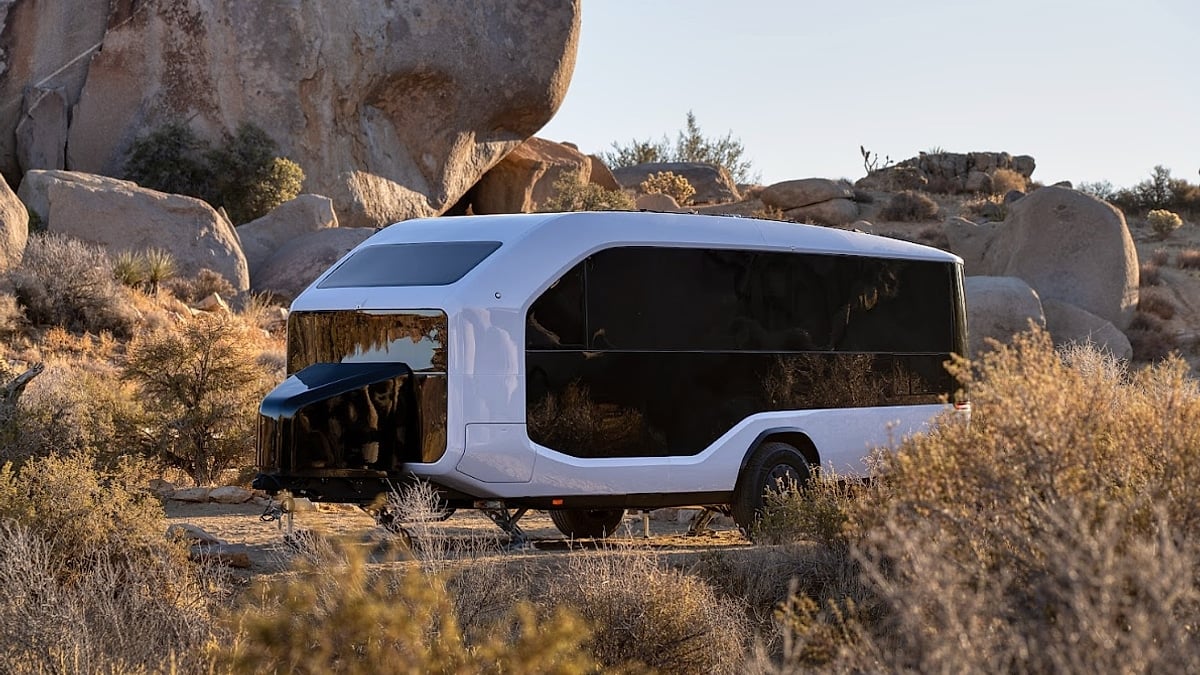
The Pebble Flow weighs 5,800 pounds dry, carries a 6,800-pound GVWR, and has a 680-pound tongue weight. It is not a featherweight pop-up. It is a serious camper with a large battery, electric HVAC, induction cooking, onboard solar, app control, auto-leveling, and power export.
The difference is that it brings propulsion to the hitch.
Pebble says its Active Tow Assist can reduce the load experienced by the tow vehicle, helping range for EVs and fuel economy for gas vehicles. That promise is easy to overhype. A self-propelled trailer does not erase physics. It brings a second battery and two more motors into the same trip.
The reward is better truck-side range and a calmer towing experience.
The cost is more complexity, a higher purchase price, and another battery state of charge to manage.
I like the idea because it attacks the correct problem. EV trucks already tow well. Torque is easy. Stability can be good. Charging with a trailer remains annoying, and range collapses with blunt campers. A trailer that reduces tow-vehicle load and provides its own house power addresses both pain points at once.
This owner’s first report suggests the concept works well enough to change expectations.
He expected 1.0 mi/kWh.
He got 1.5.
That is the kind of gap people notice after the credit card clears.
The Owner Still Had A Modified Truck
The Lightning itself deserves a footnote.
The owner said his truck does not match a stock efficiency baseline. He leveled it with aftermarket Icon Dynamics suspension and added wider tires, both of which hurt efficiency. He said standard Lightning efficiency is often discussed around 2.4 mi/kWh, while his real long-distance experience tends to sit closer to 2.0 mi/kWh, even before recent changes.
That context helps.
The Pebble did not turn a perfectly optimized Lightning into a miracle tow rig. It helped a modified truck keep a respectable number on a messy route.
If the owner later moves to a more efficient tire setup and sees 1.7 to 1.8 mi/kWh while towing, the story gets stronger. I would want to see the same route, similar speed, same trailer load, and both battery states documented.
The first two gave us a promising number.
The next two can give us a pattern.
What I Would Track On The Next Trip
I would start with five screenshots before departure:
- Lightning state of charge.
- Pebble state of charge.
- Truck trip meter reset.
- Trailer mode or Active Tow Assist status.
- Planned route and elevation.
Then I would photograph the same information at each charge stop and at camp.
That may sound excessive. It is exactly how owners will learn whether active trailers deliver enough range benefit to justify the extra cost and complexity.
The important number is 1.5 mi/kWh while the Pebble battery moved from X percent to Y percent.
That turns a cool first post into usable towing data.
For now, this Lightning and Pebble Flow pairing passed the first real test. It crossed an annoying California route, pulled a full-size electric travel trailer, avoided the owner’s worst-case efficiency fear, and delivered enough confidence for a first night off-grid.
That is a good start.
Lightning Owners, Would Active Tow Assist Change Your Trailer Choice?
If you tow with an F-150 Lightning, share your trailer type, weight, height, average speed, mi/kWh, and whether an actively assisted trailer like Pebble Flow would solve your biggest towing problem or just add another battery to manage.
One image by Honorable_Heathen
About The Author
Noah Washington is an automotive journalist based in Atlanta, Georgia, covering sports cars, luxury vehicles, and performance culture. His reporting focuses on explaining the engineering, design philosophy, and real-world ownership experience behind modern vehicles.
Noah has been immersed in the automotive world since his early teens, attending industry events and following the enthusiast communities that shape how cars are built and driven today. His work blends industry insight with enthusiastic storytelling, helping readers understand not just what a car is, but why it matters.
Noah is also a member of the Southeast Automotive Media Association (SAMA), a professional organization for automotive journalists and industry media in the Southeast.
His coverage regularly explores sports cars, luxury vehicles, and performance-driven segments of the automotive industry, including the evolving culture surrounding Formula Drift and enthusiast builds.
Read more of Noah's work on his author profile page.
You can also follow Noah here:
Set Torque News as Preferred Source on Google
Follow us today...