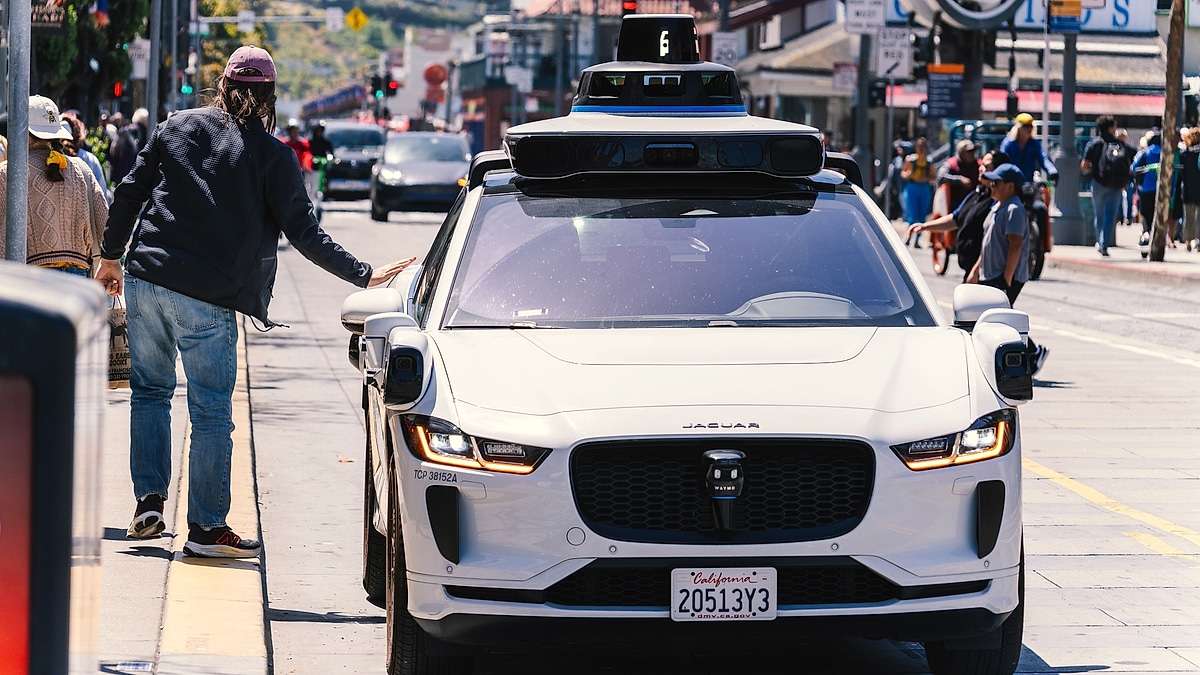

The next phase of the self-driving car debate will be decided in the claims file.
That’s where the real questions live. Not whether a car can navigate a tricky intersection. Not whether a company can cite millions of test miles. The insurance question is more grounded and more revealing: when something goes wrong, how often does it happen, how severe is the damage, what caused it, who else was involved, and is the data strong enough to actually price the risk?
To get a clear answer, I spoke directly with both the National Association of Mutual Insurance Companies and the Insurance Institute for Highway Safety, two groups that approach this question from very different angles but ultimately rely on the same thing: hard data.
- Insurers need both sides of the equation: fewer crashes (frequency) only matter if the cost per crash (severity) doesn’t rise due to expensive sensors, calibration, and repair complexity.
- “Automated miles” are not all equal; data must distinguish between controlled robotaxi deployments, driver-assist systems, and real-world consumer use before pricing can change.
- Without standardized reporting of vehicle miles traveled and detailed crash causation, even promising safety data cannot translate into reliable insurance rates.
In written comments to Torque News, Brett Odom, policy vice president for auto and alternative vehicles at the National Association of Mutual Insurance Companies, said the insurance industry still faces “significant challenges” in assessing automated-vehicle risk.
“When comparing the level of risk presented by human-driven vehicles, there remains tremendous uncertainty on the true safety of automated vehicles, and consequently, insurers’ underwriting and ratemaking processes around them,” Odom said.
A company can argue its cars are safer. A safety paper can show promising results in a defined deployment. A robotaxi fleet can operate without a human driver in selected places. None of that automatically becomes an insurance rating category.
For insurers, the keyword is “credible.”
Odom said insurers would need credible claims data showing that the risk tied to automated driving is “materially different” from the risk tied to human driving before drawing a rating distinction between the two.
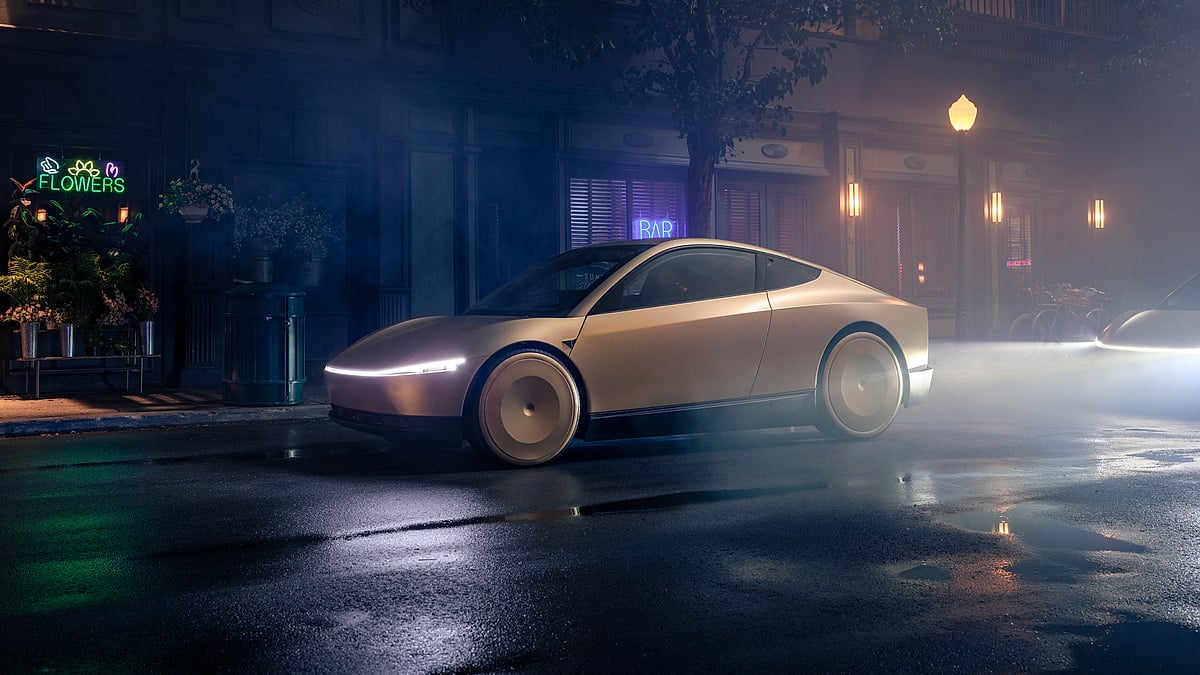
That is a higher bar than a tech company's safety graph. It means the losses have to be separated in the insurance math. If automated miles produce fewer claims, that helps. If those claims cost more when they happen, that pulls the other way. If the crash was caused by another driver, weather, road design, construction, or a human decision outside the vehicle, the automated system may not be the right thing to credit or blame.
This is where the self-driving insurance story gets more interesting than the old “who pays when the robot crashes?” version.
Pricing a risk is not the same as assigning moral blame. It is a discipline built on repeated loss outcomes. Insurers are asking whether automated miles behave differently enough, often enough, and consistently enough to deserve a different rate.
Odom pointed directly to the two old insurance words that still run the show: frequency and severity.
“Insurers should look closely at variations in claim frequency and severity when evaluating the two,” Odom said.
That is the part many consumers miss. A self-driving vehicle could crash less often and still be expensive to insure if each crash is more costly to repair.
Modern automated vehicles are not just cars with better software. They are rolling sensor suites. Cameras, radar, lidar, in some cases, control modules, wiring, calibration requirements, and body repairs can all turn a modest collision into a more complicated claim. Odom flagged that directly.
“Especially on the severity front, automated vehicles are commonly equipped with sensors, cameras, and control layers, expensive components requiring calibration and longer repair times when compared to vehicles without such technology,” he said.

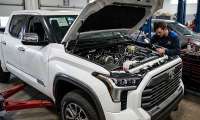
If a human-driven car has a bumper repair, that is one thing. If an automated vehicle has a bumper repair that affects sensors, calibration, driver-assistance hardware, or control systems, the cost and downtime can change quickly. The vehicle may also need to prove it still sees the world correctly before it can go back into service.
So the insurance question is not simply whether autonomy reduces crashes. It is whether the full loss picture improves once repair severity is counted.
The safety side is just as cautious.
Joe Young, director of media relations at the Insurance Institute for Highway Safety, told Torque News that research on crash rates for highly automated vehicles remains limited.
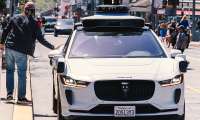
“Waymo is the only company that is currently making sufficient data available for analysis, and there is evidence that Waymo vehicles have lower crash rates than human drivers in their limited deployments,” Young said. “However, we can’t necessarily draw broader conclusions about how they’ll perform in other areas or how other developers’ AVs will perform, so this will require ongoing analysis.”
That is the cleanest current read.
Waymo’s data is important because it is one of the few places where the public can see enough information to start comparing automated driving with human driving. But the phrase “limited deployments” has to stay attached to the conclusion. A robotaxi operating in a mapped service area is not the same as every automated vehicle, every city, every weather pattern, every road design, every traffic culture, or every developer’s stack.
That does not make Waymo’s results meaningless. It makes them specific.
Specific data is exactly what insurers need. Broad self-driving claims are where the trouble starts.
Young also raised a second question that often gets lost: even if automated vehicles show lower crash rates in a limited service, what happens to the broader transportation system?
“We also need to zoom out to understand the broader effect on road safety,” Young said. “Traditional rideshare has not led to a significant reduction in human-driven trips, so it may not be realistic to expect that automated miles will replace human miles and have a net safety benefit.”
That is a brutal caveat for the robotaxi story.
If automated miles replace the riskiest human-driven miles, the safety case gets stronger. If they add new miles, replace transit trips, or mostly substitute for relatively safe trips that would have happened anyway, the net effect becomes harder to measure. A fleet can look safer per mile inside its deployment and still leave the larger road-safety question unsettled.
Young made that point directly on transit.
“Similarly, if automated miles reduce transit ridership, that could also muddy the waters, so all of this needs to be carefully considered when looking at the safety record of automated vehicles,” he said.
The public tends to talk about self-driving safety as if it has one answer. Safer or not safer? Ready or not ready. Human or machine.
Insurance does not get to be that vague.
An insurer has to know what happened in the crash. It has to know whether the vehicle was operating under automation. It has to know the road, weather, speed, other vehicles, damage, injuries, repair time, legal exposure, and whether the system involved was actually comparable to the system being rated. It also has to know how many miles were driven without a claim, because claims without exposure data can mislead.
That is why Young said IIHS wants better standardized reporting.
“IIHS would like to see better and more standardized reporting of AV deployments that includes vehicle-miles-traveled data to allow future analyses of deployments beyond those of Waymo and future Waymo deployments,” Young said.
Vehicle miles traveled may sound boring. It is not. It is the denominator.
Without it, a claim count can look scary or safe without telling you much. Ten crashes can mean one thing across 100,000 miles and something very different across 100 million miles. The same logic applies to injury claims, property-damage claims, airbag deployments, and repair severity. The industry needs the loss and the exposure.
Odom’s comment adds another layer: causation.
“Insurers will want to evaluate data regarding causation of an accident as there are a host of factors not connected to the technology that could have contributed, including road conditions, weather factors, and potential culpability of other drivers involved,” he said.
That is where self-driving insurance gets messy fast.
Imagine an automated vehicle is rear-ended by a human driver. Imagine it brakes hard because a pedestrian steps out. Imagine it avoids one crash and gets hit in another way. Imagine the road markings are missing, the rain is heavy, a construction worker is waving traffic through, or another driver runs a red light.
A claim file has to sort through that.
If insurers eventually rate automated miles differently, they will need to know more than whether the vehicle was in automated mode. They will need to know what the system was doing, what the environment looked like, whether the crash was avoidable, what another driver did, what broke, how much it cost, and whether the same pattern repeats across enough miles to trust.
That last piece is the actuarial gate.
Odom said human-driven vehicle data remains far more extensive than automated-vehicle data. That matters because traditional auto insurance is built on a mountain of human loss history. Automated vehicles are still building their file.
“Although the testing of AV technology continues and millions of miles have been conducted to evaluate safety, human-driven vehicle data is much more extensive,” Odom said.
“Over time, if the data consistently demonstrates that automated miles generate differing loss outcomes, insurers would have an actuarial basis for charging different rates for automated and human-driven miles.”
That is the real threshold.
Not a launch event. Not a promise. Not a demo ride. Not even one company’s strong early safety case.
The threshold is consistent loss data.
This is why self-driving insurance is becoming less of a science-fiction liability debate and more of a data-access fight. The party that controls the vehicle logs, software version, operating domain, incident report, sensor history, and claims record may control the explanation of the crash. The insurer will want enough of that record to price the risk. Regulators will want enough to judge safety claims. Consumers will want to know whether the promise of safer transportation is real.
An automated mile in a mapped robotaxi service in Phoenix is not the same as a supervised driver-assistance mile on a freeway, a prototype mile in testing, or a future consumer-owned vehicle operating in bad weather on unfamiliar roads. If those miles are going to be priced differently from human-driven miles, the data has to say which mile is which.
The legal question is still there. Who pays after a crash will remain contested, especially as responsibility moves between driver, owner, fleet operator, automaker, software developer, sensor supplier, and insurer. But the pricing question may move first. Insurers do not need the entire legal universe settled before they start recognizing different risks. They need credible evidence that the losses are different.
Young’s statement gives the safety boundary: Waymo’s limited deployments show promise, but broader claims need broader data.
Odom’s statement gives the insurance boundary: different rates require credible claims data, measured through frequency, severity, causation, and enough consistency to support actuarial pricing.
Put those together, and the self-driving insurance future looks less like a single breakthrough and more like a slow sorting of miles. Some automated miles may eventually earn different treatment. Others may not. Some deployments may build a strong file. Others may hide behind the word “autonomous” without showing enough loss data to deserve trust.
The insurance industry is waiting for the claims record to stop being thin.
Share your thoughts
What do you think, are self-driving cars actually safer, or are we still too early to tell without better data? Have you had any real-world experience with driver-assist or autonomous systems that changed your view?
Share your thoughts in the comments below, and let’s compare notes on where this technology is really headed.
Images by Tesla Media Center and Pexels.
About The Author
Noah Washington is an automotive journalist based in Atlanta, Georgia, covering sports cars, luxury vehicles, and performance culture. His reporting focuses on explaining the engineering, design philosophy, and real-world ownership experience behind modern vehicles.
Noah has been immersed in the automotive world since his early teens, attending industry events and following the enthusiast communities that shape how cars are built and driven today. His work blends industry insight with enthusiastic storytelling, helping readers understand not just what a car is, but why it matters.
Noah is also a member of the Southeast Automotive Media Association (SAMA), a professional organization for automotive journalists and industry media in the Southeast.
His coverage regularly explores sports cars, luxury vehicles, and performance-driven segments of the automotive industry, including the evolving culture surrounding Formula Drift and enthusiast builds.
Read more of Noah's work on his author profile page.
You can also follow Noah here:
Set Torque News as Preferred Source on Google
Follow us today...