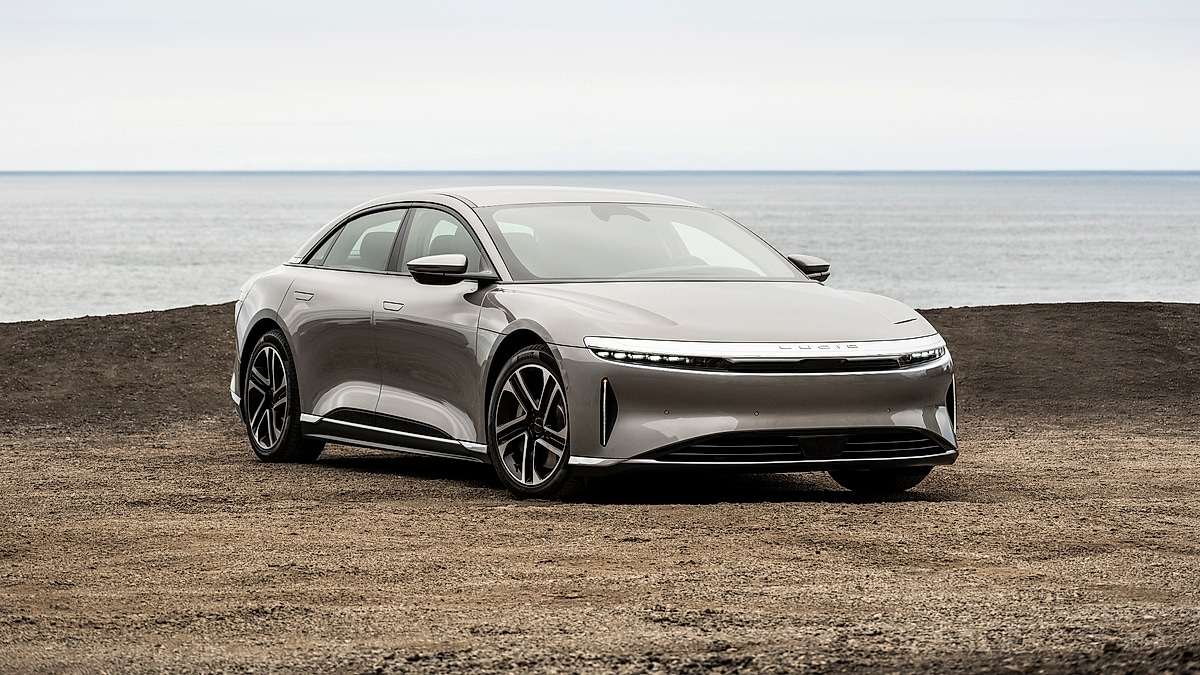

A Lucid Air owner accidentally locked himself out at a car wash with the car on, the key inside, and his phone sitting in the cabin. The rescue came from the one thing that had been locked away from him: the Lucid app.
Alexander Chan’s lockout story starts with the kind of ordinary mistake that makes modern car ownership feel slightly ridiculous.
He was at a car wash. He stopped afterward to vacuum and clean the interior. He wiped the screen without turning on Screen Cleaning Mode. While wiping, he somehow triggered the frunk. He got out, closed the door, cleaned the frunk, shut it, put the towels away, and walked back to the car. The Lucid was locked.
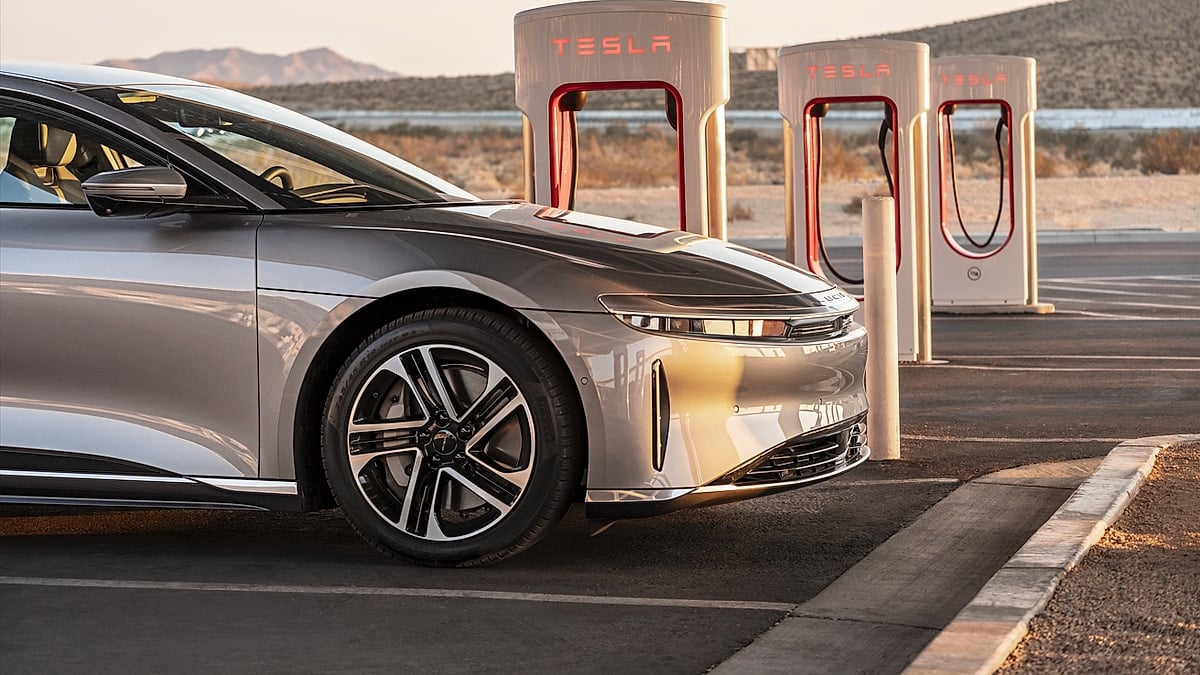
His jacket was inside. The key was in the jacket. His phone was in the car. The car was still on. The handles stayed down. The owner was standing outside a very expensive electric sedan with every normal way back in sitting behind glass.
That is a bad little moment.
It is also the kind of story every owner of an app-connected car should read twice.
Chan borrowed someone else’s phone, called his teenage daughter, talked her through installing the Lucid app, had her sign in, and asked her to send an unlock command. The handles popped up. The day recovered.
His two takeaways were simple: always keep the phone with you, and always use Screen Cleaning Mode.
I would add a third.
Set up your backup plan before the car teaches you why you need one.
The Screen Wipe Started The Whole Chain
The most believable part of this story is how small the first mistake was.
Nobody was doing anything reckless. No one dropped the key into a lake. No phone battery died in the woods. No valet lost a fob. No software apocalypse arrived. A driver wiped the screen while cleaning the car. That is all.
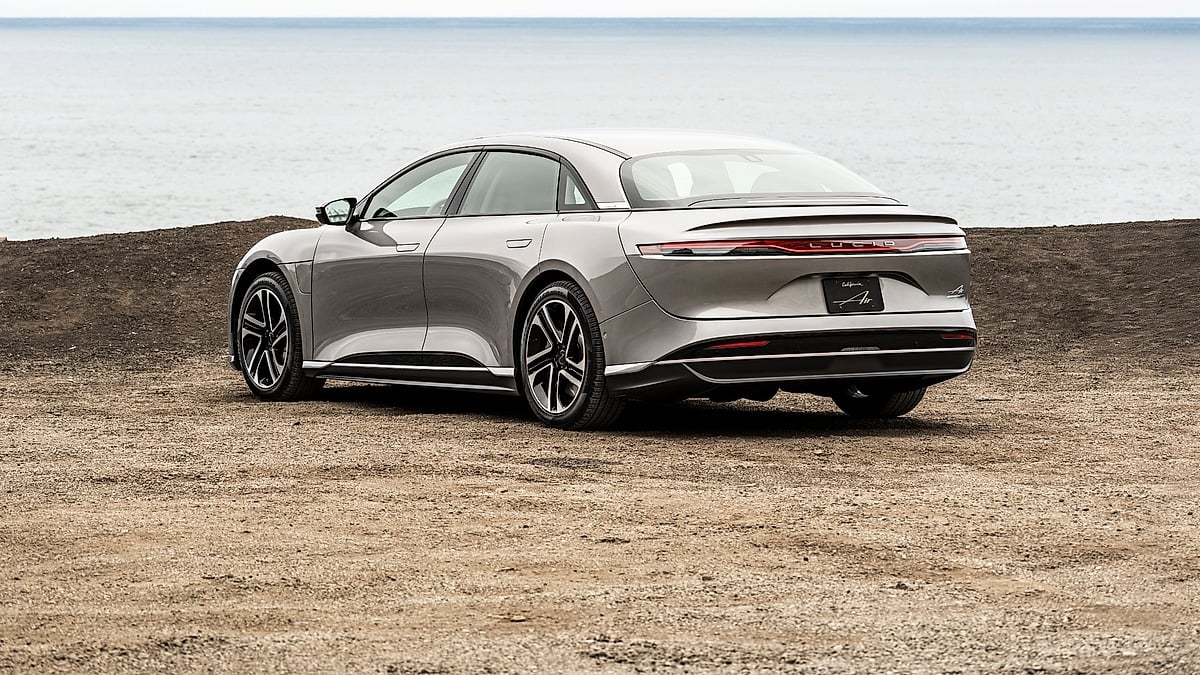
A Lucid Air cabin is dominated by screens, touch targets, icons, proximity systems, profiles, keys, cards, handles, app controls, and software states. That makes the car feel futuristic when everything works. It also means a cleaning towel can become an input device if the owner forgets to put the display into the mode designed for exactly this situation.
Screen Cleaning Mode exists because touchscreens are too easy to activate while wiping. The feature sounds minor until the wrong button opens a frunk, changes a setting, locks the vehicle, or starts a sequence the driver did not intend. Chan’s experience gives the feature a better sales pitch than any manual can.
The App Worked Exactly When It Needed To
The best thing about Chan’s story is that the app did not become another problem.
The app worked.
His daughter installed it, signed in, sent the command, and the car unlocked. No tow truck. No locksmith. No smashed window. No call to Lucid support while standing in a car wash parking lot, feeling increasingly stupid. Just a borrowed phone, a calm teenager, and a remote unlock command that reached the car.
That is the connected-car promise at its best.
App control gets criticized when it glitches, lags, loses cellular service, drains phone batteries, forgets authentication, or turns simple ownership into account management. Fair. Owners have earned the right to be skeptical. But this is the other side of the bargain. A remote app can rescue a driver from a very real problem because the command does not require the owner’s phone to be in the owner’s hand.
The car had connectivity.
The account had access.
Someone trusted could issue the command.
That combination saved the day.
This Was Clever, But It Was Also Risky
Chan’s workaround was smart. I would have done the same thing if the choice was standing outside the car or trusting a family member with the login.
Still, it is worth saying out loud: giving someone account access in the middle of a lockout is not an ideal security plan.
A Lucid account is powerful. It can control vehicle functions, location-related features, locks, and other ownership tools. A trusted daughter is one thing. A random friend, coworker, or stranger at a car wash is another. Borrowing a phone is already awkward. Typing or dictating login information under stress adds another layer of exposure.
The right lesson is not “share your login whenever you are stuck.”
The right lesson is to prepare a trusted backup before the emergency.
If the household has another driver, set up access properly. If a spouse, partner, or adult child may need to help, make sure they know the app exists and what account or profile should be used. If the owner relies on only one phone and one fob, add the key card to the routine. If the car lives in areas with weak service, know what works without the cloud.
A lockout is a terrible time to invent your security system.
The Key Card Should Live Somewhere Smarter Than The Car
Chan admitted in the comments that he should keep the key card with him. Then he added the punchline: his wallet was in the car too.
That is how lockouts happen.
People keep all the backups together because daily life rewards convenience. Phone, wallet, jacket, key, key card. Everything in one place. Then the door locks and the whole backup plan is sitting on the seat.
The Lucid key card is useful because it is passive, flat, and battery-free. It can unlock the car at the driver-side pillar using NFC. It can serve as a backup when the fob has an issue or the phone is missing. But it only helps if it is outside the vehicle when the owner needs it.
That sounds simple. It is the part people actually mess up.
If the card lives in the same jacket as the fob, it is not a backup. If it lives in a wallet that gets left in the car during cleaning, it is not a backup. If it stays in the center console because “I’ll remember it,” it is decoration.
A backup key needs physical separation.
Keep the fob in the jacket, the card in a wallet that stays on your body, or the card in a phone case if the phone stays in your pocket. Better yet, develop one rule: when you exit the car away from home, one access method leaves with you every single time.
Three Habits That Would Have Prevented This Lockout
- Turn on Screen Cleaning Mode before wiping the display, especially at car washes and detailing bays.
- Keep one access method on your body, not in the cabin, even if you are only stepping out for a minute.
- Set up a trusted second person with app access before an emergency forces you to improvise.
The Comment About Tapping The Handle Raises A Good Question
One commenter said that if the key is inside, gently tapping or pressing the handle may unlock the vehicle.
Chan said that did not work. His guess was that the car stayed locked because he had accidentally, actively locked it.
Modern keyless systems often behave differently depending on how the car reached its locked state. Passive lock, manual lock, app lock, fob lock, lock from the screen, walk-away behavior, key location, sleep state, and whether the car believes a valid key is inside can all change what the next handle press does.
Owners hate that because it feels inconsistent.
Engineers build these layers because security is difficult. A car must avoid locking a key inside under normal conditions, resist theft attempts, respect intentional locks, manage multiple key types, prevent accidental operation, and decide when to present or retract handles. The rules can make sense in software and still confuse a driver in a parking lot.
Chan’s story shows why owners should learn their own car’s behavior before relying on a forum tip.
If a fob is inside and the doors are locked, does the handle present? Does a tap work? Does walking away and returning change anything? Does the app override it? Does the key card work immediately? Does the answer change if the car was already on?
Those are annoying questions.
They are less annoying than discovering the answer while your phone is glowing through the glass.
The Lucid App Needs Cellular Service, And That Matters
Chan was lucky in one crucial way: the car could receive the unlock command.
That is not guaranteed everywhere.
Lucid’s own app guidance tells owners to make sure they are in an area with active cellular service so the app can communicate with the vehicle. It also recommends having a physical key available when parking in areas with limited or absent cellular service. That warning deserves more attention than most owners give it.
A remote unlock is only magic when the car and app can talk.
At a car wash in a populated area, that may be fine. In a mountain lot, underground garage, rural trailhead, ferry terminal, low-signal resort, or concrete parking structure, the app may not be the rescue you expect. If the phone and fob are inside and the car cannot receive the command, the situation gets harder immediately.
That is where the physical key card earns its place.
A battery-free local backup is boring until the cloud disappears.
Smart Rings And NFC Wearables Would Make Sense Here
One commenter wished for an IoT device such as a smart ring using NFC to unlock the car.
A ring, bracelet, or tiny passive NFC device solves one of the real weaknesses in phone-as-key life: the phone is often the thing owners set down. A ring stays on the body. A wearable backup could give owners a low-bulk way to unlock the car without carrying a fob, wallet, or phone.
The challenge is security, support, and automaker approval.
Cars are not gym lockers. An access device has to be difficult to clone, easy to revoke, durable, water-resistant, and properly tied to the vehicle’s identity system. It also has to work when the owner’s phone is gone. That means the wearable needs to be a true key method, not merely a companion to the phone app.
Still, the use case is obvious.
Wash the car. Go running. Surf. Hike. Valet. Walk the dog. Load kids. Step out with no pockets. A passive wearable key would help in exactly the situations where people lock their normal access methods inside.
Luxury EV makers should be moving faster here.
The Car Was On, Which Makes The Story Feel Stranger
One detail makes Chan’s story feel especially uncomfortable: he says the car was on.
To many owners, that should mean the car knows someone is using it. The key is inside. The phone is inside. The systems are awake. Locking the owner out in that state feels counterintuitive.
The software may have reasons. The car may have interpreted the lock command as intentional. The key may have been inside a jacket, shielded or detected in a way that did not prevent locking. The phone may not have been acting as a linked Mobile Key. The vehicle may prioritize explicit locks over passive assumptions. Without Lucid’s event logs, nobody outside the company can say exactly why it behaved that way.
The car did not strand him permanently. It did create a situation the app had to undo.
Car Washes Are Perfect Lockout Traps
This happened at a car wash for a reason.
Car washes break routines. You remove things from pockets. You open doors, trunk, frunk, console, glovebox. You wipe screens. You vacuum. You move towels. You step in and out repeatedly. You may leave the car on for climate. You may toss your jacket onto the seat. You may place the phone somewhere “just for a second.” You may close the door with wet hands, walk away, then realize the car’s access logic has been quietly making decisions.
The same thing happens at gas stations, detailing bays, tire shops, school drop-off, and driveways during unloading.
Short exits cause the most mistakes because the driver thinks the situation is temporary.
That is exactly when one access method should stay on the body.
If you would not leave the house without a key, do not step out of a software-defined car with every key inside. The car may be smarter than older vehicles in many ways, but the consequences of a wrong lock state are still ancient: you are outside, and your stuff is inside.
Lucid Should Add A Stronger Warning
If the car is on, a key fob is detected inside, and the owner tries to lock it from the screen or cabin controls, the vehicle could show a stronger warning or require confirmation. If a phone linked as Mobile Key is also detected inside, the warning should be even harder to miss. If the vehicle cannot confirm that any access method remains outside, it should think twice before retracting the handles.
Maybe there are theft scenarios where owners want to lock a running car with a key inside. Fine. Give them a deliberate override.
But accidental lockout prevention should be aggressive in a luxury EV.
The customer will forgive an extra confirmation far sooner than standing outside a running car while their phone sits on the seat. A simple “Key detected inside. Lock anyway?” prompt could turn Chan’s story from a rescue into a non-event.
The app saved him.
The better system would have kept him out of trouble.
The Daughter Deserves Credit
The quiet hero here is the teenage daughter.
Installing an app, signing in correctly, finding the command, and unlocking a parent’s luxury EV under phone-guided pressure is nothing. Anyone who has tried to walk a family member through app setup remotely knows how quickly that can become a comedy of passwords, verification codes, wrong email addresses, and “what screen are you on now?”
She got it done.
That also says something good about the Lucid app experience. In this case, a person who was not standing next to the car could get enough access quickly enough to solve the problem. The app command reached the vehicle and the handles presented. That is exactly the kind of emergency usefulness owners hope for when they accept an app-dependent ownership model.
This is why I would not dismiss connected-car systems outright.
They can fail in annoying ways. They can also save the day when the physical key is trapped in the cabin.
The Best Owner Setup Is Redundant
The cleanest Lucid access routine uses layers.
Carry the phone. Keep the fob or key card separate. Give a trusted household member legitimate app access if appropriate. Know the key card location. Learn the fob commands. Practice the screen-cleaning habit. Know what works when cell service is weak. Keep Lucid Customer Care information available outside the car.
That sounds excessive until one small cleaning mistake creates a lockout.
The strongest backup plans are boring. They live in pockets, wallets, phone cases, and household routines. They do not require borrowing a stranger’s phone at a car wash.
Chan’s story ended well because he stayed calm and found a clever path back in. Other owners should use the story to make their own path less fragile.
The Real Lesson
This is a Lucid success story and a Lucid warning at the same time.
The app worked. The car unlocked. The owner avoided a tow, locksmith, broken window, or long service call. That is a win for connected-car design.
The lockout still should not have been that easy to create.
A screen wipe opened the frunk. A cabin lock command apparently trapped the key and phone inside. The handle behavior did not rescue him. The physical key card was unavailable because the wallet was inside too. The app became the only exit, and it depended on another phone, another person, correct login credentials, and cellular communication.
That is too many ifs for comfort.
So yes, use Screen Cleaning Mode.
Yes, keep your phone with you.
Yes, carry the key card somewhere that does not end up inside the car with the fob.
And if you have a Lucid Air, take ten minutes this week to build a backup plan while you are calm, parked, and holding all the keys.
The best time to learn how your car unlocks is before it refuses to.
Have You Been Locked Out Of A Lucid?
If you own a Lucid Air or Gravity, have you ever locked a phone, fob, or key card inside? Include whether the car was on, whether the app command worked, whether the handle detected the key, whether you had cell service, and what backup method you now carry.
Please, return tomorrow, or check our Torque News Home Page for more interesting automotive news articles.
About The Author
Noah Washington is an automotive journalist based in Atlanta, Georgia, covering sports cars, luxury vehicles, and performance culture. His reporting focuses on explaining the engineering, design philosophy, and real-world ownership experience behind modern vehicles.
Noah has been immersed in the automotive world since his early teens, attending industry events and following the enthusiast communities that shape how cars are built and driven today. His work blends industry insight with enthusiastic storytelling, helping readers understand not just what a car is, but why it matters.
Noah is also a member of the Southeast Automotive Media Association (SAMA), a professional organization for automotive journalists and industry media in the Southeast.
His coverage regularly explores sports cars, luxury vehicles, and performance-driven segments of the automotive industry, including the evolving culture surrounding Formula Drift and enthusiast builds.
Read more of Noah's work on his author profile page.
You can also follow Noah here:
Set Torque News as Preferred Source on Google
Follow us today...