
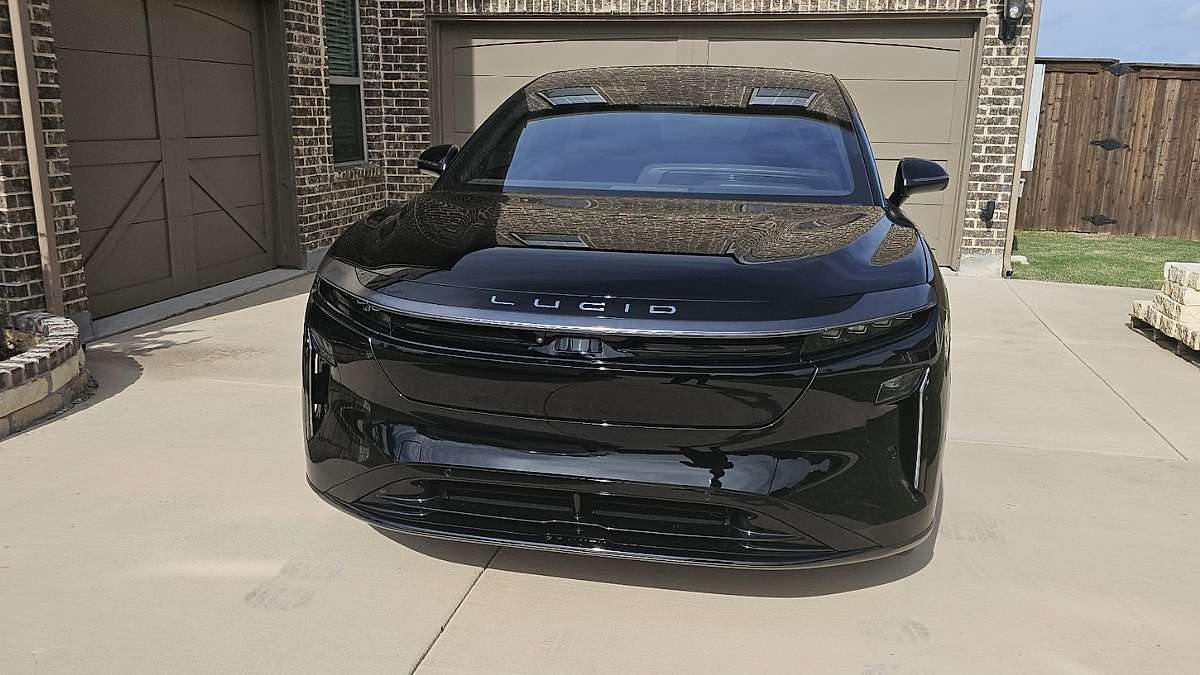

Buying a luxury vehicle has traditionally meant buying confidence. At the six-figure level, customers expect the ownership experience to feel polished from the moment they sign the paperwork to the moment they pull into their driveway, but the rise of software-defined electric vehicles is beginning to reshape that expectation entirely, and some owners are now wondering whether modern EVs are arriving fully finished or still evolving after delivery.
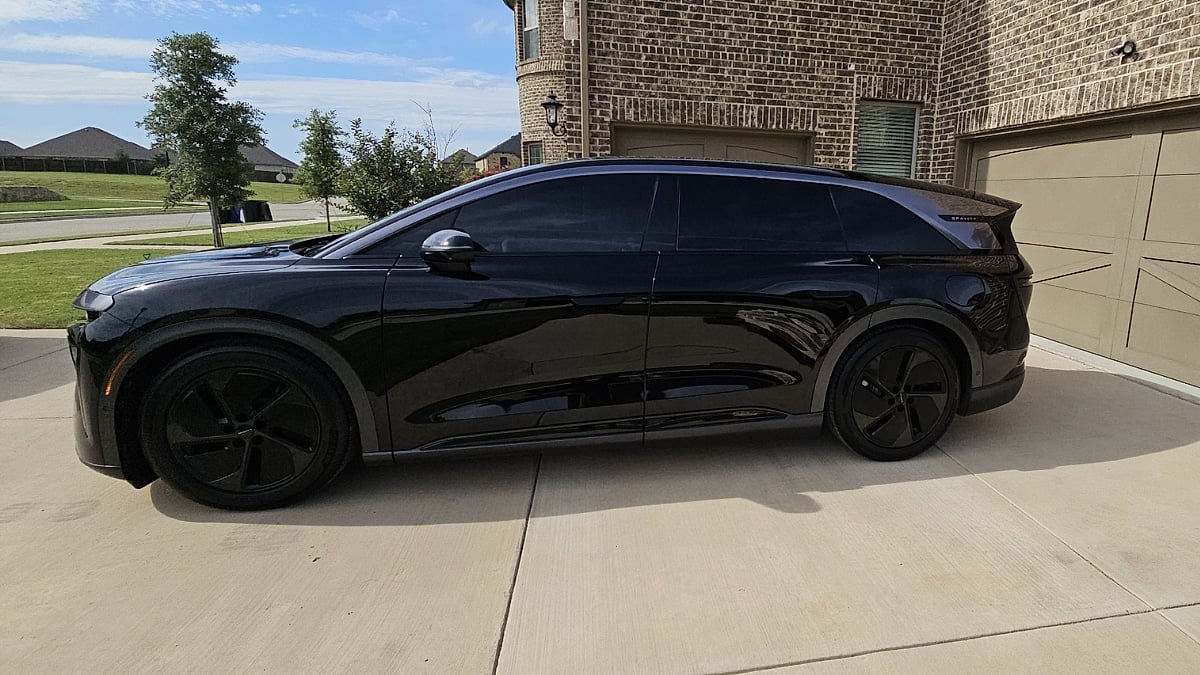
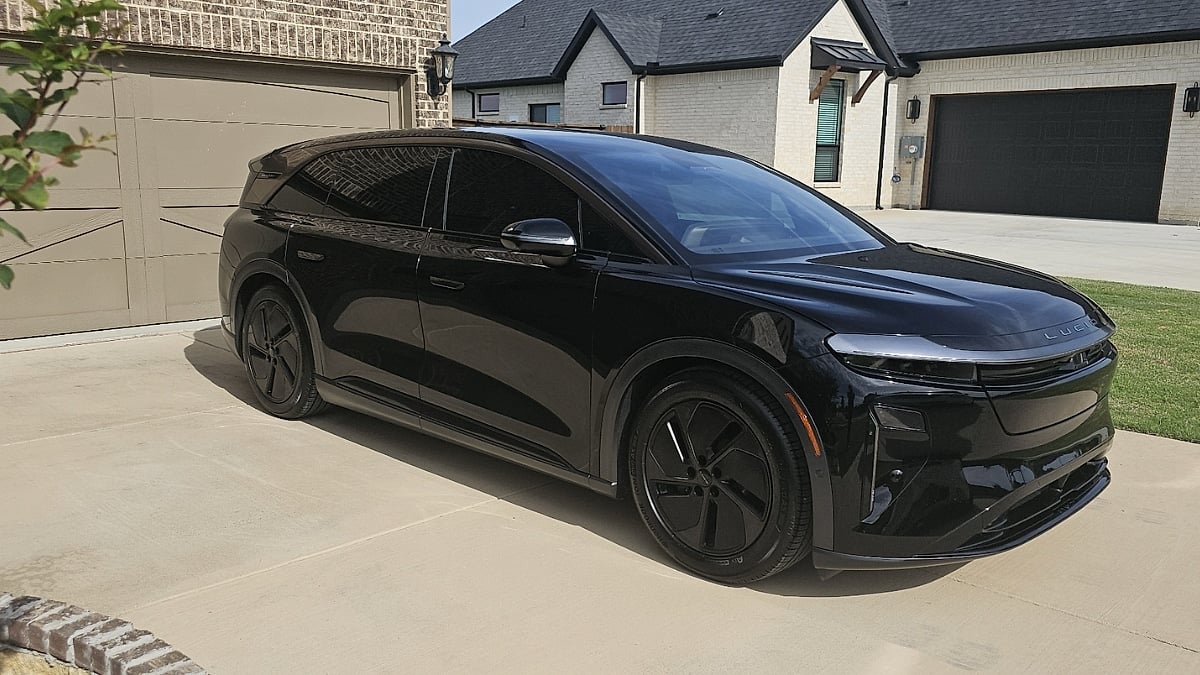
That conversation recently gained traction after Lucid Gravity GT owner Lackawanna Caston II shared an honest account of his early ownership experience online. While he praised the Gravity’s design, comfort, and futuristic feel, one strange incident during a road trip home left him questioning whether luxury EV buyers are quietly becoming unpaid quality assurance testers for rapidly evolving technology.
Here’s how Lackawanna described the situation:
“I took delivery of the Lucid Gravity GT about 2 weeks ago, and I’m not sure if I bought the future or volunteered as a beta tester.
Don’t get me wrong, the vehicle itself is seriously impressive:
- Space is unreal
- Ride quality is smooth
- Presence is 100
It feels like what an EV SUV should be, but here’s the part we don’t talk about enough:
The hardest part wasn’t the car; it was everything around it. The purchase process felt more complex than it needed to be. It sheds light on why their sales struggle; folks will back out due to the scammy feel when purchasing. Communication was inconsistent. At one point, I wasn’t sure if we were closing on a vehicle or solving a puzzle.
Then we finally get on the road, 200 miles from home, which is a normal drive, nothing crazy. I hit a bump and the car went into reduced power mode (turtle mode). Lucid’s explanation? Possibly the bump.
That’s when it hits you. We’re officially in the era where your SUV can get offended by the road. To be fair, an update later, things are already improving. That’s the upside of software-defined vehicles.
But it raises a bigger question. Are we okay with:
- Rapid innovation
- Constant updates
- Occasional “what just happened?” moments in exchange for pushing the tech forward?
Or at this price point, should the experience be closer to seamless from day one?
As someone building in the EV space with VoltConnect, this is exactly why I believe the ecosystem matters just as much as the vehicle. The car is only part of the story now. Curious where everyone lands on this. Are we early adopters or unpaid QA?”
Luxury EV Ownership Is Starting to Feel More Like the Tech Industry
One of the most interesting parts of Lackawanna’s story is that his frustration was not primarily focused on the Lucid Gravity itself. In fact, much of his post praises the SUV’s comfort, ride quality, and futuristic feel. Instead, his criticism centered around the ecosystem surrounding the vehicle, including communication, purchasing logistics, and the uncertainty that followed after the reduced power incident.
That distinction matters because it reflects something increasingly common in the EV startup world. The actual vehicles are often technologically impressive, but the surrounding ownership experience sometimes struggles to keep pace. Earlier last week, I also reported on how a Lucid Air Touring unexpectedly hit a curb after repeatedly moving forward instead of reverse just four days into ownership, further highlighting how software-related behavior is becoming part of the ownership conversation surrounding modern EVs.
Companies like Lucid are not just building cars, as they are simultaneously building sales infrastructure, service networks, software ecosystems, charging partnerships, and customer support operations.
In many ways, that mirrors what Tesla experienced during its earlier growth years. Buyers were often willing to tolerate occasional quirks because the vehicles themselves felt revolutionary compared to traditional gasoline cars. Expectations do begin to shift though once pricing climbs into luxury territory.
On the other hand, I recently covered another owner story in which a driver explained how a Lucid Gravity GT impressed him as a road-tripping machine that charged faster than his Tesla Model Y while delivering remarkable comfort and efficiency. Stories like that help explain why Lucid still generates significant enthusiasm among EV shoppers despite concerns about software glitches or ownership growing pains.
The Strange Reality of Software-Defined Vehicles
Reduced power mode, often called “turtle mode” among EV owners, is designed to protect the vehicle when the system detects a fault or potential problem. Sometimes it can be triggered by genuine hardware issues, but other times it can be caused by sensor readings, software calibration problems, or communication faults between vehicle systems.
The unusual part of Lackawanna’s experience was the suggestion that a bump in the road may have contributed to the issue. That sounds bizarre at first, but modern EVs are packed with sensors, modules, accelerometers, and interconnected software systems constantly monitoring the vehicle’s condition.
That complexity creates both advantages and disadvantages. The upside is that vehicles can improve significantly over time through over-the-air updates. Features can evolve, efficiency can improve, and bugs can sometimes be fixed without a dealership visit. The downside is that modern vehicles occasionally behave more like consumer electronics than traditional machines.
That's exactly why he described feeling like a beta tester. Consumers are increasingly buying products that continue evolving after purchase. Smartphones, gaming consoles, and computers all operate this way now, but cars occupy a different category emotionally and financially. When a phone glitches, it is annoying. But when a six-figure SUV unexpectedly enters reduced power mode on a highway drive home, it naturally feels unacceptable.
Why Tesla Still Dominates the EV Conversation
Some commenters under Lackawanna’s post immediately compared Lucid’s growing pains to Tesla’s current position in the EV market.
Daniel Williams wrote: “The more I’ve been learning about electric cars the more I really am thankful I decided to own a Tesla. These issues aren’t even a thing for them and it proves other manufacturers will be taking quite a while to catch up. The only other EV’s I’ve heard great things about are BMW’s which is very shocking.”
That comment reflects a perception that I've seen become increasingly common among EV shoppers. Tesla spent years dealing with criticism over build quality, software bugs, phantom braking complaints, and inconsistent service experiences. After more than a decade of refining its ecosystem though, many owners now see Tesla as the benchmark for EV software integration and charging infrastructure.
Now of course I've written about Tesla itself facing criticism in several areas too, but there is little doubt that they established an early lead in software-defined vehicle development. Newer EV manufacturers are now trying to reach that same level of refinement while simultaneously scaling production and support systems, which is no easy task.
At the same time, Lucid continues earning praise for the actual engineering of its vehicles. In another story I recently reported on, a Lucid Air owner explained how a long-distance road trip demonstrated the sedan’s incredible real-world efficiency and highway performance, reinforcing why many enthusiasts still view Lucid as one of the most technically impressive EV brands on the market.
Early Adopters Often Accept More Risk
One reality that sometimes gets overlooked in these discussions is that early adopters historically tolerate more imperfections in exchange for experiencing cutting-edge technology first. That pattern existed with smartphones, personal computers, gaming hardware, and even the early days of the internet itself. New technology often arrives before every edge case has been fully refined.
The difference is that vehicles involve safety, transportation reliability, and enormous financial investments. A software hiccup in a streaming app is inconvenient, but a software hiccup in a luxury SUV can leave drivers stranded or deeply concerned about long-term reliability.
That tension is becoming one of the defining challenges of modern EV ownership.
Commenter EL Riddle touched on this balancing act perfectly: “Great insight! I love over the air software updates but things shouldn't need service to work properly.”
That statement captures the central debate surrounding software-defined vehicles. Owners appreciate the ability to improve their cars remotely through updates, but they also expect the vehicle to function properly from day one without relying on patches or fixes.
In fairness to Lucid, Lackawanna himself acknowledged that updates were already improving the experience. That highlights the fascinating duality of modern EVs. Unlike traditional vehicles, some problems genuinely can be corrected or improved after delivery through software optimization.
But for many buyers, especially luxury buyers, the expectation remains that major issues should not exist in the first place.
Lucid’s Reputation May Depend on More Than Just Engineering
One thing I personally find fascinating about Lucid is that very few people criticize the core driving experience itself. Even skeptical reviewers often praise the ride quality, cabin refinement, acceleration, efficiency, and overall engineering.
The challenge seems to revolve more around consistency and ecosystem maturity. That's a critical distinction because automotive history is filled with examples of technically brilliant products that struggled because the ownership experience did not inspire enough confidence. Buying trust is the name of the game now, as consumers aren't simply purchasing horsepower figures or battery range.
What Drivers Can Learn From Experiences Like This
- Software matters more than ever: Modern EVs rely heavily on software integration, meaning updates and system calibration can dramatically influence the ownership experience.
- The ecosystem is part of the product: Charging access, communication, service quality, and support infrastructure now play a major role in customer satisfaction.
- Early adoption still involves trade-offs: Buyers of newer EV platforms may experience occasional quirks or growing pains that become less common as technology matures.
- Engineering alone is not enough: Even highly impressive vehicles can struggle if the surrounding ownership experience feels inconsistent.
- Owner communities shape public perception quickly: Real-world stories shared online now influence buyer confidence almost as much as professional reviews.
Your Turn to Share
Have you ever experienced strange software behavior or unexpected issues in a modern vehicle, whether electric or gas-powered?
And do you think buyers are becoming more accepting of software-related quirks in exchange for rapid innovation and over-the-air updates?
I’d love to hear your thoughts in the comments below.
About The Author
Aram Krajekian is a young automotive journalist bringing a fresh and analytical perspective to the evolving automotive landscape by reporting on real-world ownership experiences and providing industry analysis. Based in North Carolina, he covers electric vehicles, trucks, and broader automotive trends with a focus on contributing a balanced evaluation. His reporting cuts through brand bias to provide readers with grounded insight into how vehicles perform for everyday drivers beyond marketing narratives.
Image Credits
Lackawanna Caston II’s Facebook post.
Set Torque News as Preferred Source on Google
Follow us today...







Comments
Yes, you are a Lucid beta…
Permalink
Yes, you are a Lucid beta tester. Someone must have mentioned this, right?
I've always used the video…
Permalink
I've always used the video game Gran Turismo as an analogy for Lucid and even many established manufacturers that are building EVs. Back in 1997, when Gran Turismo was introduced to PlayStation owners, followed by GT2, GT3, GT4, etc., you'd go home, put the disc into your PlayStation, and all 140 cars and tracks were on the disc. The game was shipped when it was ready for the market, and Sony shipped 10.7 million copies in 1997. Today, you download Gran Turismo 7 onto your PlayStation, but it doesn't have all the tracks and cars. You have to wait for updates, and it was full of bugs, so you have to wait for more updates. The game needs to be constantly connected to the PlayStation network; if the network is down, you can't play, and if there's no internet, you can't play. This is the norm now with EVs, with deadlines, board meetings, and quarterly reports. The product is rushed to the market, and you pay them to be a beta tester.
Lucid footprint is very…
Permalink
Lucid footprint is very limited in showrooms across the US but they should have studied where teslas were located. Build them there so ev buyers could see them test drive them and buy them locally not driving hundreds of miles. Servicing would be a nightmare. Rivian learned that lesson and adding showrooms on Tesla locations. We owns GT performance Ford and model y AWD or bought miles apart with a dealership and showroom. Wouldn't even consider a ev if not local in 25 miles or less..