
The charger did its job.
That is the awkward part.
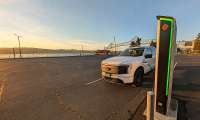
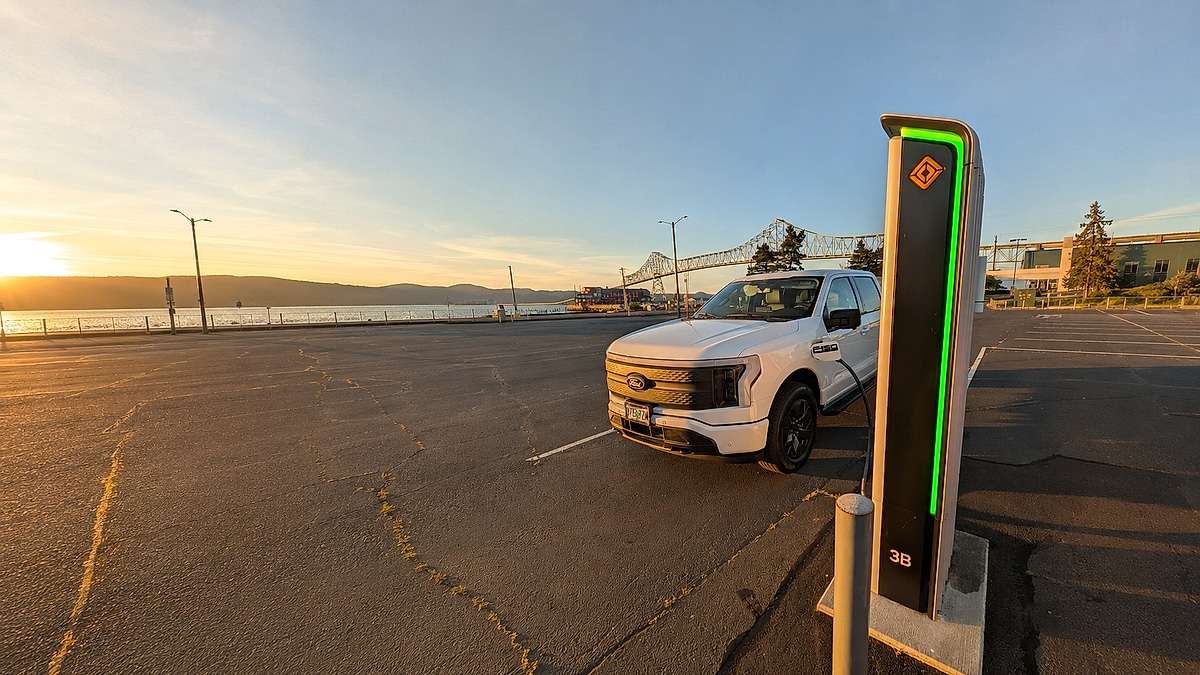
A Ford F-150 Lightning owner, posting as Polar_Ted on r/F150Lightning, tried a Rivian Adventure Network charger during a 370-mile round trip. The screen at the end of the session shows 62.7488 kWh delivered in 26 minutes and 43 seconds, no idle time, and a total charge of $34.51.
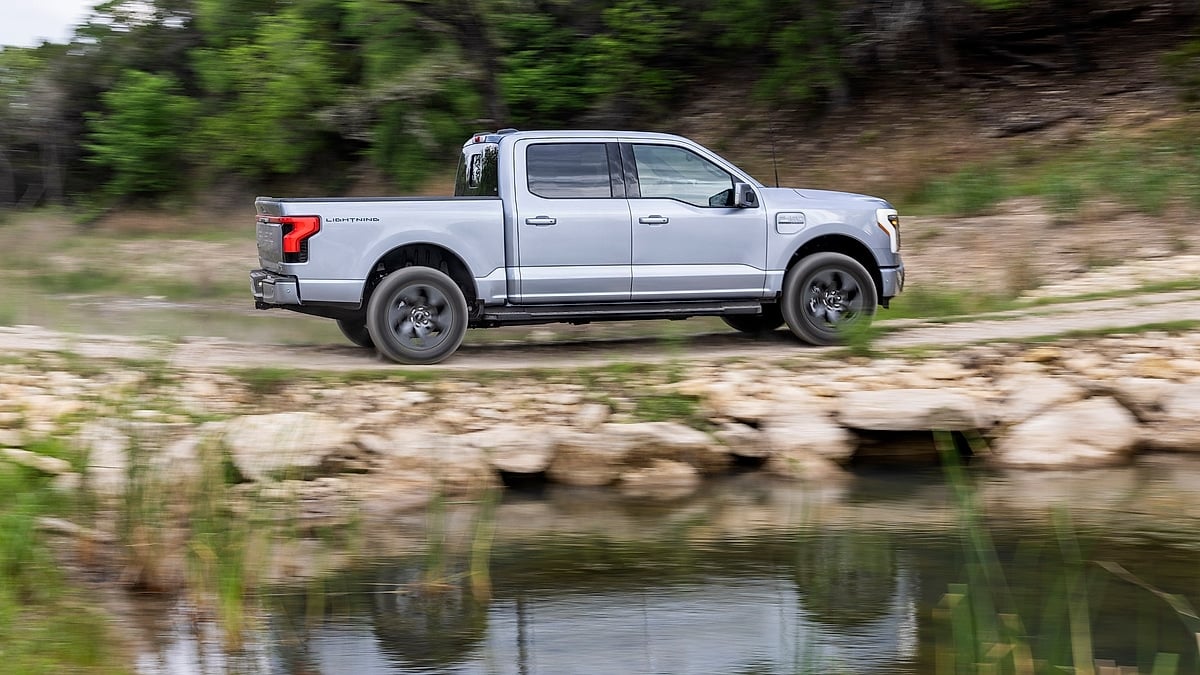
Do the math and the charger comes out to 55 cents per kWh.
For a 2025 Lightning Flash, that is a respectable stop. Ford’s electric pickup cannot use the full bragging rights of a 300 kW dispenser for long, and the owner knew that going in. He wrote that the charger was fast, then added the obvious caveat: the F-150 Lightning will not pull over 175 kW. That is the right way to read the hardware. A 300 kW charger is a big pipe. The truck still controls how much it can drink.
So this was no failed charger story. No broken stall. No app circus. No dead handle. No half-hour of cursing at a payment screen while a family member asks whether gas trucks were such a terrible idea.
The Rivian unit worked.
The bill is where things get interesting.
The receipt is the new road-trip test
EV owners have spent years arguing about range. That argument has become too blunt.
Price per mile now tells the better story.
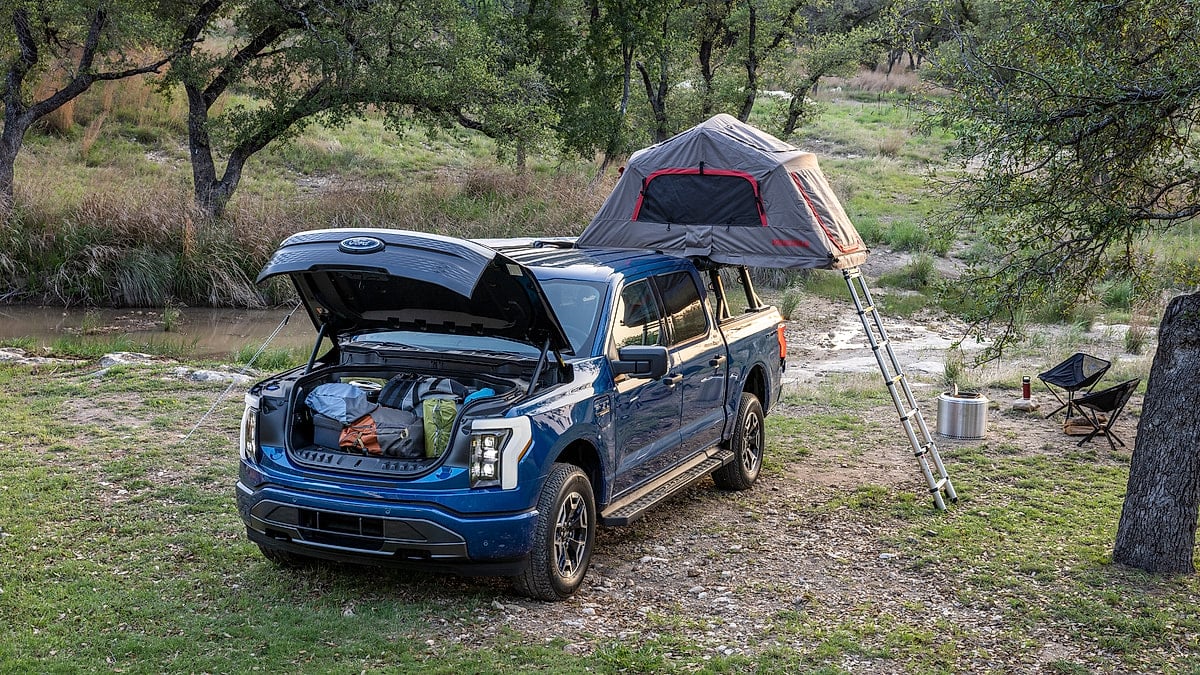
Polar_Ted says he left at 100 percent, charged in Astoria to 80 percent, and returned home with 15 percent after a 370-mile round trip. He estimated the whole run at about $48 once he included the Rivian session and the roughly $13 it would cost to charge back to full at home. At $4.66 per gallon, he figured the trip worked out like driving a gas truck that gets about 36 mpg.
That is good for a full-size pickup running winding country roads and coastal highways.
It also shows how quickly public charging can sand the shine off the EV fuel-cost argument.
A 36-mpg gas-equivalent trip in a truck is nothing to sneer at. Plenty of gas pickups would need a tailwind, a prayer, and a downhill grade to get close. Yet the same owner noticed a Tesla V4 station at Fred Meyer just three miles away, with a member rate around 38 cents per kWh. Had he used that stop, he says the trip would have been closer to 48 mpg equivalent. My math lands a little lower depending on rounding, but the direction is right. A cheaper charging stop would have moved the whole trip from mid-30s gas equivalent toward the mid-to-high 40s.
Same truck. Same roads. Same driver.
Different plug. Different conclusion.
That is the part public charging networks should worry about. The driver did not need a faster charger. He needed the right-priced charger close enough to the route and shaped well enough for the truck.
Rivian gave him speed and made him pay for curiosity
One commenter summed up Rivian charging as “fast, reliable, expensive.”
Hard to improve on that.
Rivian’s network has real appeal. The hardware looks good. Tap-to-pay is civilized. The sites often show up near outdoor routes and remote travel corridors where another dependable option can change an EV trip from tense to easy. Rivian deserves credit for thinking beyond the usual suburban retail-pad charging layout. Some of its sites fill map gaps that matter to trucks, adventure vehicles, and people trying to leave the interstate without turning battery percentage into a gambling habit.
Still, 55 cents per kWh lands hard when a cheaper Tesla V4 station sits three miles away.
That price gap becomes enormous on repeat trips. Ten dollars saved on one stop sounds like lunch money. Ten dollars per stop across a summer of weekend travel becomes real money. For a Lightning, Silverado EV, Rivian R1T, Cybertruck, or Hummer EV, big batteries amplify every pricing mistake. A compact EV can nibble at an expensive charger and leave with a tolerable bill. A full-size electric truck eats like a defensive lineman.
The Lightning’s battery makes the rate visible.
Public charging has reached the point where the driver has to shop it like fuel. Not emotionally. Not by brand loyalty. By cents per kWh, stall layout, plug type, reliability, membership rates, and where the charger sits compared with the actual route.
That is a lot of homework for something that used to be “pull into the station with the big sign.”
The cable problem is a truck problem now
The price got the comments, but the physical layout may be the more important ownership lesson.
Polar_Ted tried the pull-in stalls and found that the cable had to be dragged around the bumper and barely reached. Since nobody was using the towing charger, he moved there.
That is the kind of small detail that separates a charging network built for real vehicles from one built for renderings.
A Ford F-150 Lightning is 232.7 inches long. It is 80 inches wide without mirrors. It has a front-driver-side charge port. Depending on how a charging stall is angled, where the dispenser sits, and how long the cable is, a perfectly good charger can become clumsy. The driver has to park like a contortionist, stretch the cable around paint and plastic, or occupy a pull-through stall meant for towing because the regular stall behaves like it was designed around a different vehicle’s anatomy.
Nobody should turn that into a moral trial against the owner. He used the towing stall because it solved the fit problem and nobody needed it.
The bigger issue is scalability.
As Rivian, Tesla, IONNA, Electrify America, EVgo, and others open networks across brands, plug placement becomes the ugly little engineering bill everyone avoided paying earlier. Front-left, rear-left, rear-right, front-right. Nose-in, back-in, pull-through. CCS, NACS, adapters, cable weight, cold-weather stiffness, trailer length, curb position. All of it lands at the stall.
A charger that technically supports a truck but barely reaches the port has already lost part of the battle.
Longer cables and pull-through layouts do more than help people towing. They reduce stall blocking, speed up parking, cut awkward cable routing, and make the site friendlier to the mixed fleet now showing up. A charging stop should not require a geometry lesson.
The Lightning performed better than the bill
The F-150 Lightning gets kicked around in EV forums because its public fast-charging curve does not match newer 800-volt trucks. Fair enough. A Silverado EV or Sierra EV can turn a fast stop into a much bigger gulp under the right conditions. The Lightning’s 400-volt architecture and charging limits keep it from looking heroic on a high-power dispenser.
This session still looked healthy.
An average of roughly 141 kW over nearly 27 minutes means the truck and charger were working well together. Owners get too fixated on peak numbers. Peak kW is the bar fight stat. Average delivered power is the meal.
The Rivian charger delivered over 62 kWh in less than half an hour. That is enough energy to cover a serious chunk of highway driving in a Lightning, even with truck aero and coastal roads in play. The owner reached 80 percent, finished the trip, and got home with 15 percent.
No drama.
The story turns because the driver later found a cheaper option nearby. That is the modern EV road-trip irritation in one sentence. The bad decision was not technical. It was economic.
He admitted as much. He should have gone to Tesla, but he wanted to see what a Rivian charger was like.
Honestly, I respect that. Somebody has to test the map.
The new road-trip skill is charger arbitrage
EV owners used to plan around plug availability. Now the sharp ones plan around price gaps.
One commenter said he passed up a 69-cent charger and used an IONNA station a few exits later at 39 cents. Another said northern Oklahoma had EVgo at 69 cents and IONNA less than 10 miles away at 39 cents. Tesla membership pricing can make sense for one month of heavy road-tripping and become useless the next month when the route moves away from Supercharger coverage. Rivian may be worth paying for in a remote area where it fills a gap. It looks expensive when a cheaper, easier Tesla V4 pull-through site sits down the road.
That is no longer enthusiast trivia. That is trip cost.
For a truck, a 15-cent or 20-cent spread per kWh can rewrite the fuel comparison. On a 60-kWh stop, the difference between 55 cents and 38 cents is about $10.67. On a long trip with multiple stops, that difference becomes hotel money, dinner money, or the margin that makes the EV feel cheaper than a hybrid SUV.
The old fuel-economy language does not quite fit this world. Nobody talked about a gas truck getting 36 mpg at one Shell station and 48 mpg three miles later at another pump. EVs now make that kind of comparison possible because electricity pricing swings wildly by network, time, membership, and location.
That is maddening.
It is also an opportunity for owners willing to do the arithmetic.
What I would take from this Lightning owner’s stop
The Rivian charger passed the speed test. It failed the value test for this exact stop because a cheaper Tesla option was nearby.
That is the clean read.
A Lightning owner should keep Rivian Adventure Network sites in the route planner, especially in remote corridors and outdoor travel areas where reliability counts more than squeezing every cent. Rivian’s equipment has a reputation for being clean and dependable, and this session supports that. A fast, working charger has value. Anyone who has limped into a dead station knows the cheapest charger in the app is worthless if it cannot deliver.
For regular highway travel, price-check before you plug in. Open the Rivian app. Open the Tesla app. Check PlugShare, ABRP, Ford navigation, and any network-specific pricing that actually shows current rates. Look for membership pricing only when the math beats the monthly fee. Check whether the site has pull-through stalls, especially with a full-size pickup. If the station forces you to stretch a cable around the nose of the truck, the charger may be compatible on paper and annoying in real life.
The owner paid $34.51 for a lesson.
He got a good charge, a clean receipt, and a better understanding of the new public-charging game. Speed gets you back on the road. Price decides how smug you feel when you get there.
Lightning owners, what are you paying?
If you road-trip an F-150 Lightning, share your best and worst public-charging price per kWh, the network, average charging speed, and whether the stall layout worked without cable gymnastics. The price spread may be the hidden range test for electric trucks.
Image credit: Polar_Ted
About The Author
Noah Washington is an automotive journalist based in Atlanta, Georgia, covering sports cars, luxury vehicles, and performance culture. His reporting focuses on explaining the engineering, design philosophy, and real-world ownership experience behind modern vehicles.
Noah has been immersed in the automotive world since his early teens, attending industry events and following the enthusiast communities that shape how cars are built and driven today. His work blends industry insight with enthusiastic storytelling, helping readers understand not just what a car is, but why it matters.
Noah is also a member of the Southeast Automotive Media Association (SAMA), a professional organization for automotive journalists and industry media in the Southeast.
His coverage regularly explores sports cars, luxury vehicles, and performance-driven segments of the automotive industry, including the evolving culture surrounding Formula Drift and enthusiast builds.
Read more of Noah's work on his author profile page.
You can also follow Noah here:
Set Torque News as Preferred Source on Google
Follow us today...