
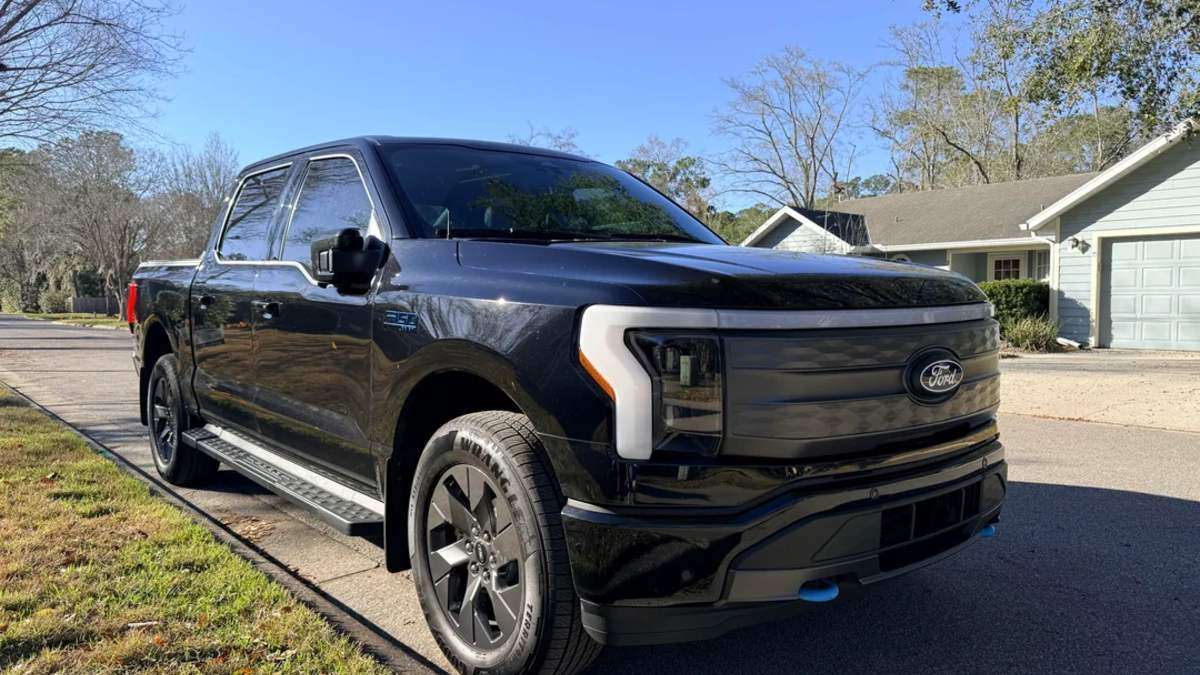

The notion that an electric pickup truck, specifically the Ford F-150 Lightning, can serve as the ultimate family vehicle for a suburban dad seems counterintuitive to many, yet one owner’s seven-month, 9,000-mile journey presents a compelling case. This driver, a self-described mid-thirties white-collar professional, initially sought a sedan but found himself drawn back to the utility of a truck, ultimately landing on an EV that has redefined his expectations of daily driving and family transport.
His experience, which he very recently detailed in writing, challenges the common preconceptions about EV ownership, from range anxiety to the practicalities of fitting a growing family into a full-size electric truck.
“Background: I'm a mid-thirties suburban dad with a white-collar job. My first vehicle I had in high school was a single-cab 2001 F-150 XLT Triton V8. The thing was awesome, and I drove it for 12 years before parting with it in 2018. After that, a 2015 Toyota Camry became my daily driver as my wife drove the new Honda Pilot we got. Fast forward to 2024, and we found out we were having a third kid, and we traded the Pilot for a Kia Carnival to be our primary family vehicle, and I continued to drive the Camry. I'd really been itching to upgrade my daily driver, but the situation and finances dictated that I keep driving the Camry. However, this really got me started on eyeing what I'd replace the Camry with, and I spent a lot of time looking at similar sedans: Accord, Camry, and some entry luxury models from Genesis and Lexus. But there was a part of me that really wanted to get back in a truck again, even though it didn't really make sense, as I don't "need" it for my daily life. I had a hard time justifying the poor gas mileage when a nice sedan is really all I need, other than when the occasional need arises to make use of a truck bed, and even then, the Carnival has cavernous cargo space even before taking the middle row out.
I started seriously looking at the Maverick and liked it a lot, but with three kids 4 and under, my wife really thought that if I was going to look beyond sedans, I should look at something that could fit three car seats in it if we needed to in a pinch, even if the Carnival would remain our primary weekend vehicle. I guess it's possible the Maverick could fit three slim car seats, but it seemed like it'd be a tight squeeze. That's when I seriously started looking at the Lightning. I've never owned an electric but was distantly curious about it, but wasn't sure if I was ready to make the jump. Worrying about charging networks, getting a home charging set up taken care of, and dealing with range anxiety was something I didn't think I was ready for. But then I test-drove one and was instantly sold. It was so quick, quiet, and smooth, and the fuel cost put it well above the hybrid Maverick and hybrid sedans I'd been looking at. The back seat was huge, easily big enough for three car seats and tons of room for the kids to maneuver in and out of them. I started researching home chargers and determined I could easily get it installed myself. However, I really wanted a Lariat as most of the sedans I'd been looking at were top trims with luxury features that I wanted after driving a stripped down Camry LE for almost a decade: I decided that cooled seats were a must (I'm in Florida), really wanted driver memory, and in the case of the Lightning, the 131 kWh battery. Since I'd been looking in the ~$45k range for what I was cross-shopping, I decided I'd have to look at used options as a ~$70k Lariat was way out of my budget.
This was in July of 2025, and in looking at used ER Lariats with decently low mileage, I was mostly finding prices in the $50-$55k range. This is when I discovered a local dealership had 2 new 2024 Lariat models still on the lot. Seeing as it was July, I knew these had been sitting for a while. I'd already been communicating with them on a used Lariat, and out of curiosity, I asked them about the 2024s that were sitting. They gave me an initial price that didn't include the tax credit. I pushed back on that (they initially said it wasn't eligible; sticker was $79.9k, so it was), and then they sent me an offer that included it: $56k inclusive of all fees before tax. Seeing as I was at $24k off sticker and really close to the used price quotes I'd gotten from a few places, I decided to pull the trigger. The only thing it didn't have that would have been nice was 9.6 kw Pro Power, but seeing as I was bargain hunting, I wasn't picky on that, and it wasn't a deal breaker.
Advertising
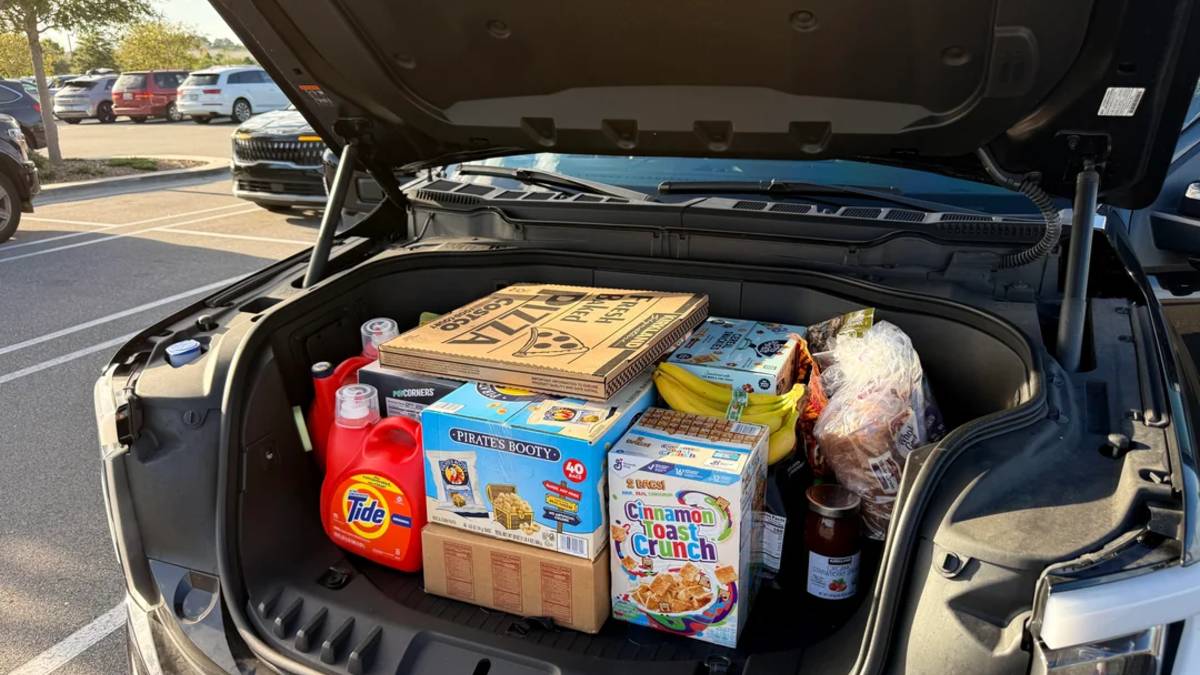
7 months and 9k miles in, I can confidently say that this is the best vehicle I've ever owned, and every day I still am appreciative of what a joy it is to drive. Range anxiety has been non-existent after the first month or so, charging is something I rarely think about, and having access to the Tesla network really gives the ultimate peace of mind for taking it on road trips (I've used public charging maybe 6-7 times in these 7 months, and they've all been Tesla Superchargers save for twice on a free destination charger at a hotel). Having the instant torque is extremely useful beyond just smoking Raptors off the line. Despite having a literal minivan, the truck has become the de facto weekend family vehicle as the entire family prefers riding in it over the van. And the frunk, holy crap, the frunk is honestly the unsung hero of the Lightning. Costco trips, overnight trips, you name it; the frunk delivers, and ALWAYS gets stares and comments in parking lots, which I still get a kick out of. "??? Where is the engine?!?"
In summary, this is the perfect truck for someone like me who doesn't "need" a truck but gets occasional utility out of it. I can drive around without feeling like I'm pissing away money on fuel because I have way more vehicle than I need for my daily life, and on top of that, it's a better truck in every way compared to its ICE counterparts (save for long-distance towing).”
The owner's decision to purchase a 2024 F-150 Lightning Lariat, effectively securing a $24,000 discount from its original $79,900 sticker price, shows a critical market dynamic. Dealerships, eager to move inventory, are often willing to negotiate significantly on EVs, especially as new model years arrive. This case demonstrates that patience and persistence can yield substantial savings, turning an otherwise unattainable vehicle into a viable option. The initial hesitation of the dealership to apply the tax credit further reveals the inconsistent knowledge base within the sales force, a frustrating reality for savvy consumers.
Ford F-150 Lightning: Real-World Family Utility and Value
- The 2024 F-150 Lightning Lariat Extended Range features a 131 kWh battery, providing an EPA-estimated range of 320 miles. This capacity supports the owner's reported non-existent range anxiety for daily use and occasional road trips.
- The Lightning's interior dimensions, particularly the rear passenger space, are crucial for family utility, boasting 43.6 inches of rear legroom. This generous space allows for the comfortable installation of three car seats, a key factor for families with multiple young children.
- The frunk (front trunk) offers 14.1 cubic feet of secure, lockable, and weather-sealed storage space, with a 400-pound payload capacity. This feature provides SUV-like cargo convenience, distinguishing it from traditional internal combustion engine pickups.
- Significant discounts on new 2024 models, such as the reported $24,000 off a $79,900 MSRP, indicate aggressive market adjustments by dealerships. These price reductions, combined with federal tax credits, make the Lightning a more accessible option for value-conscious buyers.
The practicality of the Lightning as a family hauler, particularly its ability to comfortably accommodate three car seats, resonated with other potential buyers. One commenter, bromophobic272, expressed this directly: "Dude, thanks so much for sharing this. Fellow mid-thirties suburban dad with a white-collar job and the exact same use case here. Have been trying to figure out how comfortable 3 car seats across the back are, and couldn’t find much info. Looks like they all fit great! Now I’m salty because I’m trying my hardest to talk myself out of buying a $40k used Lariat, and it’s getting harder and harder!"
This sentiment reveals a significant gap in manufacturer marketing: the real-world utility of a vehicle for young families. While Ford touts the Lightning's towing and Pro Power Onboard capabilities, the ability to comfortably transport three small children is a far more common daily requirement for many buyers. The industry often focuses on aspirational use cases, neglecting the mundane but critical aspects that drive purchasing decisions. A truck that can handle both construction materials and car seats is a powerful proposition, and Ford would be wise to show this often-overlooked versatility.
Another commenter, ruraljurorrrrrrrrrr, offered a contrasting perspective on truck size: "Can’t get a car much wider than a pickup truck. I have one rear-facing, and it looks hilariously small in the back seat." This points to the inherent trade-offs of a full-size truck. While the Lightning's interior volume is indeed generous, its exterior dimensions remain a challenge for urban parking and narrow streets. The perception of a "small" car seat within a vast cabin can be misleading; the critical factor is the width available for multiple child restraints, an area where the Lightning clearly excels over smaller vehicles.
The owner's declaration that the Lightning is the "best vehicle I've ever owned" after 9,000 miles is a powerful endorsement, particularly given his prior experience with both traditional F-150s and sedans. His dismissal of range anxiety after the initial adjustment period, coupled with the newfound peace of mind from Tesla Supercharger access, shows a common EV adoption curve. Many new EV owners report a similar transition, where initial concerns about charging infrastructure quickly fade as they establish home charging routines and learn the public network. The instant torque, often seen as a performance novelty, is here framed as a practical asset for daily driving, further cementing the Lightning's utility.
The enthusiastic praise for the frunk, or front trunk, as the "unsung hero" of the Lightning, is a testament to clever design. This secure, weather-sealed storage space fundamentally alters the utility of a pickup truck, offering sedan-like cargo protection without sacrificing the open bed. For a family man, this means groceries, sports equipment, or luggage can be safely stowed away from the elements and prying eyes, a feature traditional pickups simply cannot match. It’s a design element that elevates the EV truck beyond a mere powertrain swap.
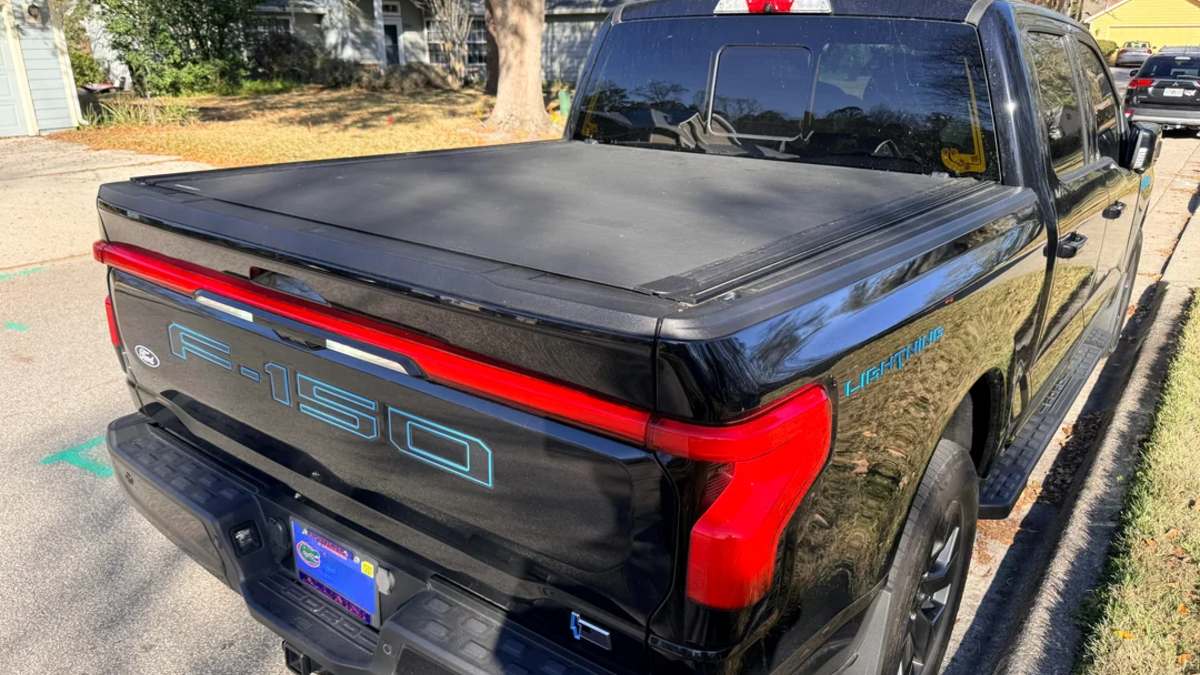
The owner's confidence in his choice was further tested by a question from rali8: "First of all, Go Dawgs! Second, would you still buy one today after knowing it's been discontinued? Or would you go for a Silverado/Sierra EV?" The owner, zman2100, responded with unwavering conviction: "I would still get the Lightning. The other electric trucks do not suit me. The Cybertruck is… a Cybertruck. The Silverado/Sierra is much heavier and more sluggish, and doesn’t have CarPlay. The same goes for the Hummer, which also isn’t really a truck. If I totaled my Lightning tomorrow, I’d get another Lightning. If that wasn’t available, I’d most seriously look at the Rivian R1T, but I don’t know if the smaller size would suit me."
This decisive stance reveals a critical point for EV truck buyers: the current market offers distinct personalities, not interchangeable alternatives. The Cybertruck's polarizing design and unproven track record, the Silverado/Sierra EV's perceived bulk and lack of CarPlay, and the Hummer EV's sheer excess all present significant differentiators. The Lightning, despite its "discontinued" status (referring to the 2024 model year being superseded by 2025, not the entire line), clearly hits a sweet spot for practical utility, driving dynamics, and technological integration that its competitors have yet to replicate. This owner's experience suggests that for many, the Lightning remains the benchmark for a usable electric pickup.
Image Sources: Ford Media Center
Noah Washington is an automotive journalist based in Atlanta, Georgia. He enjoys covering the latest news in the automotive industry and conducting reviews on the latest cars. He has been in the automotive industry since 15 years old and has been featured in prominent automotive news sites. You can reach him on X and LinkedIn for tips and to follow his automotive coverage.
Set Torque News as Preferred Source on Google
Follow us today...



Comments
Then why do they keep losing…
Permalink
Then why do they keep losing billions of dollars?
The EV problems aren't myths; in fact, they're massively downplayed.
Let's see him debunk battery fires when it blows up in his garage.
So they gave a 24k discount…
Permalink
So they gave a 24k discount on a vehicle that had been rotting on the lot and is now worth likely 24k less than the price they paid? And still can only tow something about 75-80 miles before it needs a charge. There’s a reason why no one wants them!! Meanwhile all of the manufacturers have increased the price of their products so they can can continue to cover their losses on EVs!
EV's: choose it if you can…
Permalink
EV's: choose it if you can afford it.
High costs...
Poor resale value...
Those catastrophic fires, oops.
But hey...it's a free world!
ICE me anytime.
What it means is that they…
Permalink
What it means is that they're a depreciation disaster - if it loses that much so quickly, who in their right mind would buy a new one?
Hi there just wanted to give…
Permalink
In reply to What it means is that they… by Andrew Parker (not verified)
Hi there just wanted to give you a quick heads
up and let you know a few of the pictures aren't loading properly.
I'm not sure why but I think its a linking issue. I've tried it in two different browsers and both
show the same outcome.
It wasn't even free. It was…
Permalink
It wasn't even free. It was less than free. The $50,000 he paid was just a token contribution to the 10 billion Ford lost. It is an unsustainable business model.
So much demand they scrapped…
Permalink
So much demand they scrapped the production!
I've seen both Lightning's…
Permalink
I've seen both Lightning's and the Silverado's side by side for range and they don't even compare. A lightning at 88% charge will give you about 175 miles of range. The Silverado at the same amount of charge will give you around 375. I would be scared to rely on a lightning for range, especially living in a rural area. I'd never buy an electric vehicle to begin with but given the poor range for the lightning, I would never want to rely on that.