
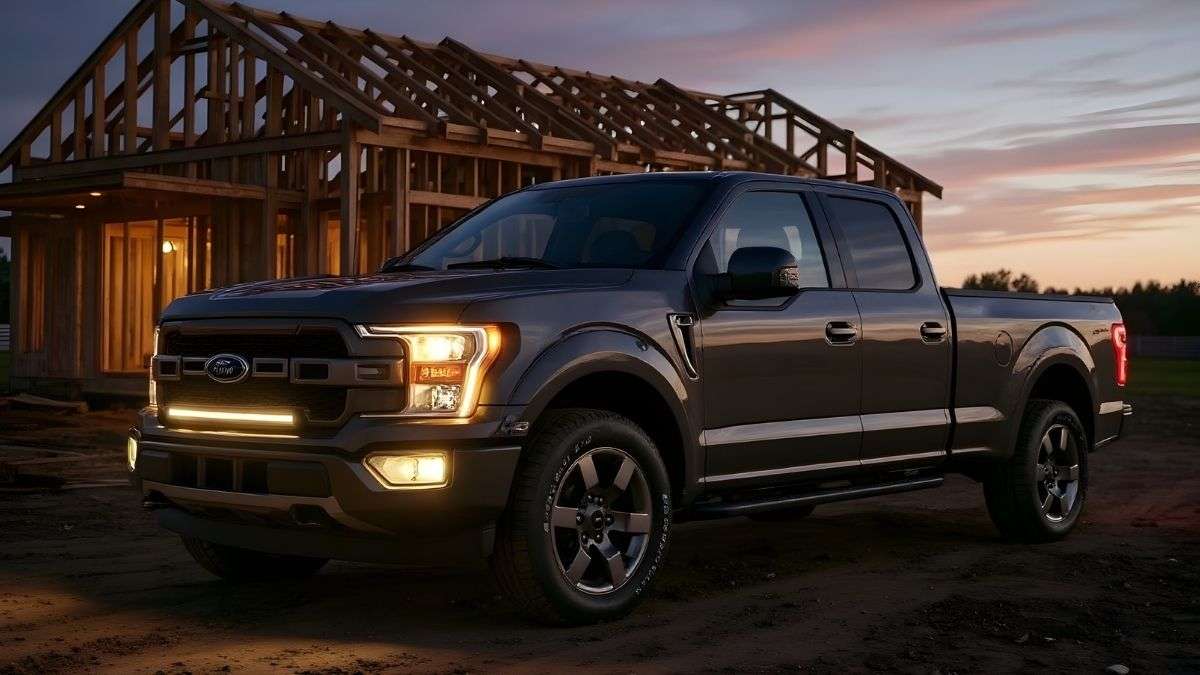

For decades, the American pickup truck has been an undisputed icon of capability, a symbol of work, and the unwavering backbone of the nation's most profitable automotive market. So, when the electric revolution arrived, the idea of an EV pickup seemed like a perfect match. A truck with a massive battery could be more than just transportation; it could be a mobile power station, a silent generator capable of running an entire job site. Yet, despite this revolutionary potential, the first generation of electric trucks has remained more of a niche curiosity than a mainstream workhorse. This week in Dearborn, Ford unveiled its answer to this unfulfilled promise: the second-generation F-150 Lightning, and it comes with a number that could change everything: 450. That’s the EPA-estimated range, in miles, of the new top-trim model, a figure that directly targets the single greatest fear holding back the working truck owner and signals that the electric pickup might finally be ready to clock in.

The Unfulfilled Promise of the Electric Workhorse
On paper, an electric pickup should be a contractor's dream. Ford’s own Pro Power Onboard system is a work of genius, turning the Lightning’s battery into a clean, quiet, and powerful generator with multiple outlets capable of running everything from saws to compressors. The idea of leaving the noisy, gas-guzzling generator behind and simply plugging your tools directly into your truck is a massive leap in convenience and efficiency. Add to that the instant torque for towing and the lower "fuel" and maintenance costs, and the EV truck should have been an easy sell.
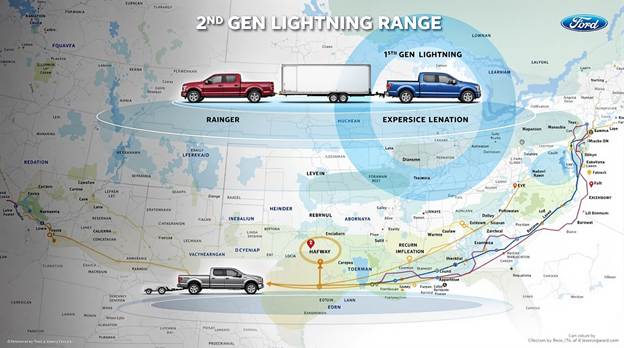
But it wasn't. The first-gen Lightning, while a critical first step, ran headfirst into the brutal physics of towing. For a truck owner, the advertised range is irrelevant; the only number that matters is the range they get while hauling a heavy trailer. As numerous real-world tests showed, towing a significant load could slash the truck's range by 50% or more. A truck with a 300-mile range suddenly becomes a truck with a 130-mile range. For a contractor heading to a remote job site, that’s not just an inconvenience; it’s a crippling liability. The risk of being stranded was simply too great, and the promise of a mobile power station was useless if the truck couldn't reliably get there in the first place.
 v
v
The 450-Mile Range: Crossing the Psychological Threshold
This is why Ford’s new 450-mile battery isn't just an incremental improvement; it's a game-changer. It addresses the towing dilemma head-on by providing a massive buffer. While the official towing range figures have yet to be released, simple math suggests a monumental shift. If a 450-mile battery still loses 50% of its range while towing, you are left with a 225-mile range. That number crosses a critical psychological threshold. It means a plumber, an electrician, or a construction crew can confidently load up a trailer, drive 100 miles to a job, work all day using the truck's power, and still have enough juice to get home without a panic-inducing search for a fast charger.
This transforms the F-150 Lightning from a "lifestyle truck" for suburbanites into a legitimate, no-compromise work vehicle. It makes the conversation about total cost of ownership—factoring in massive fuel and maintenance savings—not just a theoretical exercise, but a practical reality for business owners. The 450-mile range isn't just about longer road trips; it's about providing the confidence and dependability that are the absolute, non-negotiable currency of the commercial truck world.
Winning the Hearts and Minds of Truck Country
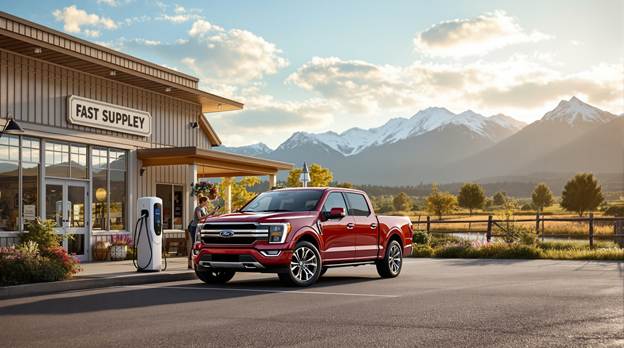
Of course, a single headline number, however impressive, won't be enough to convert the most loyal and traditional customer base in the automotive world. To get pickup drivers to truly embrace the Lightning, Ford must do more. First, the truck must be unconditionally "Built Ford Tough." It must withstand the daily abuse of a job site with the same resilience as its gas-guzzling ancestors. Second, the charging infrastructure must expand beyond the highway corridors and into the rural areas where so many trucks live and work. A reliable charging network that is as ubiquitous as gas stations is essential for mass adoption.
Finally, there is the issue of price. The new technology must be priced competitively. While the long-term savings are significant, the upfront cost must not be a barrier for the small business owners and independent contractors who are the heart of the market. Ford must make the financial case so compelling that sticking with gasoline feels like a fiscally irresponsible decision.
Wrapping Up
The first-generation F-150 Lightning was a bold and necessary proof of concept. It demonstrated that an electric pickup was possible and that its onboard power capabilities were revolutionary. The second-generation F-150 Lightning, with its 450-mile range, is the vehicle that can finally deliver on that initial promise. By directly addressing the critical issue of towing range, Ford has removed the single biggest obstacle to adoption for its core audience. This is more than just a new model; it's the moment the electric work truck becomes a reality, potentially triggering the most significant shift in the American automotive landscape in a generation.
Disclosure: Images rendered by Artlist.io and Scholar GPT4
Rob Enderle is a technology analyst at Torque News who covers automotive technology and battery developments. You can learn more about Rob on Wikipedia and follow his articles on Forbes, X, and LinkedIn.
Set Torque News as Preferred Source on Google
Follow us today...




Comments
That’s great and everything,…
Permalink
That’s great and everything, but the problem is the fact that they’re only going to be offering this in their top trim level. If they are going to try and appeal this to the working man, they need to offer this in a lower trim level at a price that makes sense to them.
Is this normal to make a…
Permalink
Is this normal to make a major statement like this regarding range and not cite the source? There is nowhere else on the internet that confirms your claim of a new battery pack size on the horizon. Without the source, and with the abundance of ads, one could reasonably conclude that you made up this article for ad revenue and traffic.......
"rainger", "expersice…
Permalink
"rainger", "expersice lenation", "fast suppley"?
Come on, if you're going to create AI slop, at least proofread the garbage it spits out.
Why do you post articles…
Permalink
Why do you post articles that are complete fabrication like this?
There's no such thing as a 2nd generation F-150 Lightning with a 450-mile range.
Torquenews has really become total trash.
I like how this article…
Permalink
I like how this article ignores the fact that the GM and Chevy electric pickups launched with 450 miles of available range and subsequently exceeded that. Real world range is even higher. Glad ford is now going to revolutionize the work truck market by catching up.
Because contractors want to…
Permalink
Because contractors want to buy the top of the range luxury model for over 100k to get the extra range....It is a lifestyle truck plain and simple or Ford would offer the electric on a basic work truck
GIVE ME A SINGLE CAB! This…
Permalink
GIVE ME A SINGLE CAB!
This vehicle is electric. There is no reason to hold it to the arbitrary fuel efficiency café laws. It doesn't have to be a quad cab.
I would bet that is based on…
Permalink
I would bet that is based on pulling loads on level highways and not up hills or mountains. I ain't convinced, be more specific on where you're driving please.
I'm not impressed. These…
Permalink
I'm not impressed. These things - EV or gas are well out of reach for most people financially speaking. And the complaints from current owners are not exactly the best springboard for media suck-ups to praise a single specification and without any confirming data.