
A 1978 Chevy K10 teaches a driver a different kind of patience.
Big hood. Small-block V8. Leaf springs. Fuel economy measured more in optimism than mathematics. The old K10 came from an era when trucks were tools first and transportation second, built with all the subtlety of a framing hammer. They rattled, drank fuel, wandered across the highway, and somehow earned loyalty anyway. There is something deeply American about a square-body Chevy that refuses to die. They are honest machines. Every sound means something. Every mile feels earned.
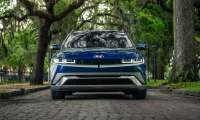
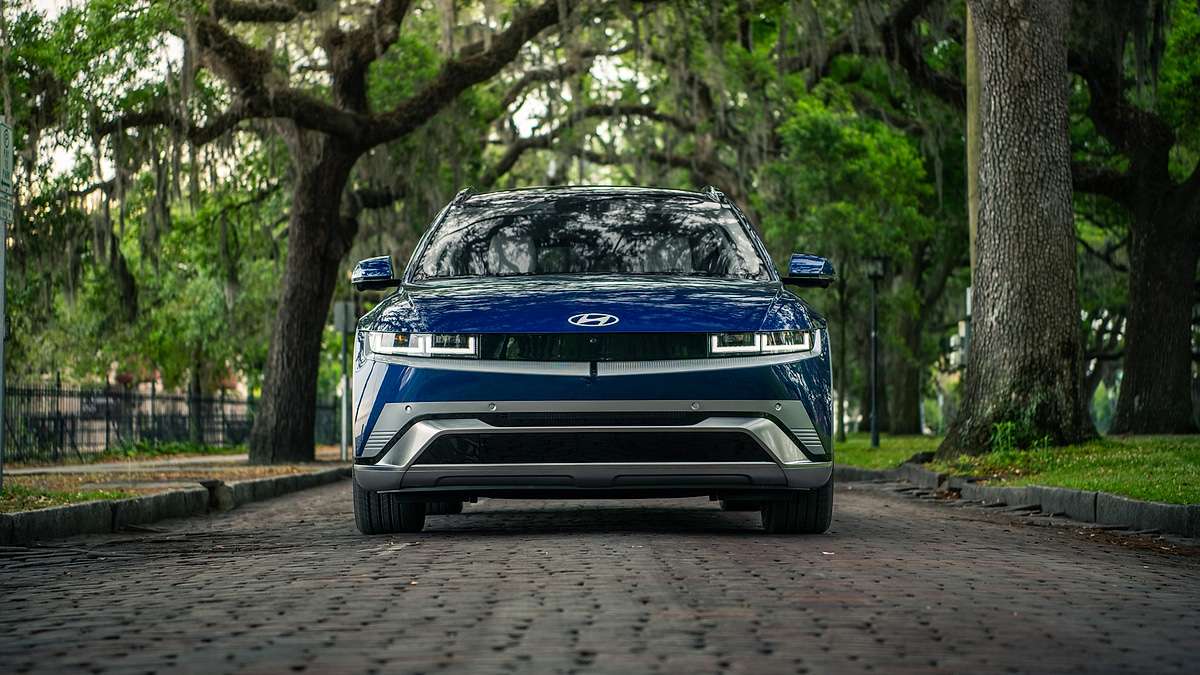
So when an owner whose garage history includes a 1978 Chevy K10 with a 350 V8 climbs into a 2026 Hyundai Ioniq 5 RWD Limited and describes it as a spaceship, I pay attention.
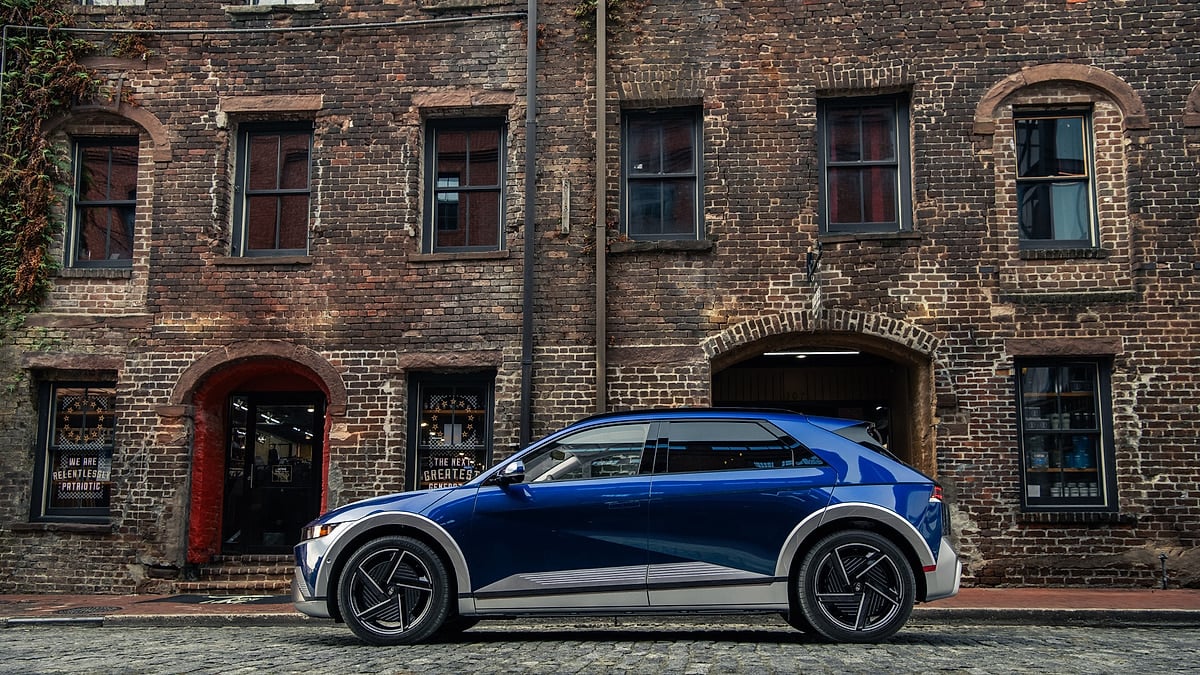
The owner, posting as Prospechtus on r/Ioniq5, has had his Cyber Gray Ioniq 5 for a little over a month. His commute changed from a 160-mile trip once a month to roughly once a week, mostly interstate, highway, and heavy North Texas traffic. That kind of driving has a way of exposing a vehicle's weaknesses. A classic K10 can make you grin on a back road or at a gas station conversation, but asking an old truck to spend hours chewing through modern commuter traffic is a reminder of how far the automobile has evolved.
That is where the Ioniq 5 makes its case.
He bought the RWD Limited for range, price, comfort, and the chance to use free charging at work. He wanted bigger, safer, quieter, and cheaper to operate. He also wanted to avoid the slow bleeding wound of modern subscriptions. Hyundai’s 0 percent APR offer, $3,000 bonus cash, a $500 concierge offer, and complimentary Bluelink services pushed the deal from appealing to hard to ignore.
The car did not replace the Fiesta ST in spirit. He still has the Fiesta. Smart man.
The Hyundai took over the life the Fiesta had started punishing.
The real luxury is less work
The owner’s strongest line has nothing to do with horsepower or charging speed. He used to row gears and work three pedals in bumper-to-bumper traffic. Now he listens to audiobooks while Highway Driving Assist 2 handles steering support and stop-and-go flow.
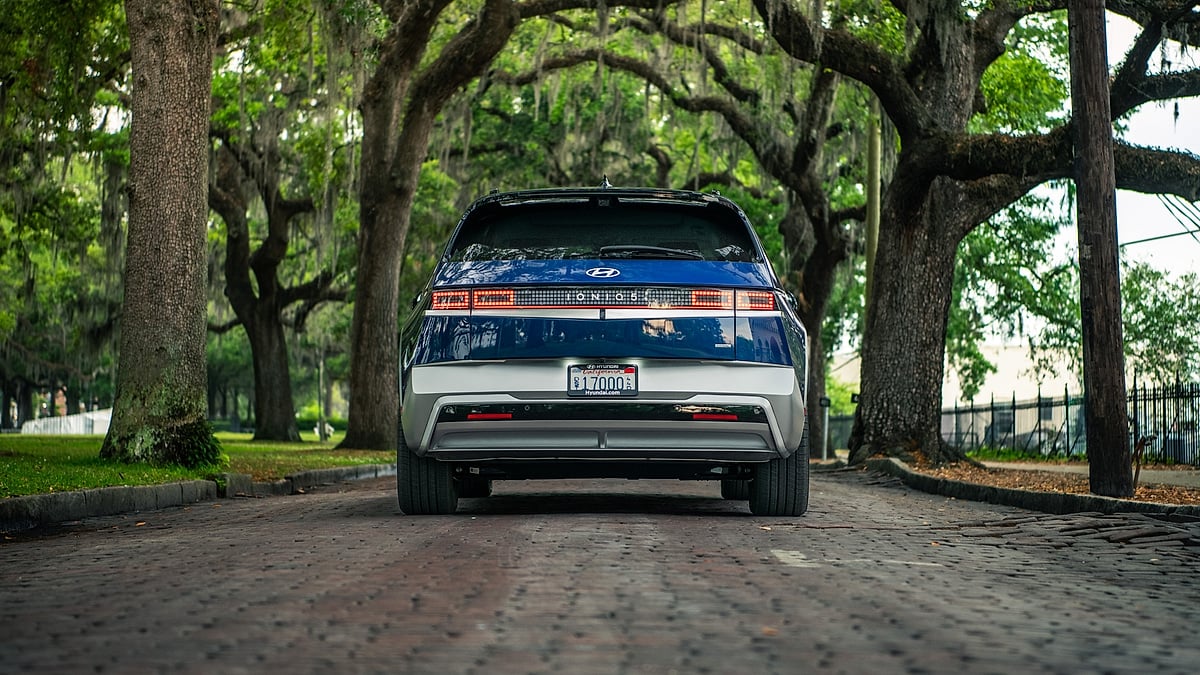
Enthusiasts have a strange guilt around ease. We worship involvement until the commute becomes a weekly grind through North Texas congestion, then we pretend our left calf is part of the romance. There is a time for a manual gearbox. There is also a time to admit that I-35 traffic does not deserve your clutch leg.
The Ioniq 5 gives this owner something a Fiesta ST cannot: calm.
He says friends call it one of the quietest and smoothest cars they have ridden in. Compared with the ST, he says it feels like a Lincoln Continental. That comparison sounds funny until you remember what the Fiesta ST was: great seats, great steering, great mischief, and the refinement budget of a college apartment.
The Ioniq 5 Limited brings heated and cooled seats, a quiet cabin, a head-up display, parking assists, V2L power, and the kind of smooth torque delivery that makes traffic less hostile. He even worked remotely while DC fast charging, using the V2L plug under the rear seat.
That is the new definition of performance for a lot of drivers: arriving with your nerves intact.
The Ioniq 5 won him by refusing to nickel-and-dime him
The owner cross-shopped the Tesla Model Y and Ford Mustang Mach-E Premium RWD. His rejection of both tells us where the EV market is heading.
He disliked Tesla’s camera-only safety philosophy, did not want to pay $99 per month for FSD Supervised, found insurance higher, and wanted less of the vehicle experience trapped inside a screen. The refreshed Model Y rides better than older ones, and I would never pretend Tesla has forgotten how to build a compelling EV. Tesla still owns charging, software confidence, and brand gravity.
The Mach-E made a cleaner impression. He liked the sportier handling, but availability and financing fell short in his area. He did not want to pay for BlueCruise. He also thought the Ioniq 5 felt more distinctive, while the Mach-E felt closer to a rental car. That sounds harsh, but I understand the reaction. The Mach-E drives with more conventional athleticism. The Hyundai has the weirder visual hook. It looks like a big hatchback from a future that still remembers 1980s concept cars.
That big-hatchback look mattered to him because he came from a Fiesta ST. He did not just buy an appliance. He bought the EV that still gave him a shape to care about.
Value sealed it. Free work charging, low operating cost, 0 percent financing, bonus cash, lifetime-style connected-service value, and no monthly driver-assist tribute. That combination feels almost old-fashioned now: buy the car, use the features, stop passing the hat every month.
Automakers should study that.
The school-bus complaint
The owner’s best criticism is simple: the Ioniq 5 turns like a school bus.
He is not alone. Other owners in the thread said the same thing. One said the car’s rear end is hard to place while backing into tight spots. Another said she still loves the car, but could not believe how poorly it turns the first time she needed to maneuver it.
Hyundai’s official turning diameter is 39.4 feet. The number by itself sounds harmless until you pair it with the Ioniq 5’s 118.1-inch wheelbase. That wheelbase is the trick. It gives the car that long, planted, lounge-like road feel. It also makes parking garages and tight U-turns feel less graceful than the exterior size suggests.
The Ioniq 5 looks compact in photos because the proportions are clean and the overhangs are short. In real parking lots, it has the turning manners of something longer and more stubborn. Owners learn the corners. They use the cameras. They park farther out. They stop pretending the thing is a normal hatchback.
I like that the owner calls it “The Bus” at home. Affectionate insults usually mean the car has already joined the family.
The ICCU anxiety has become part of the ownership experience
The owner’s only major concern is the ICCU. That says a lot about how the Ioniq 5 community thinks now.
The ICCU, or Integrated Charging Control Unit, became infamous because earlier E-GMP vehicles could suffer 12V charging problems and reduced power events tied to the system. Hyundai issued recalls for certain earlier vehicles, and the issue has lived rent-free in owner forums ever since. A new 2026 owner can read enough threads to feel haunted before the first payment clears.
He tries to manage the risk by charging in shorter stints, keeping Level 2 charging at 32 amps or less, and placing desiccant in the cabin to reduce moisture. The desiccant idea comes from forum theories about humidity and electronics. I would treat that as owner folklore with a small practical upside, not a verified ICCU cure. A dry cabin is nice in North Texas. A $2 moisture absorber will not turn a complex charging-control unit into an aircraft black box.
Charging at 32 amps or less reduces heat and stress compared with hammering the car at the top of a home circuit every night. Whether that directly protects the ICCU in a 2026 model is a harder claim. I would not sell certainty where the data is murky. I would call it reasonable mechanical sympathy.
The bigger issue is mental. When a known failure topic becomes famous enough, even happy owners start building rituals around it. That can erode trust faster than the actual statistical risk. Hyundai needs permanent confidence here, not just repair procedures and warranty comfort. The Ioniq 5 is too good a daily EV to have owners thinking about one component every time they press Start.
RWD was the rational pick, AWD was the emotional regret
The owner says he would only change one thing if he had to replace the car tomorrow: he would get AWD.
He chose RWD for range and price. Hyundai rates the 2026 Ioniq 5 RWD SE, SEL, and Limited at up to 318 miles. The Limited AWD drops to a lower EPA range because it carries the extra front motor hardware and power demand. On paper, RWD is the clean answer for a long commute and free work charging.
Then you live with the car.
The RWD Limited has 225 horsepower and instant EV torque. It is not slow. Still, a former Fiesta ST driver understands the value of a little shove and a little mischief. The AWD Ioniq 5’s extra punch changes the personality. It turns the big calm hatch into something that can embarrass traffic with less effort.
Owners also point out that Hyundai’s AWD system can behave like rear-drive in certain modes and conditions, sending power forward when the car asks for it. That helps efficiency, but it does not erase the weight, cost, or EPA difference. I would frame the decision this way: buy RWD if your commute is the job. Buy AWD if you know you will keep wondering.
That sentence could save a few people from themselves.
The owner’s car history explains the whole review
The best part of the thread comes later, when the owner lists his previous machines.
A 1978 Chevy K10 with a 350. A 2009 Nissan Altima coupe. The Fiesta ST. A Kawasaki Z125. A Suzuki SV650. A Yamaha Bolt. That is not the résumé of someone who hates cars and bought an EV because a spreadsheet told him to. That is a driver who understands different machines doing different jobs.
The Ioniq 5 impressed him because it did the daily job with style.
That is the 11th concept here. The most interesting EV conversions are not coming from people who never cared about driving. They are coming from people who already love machines and have grown tired of using the wrong one for the wrong life. The Fiesta ST can still be the weekend troublemaker. The Ioniq 5 can handle the commute, dogs, fiancée, audiobooks, work charging, Texas heat, and the quiet miracle of cooled seats after a parking lot has tried to cook you through the windshield.
That does not make the EV soulless. It gives the owner room to enjoy the soulful car at the right time.
I have always believed garages work best when vehicles have jobs. The mistake is asking one machine to be a confession booth, appliance, toy, office, dog hauler, road-trip car, traffic weapon, and financial advisor.
The Ioniq 5 takes over the grown-up job without feeling dead inside. That is why this owner sounds happy.
What buyers should take from his first month
The 2026 Ioniq 5 RWD Limited makes sense for drivers with long commutes, access to cheap or free charging, subscription fatigue, and a taste for something more interesting than the usual rounded EV crossover. It is quiet, comfortable, roomy, quick enough, and efficient enough to make a gas bill feel foolish.
Test the turning circle before you fall in love. Park it. Back it into a tight space. Try a U-turn on a road you know. The long wheelbase gives the car its highway calm, then asks for payment in parking lots.
Treat ICCU fear with discipline, not superstition. Keep recall checks current. Save service records. Use sane home-charging settings. Do not assume a desiccant bag fixes high-voltage hardware, but if it keeps a North Texas cabin drier, enjoy the two-dollar placebo with benefits.
Cross-shop the Model Y and Mach-E honestly. The Tesla may win on charging and software confidence for some drivers. The Mach-E may win for handling feel. The Ioniq 5 wins when space, comfort, design, fast charging, value, and fewer monthly subscription traps sit at the top of the list.
If you are coming from a small manual performance car, keep it if you can.
Let the Ioniq 5 do the commute. Let the Fiesta ST keep the bad ideas alive.
Ioniq 5 owners, what did you come from?
If your Ioniq 5 replaced a manual car, hot hatch, truck, or older gas commuter, what surprised you most after the first month: cabin quiet, driver assist, charging habits, turning radius, ICCU anxiety, or the feeling of giving up the old mechanical routine?
About The Author
Noah Washington is an automotive journalist based in Atlanta, Georgia, covering sports cars, luxury vehicles, and performance culture. His reporting focuses on explaining the engineering, design philosophy, and real-world ownership experience behind modern vehicles.
Noah has been immersed in the automotive world since his early teens, attending industry events and following the enthusiast communities that shape how cars are built and driven today. His work blends industry insight with enthusiastic storytelling, helping readers understand not just what a car is, but why it matters.
Noah is also a member of the Southeast Automotive Media Association (SAMA), a professional organization for automotive journalists and industry media in the Southeast.
His coverage regularly explores sports cars, luxury vehicles, and performance-driven segments of the automotive industry, including the evolving culture surrounding Formula Drift and enthusiast builds.
Read more of Noah's work on his author profile page.
You can also follow Noah here:
Set Torque News as Preferred Source on Google
Follow us today...