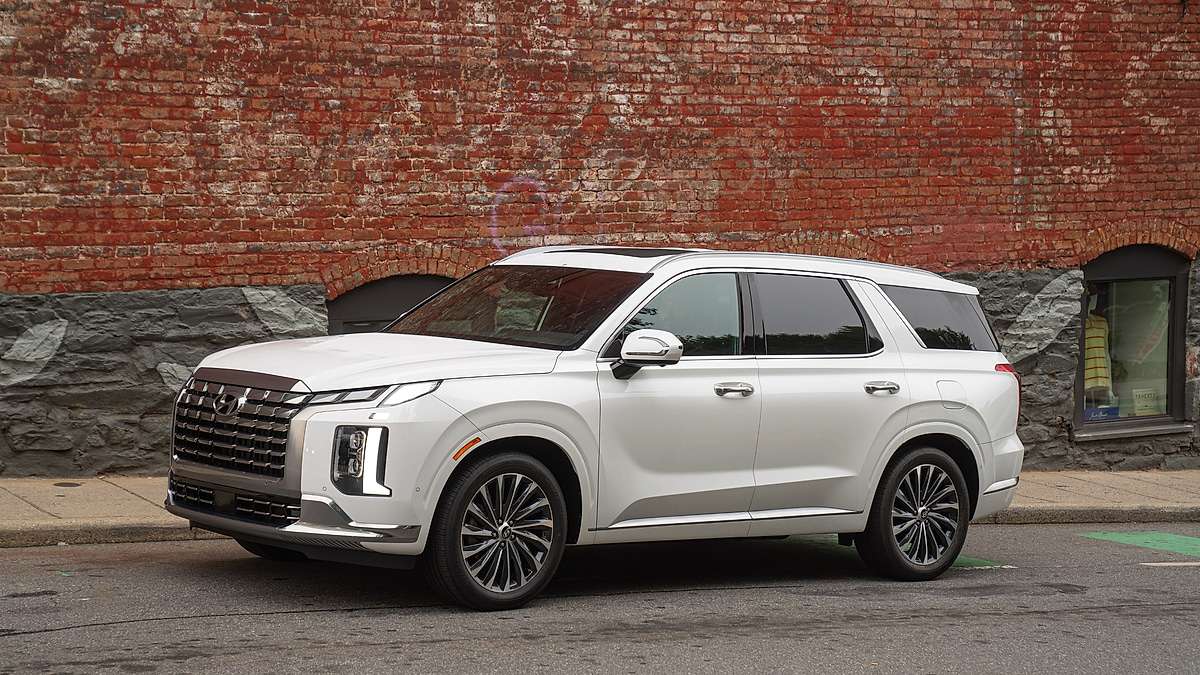

A 2026 Hyundai Palisade Calligraphy driver emailed me after reading our earlier report about a Palisade that lost acceleration at low mileage. Martha J. says her SUV has failed to move after stopping 3 to 4 times, including once with four adults in the vehicle, and she has already reported the issue to Hyundai USA. Torque News checked her account against NHTSA recall records, NHTSA complaint data, Hyundai's own feature information, and the prior Palisade case. The concern matters because an SUV that does not move after a stop is not a convenience problem. It is a traffic-exposure problem.
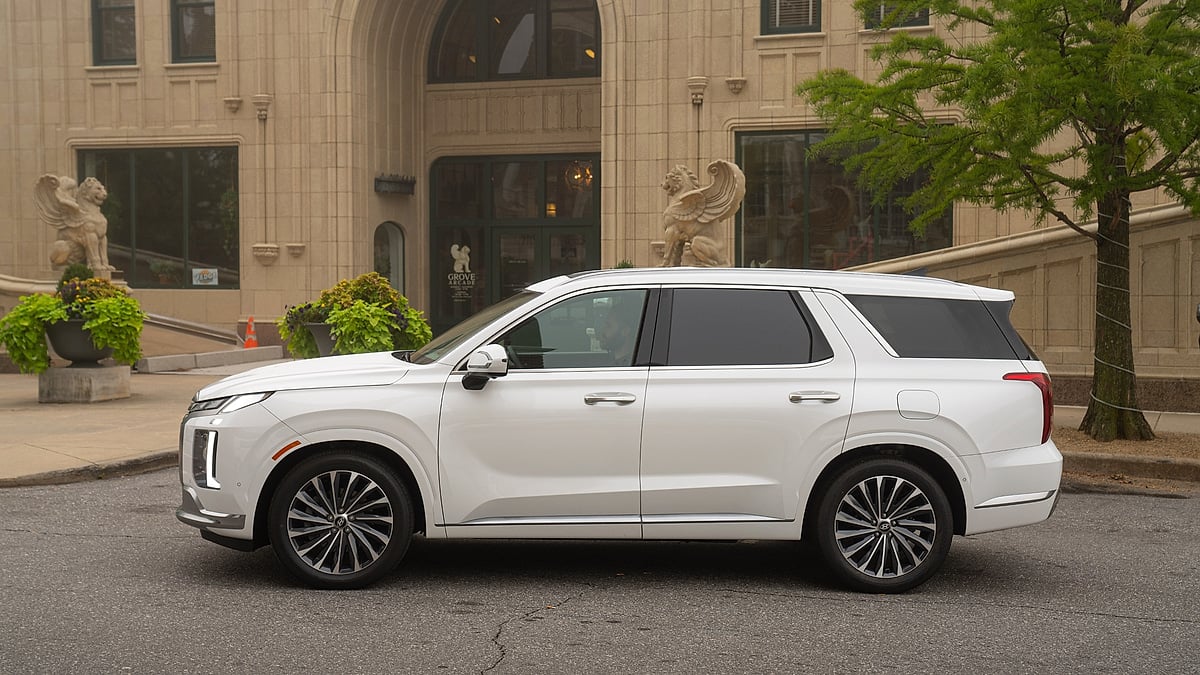
"The car is beautiful, but it's having issues," she wrote. Her Palisade was in the shop for a separate power-seat issue when she contacted Torque News. The right-side automatic seat was not folding down, she said, and that detail now sits against a wider official record: Hyundai has already recalled certain 2026 Palisade and Palisade Hybrid Limited and Calligraphy models for powered rear-seat behavior that may not respond to contact with an occupant or object as intended.
But Martha's bigger worry is not the seat.
It is the moment after a stop when she expects the SUV to move, and it does not.
What Torque News Checked
- Martha J.'s direct email, including repeat no-go events, intermittent start complaints, dealer visits, and her Hyundai USA report.
- NHTSA recall data for the 2026 Hyundai Palisade, including recalls 26V047, 26V160, and 26V169.
- NHTSA complaint data and Torque News' prior Palisade report involving a low-mileage acceleration failure traced to an engine-control wiring-harness issue.
The Pattern Is Different From A Simple Seat Recall
Martha's email describes three buckets of trouble.
First, she says the Palisade has failed to stop at an intersection or prepare to make a turn. The first time, she shut the vehicle off, restarted it, shifted back into Drive, and continued. During the most recent event, she says four adults were in the vehicle and saw her press the accelerator while the SUV would not move.
"The last time it happened so quickly after I stopped to make a left turn, I wasn't expecting it," she wrote. "I tried to push the gas down three times while the four adult drivers in the back of the car were telling me just go. I showed them that the car wasn't going when I had the gas pedal down."
Second, she says the vehicle sometimes does not start immediately after it has already been driven. The dash lights come on, but the engine does not turn over right away. If she keeps trying, or waits 30 seconds to a minute, it eventually starts. That is the kind of intermittent problem that makes owners feel foolish at a service desk and unsafe in a parking lot. The car works again by the time anyone looks at it.
Third, she says her Bluetooth scan recorded five closed historical DTCs, including a seatbelt issue and an airbag issue, but no one has explained what those mean.
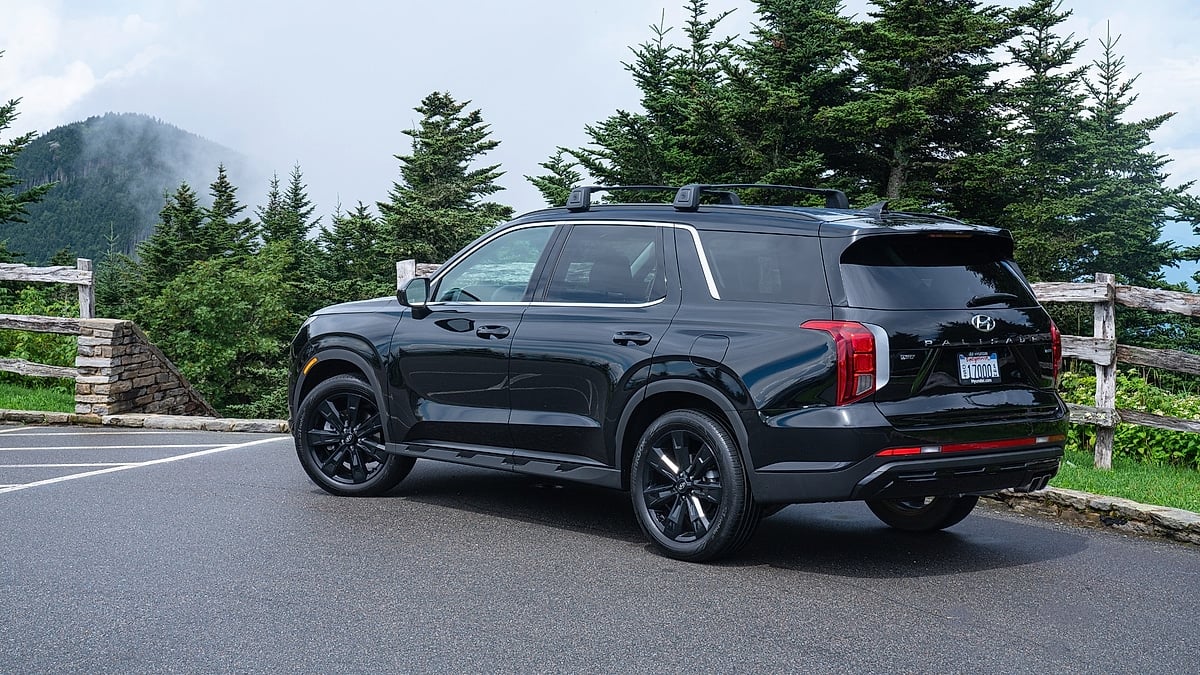
That last part should not be dismissed. Historical codes can be old noise, but they can also be breadcrumbs. The correct answer is not to wave them away. The correct answer is to print the full scan, identify the modules that set the codes, note whether they are current or history, clear them only after documentation, and see whether the same modules log faults after the next event.
This is where the story moves beyond one owner's email.
The Official Record Already Shows Launch-Year Complexity
NHTSA's recall API listed three recalls for the 2026 Hyundai Palisade as of May 25, 2026.
Recall 26V047 covers an instrument panel display software problem across multiple Hyundai models, including the 2026 Palisade and Palisade Hybrid. NHTSA says the display may fail and may not show critical safety information, such as the speedometer or warning lights, increasing crash risk.
Recall 26V160 covers certain 2026 Palisade and Palisade Hybrid vehicles equipped with Limited or Calligraphy trim packages. NHTSA says the second- and third-row power seats may fail to detect a person and continue moving after contact during powered-seat functions such as one-touch tilt-and-slide or automatic power fold-and-stow. The consequence is direct: a person, especially a child, may become trapped by a rear-facing seat, increasing injury or death risk.
Recall 26V169 covers the internal wiring in the third-row driver-side seat-belt buckle. NHTSA says wiring damage may create an incorrect seat-belt status display.
These are not small trim complaints. They involve displays, seats, seat-belt detection, software, wiring, and owner confidence in the vehicle's electrical architecture.
Do these recalls prove Martha's intersection no-go problem?
No.
That is the key line.
They do prove something else: the 2026 Palisade is already in a launch-year safety and software environment where a dealer should not treat owner reports like isolated drama. When an owner reports repeat no-go events, delayed starting, power-seat malfunction, and historical restraint-related codes, the response should be structured documentation, not a shrug because the vehicle behaved during a short service drive.
Why The No-Go Complaint Is Harder Than A Broken Part
The hardest service problems are not always the most expensive ones. They are the ones that disappear.
Martha says she has spoken with two dealership service departments. Both told her they had not heard of the problem. Since it does not happen when she brings the vehicle in, they do not know what to do. She is doing the one thing she can do: asking them to document it.
That is the right move, but it is not enough by itself.
Owners need the repair order to say more than "customer states vehicle will not go." That phrase is too weak. It lets the system flatten a safety event into a vague complaint. The better repair-order language is specific:
"Customer states vehicle intermittently fails to move when the accelerator is applied after coming to a stop at the intersection/left turn. The customer believes the gear indicator may show Park, or the vehicle may shift out of Drive. The event occurred approximately 3 to 4 times. The most recent event had four adult witnesses. The customer also reports intermittent no-start after hot soak and historical DTCs in restraint/seatbelt/airbag-related modules. Please perform a full vehicle scan, preserve the DTC report, inspect the shift-by-wire/ISG/Auto Hold/brake switch/gear selector data, and contact Hyundai Techline if no fault is found."
It is leverage.
A dealer cannot fix what it cannot see, but it can document the complaint precisely. Hyundai cannot review a pattern that never gets reported. NHTSA cannot see a trend if owners only vent online.
Martha's own theory is worth noting carefully. She believes the vehicle may be putting itself in Park, because the last time it happened she pressed the brake, shifted to Drive, and then the SUV moved without a full restart.
That is not a diagnosis. It is an observation that should guide the next capture. The next time it happens, if it is safe, the key evidence is the gear indicator. Is the SUV in D, P, N, Auto Hold, or an Auto Stop state? Is there a message on the cluster? Does the engine restart? Does the tachometer move? Does the brake pedal feel normal? Are warning lights present? Does the Hyundai app record anything? Does the event happen with ISG off or on?
Those details separate a drivability complaint from a usable defect report.
The Prior Palisade Case Makes The Documentation Even More Important
Torque News previously reported on a different 2026 Hyundai Palisade Calligraphy that suffered a severe low-mileage acceleration failure. In that case, the owner reported the vehicle would not accelerate after coming to a stop while carrying two young children. The repair trail eventually pointed to loose pin tension in a critical connector and replacement of the engine-control wiring harness.
Martha's vehicle should not be assumed to have the same root cause.
But the overlap matters. A nearly new Palisade. A stop. A demand for acceleration. A failure to move. A dealership that needs replication or codes before it can act.
That is a cross-source pattern worth watching, not because it proves a recall is coming, but because it shows the exact place owners get trapped. The vehicle acts up in the real world, then behaves at the dealership. The first service department says it has not heard of the problem. The owner goes home with no answer and waits for the next event, which may happen in traffic.
That is unacceptable as a long-term ownership model.
Hyundai has built a strong reputation for design, value, and feature density. The 2026 Palisade Calligraphy is a handsome, tech-heavy, family-focused SUV with features buyers used to associate with luxury brands: power rear seats, digital displays, relaxation seating, remote parking assist, head-up display, premium audio, and advanced driver-assistance technology.
But feature density raises the standard for failure handling. If a flagship family SUV uses shift-by-wire controls, smart-key starting, auto stop-start logic, powered seats, digital displays, and multiple safety modules, the service process has to be equally sophisticated. A "could not duplicate" answer may be technically true. It is not enough.
The Start Complaint Needs Its Own Paper Trail
Martha also describes a separate problem: after driving the vehicle, it sometimes does not start right away.
"A few of the dash lights come on, but the car won't start," she wrote. "I have learned that if you keep trying or you pause 30 seconds to a minute, it will eventually start."
That is the kind of issue owners often under-document because the car eventually starts. Do not make that mistake.
For delayed-start complaints, owners should record whether the brake pedal is fully depressed, whether the key fob or digital key is being used, whether the vehicle shows "key not detected," whether the gear selector is in Park, whether accessories power on, whether the starter engages, and whether the event happens after a hot restart, fuel stop, grocery run, or overnight sit.
The brake-pedal switch and smart-key authorization are not glamorous topics. Neither is shift interlock logic. But they are exactly the kinds of systems that decide whether a push-button vehicle wakes up, shifts, and moves.
The owner should not have to guess. The service department should write down the conditions and inspect the relevant modules.
The Action Plan For 2026 Palisade Owners
If your 2026 Palisade fails to move after a stop, do not rely on memory alone. Create evidence.
The first step is video, but safety comes first. Do not film if doing so puts you or others at risk. If a passenger is present, have them capture the cluster, gear indicator, warning messages, tachometer, and your foot position if possible. If you are alone and the vehicle is blocking traffic, focus on getting safe.
The second step is a written timeline. Record date, time, mileage, outside temperature, whether the engine was warm, whether ISG was on, whether Auto Hold was on, whether the seatbelt was buckled, whether the driver's door had been opened, whether the vehicle had just restarted from Auto Stop, and whether you had to shift from P to D or restart the SUV.
The third step is the dealer repair order. Before leaving the vehicle, ask the advisor to include your exact driving scenario. Ask for a full scan report. Ask whether any DTCs were current, pending, history, or cleared. Ask whether Hyundai Techline was contacted. If the dealer cannot replicate it, ask them to write "unable to duplicate at this visit" rather than "no problem found."
Those two phrases are not the same.
The fourth step is Hyundai and NHTSA. Martha says she has already reported the issues to Hyundai USA. Owners should also file a NHTSA complaint when a vehicle fails to accelerate, shifts unexpectedly, loses propulsion, will not engage Drive, or creates a traffic safety risk. Include photos, videos, repair orders, DTC reports, and case numbers.
The fifth step is escalation if the vehicle remains unsafe. Depending on the state, repeated repair attempts or extended out-of-service time may matter for lemon-law or BBB Auto Line claims. That is not legal advice. It is a reminder to preserve the record before you need it.
This Is a Family Car, Not An Expirement
The 2026 Hyundai Palisade is not a cheap experiment. It is a family SUV that many buyers choose because it feels premium, spacious, and safe. When a driver says it will not move after a stop, the issue touches the most basic promise a vehicle makes: press the accelerator in Drive and the vehicle responds predictably. Owners should not have to wait for a crash, a permanent code, or a viral post before intermittent no-go complaints receive serious documentation.
Practical Consequences
If your 2026 Palisade has done anything like Martha describes, do not just tell the dealer it "acts weird." Put the failure in writing, ask for the exact language on the repair order, request the full DTC scan printout, open a Hyundai case, and file with NHTSA if the vehicle failed to move or created a traffic risk. Until the cause is identified, avoid situations that require tight left turns across traffic or quick merges immediately after a stop. The safest owner is the one who turns a random event into a traceable record.
If you own a 2026 Hyundai Palisade or Palisade Hybrid, have you experienced delayed starting, failure to engage Drive, sudden lack of acceleration after a stop, or unexplained gear changes? Share the mileage, trim, whether ISG or Auto Hold was active, and what the dealer wrote on the repair order.
Let us know in the comments below.
About The Author
Noah Washington is an automotive journalist based in Atlanta, Georgia, covering sports cars, luxury vehicles, and performance culture. His reporting focuses on explaining the engineering, design philosophy, and real-world ownership experience behind modern vehicles.
Noah has been immersed in the automotive world since his early teens, attending industry events and following the enthusiast communities that shape how cars are built and driven today. His work blends industry insight with enthusiastic storytelling, helping readers understand not just what a car is, but why it matters.
Noah is also a member of the Southeast Automotive Media Association (SAMA), a professional organization for automotive journalists and industry media in the Southeast.
His coverage regularly explores sports cars, luxury vehicles, and performance-driven segments of the automotive industry, including the evolving culture surrounding Formula Drift and enthusiast builds.
Read more of Noah's work on his author profile page.
You can also follow Noah here:
Set Torque News as Preferred Source on Google
Follow us today...