
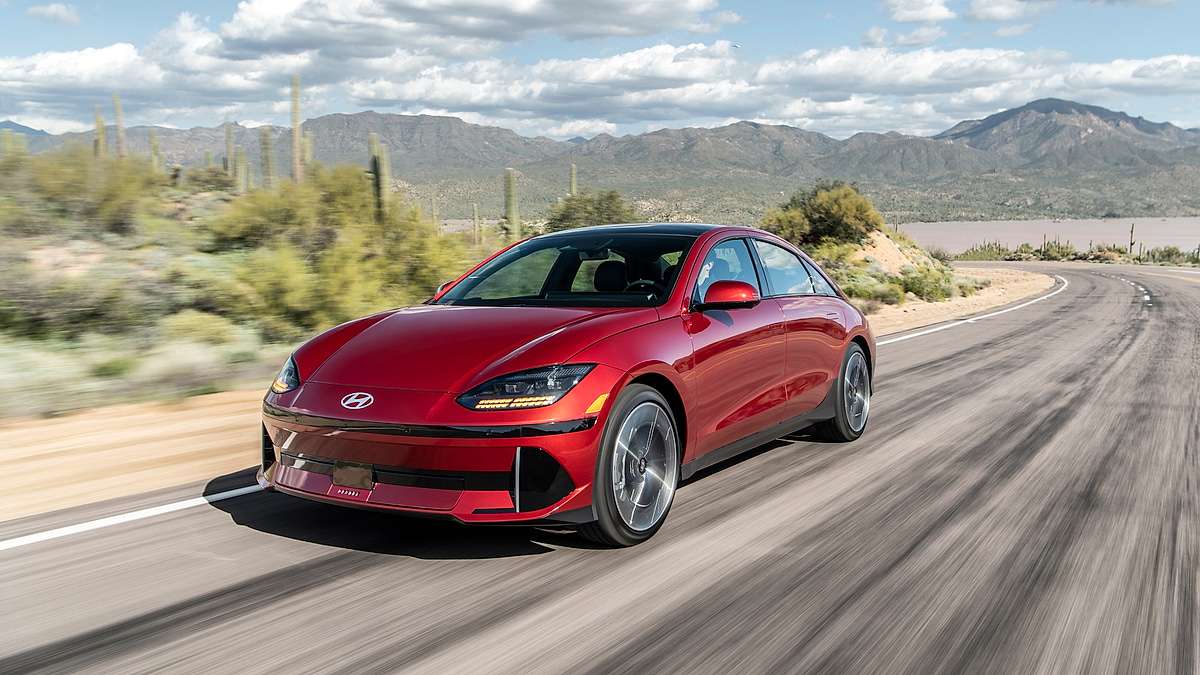

A Hyundai Ioniq 6 driver found out the annoying way that some EV tires have acoustic foam inside, and that a simple puncture can turn into a weird argument at the tire counter. Torque News checked the Ioniq 6 owner discussion, Hyundai's flat-tire guidance, USTMA and Tire Industry Association repair standards, and USTMA's acoustic-foam tire bulletin. The lesson for owners is not "EV tires cannot be patched." The lesson is sharper: foam-lined tires can be repairable, but only if the puncture, the tire condition, the manufacturer's guidance, and the shop's repair policy all line up.
What Torque News Checked
- Hyundai Ioniq 6 flat-tire guidance, including the Tire Mobility Kit's temporary-use limits and the instruction to have the tire inspected after use.
- USTMA and Tire Industry Association repair guidance, including the 1/4-inch/6-mm puncture limit, inside inspection, plug-and-patch requirement, and repairable tread-area rule.
- USTMA's acoustic-foam tire bulletin and Kia's EV6 foam-lined tire service bulletin, both of which show that foam-lined tires require extra repair steps rather than automatic replacement in every case.
The Reddit thread started with a familiar EV ownership moment: a driver learned that the inside of the tire did not look like the tire they expected. Foam blocks. Adhesive. A shop that may or may not want to touch it.
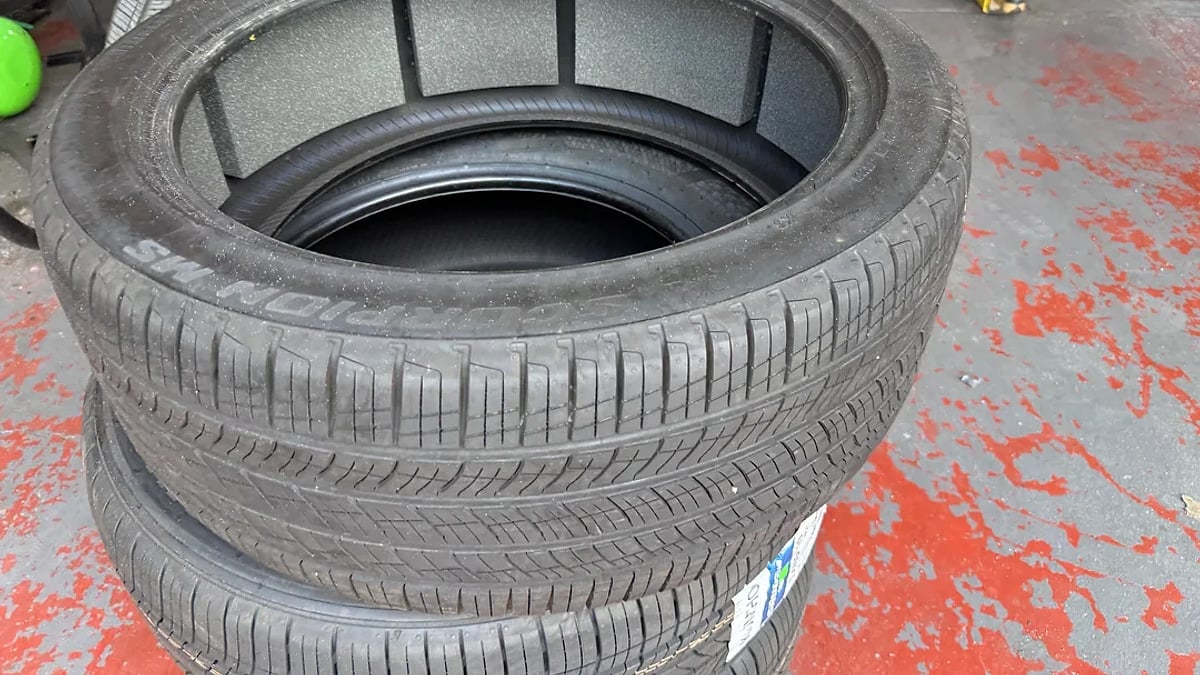
The comments split quickly. One driver said national chains may insist on an internal patch, then sell a new tire when they cannot get down to clean rubber under the foam. Another said local garages can plug the tire and that the plug has held. Another Ioniq 6 driver said Discount Tire patched their tire for free. A different commenter said their shop cut away foam, patched it from the inside, checked the balance, and the tire was still in service 10,000 miles later.
That disagreement is the story: the decision tree, not the foam itself.
Foam Is There For Noise, Not Puncture Protection
The foam inside these tires is easy to misunderstand because drivers hear "foam" and imagine something structural. In acoustic EV tires, the foam's job is sound control. Pirelli describes its Pirelli Noise Cancelling System as a foam material inside the tire cavity that absorbs resonant air waves. USTMA's acoustic-foam tire bulletin describes noise-reduction tires as tires with acoustic foam attached to the inner liner to reduce tire noise transmitted into the passenger compartment.
That makes sense in an EV. Once the engine disappears, tire cavity noise, road texture, and suspension boom move up the list of sounds drivers notice.
But the foam does not make the tire magic. It does not turn a puncture into a non-event. It does not mean the tire is self-sealing. It does not mean every EV tire has it, either. Some EV tires have acoustic foam. Many do not. Some tires have separate self-sealing technology. Some have both noise technology and sealing technology. Some are plain tires fitted to EVs because the correct load rating, size, efficiency target, price, and availability mattered more than foam.
That is why the phrase "EV tire" is too broad to be useful at the repair counter.
The real questions are narrower: What tire is on the car? Is it foam-lined? Where is the puncture? How large is it? Was the tire driven low or flat? Does the tire manufacturer allow repair? Does the shop perform foam-lined tire repairs, or does it refuse them as policy?
The 6-mm Rule Is Where The Real Conversation Starts
Here is the part every Ioniq 6 driver should know before the first screw finds the tread.
USTMA says a tire repair may be considered when damage is limited to the tread area and the puncture injury is no greater than 1/4 inch, or 6 mm, in diameter. It also says the tire must be removed from the wheel and inspected inside, and that a rubber stem or plug must fill the puncture while a patch seals the inner liner. The Tire Industry Association says the same basic thing in more direct shop language: remove the tire, inspect the inside, fill the void, seal the inner liner, and do not treat a plug by itself or a patch by itself as a complete repair.
That is why drivers hear different answers.
A shop doing a permanent industry-standard repair wants access to the inside of the tire. If the acoustic foam covers the puncture area, the tech has to remove enough foam to inspect, clean, buff, cement, and install the repair unit. That takes more time than a normal tire. It also creates a warranty and liability question: if the foam is cut away or reattached poorly, will the customer come back complaining about vibration, noise, or imbalance?
Some shops say yes and do the work. Some say no and sell a tire. Some local garages plug from the outside and send the driver on. That outside plug may hold air, and plenty of people have driven thousands of miles on plugs. I am not here to pretend those stories are fake. But a roadside plug and an industry-standard permanent repair are not the same claim.
If a shop says, "We cannot patch this tire," ask why. If the answer is "the puncture is in the shoulder," that is a safety answer. If the answer is "the hole is larger than 6 mm," that is a safety answer. If the answer is "the tire was driven flat and has internal damage," that is a safety answer. If the answer is "we do not repair foam-lined tires," that may be a store policy answer.
Policy is allowed. But owners should know the difference before buying a $250, $350, or $500 tire.
Foam-Lined Tires Can Be Repaired, But The Procedure Has Extra Steps
The best proof that foam does not automatically kill repairability comes from the industry's own documents. USTMA's Tire Information Service Bulletin 52 says the recommended repair procedure for acoustic-foam tires generally follows standard puncture-repair methods, with an added step: carefully remove foam from the injury area so the inner liner can be prepared for repair. The bulletin says the removed piece of acoustic foam does not have to be replaced, though tire manufacturer guidance still matters.
Kia's EV6 service bulletin is useful context because the EV6 shares the broader Hyundai Motor Group E-GMP world with the Ioniq 6, even though it is not an Ioniq 6 document. Kia's bulletin says foam-lined EV6 tires can be repaired but require extra steps compared with a conventional tire repair. It tells technicians to confirm the puncture is in the repairable area, confirm it is under 6 mm, dismount the tire, cut out the foam section for full plug-patch installation, install the repair, reattach the removed foam lining pad with cement, then remount, inflate, measure road force variation, and balance.
- That is not "throw the tire away."
- It is also not "jam a rope plug in and call it perfect."
The grown-up answer sits in the middle. Foam-lined EV tires are repairable when the injury is repairable, and the shop is equipped for the extra work. They become replacement-only when the puncture is outside the repairable zone, the hole is too large, the tire has internal damage, the tire maker or retailer's policy forbids the repair, or the shop cannot properly prepare the inner liner.
This is exactly why the Ioniq 6 thread is valuable. The comments are not contradictory once you sort them into categories. A plug held for one driver. A free patch worked for another. A shop refused another tire. A technician cut away the foam and repaired it from the inside. All four outcomes can exist in the same world.
Hyundai's Tire Mobility Kit Is A Get-You-Somewhere Tool
The Ioniq 6 adds another wrinkle because, like many modern EVs, it relies on a Tire Mobility Kit rather than making the spare tire the center of the flat-tire plan. Hyundai's manual describes the kit as a temporary fix. It says the kit can seal most passenger-car tire punctures caused by nails or similar objects, but it also tells drivers to have the tire inspected as soon as possible. It limits driving after a sealed puncture to cautious use, up to 200 km or 120 miles, at a maximum of 80 km/h or 50 mph, to reach a service station or tire dealer.
Hyundai also warns not to use the kit for tire-wall punctures, says larger punctures or sidewall damage may not seal, and says the kit is not designed as a permanent repair method. The manual also notes that unapproved puncture-repairing agents may damage the TPMS sensor.
So the owner script changes depending on what happened.
If you picked up a small nail in the repairable tread area, kept air in the tire, and drove gently to a shop, repair may be on the table. If you drove for miles at low pressure, used sealant, shredded the sidewall, or hit road debris hard enough to damage the internal structure, the foam is no longer the main issue. The tire may be done.
That is the part people miss online. Foam gets blamed because it is visible and weird. The actual repair decision still depends on the same boring tire rules: location, size, internal condition, tread depth, prior repairs, and manufacturer policy.
The Shop Question That Saves Money
If you own an Ioniq 6, I would not wait until the car is sitting on a shoulder to figure this out. Call two local shops now. Ask these questions:
- "Do you repair foam-lined acoustic tires?"
- "Do you perform an internal plug-patch repair after removing foam around the injury area?"
- "If you refuse the repair, will you tell me whether it is because of puncture location, tire condition, manufacturer guidance, or store policy?"
That sounds specific. Good. Specific questions get specific answers.
The worst version of this story is a driver hearing "EV tire" and assuming replacement is automatic. The second-worst version is a driver hearing "a plug worked for me" and assuming every puncture is safe to plug from the outside. Both are lazy.
My position is simple: if the tire is worth repairing, it is worth inspecting from the inside. If the shop refuses because the puncture violates repair rules, believe them. If the shop refuses only because foam is present, call another qualified tire shop before buying a new tire.
This is where local garages sometimes beat big chains. Big chains often have cleaner policies, which can be good for consistency and bad for borderline cases. A local tire shop may be more willing to cut the foam, prep the inner liner, use the correct repair unit, and rebalance the tire. The best answer may come from the shop that can explain its process, not the shop with the biggest sign.
The Foam Can Create A Second Problem: Balance And Noise
One Reddit commenter said their shop had the balance checked after removing foam and repairing the tire, and it made no difference. That is exactly the kind of detail owners should pay attention to.
Foam is mass. Adhesive is mass. A patch is mass. Cutting away foam and reattaching it changes something inside the tire, even if the change is small. Kia's foam-lined EV6 bulletin ends with remounting, inflation, road-force measurement, and balance. That is the correct level of seriousness.
If a shop repairs a foam-lined tire and does not rebalance it, I would ask why. Maybe the repair was tiny, and the shop's procedure says it is fine. Maybe it forgot. I would rather be the annoying customer for 30 seconds than live with a highway vibration for 10,000 miles.
There is also a noise question. USTMA says the removed piece of foam does not have to be replaced, while Kia's EV6 bulletin instructs the reinstallation of the foam pad after repair. Ask what the shop plans to do with the foam before it starts cutting. If it discards a small section, the tire may be a little noisier. If it reattaches foam poorly, vibration may become the new problem.
The Replacement Quote Is Sometimes Correct
If the puncture is in the shoulder or sidewall, do not turn this into a debate about foam. Replace the tire. If the tire was driven with low pressure long enough to damage the inner liner or sidewall, replace it. If the puncture is too large, replace it. If there are overlapping repairs, exposed cords, belt damage, or the tire is at the wear bars, replace it. If the tire manufacturer says that particular tire should not be repaired under those conditions, replace it.
The goal is not to bully a technician into repairing an unsafe tire. The goal is to prevent a repairable foam-lined tire from becoming a replacement because nobody wants the extra steps.
The difference matters more on EVs because tires are already a sensitive ownership cost. A replacement tire is not always "whatever fits." Match the load rating, speed rating, size, and vehicle placard. On the Ioniq 6, Hyundai's published specs show 18-inch trims using 225/55R18 tires and 20-inch trims using 245/40R20 tires, depending on configuration. The wrong tire can change ride, noise, efficiency, and handling.
The Better Question
The fix requires better language. Drivers should stop asking, "Can EV tires be patched?" That question is too broad. Ask this instead: "Is this puncture repairable under USTMA-style criteria, and can your shop perform the foam-lined tire procedure?"
That one sentence separates the physics from the policy.
That gives you room to make a smart decision. If the answer is yes, repair it properly and rebalance it. If the answer is no because of safety criteria, replace it. If the answer is policy, decide whether a second shop is worth the call.
That is the kind of EV ownership knowledge that saves money precisely because it is boring.=
What To Care About
Ioniq 6 buyers expect the car to feel futuristic, but the tire counter can still feel painfully old-school. A foam-lined tire turns a normal puncture into a communication problem between the driver, shop, tire maker, and retailer policy. The practical risk is not only paying for a tire you did not need. It is also trusting a quick plug as a permanent repair when the tire should have been dismounted and inspected. Owners need to know the difference before the tire starts losing air.
Things To Ask The Tire Shop
Before replacing a punctured Ioniq 6 tire, ask the shop to identify the exact refusal reason in plain language: location, size, internal damage, prior repair, manufacturer rule, sealant contamination, or store policy. If the tire is foam-lined and otherwise repairable, ask whether the shop can remove foam around the injury, perform a proper plug-patch repair, and rebalance the tire. If it cannot, call a second qualified tire shop before buying a replacement. If the puncture is in the shoulder or sidewall, stop shopping for loopholes and replace the tire.
Ioniq 6 drivers: if you have had a puncture on the factory tires, did the shop plug it, patch it, cut the foam and repair it, or insist on a new tire? Share the tire size, shop type, repair cost, and whether it held air afterward.
About The Author
Noah Washington is an automotive journalist based in Atlanta, Georgia, covering sports cars, luxury vehicles, and performance culture. His reporting focuses on explaining the engineering, design philosophy, and real-world ownership experience behind modern vehicles.
Noah has been immersed in the automotive world since his early teens, attending industry events and following the enthusiast communities that shape how cars are built and driven today. His work blends industry insight with enthusiastic storytelling, helping readers understand not just what a car is, but why it matters.
Noah is also a member of the Southeast Automotive Media Association (SAMA), a professional organization for automotive journalists and industry media in the Southeast.
His coverage regularly explores sports cars, luxury vehicles, and performance-driven segments of the automotive industry, including the evolving culture surrounding Formula Drift and enthusiast builds.
Read more of Noah's work on his author profile page.
You can also follow Noah here:
Set Torque News as Preferred Source on Google
Follow us today...







Comments
I'm glad you wrote this…
Permalink
I'm glad you wrote this article. I had not thought about tire repair on my EV which happens to be a Hyundai Ioniq 6 Limited RWD. I have the original stock tires, but they wear out very fast. I was looking to see what to replace them with and I was debating EV specific tires or "ev compatible". Now this article made the choice very simple Buy "ev compatible" tires that do not have foam just to make tire repair a whole lot smoother, selection greater and price a little less expensive in most cases. I'm going with the popular Continental Extreme Contact DW 06 Plus.
Glad you enjoyed the article…
Permalink
In reply to I'm glad you wrote this… by Ken (not verified)
Glad you enjoyed the article. Feel free to share it with your friends.
Have a wonderful day.