
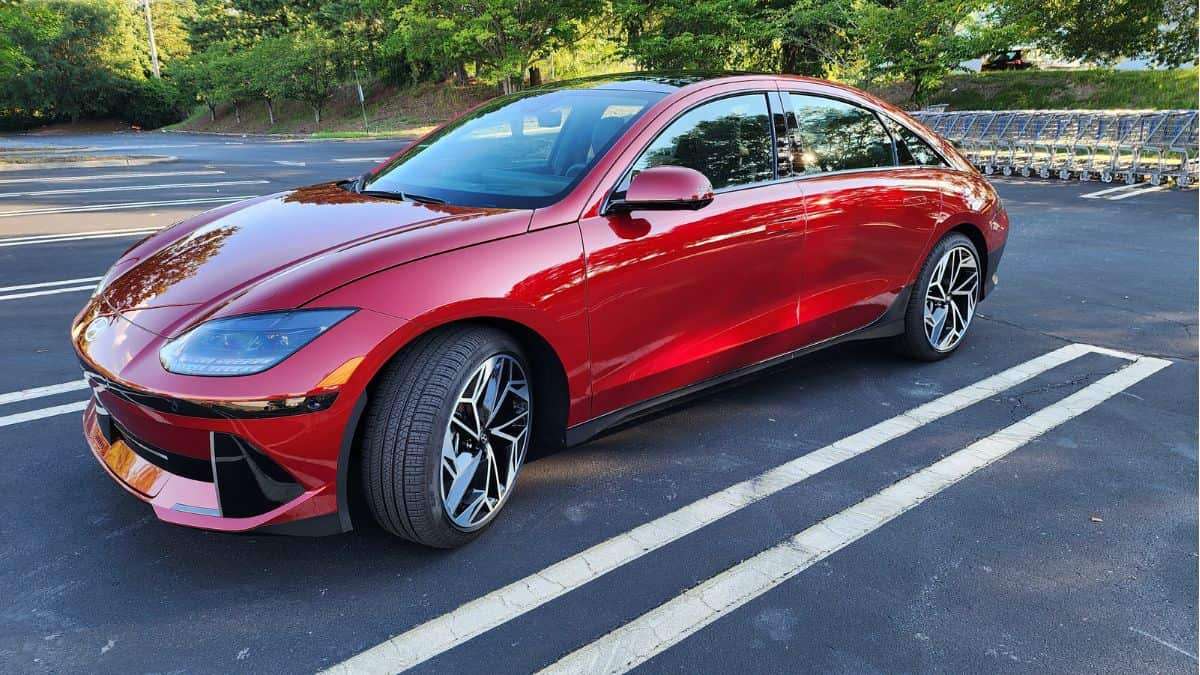

After a full week with the 2025 Hyundai Ioniq 6 Limited AWD, I’ll admit I walked in curious and walked away impressed. From the bold exterior design to the composed handling I loved, this EV has more going on than meets the eye. If you’re hunting for a sedan that looks good, feels planted and earns its spot in the growing EV scene, the 2025 Ioniq 6 Limited with its 20‑inch wheels deserves your attention - let's jump in.
So, last Sunday evening, something happened that brought the realities of EV charging into focus. Five of us were returning to Charlotte from Columbia, South Carolina. We were packed in comfortably, and the Ioniq 6 was gliding along the highway as smooth as ever. But as we got closer to Rock Hill, I began to feel a little anxious about the remaining charge. I didn’t want to risk it, so I made a quick stop at a nearby Hyundai dealership to top off.
Now, I knew that public charging, especially on the go, is more expensive than charging at home. But I wasn’t expecting just how steep it could get. I paid $20 and only got about 50 miles of range in return. To put that in perspective, if I were driving a gas-powered car of similar size, I could have paid about $6 for two gallons of gas, which would have easily taken me 60 miles or more. That’s a pretty stark contrast.
But the good news? Most EV owners don't rely on public chargers often, and I would like to give you 3 reasons charging at home is a must for electric vehicle owners. They typically charge at home overnight, where electricity rates are far lower, and the experience is seamless. So while that $20 hit stung a bit, it’s not the norm.
That said, let me tell you why it still didn’t take away from how much I enjoyed this car. The Ioniq 6 is genuinely good. Really good. That short charging stop gave me enough juice to comfortably cruise the rest of the way into Charlotte, and the ride remained quiet, smooth, and effortlessly refined. The more time I spent in the Ioniq 6, the more I appreciated its design choices, comfort, and the overall sense of purpose baked into its engineering.
What's New for 2025 in Ioniq 6?
For the 2025 model year, Hyundai has tightened up the Ioniq 6 lineup. Gone is the entry-level SE Standard Range trim, and in comes a more streamlined set of trims centered around the SE, SEL, and Limited models. Each trim can be configured with either a rear-wheel-drive single-motor setup or an all-wheel-drive dual-motor configuration. The Long Range AWD Limited I tested is the top dog, blending premium features with enhanced traction and more spirited performance.
As highlighted in Torque News' post titled “2025 Hyundai Ioniq 6 Limited LR AWD Is a Fantastic Vehicle For the Right Environment and Right Type of Buyer,” the Limited is clearly targeted to those who want tech, track feel, and winter driving confidence.
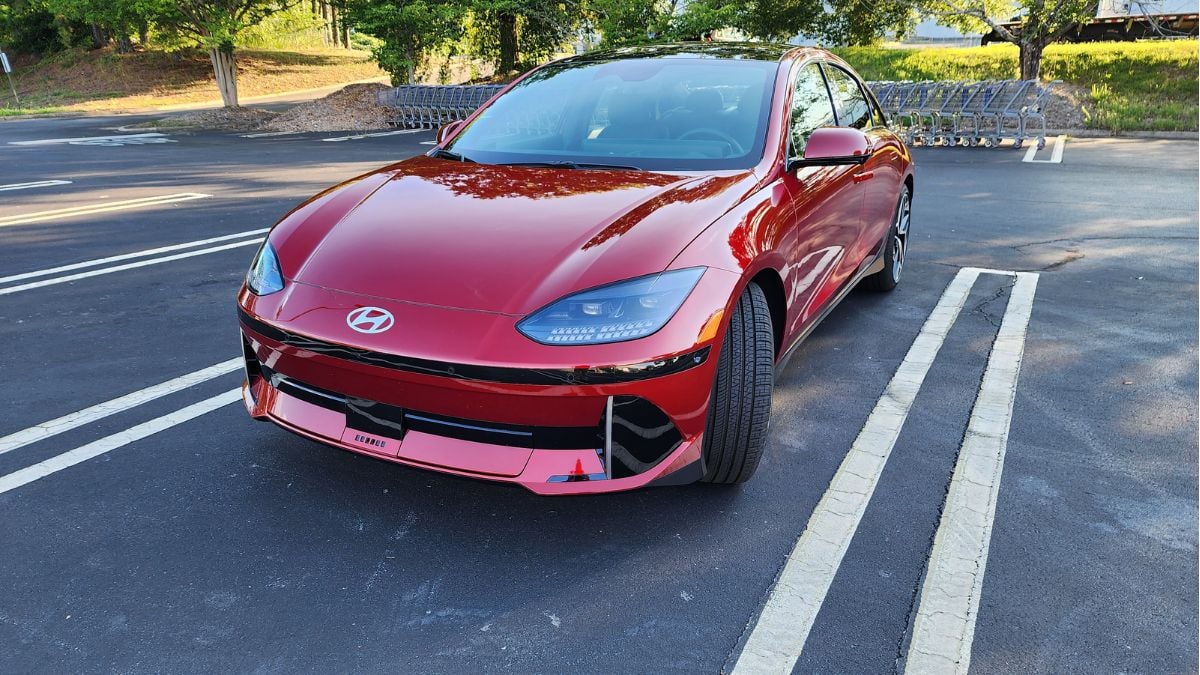
There are also a few updates to standard equipment. Hyundai has made some formerly optional features standard on higher trims. Notably, the Limited trim now includes Hyundai’s Highway Driving Assist 2, Remote Smart Parking Assist, and upgraded ambient interior lighting without needing to tick extra boxes. You also get the 20-inch alloy wheels as standard, which not only change the car’s look but impact its driving dynamics and range too.
Exterior Design of the 2025 Ioniq 6: It Grows on You, Fast
When I first saw the Ioniq 6 in photos months ago, I wasn’t sure if Hyundai was trying to chase down Porsche’s curves or if they’d overreached. But in person, especially in this Limited trim with the 20-inch wheels, it makes a bold impression. The low, rounded nose and arched roofline look slippery and almost retro-futuristic. The pixel-themed lighting up front and in the rear add a geek-chic layer to the design, one that speaks to Hyundai’s EV ambitions.
From the side profile, the Ioniq 6 has a coupe-like silhouette even though it’s a four-door sedan. The flush door handles pop out to greet you and disappear as you drive. Around back, the tail is more sloped than most sedans, almost borrowing from the fastback playbook, with a slight ducktail built into the trunk.
It turns heads. And not in the “what’s that weird thing” kind of way. It’s more like “that looks expensive, what is it?”
Interior Design and Cabin Feel
Inside, Hyundai leans into simplicity and space. The cabin of the Ioniq 6 Limited feels more open and airy than you’d expect in a midsize sedan, thanks to a flat floor and minimalist layout. The dual 12.3-inch screens are seamlessly connected behind a single pane of glass, giving it a modern command center look.
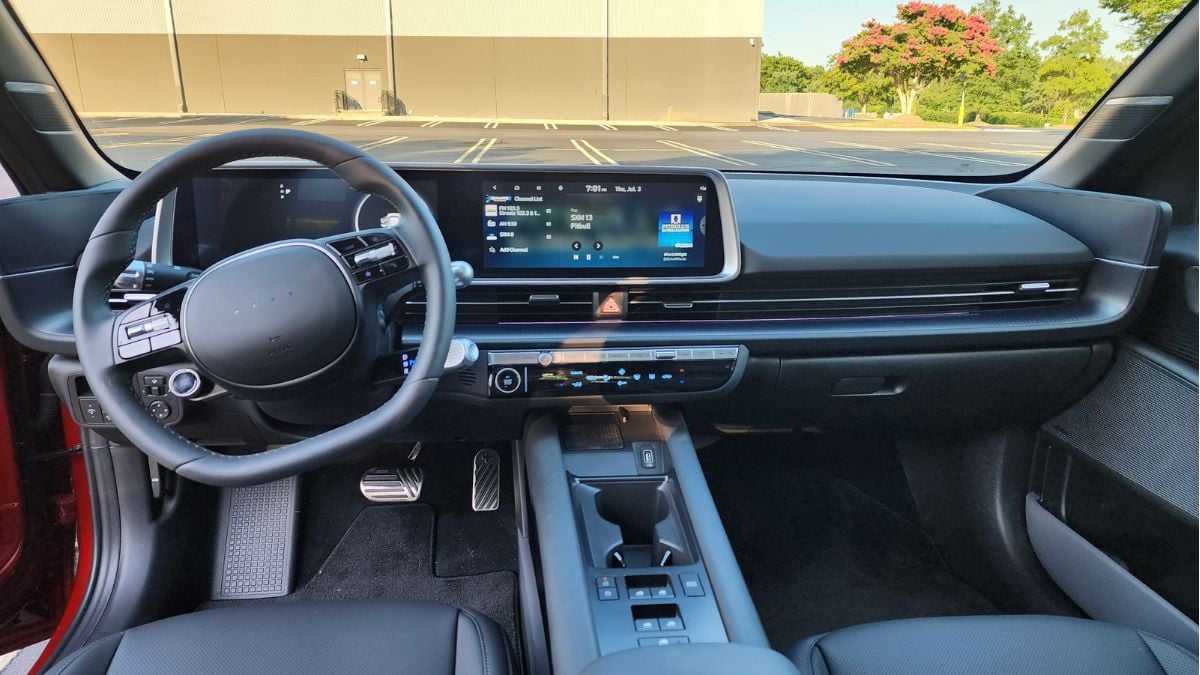
Materials in the Limited trim feel premium. Soft-touch plastics, leather seating surfaces, and customizable ambient lighting elevate the experience. The steering wheel has a unique pixel-themed light cluster that lights up when you start the vehicle. And the customizable ambient lighting is more than just a gimmick - I found it subtly changed the vibe of night driving, especially in quiet residential neighborhoods.
What struck me most about the cabin, though, is how quiet it is. Even at highway speeds, there’s very little wind or road noise. Hyundai clearly took NVH (noise, vibration, and harshness) seriously when building this car. It makes even your everyday errand runs feel like a premium experience.
Infotainment and Touchscreen Tech
Hyundai’s infotainment system has matured over the years, and in the Ioniq 6, it’s both functional and intuitive. The Limited model gets the full tech package: a 12.3-inch digital gauge cluster and a 12.3-inch central touchscreen. Wireless Apple CarPlay and Android Auto still aren’t available, which is a bit of a head-scratcher, but plug-in versions work flawlessly.
The menus are easy to navigate, the screen is responsive, and the navigation includes EV-specific routing with charging station data baked in. There’s a satisfying tactility to the haptic buttons and dials. Hyundai didn’t over-digitize the cabin like some rivals.
Hyundai’s SmartSense safety suite is also standard here, including adaptive cruise control, lane keeping assist, and Highway Driving Assist 2. The HDA2 system combines adaptive cruise with lane centering and semi-autonomous lane changes. I tested it during a highway drive through moderate Charlotte traffic, and it performed smoothly, holding lanes confidently and changing lanes on command.
Second-Row Space and Comfort
If you’re tall, you’ll probably find the rear seats a bit tight on headroom. That sloping roofline, while gorgeous from the outside, eats into vertical space in the back. Legroom, however, is surprisingly generous, and the flat floor means the middle passenger won’t be punished on longer drives.
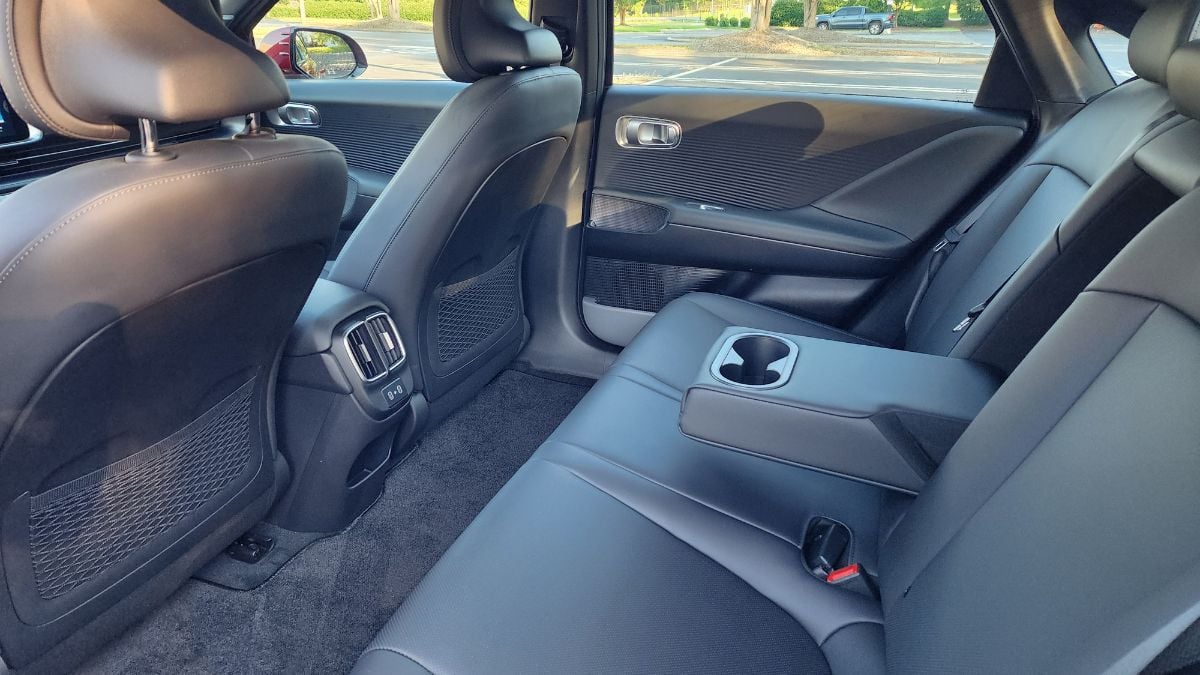
Materials in the second row are just as upscale as up front. The Limited trim even includes rear heated seats and dedicated climate vents. Visibility out the rear quarter windows is a little compromised due to the styling, but not to a deal-breaking degree.
It’s a good space for kids or average-height adults. Anyone above six feet may want to claim the front passenger seat for road trips.
Cargo Space: Looks Can Be Deceiving
Here’s one area where the Ioniq 6 reminds you it’s a form-first design. The trunk opens to reveal 11.2 cubic feet of cargo space, which is fine for daily use but not on par with hatchback-style EVs like the Ioniq 5 or Tesla Model Y. The rear seats do fold down to expand your usable space, but if you're planning a road trip for four people, you’ll have to pack smart.
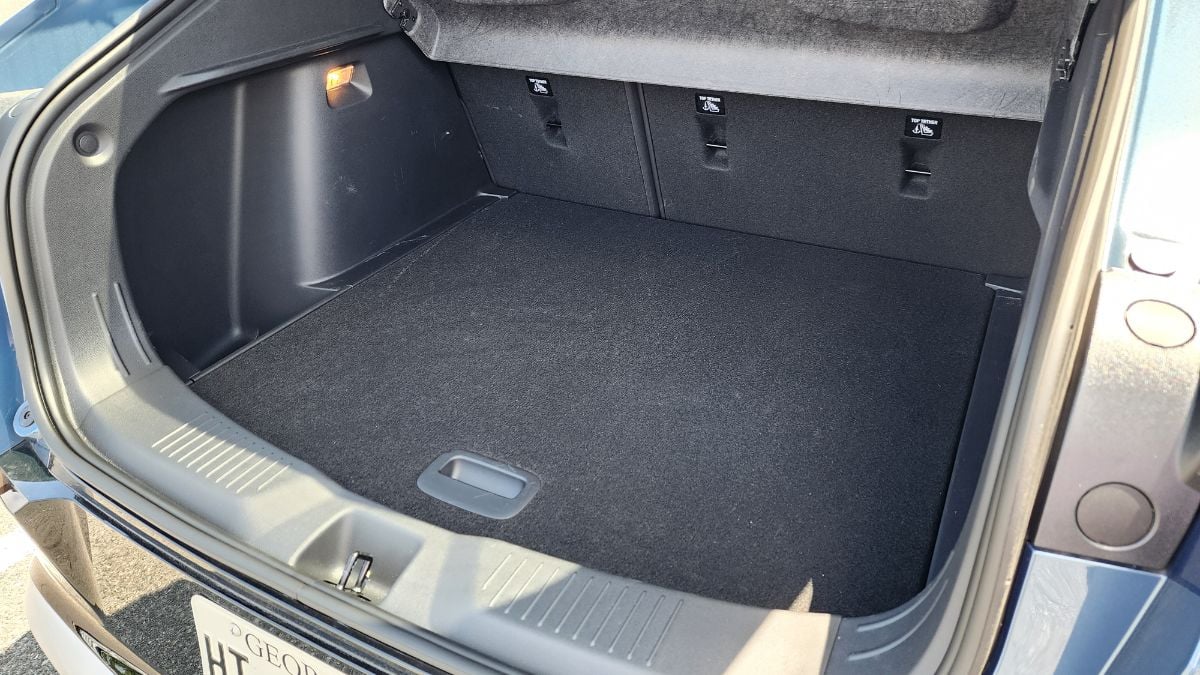
There’s a small frunk up front too, but it's more suitable for charging cables than groceries.
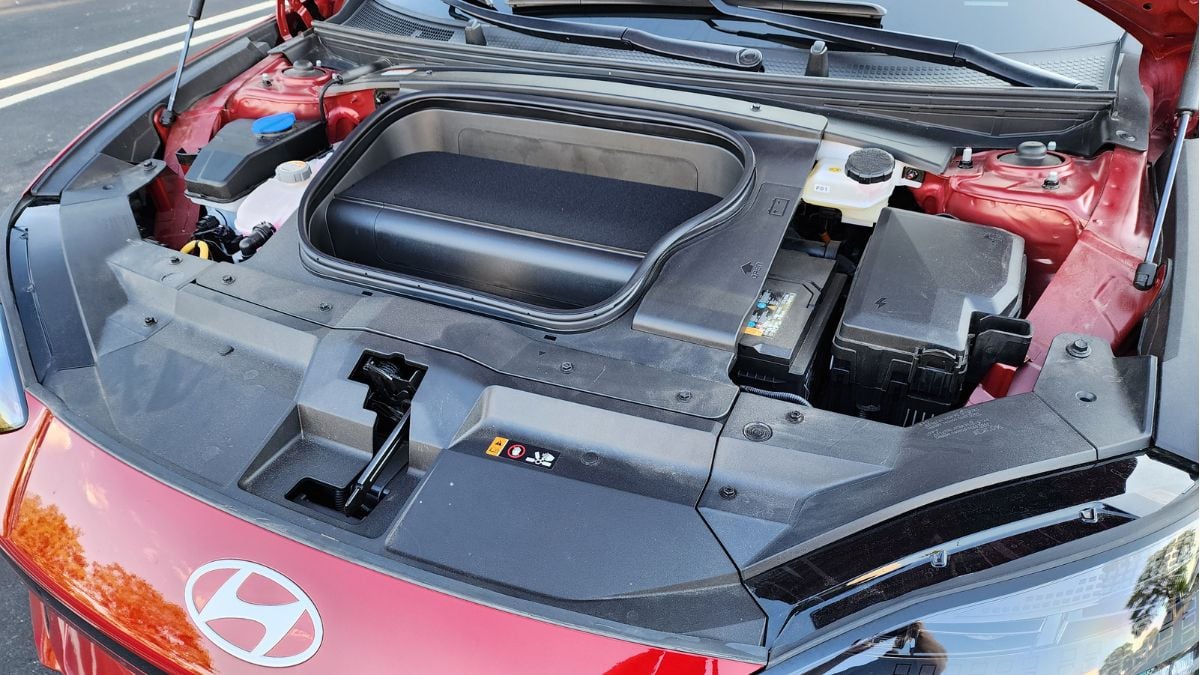
That said, this is still a sedan. And the Ioniq 6 makes no pretense about trying to be a crossover. For people who don’t need SUV-sized cargo capacity, it delivers enough practicality without losing its design focus.
Driving Experience: Composed, Comfortable, Surprisingly Engaging
Let’s talk about how the 2025 Hyundai Ioniq 6 drives. Because this was the part that really impressed me. The dual-motor AWD setup in the Limited trim delivers 320 horsepower and 446 lb-ft of torque. That’s enough to rocket this EV from 0 to 60 in just over five seconds, but it never feels twitchy or jerky. Power delivery is smooth and linear.
What I noticed most was how composed it felt. The suspension, even on these 20-inch wheels, does a great job of balancing ride comfort with road feel. It doesn’t float like some EVs do. Instead, it feels planted, responsive, and confidence-inspiring. On winding North Carolina backroads, I actually found myself pushing it a bit more than I expected to. And it responded with poise and quiet determination.
The 20-inch wheels look great, but they do reduce the range. Hyundai estimates the Limited AWD on 20s will get around 270 miles on a full charge, versus over 300 with the 18-inch setup. In my real-world mix of city and highway driving, I averaged just under 250 miles. Not bad at all, but something to consider if you do a lot of long-distance driving.
In this Torque News review, one of our senior reporters, John Goreham, emphasizes that the 2025 Ioniq 6 Limited AWD is a fantastic vehicle for the right buyer highlighting its composed driving dynamic.
Regen braking can be customized via the paddle shifters. I kept it in i-Pedal mode most of the time, which allows for true one-pedal driving. Once you get used to it, it becomes second nature.
Charging was fast and easy. The Ioniq 6 supports 800V architecture, which means you can go from 10 to 80 percent in about 18 minutes at a 350-kW DC fast charger. At home, it’ll take around 7 hours on a Level 2 charger. In a pinch, it’s one of the quickest-charging EVs in this price range.
How Does the Ioniq 6 Compare to the Tesla Model 3 and Polestar 2?
The 2025 Hyundai Ioniq 6 is walking into a very specific kind of EV arena - one dominated by the Tesla Model 3 and, more quietly but effectively, the Polestar 2. All three are electric sedans aiming to combine sleek design with sporty dynamics and long range. But here’s the key difference: the Ioniq 6 doesn’t try to be a tech-first minimalist spaceship like the Model 3, nor does it lean heavily into Volvo’s Scandinavian stiffness like the Polestar 2. Hyundai finds a middle ground - comfort-driven, elegant, and quiet - with handling that surprises you the more miles you put under its tires.
In terms of real-world ownership, as illustrated in this Torque News story where a former Tesla owner traded in two Model Ys for an Ioniq 6 and a used Chevy Bolt and reported getting better range for less money, the Ioniq 6 makes a strong case for value and refinement. The Ioniq 6 offers a broader dealer support network and avoids locking you into a single-brand charging system. While the Model 3 benefits from Tesla’s robust Supercharger network, the Ioniq 6 balances things out with a smoother ride and a more premium-feeling cabin, especially in this Limited AWD trim.
Real-World Charging Costs and Why Home Charging Still Wins
Let’s talk about what that Sunday night $20 charging stop actually means in the bigger EV ownership picture. While fast-charging on the go is convenient, it’s also not the norm for most owners. The bulk of EV charging happens at home, overnight, at residential utility rates that often range from 10 to 14 cents per kWh. That’s what makes EVs cheaper to “fuel” over time, when you avoid the high markup of public chargers.
Here’s how that reality typically breaks down:
- Public fast charging: Often 40 to 60 cents per kWh (and sometimes as high as 70 cents).
- Home Level 2 charging: Around 12 to 18 cents per kWh depending on your state.
- Hyundai’s included incentives: Two years of Electrify America fast-charging credits or a $600 credit toward home charger installation.
So yes, $20 for 50 miles hurts, but it’s an outlier. EV economics only really shine when you plug in at home, which is why most owners invest early in a good Level 2 system and rarely look back.
Is the Ioniq 6 Practical for Families or Just a Stylish Commuter?
At first glance, the Ioniq 6 looks like it’s trying to win over the single-urban-commuter crowd with its sleek, coupe-like profile. But spend time in it, and you realize Hyundai built a far more versatile sedan than the silhouette suggests. The back seat has surprising legroom for a mid-size EV, and even with the sloping roofline, most average-height adults won’t feel cramped. The flat floor also makes it easier to seat three across in a pinch - though the trunk space is more in line with a compact sedan.
That said, if you have small children, car seats will fit just fine, and the ride quality makes it a great highway cruiser for family trips. What’s missing, however, is a true hatchback design that would unlock more cargo space. If practicality is a top priority, the Ioniq 5 or even the Kia EV6 might be better suited. But if your family values comfort, luxury-like smoothness, and eye-catching design in a daily driver, the Ioniq 6 might still check all the boxes.
The New Ioniq 6 Is A Sedan With Purpose and Poise
After seven days behind the wheel of the 2025 Hyundai Ioniq 6 Limited AWD, I came away genuinely impressed. It’s not trying to be a crossover. It’s not trying to be flashy or ostentatious. Instead, it’s an EV sedan that knows what it is. Stylish, composed, and equipped with enough tech and driving dynamics to make it not just livable, but lovable.
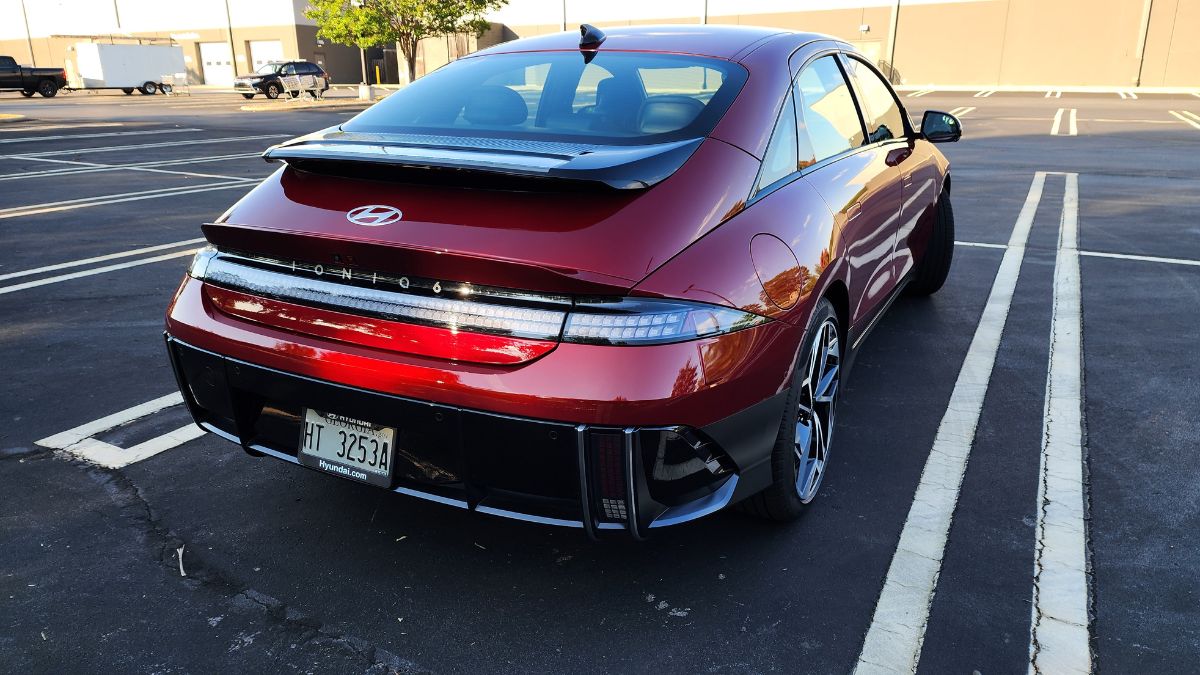
If you’re shopping EVs right now and leaning toward something like the Tesla Model 3 or Polestar 2, you owe it to yourself to drive the Ioniq 6. Its ride comfort, interior design, and quiet refinement might just win you over.
Now I’d love to hear from you.
If you’ve test-driven or owned the Ioniq 6, how does it compare to the EVs you’ve cross-shopped?
Does the sedan form factor make sense in today’s SUV-saturated market, or are you still leaning toward something with a hatch?
Please, leave your thoughts and stories in the comments below. Let’s talk about what really matters when it comes to EV ownership today.
Armen Hareyan is the founder and Editor-in-Chief of Torque News. He founded TorqueNews.com in 2010, which since then has been publishing expert news and analysis about the automotive industry. He can be reached at Torque News Twitter, Facebook, Linkedin, and Youtube. He has more than a decade of expertise in the automotive industry with a special interest in Tesla and electric vehicles.
Images by Armen Hareyan.
Set Torque News as Preferred Source on Google
Follow us today...





Comments
I own a 2024, I've done the…
Permalink
I own a 2024 Ionq 6. I've done the same math on public charging, it's incredibly expensive when it comes to cost per mile, if you live in an expensive electrical cost area, you'll do no better charging at home. I happen to live in one of the most expensive utility areas in the country and even with solar panels my cost per kwh averages out to about 37¢/kwh which translated to the equivalent of a 33 mpg car the last time I did the math. I could have gotten a Camry Hybrid and gotten a lower cost per mile, but Hyundai had 2 free years of charging when I leased it. I don't know if I would have done it without that incentive.
I own a 2023 Hyundai Ioniq 6…
Permalink
In reply to I own a 2024, I've done the… by Your Pal (not verified)
I own a 2023 Hyundai Ioniq 6 it is the first ev I owned. Like the article says its a smooth ride and comfortable even for a long commuter like myself. That said I live in a state where long commuting and ev don't mix. I've owned the ioniq 6 for just over 2 months and have driven around 5,500 miles mainly commuting from work and home and so far I've spent $2,500 charging all public charging. Luckily I have the 2 years of complimentary charging, however at this rate I'm on track to spend around $12k/year on charging alone. Although I do love the comfort and smooth ride I will definitely be switching back to either gas or hybrid vehicle after the 2 years of complimentary charging is over.
So @ 3.0 mi/kw consumption…
Permalink
So @ 3.0 mi/kw consumption which is very typical for an Ionic 6, 50 miles of range would be 16 67 kw. Let's say then you dispensed 18kw to allow for charging losses.
That works out to $0.90/kw! Whatever dealer that was, was seriously price gouging.
The Circle K in Rock Hill is $0.49/kw and has two 360kw and two 400kw stalls.
That is more typical DCFC pricing.
Still more than gasoline…
Permalink
In reply to So @ 3.0 mi/kw consumption… by egmp driver (not verified)
Still more than gasoline cost for 50 miles.
What charger did you use? I…
Permalink
What charger did you use? I paid 30 bucks to go from 20% to 90% which is over 100 miles. Public charging often is very affordable, some are expensive for super duper charging. I relied on public charging for years and paid an average.of 30 a week or every two weeks depending on my commute. There are also tons of free chargers. On average I paid north of 60 a week to put gas in my car
I used the charger at a…
Permalink
In reply to What charger did you use? I… by Gregory Frank (not verified)
I used the charger at a Hyundai dealership just outside of Columbia, SC, on highway 77. On the charger, it read Hyundai, but I forgot by which company it was powered.
I agree about the price…
Permalink
In reply to What charger did you use? I… by Gregory Frank (not verified)
I agree about the price gouging. I've been driving EVs for 10 years and never paid that much at any public charging station throughout SoCal and Arizona.
From San Diego to Ventura County, or long road trip to the south east of Arizona and up through the north around Prescott and back.
I love my ioniq6. It’s…
Permalink
I love my ioniq6. It’s everything the review said it was
Not missing my MB at all
Great looking and fun to drive
Another review pegged its 0-60 at 4.3 not “a little over 5” which is it? (mine is a 2024 with 10k miles)
Thank you
I will offer some real world…
Permalink
I will offer some real world advice as someone who works at a repair shop. Avoid Kia/Hyundai and Ford at all costs. Now I know Kia/Hyundai is the only brand most people can afford, but it is simply not worth the headaches and downtime that comes with owning one.
I own the 2023 awd ioniq-6…
Permalink
I own the 2023 awd ioniq-6 in Canada and it is simply the best car I have ever owned or driven. Using Apps like plugshare prevents me from stopping at any place that over charges. Here we have 350 kw stations that charge 50 cents per minute. I can and have charged from 10 % to 80 % in 18 minutes for a cost of $9.00. It costs less to road travel than my previous Hyundai hybrid which was about 4.5 litres per 100 km.
I own the 2023 awd ioniq-6…
Permalink
I own the 2023 awd ioniq-6 in Canada and it is simply the best car I have ever owned or driven. Using Apps like plugshare prevents me from stopping at any place that over charges. Here we have 350 kw stations that charge 50 cents per minute. I can and have charged from 10 % to 80 % in 18 minutes for a cost of $9.00. It costs less to road travel than my previous Hyundai hybrid which was about 4.5 litres per 100 km.
Still not convinced that for…
Permalink
Still not convinced that for most drivers the savings in fuel costs will outweigh the increased cost of an EV, and the higher depreciation, during the time they have the car.
This article states that the…
Permalink
This article states that the 20" wheels increase range. What I remember is that I found it odd that they were standard on the 2023 SEL model because the brochure indicated that they reduced range. I thought I read that they were going to be an option by 2026. I swapped out my 20" for 18" to increase my range.
When I purchased my 2025…
Permalink
When I purchased my 2025 Ioniq they threw in the Electrify America app that shows you were charging stations are located.That app would have helped you bypass the Hyundai dealership.Though most dealers are independent I would contact corporate after talking to the manager of the dealership you stopped at and lodge a complaint.
I recently moved to Las…
Permalink
I recently moved to Las Vegas to live with my 91-year-old mother. I convinced her to buy the 2025 Ioniq 6. I have owned three Lexus SUVs; my first car was a Nissan 300ZX, and I can honestly say this is my favorite car I’ve ever driven. It’s everything you said in this article. Every time I get in to drive, it just makes me happy. The acceleration is so smooth and quiet. It handles great and the ride is smooth. My husband is 6’3” and he has no problem sitting in the backseat. He even commented on how surprised he was how much legroom there is in the back. He’s a pick-up kind of guy, but even he admitted he likes driving this car. Mom bought the Limited; the sticker was about $52,000, but with the $7500 rebate was only about $45,000. It rides and drives like a much more expensive vehicle. Definitely the most fun car I have ever driven. As you can tell, I highly recommend it!