
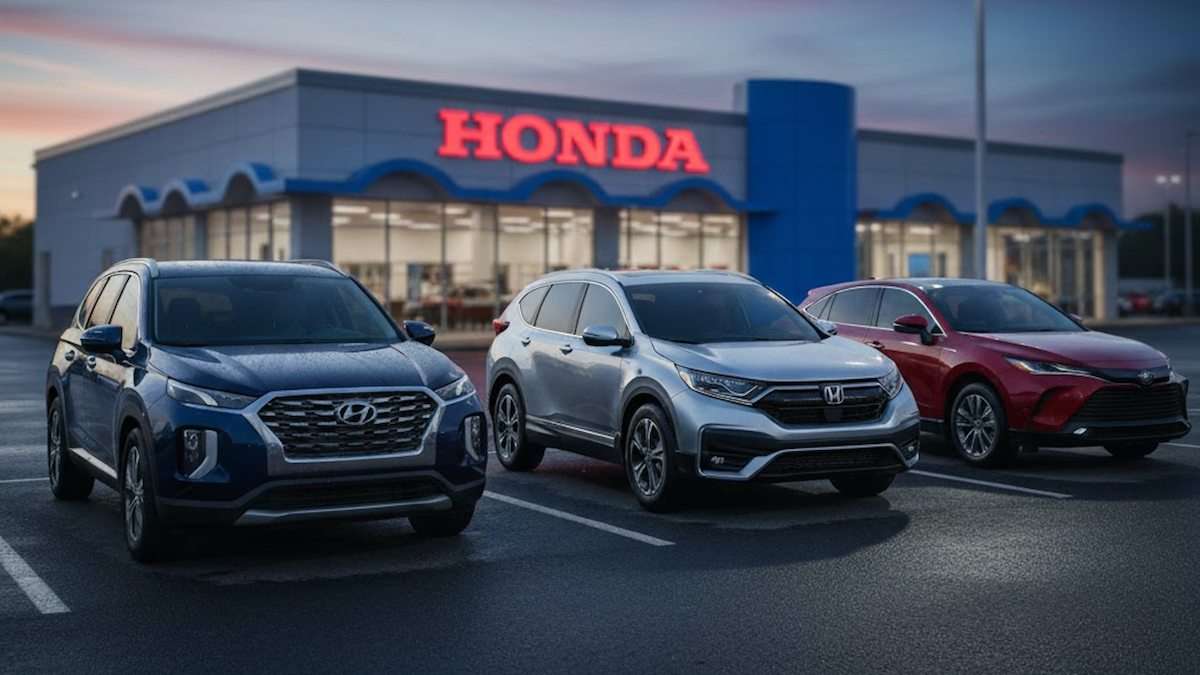

Escaping the "Palisade Pitfall": Can a Honda CR-V or Toyota Venza save this buyer from $7,000 in negative equity and a mechanical nightmare?
Imagine being trapped in a high monthly payment for a vehicle that spends more time in the shop than in your driveway, all while owing thousands more than the car is actually worth. This is the high-stakes reality for one family desperate to escape a mechanical nightmare and find a reliable sanctuary in a Honda or Toyota.
What Would You Do?
Liliya Krys on the Honda CR-V Community Facebook page says,
“My husband and I have been looking to get rid of our Hyundai Palisade for the last few months because it’s unreliable, and I told him that this time I will go with either Honda or Toyota. It came down to the 2022 Honda CR-V Touring hybrid or the 2021 Toyota Venza.”
“We are almost $7K upside down with negative value coming from our Hyundai trade-in, so we need to buy a used car that costs less. I hope to go with Honda’s reliability.”
“With Honda and Toyota, you know there’s reliability, so I hope to buy a car that will last for years. My parents always had Toyotas: a Siena, a Highlander, a Corolla, and an RAV4, and they all still drive. The Corolla was my first car, and it has over 200k miles, and my dad still uses it to get to work. One was in a car accident, and my brother came out without a scratch in the Siena. It drove seven people to Florida, probably 5-6 times.”
“So I respect Toyotas and would love to have one, but the 2021 Toyota Venza is $29, and the 2022 Honda CR-V is $26K. Because we are upside down in the Palisade, price makes a difference too.”
“We test drove both, the Venza and the CR-V. The Toyota feels smaller inside and has less storage space in the console. My husband liked it a bit more because it had a few more features compared to the Honda, but I told him that more space would be better in the long run. We test drove the Toyota RAV4 two times, and every time we got in, it didn’t seem comfortable inside.”
“This CR-V that we’re looking at has 61K miles, and when we asked if there’s any warranty left on it, the salesman said that it ended at 60K miles. So, I don’t know if that’s not too many miles because I hope to drive it at least until 200K miles. So, I’m pretty sure we will go with the Honda CR-V.”
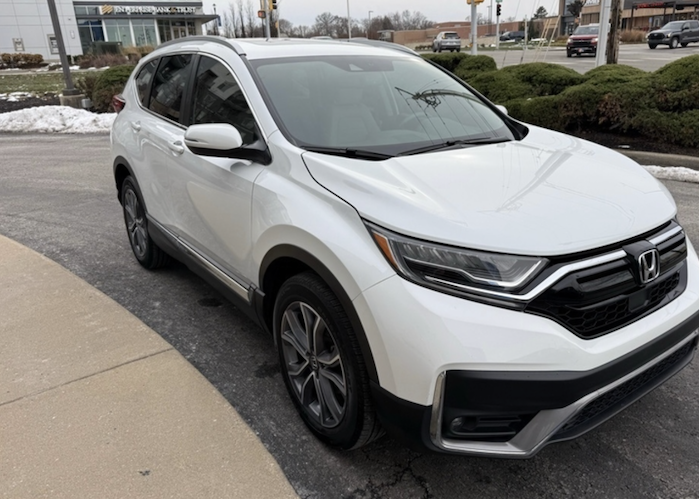
Is a 60k-mile 2022 Honda CR-V the Best Escape?
I have spent over 30 years in the automotive trenches, from consulting for major manufacturers to reporting on the front lines of consumer advocacy. I have seen the "shiny new car" glow fade into the "unreliable lemon" gloom more times than I can count. When a reader like Liliya reaches out, drowning in $7,000 of negative equity from a Hyundai Palisade, my "radar" goes into overdrive.
Being "upside down" on a car loan is a financial anchor, but combining that with an unreliable vehicle is a recipe for a crisis. Many people searching for how to trade in a car with negative equity feel stuck, but moving into a 2022 Honda CR-V Touring Hybrid or a 2021 Toyota Venza is a smart strategic retreat. However, buying a used car with 61,000 miles, just one thousand miles past its powertrain warranty, requires a surgeon's precision in decision-making.
The Reliability Check: Honda vs. Toyota
Liliya’s family history with Toyota is legendary. We’ve all heard those stories of the 200,000-mile Corolla that refuses to die. That is the gold standard. However, the 2021 Toyota Venza, while essentially a "baby Lexus," has a significant drawback for a growing family: space. The Venza prioritizes style and fuel efficiency over cargo volume. If you are coming from a massive Palisade, the Venza’s cramped interior might feel like a claustrophobic cage.
The 2022 Honda CR-V Hybrid, on the other hand, is the "Goldilocks" of the compact SUV world. It offers a massive 33.2 cubic feet of cargo space, even with the hybrid battery, which is significantly more than the Venza. But is it reliable? In my years of reporting, I have found that while Honda’s reputation is stellar, it is not without its hiccups.
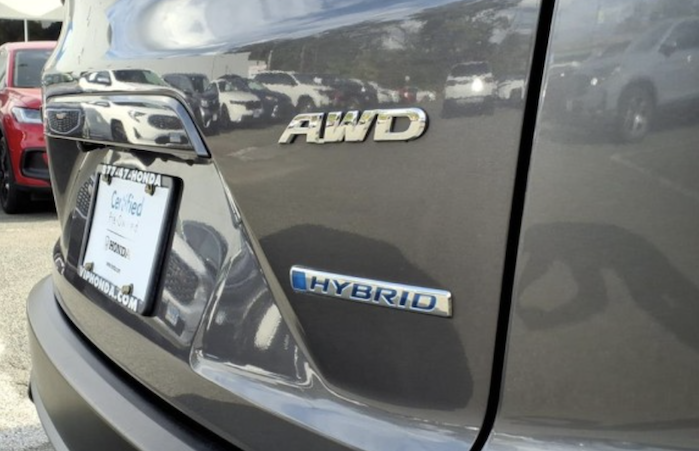
As I noted in my report, I’m Selling My Unreliable Honda CR-V and Buying A Toyota. My CR-V, With Only 68K Miles Already, Needs New Injectors at a cost of $2,000; even the "bulletproof" brands have specific weak points you must watch out for. For the 2017-2022 CR-V generation, fuel injectors and the 1.5L turbo engine (in non-hybrids) have been points of contention.
The 61,000-Mile Warranty Wall
The salesman wasn't lying: at 61,000 miles, the 5-year/60,000-mile powertrain warranty has indeed expired. This is the "danger zone" for many buyers. When looking for a used Honda CR-V reliability review, the 60k mark is a significant milestone.
At this mileage, the vehicle is due for significant maintenance. You are looking at CVT transmission fluid changes, rear differential fluid (if it's AWD), and potentially new brakes or tires if the previous owner neglected them. If you are rolling $7,000 of negative equity into a new loan, the last thing you need is a $2,000 repair bill in month two.
I recently covered a story that highlights exactly why you shouldn't panic about mileage, but you must be vigilant. Check out I Got a Great Deal On a 2016 Honda CR-V, 33K Miles, Elderly Couple, Garage Kept, But Now I Find Out It's a Ticking Time Bomb Because It Was Rarely Driven. The takeaway? Maintenance records are more important than the odometer reading. If that 2022 CR-V has a documented history of oil changes every 5,000 miles, it can easily see 200,000 miles.
Moving the Needle From Negative to Positive
To make this work, Liliya needs to minimize future risks. Rolling $7,000 into a $26,000 Honda means she is effectively paying $33,000 for a car worth much less. This is an "equity trap." To survive this, she needs the best long-term hybrid SUV for high mileage to ensure the car outlives the loan.
The CR-V Hybrid uses a 2.0L naturally aspirated engine paired with two electric motors. This system is arguably more robust than the 1.5L Turbo found in the base models, which has faced some head gasket concerns in higher-mileage units. By choosing the Hybrid, she is avoiding the "oil dilution" and "turbo failure" headlines that have plagued some 5th-gen CR-Vs.
However, technology isn't perfect. I’ve reported on instances where newer tech doesn't always equal fewer headaches. For example, I Traded My Perfect 2016 Honda CR-V for a 2022 CR-V, and I Regret It. The Day After I Bought It, the Entire Dash Went Nuts. Now, I have a Dealer Loaner. While rare, electronic glitches can happen. For someone $7,000 upside down, I recommend a high-quality aftermarket service contract (warranty) from a reputable provider to bridge the gap, since factory coverage is gone.
What CR-V Owners Are Saying
The community feedback is vital. On Reddit's r/CRV and r/ToyotaVenza, the consensus is clear:
Regarding Space: "I miss the cargo practicality of my CR-V. The Venza doesn't have nearly enough cubbies in the front for my glasses and receipts." Reddit User Mediocre-Catch9580
Regarding Reliability: "My dad had a 2014 Accord hybrid that went 160k miles 10 years no problem... the hybrids all use some form of the 2.0 hybrid engine." Reddit User Mistergq2k
Regarding 60k Miles: "Change your tranny oil at 30k... If you're concerned about cost, YouTube has a how-to-do-it-yourself guide. It's not hard." Reddit User BeginningSubject201
Key Takeaways for the "Upside Down" Buyer
- Prioritize Volume: If you are coming from a Palisade, the Venza will feel like a downgrade in utility. Stick with the CR-V for family needs.
- Inspect the 2.0L Hybrid: Ensure the 12V battery and the hybrid cooling system have been checked. These are common 60k-mile failure points.
- Maintenance is King: Before signing, demand the service records. If the CVT fluid hasn't been changed yet, make the dealer do it as part of the deal.
- Gap Insurance is Mandatory: Since you are $7,000 upside down, if the car is totaled, insurance will only pay the market value. You must have Gap insurance to cover that $7,000 deficit.
A Move That Will Stabilize Your Finances
Trading an unreliable Palisade for a Honda CR-V is a savvy move to stabilize your life, even with the sting of negative equity. While 61,000 miles means you are flying without a factory safety net, the CR-V Hybrid’s powertrain is one of the most resilient on the market. Focus on aggressive maintenance now, and that $7,000 debt will eventually vanish as the Honda continues to run long after the loan is paid off.
What Would You Do? Would you take the $7,000 hit to get into a more reliable Honda, or keep the Palisade and hope the repairs don't outpace depreciation? Let me know in the comments!
Next Up: Think the CR-V is the only option? Check out why some owners are choosing the older models over the new tech. "I'm driving a paid-off 10-year-old Honda CR-V Because It Costs Nothing to Run, and Who Wants a $ 500-per-month car payment?"
With over 30 years of industry experience, Denis Flierl brings an insider’s perspective to Torque News, where he has been a Senior Reporter since 2012. Before picking up the pen, Denis consulted for the automotive industry's biggest brands and honed his skills as a test driver. He cuts through the noise to deliver the latest auto news, compelling owner stories, and the expert analysis necessary to navigate today's changing automotive market.
Have a tip or question? Follow me on X @DenisFlierl and @WorldsCoolestRides, or connect with me on Facebook, Instagram, and LinkedIn.
Photo credit: Denis Flierl
Set Torque News as Preferred Source on Google
Follow us today...






Comments
Why is she upside down in…
Permalink
Why is she upside down in the Palisade. They have a 10 year 100,000 mile drive train warranty. I wonder what year she has that she's 7,000.00 upside down. I have a 2024 Palisade and it runs flawlessly.
Only a matter of time. Our…
Permalink
In reply to Why is she upside down in… by Dan Smith (not verified)
Only a matter of time. Our Elantra at the shop has 110 000km and it sounds like the engine will blow any day now. Kia/Hyundai are the worst car brand going, no contest. But I only say that because I drive them and work on them every day.
Without more details on …
Permalink
Without more details on "unreliable"Hyundai,
the model year, and mileage, the article has little to offer.
Almost sounds like a hit piece.
I agree. Our '22 Palisade…
Permalink
In reply to Without more details on … by Geoffrey Mordue (not verified)
I agree. Our '22 Palisade ran perfectly for 3 years. We missed it so much that we just purchased the '26 model.
Every year of every model of…
Permalink
In reply to Without more details on … by Geoffrey Mordue (not verified)
Every year of every model of vehicles that Kia/Hyundai makes are unreliable. Ask any mechanic.
He would not believe how…
Permalink
He would not believe how many test drives I've driven with cars and customers with a new vehicle saying I bought a new car because I didn't want it to break It doesn't matter what manufacturer yet things break
I have a pallisafe too , but…
Permalink
I have a pallisafe too , but it’s a mess 115000 miles , bought it at 79.000 too many , I drive it slot , so I’m stuck too , but gonna trade it in too ,but msybe another Les miles than get Honda and I need three rows!