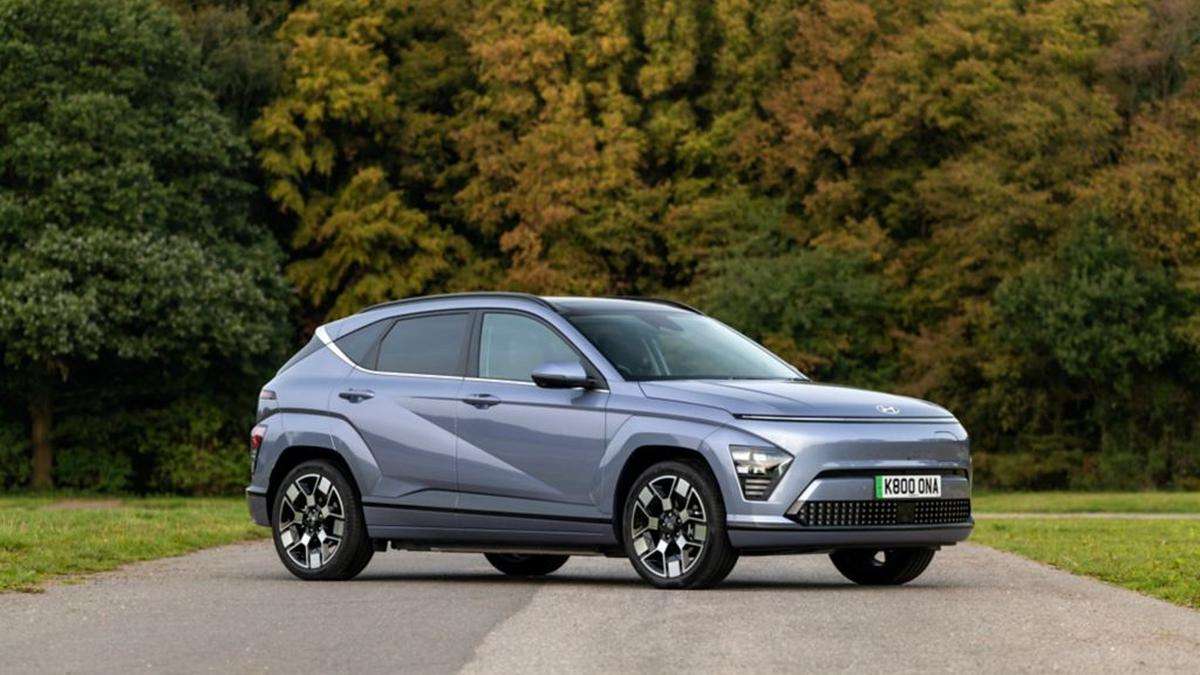

In the often brutal world of rideshare driving, where mileage piles on fast and downtime costs real money, one Hyundai Kona EV owner believes he has found the sweet spot. After roughly 93,000 miles in just two years of Uber driving, he says the Kona EV has proven itself to be the cheapest, most reliable vehicle he has ever operated. His verdict is blunt and confident. You just cannot beat this car.
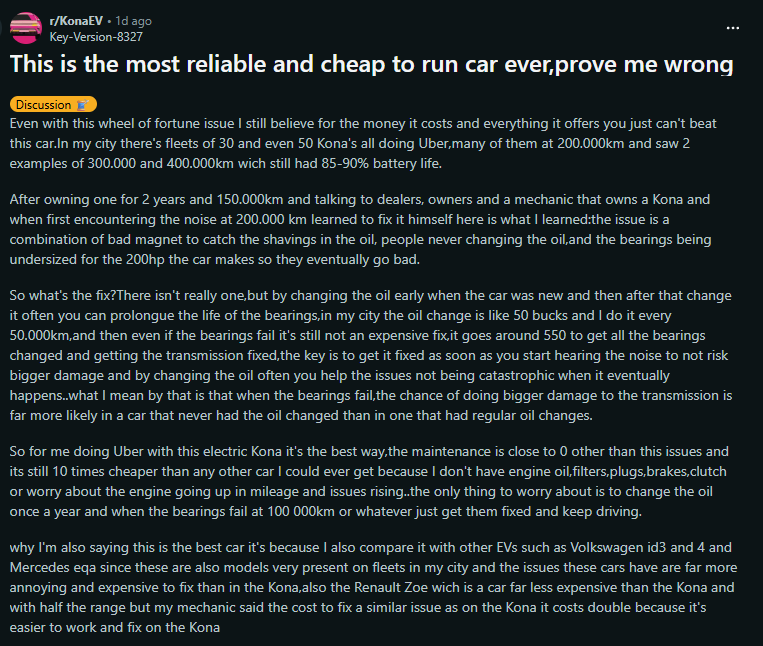
The driver points to fleet-level evidence in his city, where groups of 30 to 50 Kona EVs are used almost exclusively for Uber and delivery work. Many of those cars have already surpassed 124,000 miles, with a few examples reportedly reaching 186,000 miles and even 248,000 miles. Despite that kind of abuse, he claims battery health commonly remains in the 85 to 90 percent range, which is a critical metric for any high-mileage EV used for income.
“Even with this wheel of fortune issue, I still believe, for the money it costs and everything it offers, you just can't beat this car. In my city, there are fleets of 30 and even 50 Kona's all doing Uber, many of them at 124,274 mi, and saw 2 examples of 186,411mi and 248,548 mi, which still had 85-90% battery life.
After owning one for 2 years and 93,206mi and talking to dealers, owners and a mechanic that owns a Kona and when first encountering the noise at 124,274 mi learned to fix it himself here is what I learned: the issue is a combination of bad magnet to catch the shavings in the oil, people never changing the oil, and the bearings being undersized for the 200hp the car makes so they eventually go bad.
So what's the fix? There isn't really one, but by changing the oil early when the car was new and then after that change it often you can prolongue the life of the bearings, in my city the oil change is like 50 bucks and I do it every 31,069mi, and then even if the bearings fail it's still not an expensive fix, it goes around 550 to get all the bearings changed and getting the transmission fixed, the key is to get it fixed as soon as you start hearing the noise to not risk bigger damage and by changing the oil often you help the issues not being catastrophic when it eventually happens..What I mean by that is that when the bearings fail, the chance of doing bigger damage to the transmission is far more likely in a car that never had the oil changed than in one that had regular oil changes.
So for me doing Uber with this electric Kona it's the best way, the maintenance is close to 0 other than this issues and its still 10 times cheaper than any other car I could ever get because I don't have engine oil, filters, plugs, brakes, clutch or worry about the engine going up in mileage and issues rising..the only thing to worry about is to change the oil once a year and when the bearings fail at 62,137mi or whatever just get them fixed and keep driving.
Why I'm also saying this is the best car it's because I also compare it with other EVs such as Volkswagen id3 and 4 and Mercedes eqa since these are also models very present on fleets in my city and the issues these cars have are far more annoying and expensive to fix than in the Kona, also the Renault Zoe wich is a car far less expensive than the Kona and with half the range but my mechanic said the cost to fix a similar issue as on the Kona it costs double because it's easier to work and fix on the Kona”
The Kona EV does have a well-known Achilles’ heel, often referred to by owners as the “wheel of fortune” noise. This issue is tied to the reduction gear unit bearings, which can develop a distinctive whine over time. According to the driver, the root cause is a combination of undersized bearings for the roughly 200-horsepower output, inadequate magnetic capture of metal shavings, and the fact that many owners never change the gear oil because they assume EVs require no drivetrain maintenance.
Hyundai Kona EV: Compact Efficiency for City Driving
- The Kona EV’s compact footprint makes it easy to maneuver and park, giving it an urban-friendly advantage over larger electric crossovers with similar passenger counts.
- Power delivery is tuned for smooth, predictable response rather than aggressive acceleration, supporting efficient commuting with minimal driveline drama.
- Cabin design balances modern screens with conventional controls, though rear-seat space remains a limiting factor for taller passengers on longer trips.
- Efficiency tends to be a practical strength in daily use, but highway range can drop more noticeably than in larger, more aerodynamic EVs.
His approach is simple and pragmatic. Change the reduction gear oil early in the car’s life and then do it regularly. In his case, an oil change costs about $50, and he performs it roughly every 31,000 miles. That alone, he says, significantly extends bearing life and reduces the chance of catastrophic damage when the bearings eventually wear.
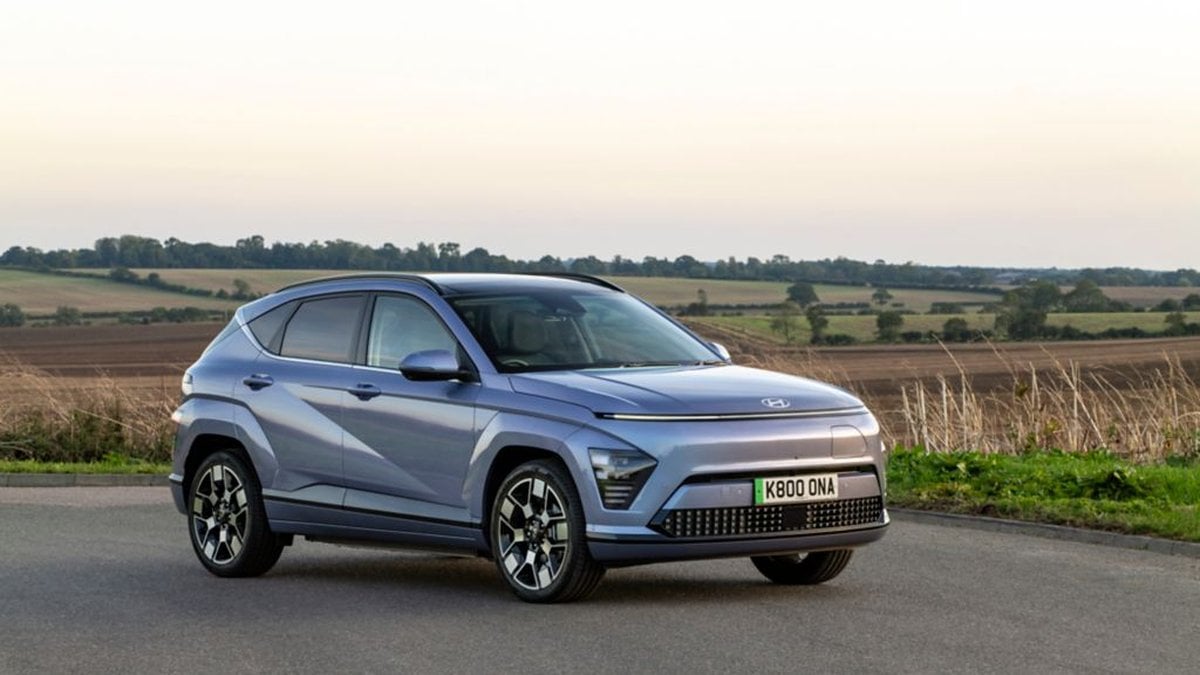
Even when the bearings do fail, he argues the fix is far from disastrous. Replacing all the bearings and servicing the gear unit typically runs around $550 in his market, provided the repair is done as soon as the noise begins. Cars that skip oil changes are far more likely to suffer secondary damage, which is where repair costs can escalate. With routine oil changes, failures tend to be contained and manageable.
From a rideshare economics standpoint, this is where the Kona EV shines. There are no engine oil changes, spark plugs, timing components, clutches, or traditional transmission services. Brake wear is minimal thanks to regenerative braking. The driver says his maintenance routine essentially boils down to one gear oil change per year and addressing the bearing issue if and when it appears.
He also compares the Kona EV favorably against other popular fleet EVs such as the Volkswagen ID.3, ID.4, Mercedes EQA, and Renault Zoe. Based on feedback from his mechanic, he claims those vehicles suffer from more complex and expensive failures. In some cases, similar drivetrain repairs can cost nearly twice as much as on the Kona, largely due to design and labor accessibility.
Other owners echoed his experience. One reported spending just $20 in electricity to drive about 1,900 miles thanks to free workplace charging. Another owner logged roughly 174,000 miles on a 2021 Kona EV with no major issues, noting only a single gear oil change and routine inverter fluid service. Tire wear and 12-volt battery replacements were mentioned, particularly in cold climates, but battery capacity remained strong.
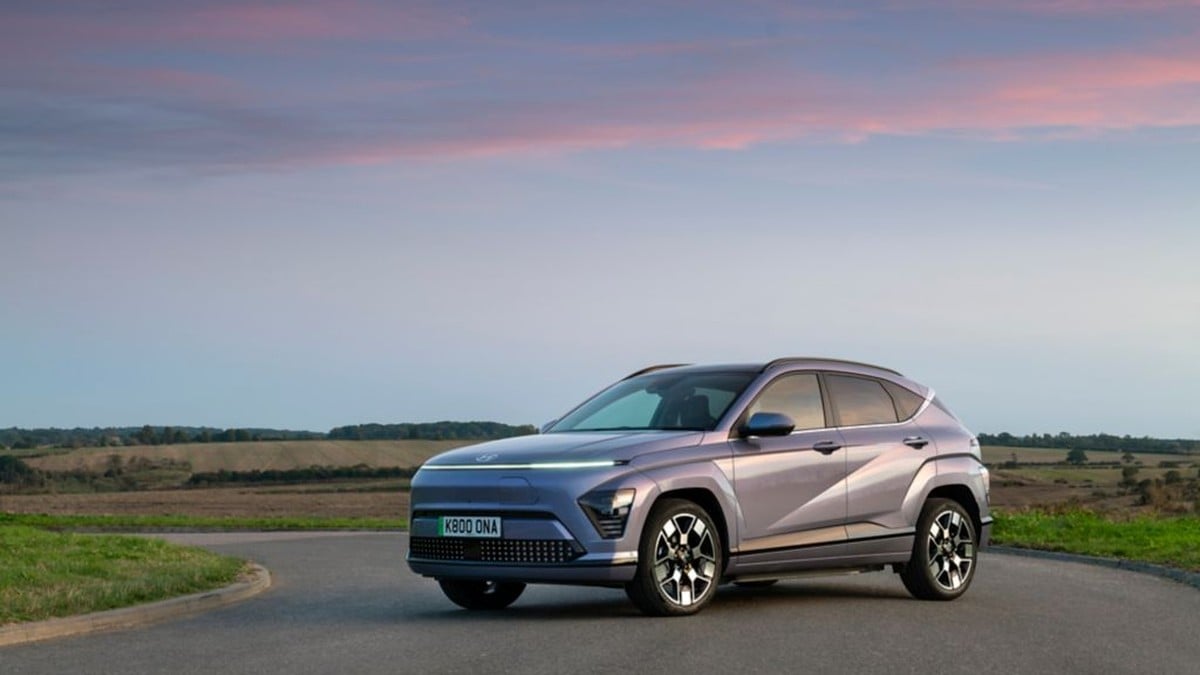
Taken together, the Kona EV’s story is not about perfection, but about predictability. For drivers stacking on 40,000 to 50,000 miles per year, the math matters more than hype. A $50 oil change and a potential $550 repair over six figures of mileage is a trade many rideshare drivers are more than willing to make.
For this Uber driver, the conclusion is already settled. With low energy costs, manageable maintenance, and proven high-mileage durability, the Hyundai Kona EV is not just a good electric car. In his view, it is the most economical tool you can buy for the job.
Image Sources: Hyundai Media Center
Noah Washington is an automotive journalist based in Atlanta, Georgia. He enjoys covering the latest news in the automotive industry and conducting reviews on the latest cars. He has been in the automotive industry since 15 years old and has been featured in prominent automotive news sites. You can reach him on X and LinkedIn for tips and to follow his automotive coverage.
Set Torque News as Preferred Source on Google
Follow us today...