
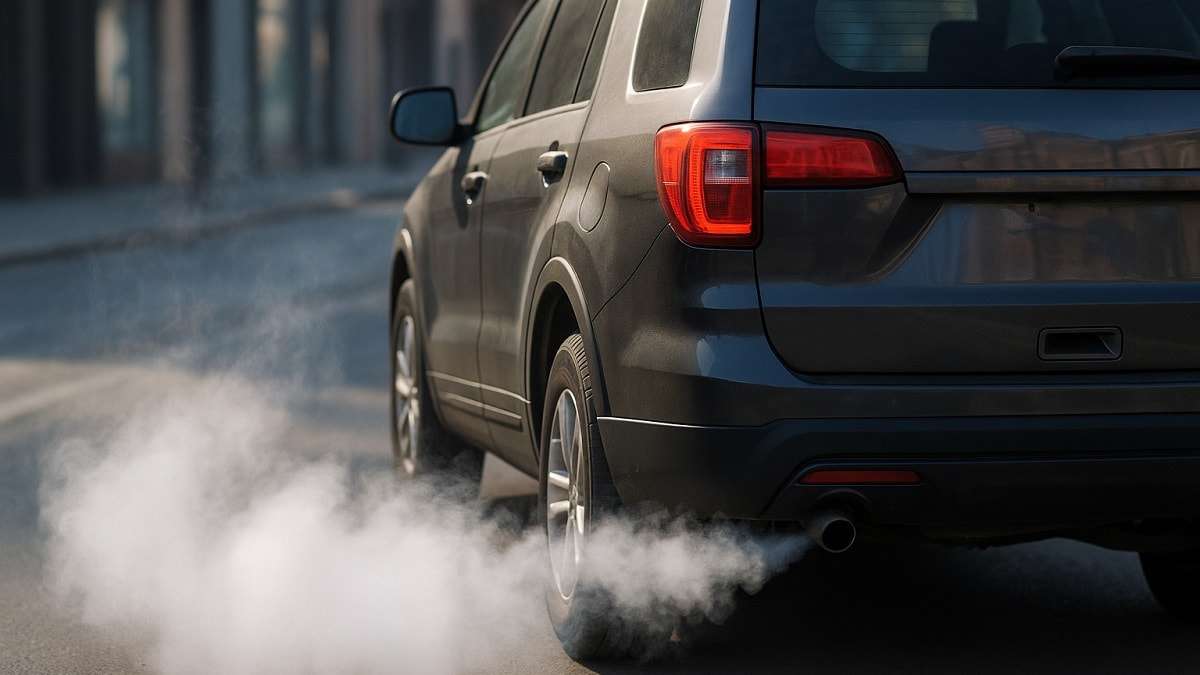

We’ve all heard EV drivers rave about how much they love their cars and how they are so much better than gas powered cars, but what aren’t they telling you? Well, it turns out that there is a lot that they’ve been keeping to themselves. Here’s a fun collection of insights and anecdotes from around social media including a long Reddit post regarding the little items that EV drivers experience. If you own an EV, what subtle differences have you noticed in your driving experience?
Responsible_Syrup146 started the thread with an interesting comment about how EVs’ weight distribution doesn’t change as gas gets used:
“My EV’s weight doesn’t fluctuate.
I traded a 2020 ICE Tucson for a CPO 2023 Kona EV. When the Tucson’s gas tank was full, it handled like a completely different car than when it was close to empty. The lack of weight from empty tank made the handling noticeably squirrelly, whereas a full tank felt so much more grounded (i.e. safer).
I love that my EV feels and handles the same all the time.”
Additional-Sky-7436 vibed about vibrations (or lack thereof):
“Vibrations.
I really didn't notice how much ICE cars shake all the time. Even at stoplights, there is a constant low vibration.
Now all ICE cars always feel like they are about to fall apart to me at any time.”
TorchedUserID commented about how quickly auto-stop gas cars can get how in summer:
“On auto-stop cars with belt-driven AC compressors the air coming out of the dash can go warm in less time than it takes the light to change.”
IStream2 mentioned how much they like quick heat and cooling:
“How fast the heat and AC kick in. No waiting for an engine to warm up to get heat or having to spool the engine up to get the AC compressor working better.
This is huge in cold climates. Being able to warm up the cabin with the garage closed is already a great feature, being able to get warm air in a couple minutes is simply awesome.”
andy_nony_mouse likes how an EV can be safely started and warmed up in a closed garage:
“Being able to warm up the car in the garage without filling it with suffocating fumes is huge.”
bucksncowboys513 added how his Chevy Equinox EV does great in his hot climate:
“EV’s are also great in hot climates. I'm in AZ and it's such a massive benefit to be able to either get in my car that has already been cooling for a few minutes, or to get in and within a minute my AC is blowing ice cold. I'm now the designated driver when I go to lunch with my coworkers in the summer because my car is cold by the time we leave the building.”
Drabadum notes the smell:
“We love the lack of smell. My wife immediately told me that the electric car we test drove doesn't smell. After that, it was impossible to stop noticing the smell of ICE cars.”
SerHerman made a very interesting comment about why gas-powered cars seem to do better in cold weather because they are so inefficient.
“I like that it doesn’t waste energy.
You really get to understand how much of the energy stored in fossil fuels is just wasted as heat.
100% of the reason that EVs get hit so hard in the winter compared to ICE cars is that ICE cars are obscenely inefficient. When it's cold, a fraction of that waste energy goes into the cabin. With an EV, any heat you need must be explicitly generated (parasitic heat pumps notwithstanding).
I thought EVs had it rough in winter but when I started researching some more, apparently EVs lose 40-50% range BUT also ICE lose ~30% of range, you just don't notice that you are heading to the gas station more frequently. winter is tough.”
TheKingOfSwing777 who owns a 2022 Kia EV6 GT observed how EVs seem much more advanced that
“Being propelled by thousands of tiny explosions seems extremely primitive in retrospect.”
Well, there you have it, a long list of gripes (about gas-powered vehicles) and insightful anecdotes from EV drivers. You probably notices that all of the negative feelings resulted from burning fuel, including comments about air pollution.
Why Is Clean Air Important?
Cleaner air is a basic right that benefits everyone. It’s not just whether EVs are cleaner, but also how transportation electrification changes pollution where people actually live, work, and breathe. Vehicle exhaust contains a variety of harmful substances like nitrogen oxides, sulfur dioxide, ozone precursors, carbon monoxide, and particulates like PM10 and PM2.5. Peer-reviewed studies link these exposures to asthma, COPD, heart attacks, strokes, immune impacts, and higher hospitalizations, even after adjusting for smoking, exercise, and socioeconomic factors.
Studies modeling the conversion to EVs show large improvements to urban air quality. One such model published in ScienceDirect projected that electrifying the vehicle fleet in Turin, Italy could lead to an 87% reduction in NO₂, a 36% cut in PM10, and a 50% cut in PM2.5 by 2030 compared to a baseline scenario. It also projected hundreds of avoided deaths with over a thousand fewer hospitalizations each year.
EVs eliminate tailpipe pollution from streets, but total outcomes depend on how electricity is generated at power plants. The system must be clean from end to end, from generation to consumption in a vehicle.
Regions that cling to coal and natural gas simply shift some pollution from roads to power plants. Cleaning the electric grid (power generation) amplifies EV health benefits and improves life expectancy.
What Can Your Municipality Do To Turn Your Power Grid Greener?
The biggest impact would be to generate electricity from greener sources. Before we get into that, here are a couple of smaller, faster things that can be done.
Converting streetlights to LED is a “day-one” win that typically halves lighting energy and bills, often freeing budget for EV charging or solar canopies.
School buses sit idle at peak hours, making them ideal grid assets. Early deployments and studies show they can reduce peak demand and create revenue, though programs must be carefully designed.
On a large scale, the fastest and cheapest new electricity generation source to implement is solar. When comparing various generation sources, the cheapest to add are onshore wind, solar photovoltaic, natural gas, hydroelectric, coal, and nuclear in that order. Adding new coal or nuclear generation is impractical because getting permits for them are nearly impossible. When it comes to the fastest to implement, solar is the fastest at about six to fifteen months, and coal, gas, nuclear and hydro are the longest at about five years. One problem with coal and gas is that the lead time for the turbines needed is over five years.
As proof that this can be done at scale, Houston, TX powers all city operations with ~1.0 TWh/yr from a dedicated Texas solar project and has realized large cost savings.
What Do You Think?
Did you notice any small changes when moving from gas to EV?
How does instant heat, AC, or preconditioning change your routine in winter or summer?
Chris Johnston is the author of SAE’s comprehensive book on electric vehicles, "The Arrival of The Electric Car." His coverage on Torque News focuses on electric vehicles. Chris has decades of product management experience in telematics, mobile computing, and wireless communications. Chris has a B.S. in electrical engineering from Purdue University and an MBA. He lives in Seattle. When not working, Chris enjoys restoring classic wooden boats, open water swimming, cycling and flying (as a private pilot). You can connect with Chris on LinkedIn and follow his work on X at ChrisJohnstonEV.
Set Torque News as Preferred Source on Google
Follow us today...







Comments
Well when you make a huge…
Permalink
Well when you make a huge mistake on a 100% EV the owners are Not going to admit the failure.
Hmmm, seems like you didn’t…
Permalink
In reply to Well when you make a huge… by Ian Gunn (not verified)
Hmmm, seems like you didn’t read the article. It‘s about all of the things that EV drivers LIKE about their vehicles, that they don’t tell you.
Many times I scratch my head…
Permalink
Many times I scratch my head over these discussions, wondering if they are trying to convince me or themselves.