
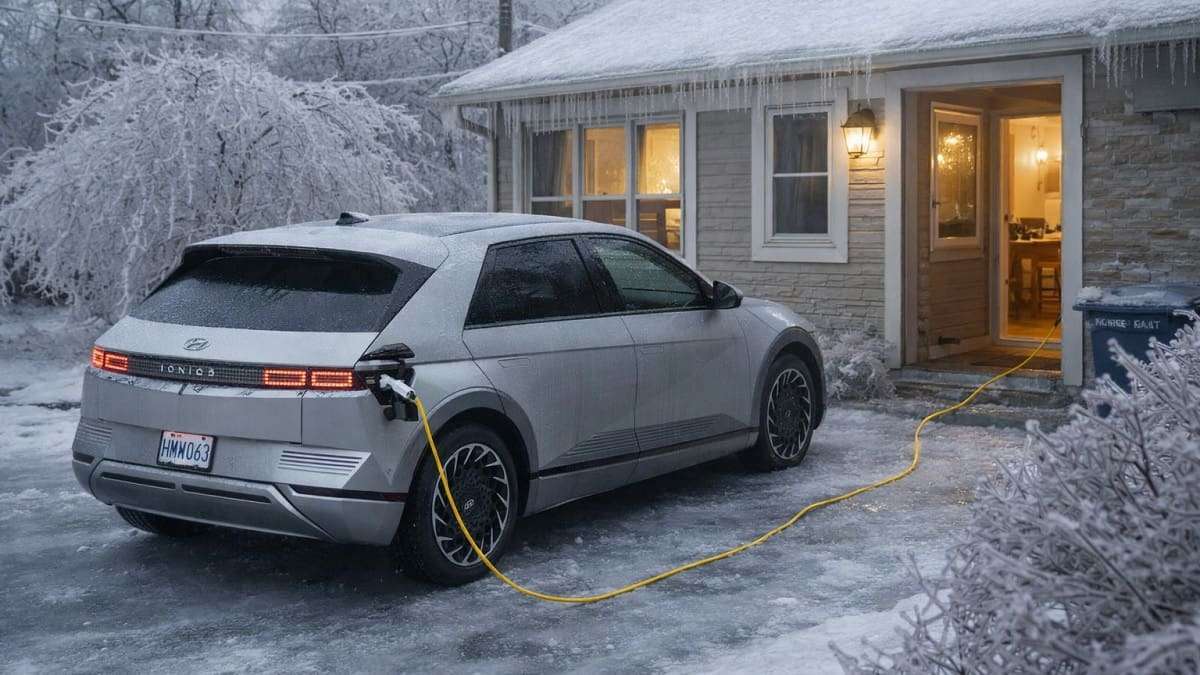

As the U.S. electrical grid ages without needed upgrades and climate change throws artic blasts at us, we can expect to see more frequent power outages. A glimmer of hope comes from electric vehicles that can provide power using a feature called vehicle-to-load (V2L). It’s a technology that allows EVs to act as mobile power banks, supplying electricity from their high-voltage battery to external devices. It converts the car's stored energy into usable AC power, typically via a 120V adapter, enabling it to power small appliances and tools. It’s been a popular social media subject including this post from Lemonn_time on the r/electricvehicles subreddit:
“A major storm is hitting the U.S. now and a good chance people are going to lose power due to ice. I feel like having your EV power your home is a game changer that’s not discussed enough.”
rob94708 laid out his affordable power backup system:
“I have a 4 kWh EcoFlow (bought on sale at Costco), which I keep topped off to 80% with small solar panels.
That feeds into a house “generator” transfer switch, and it can power everything in the house (I have gas heating so it only needs to power the furnace fan).
If the outage lasts more than an hour, I plug the Ioniq 5 V2L adapter into the Ecoflow to keep it charged, using a normal extension cord. The Ecoflow can charge and discharge simultaneously. The V2L adaptor easily keeps up with the average power.
For under $3,000 total, I have whole house backup power with greater than 80 kWh of battery backup. This is enough to last many days. It’s fantastic.”
Thrownjunk added more proof that EV backup can work:
“Lots of us have either gas furnaces or boilers. You dont need much power for that and the fridge plus a few led lights.”
Using a Hyundai Ioniq 5 as a home backup power source during an outage can be both flexible and surprisingly capable when set up correctly. One advantage of Hyundai’s V2L (vehicle to load) system is that the owner can set a battery reserve limit, ensuring the vehicle retains enough charge for driving if evacuation or emergency travel becomes necessary. Many users choose a conservative cutoff, such as 50%, which balances home power needs with mobility. The vehicle’s screen displays real-time power draw along with the remaining battery capacity allocated to V2L, making it easy to monitor usage.
When powering a home, all 240-volt breakers must remain off. Even appliances that appear inactive, such as dryers or ranges, can create unsafe feedback paths through internal heating elements. Leaving these breakers off eliminates that risk and helps keep the system stable and predictable. Power is instead routed only to essential household loads, typically through a generator inlet and panel interlock that isolates the home from the grid.
The long-range Ioniq 5 is equipped with a 77.5-kilowatt-hour battery. Using an 80% usable window leaves roughly 62 kilowatt hours available for home backup. At a modest average load of about 500 watts, that translates to just over five days of runtime without recharging, enough to cover lighting, refrigeration, networking equipment, and other critical needs.
Another practical benefit is that the system continues supplying power even when the vehicle is turned off, reducing the need for constant interaction. While V2L is limited to about 1,800 watts, it provides a clean, quiet, and reliable alternative to traditional generators, without fuel storage, noise, or extension cords running through the house. For homeowners, especially in colder regions with non-electric heating, an EV-based backup system can be a highly practical solution. As Hyundai expands its vehicle-to-home capabilities in future models, setups like this may become even simpler and more powerful.
Bottom Line
In practice, a V2L setup turns the Ioniq 5 into more than just transportation, it becomes a resilient energy asset during grid outages. With proper electrical safeguards, realistic load expectations, and a bit of planning, an EV with V2L can quietly keep a household functional when power is unavailable. As more drivers experience this capability firsthand, it is likely to reshape how people think about emergency preparedness, home energy independence, and the everyday value of an electric vehicle.
The Hyundai Ioniq 5
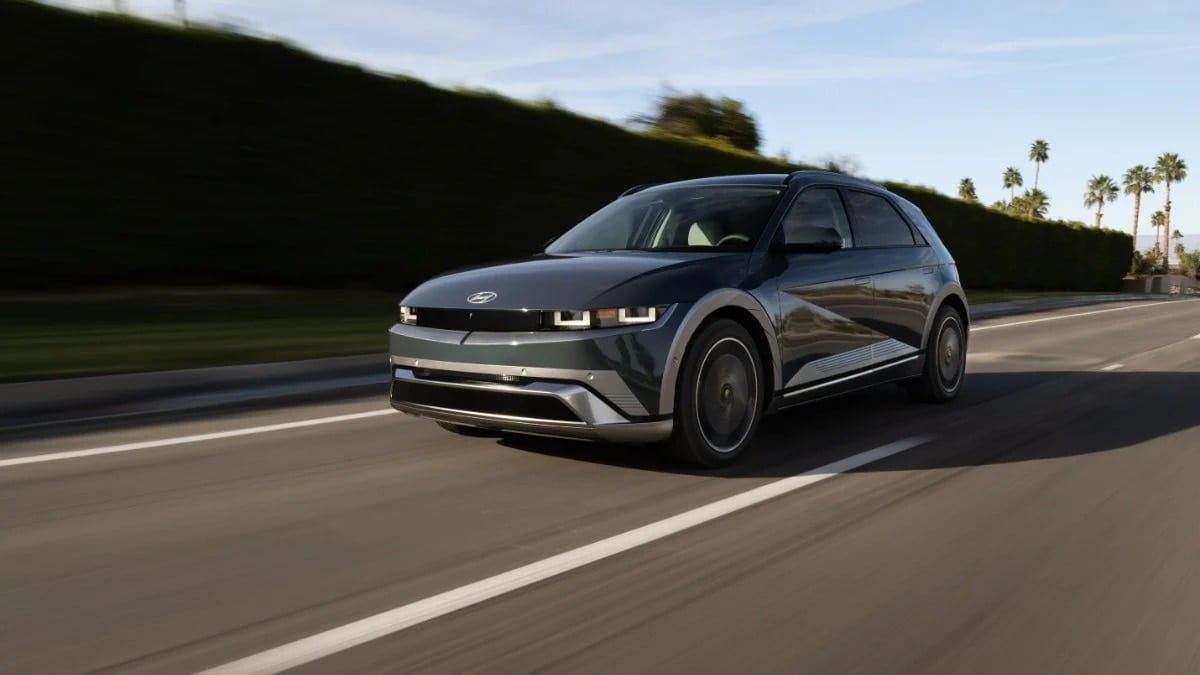
The Hyundai Ioniq 5 is a midsize electric crossover that launched globally in 2021 and quickly stood out for its clean retro inspired design, roomy interior, and fast charging capability. It is built on Hyundai’s dedicated EV platform, which allows for a flat floor, excellent rear seat space, and ultra-fast DC charging that can add significant range in under 20 minutes with the right charger. Owners tend to like its comfortable ride, intuitive tech, and useful features like vehicle to load power for running external devices or even parts of a home. Pricing typically starts in the low to mid $40,000 range before incentives, depending on trim and drivetrain. The Ioniq 5 is sold only as a five door crossover, and its closest sibling is the Kia EV6, which shares the same underlying platform but leans sportier in styling and driving character, while offering similar range, charging speeds, and technology.
What Do You Think?
If you already own an EV, would you trust it to power your home during an outage?
What essential loads would you prioritize first if you were limited to 1,800 watts?
Chris Johnston is the author of SAE’s comprehensive book on electric vehicles, "The Arrival of The Electric Car." His coverage on Torque News focuses on electric vehicles. Chris has decades of product management experience in telematics, mobile computing, and wireless communications. Chris has a B.S. in electrical engineering from Purdue University and an MBA. He lives in Seattle. When not working, Chris enjoys restoring classic wooden boats, open water swimming, cycling and flying (as a private pilot). You can connect with Chris on LinkedIn and follow his work on X at ChrisJohnstonEV.
Photo credit: Provided by author, Hyundai media kit
Set Torque News as Preferred Source on Google
Follow us today...





Comments
I bought a Hyundai Ioniq 5…
Permalink
I bought a Hyundai Ioniq 5 SEL trim and rear wheel drive with the 77.4 kWh battery.......303 miles per charge..................Jan 2022. I have 107k miles plus and 4 years of wonderful experiences.
The V2L was one of several things that lead me to this suv/hot hatch. Long range, ultra fast charging and the exterior design. The Shooting Star gray matte finish literally MADE me spend the $45k usd.....and willingly. It is a museum piece. It was World Car of the Year and 6 other high praise accolades in December 2021 when I was researching and dreaming of owning one.
The electric company went down and I plugged in an extension cord to my baby and had lights, two refridges and coffee maker and toaster oven. It was amazing.
I have a solar array on my roof since 2012......it is magical to watch the sun hit my panels and feed clean electrons (very very cheap) into my vehicle. I am going to get more solar and will have a sub panel installed in the garage and then plug my baby into it and power all my lights, the TV, cable box, wifi, 2 fridges, coffee maker and toaster oven.......NO heat or a/c but I will feel semi human in a power outage.
The fact that Hyundai Kia and Genesis did this tech in 2021 is amazing. Hopefully others will catch up fast. I wish them much success in their EV rollouts and thank them for the beast in my garage.
I bought a Tesla Power…
Permalink
I bought a Tesla Power Bridge to let Tesla could backup my house energy during outage. It is working great with 3500w output. If you are Tesla owner take a look this product at roamenergy.tech
It is not cheap. But it is really helpful at outage