
It begins with a rainy morning.
A Ford Mustang owner climbs into the driver's seat before work, starts the engine, and flips the windshield wipers on. Instead of sweeping steadily across the windshield, they behave strangely. Another Mustang owner, hundreds of miles away, parks a completely different Mustang after arriving home only to feel it roll on its own while in park. That owner never thinks about windshield wipers at all. Instead, the concern lies deep underneath the vehicle in the electric drivetrain that has already forced Ford to recall Mach-E half shafts once before. The two drivers own vehicles wearing the same famous running-horse badge, yet they couldn't be experiencing more different problems. That simple moment helps explain why Ford's latest recalls tell a much bigger story than most headlines suggest.
Here's a question to keep in mind as you read: If two vehicles share the same Mustang name but have completely different engineering, are they really the same Mustang anymore? Think about your answer while reading, and share your opinion in the comments after you finish this article.
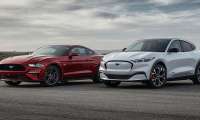
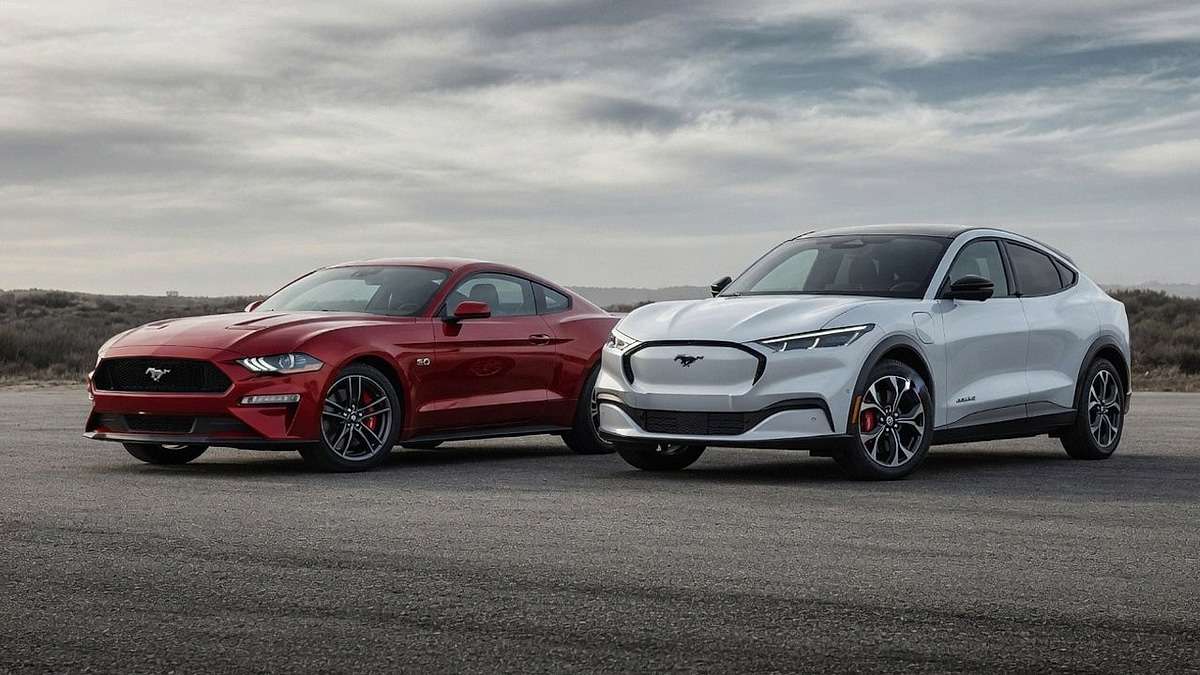
This week Ford announced recalls affecting more than 110,000 Mustang vehicles, but they aren't all the same Mustang. According to documents cited by Reuters and the National Highway Traffic Safety Administration (NHTSA), approximately 67,800 traditional Mustang coupes are being recalled because of a windshield wiper issue that may limit operation in cold weather, while roughly 42,800 Mustang Mach-E electric SUVs are being recalled because of a rear differential pinion shaft issue that could lead to a loss of drive power or allow the vehicle to move unexpectedly if the parking brake isn't applied, an echo of the subframe bolt problem that once held up deliveries of the very same SUV. On paper, these recalls appear unrelated. In reality, together they reveal something fascinating about the future of one of America's most famous automotive names.
The hidden story isn't the recalls themselves.
It's that there are now two completely different Mustangs.
And they're beginning to develop completely different kinds of problems.
The Ford Mustang Name Has Never Carried So Much Responsibility
For decades, saying "Mustang" meant one thing.
A two-door sports coupe.
Rear-wheel drive.
A long hood.
A short rear deck.
A powerful gasoline engine.
Whether someone owned a four-cylinder EcoBoost or a roaring V8 GT, they still shared the same basic engineering philosophy.
Then something changed.
Ford introduced the Mustang Mach-E, a vehicle so different from tradition that one longtime Mach-E shopper canceled his order over button placement rather than powertrain concerns.
Suddenly, one badge represented two entirely different engineering worlds.
One burns gasoline.
The other runs on electricity.
One uses a traditional transmission and drivetrain.
The other depends on high-voltage batteries, electric motors, and completely different mechanical systems, the same systems that led one owner to face a $30,000 repair bill after a small rock caused total coolant loss.
They're family members.
But they're no longer built around the same DNA.
Why Are The Two Mustang Recalls So Different?
That's because the two vehicles are fundamentally different beneath the body.
According to Reuters, the traditional Mustang coupe recall involves windshield wiper operation. Under certain cold-weather conditions, the windshield wipers may only operate at high speed, while the washer system may not function correctly.
That sounds like a relatively familiar automotive issue.
The Mustang Mach-E recall is entirely different, and it isn't the first time the model's high-voltage systems have triggered a callback, since Ford previously recalled nearly 50,000 Mach-E units over contacts that could melt or weld shut.
It centers on the rear differential pinion shaft, which could fracture. If that occurs, the vehicle could lose drive power or move unexpectedly after being parked if the parking brake isn't applied.
Those aren't just different repairs.
They're different engineering challenges altogether.
Twenty years ago, two Mustang recalls probably would have involved similar components.
Today, they're speaking two completely different technical languages.
What Is The Ford Mustang Windshield Wiper Recall About?
Many owners searching online are likely asking exactly this question.
According to Ford's recall information reported by Reuters, certain Mustang coupes may experience windshield wiper behavior that doesn't operate as intended in cold weather.
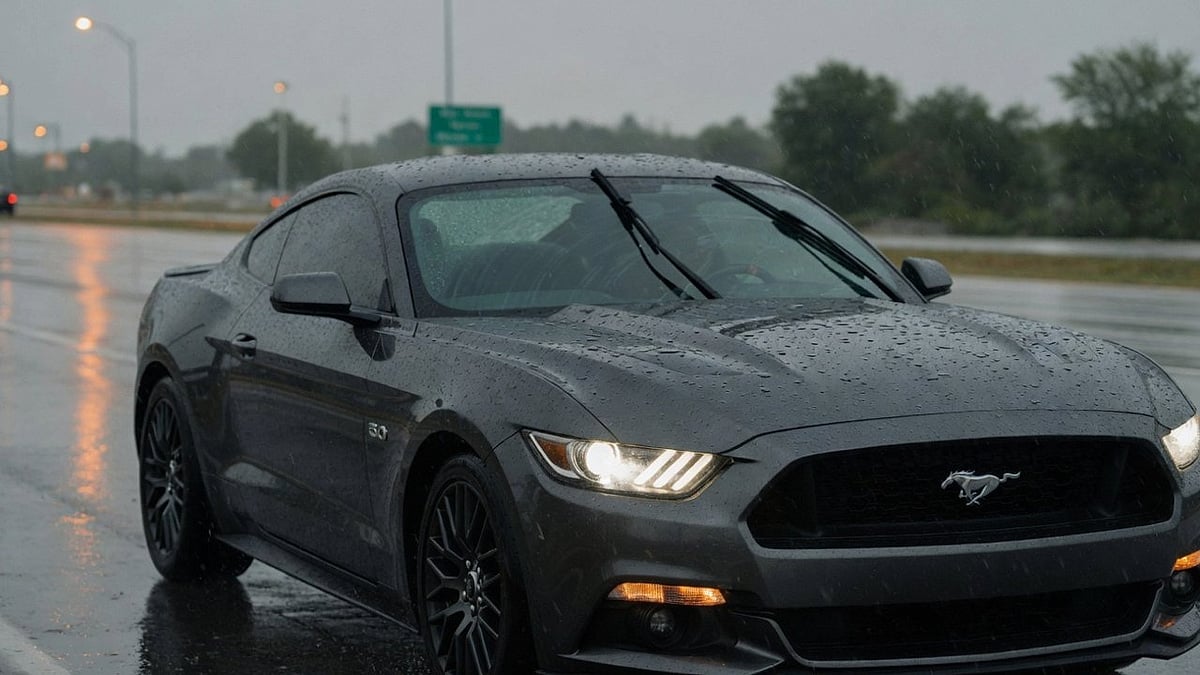
Specifically, drivers could lose access to lower-speed wiping functions, and windshield washer operation may also be affected.
At first glance, that might sound like a relatively minor inconvenience.
But visibility is one of the most important safety systems on any vehicle, a lesson that also applies to the software glitch that once had Ford mailing owners over incorrectly reported torque figures.
Five hundred horsepower doesn't help if the driver can't clearly see the road ahead during freezing rain or heavy snowfall.
That's why even seemingly small issues often result in recalls.
What Is The Mustang Mach-E Pinion Shaft Recall?
This recall is quite different.
The rear differential pinion shaft is part of the drivetrain responsible for transferring power, a system built around the same 8 year, 100,000 mile EV component warranty that also covers costly high-voltage battery replacements.
According to Reuters and NHTSA, if the shaft fractures, drivers could experience a loss of propulsion.
Additionally, if the parking brake isn't applied, the vehicle could potentially move unexpectedly after being parked, the same rollaway risk that once forced Ford into an earlier expansion of its shifter and Park mechanism recall to nearly 3 million vehicles.
Again, this isn't a software glitch.
It's a drivetrain issue unique to the Mach-E's electric powertrain.
It reminds us that electric vehicles introduce new mechanical systems alongside familiar automotive components.
The Bigger Story Isn't The Recall, It's The Evolution Of The Mustang
This is where the story becomes much more interesting.
Historically, Mustang recalls often involved traditional automotive systems. Those are:
- Fuel systems.
- Steering.
- Suspension.
- Engines.
- Clutches.
Today's Mustang family has expanded beyond that, to the point where a 12 volt battery dip can lock rear seat passengers inside 300,000 Mach-E SUVs.
Now one Mustang may receive an over-the-air software update.
Another may require mechanical repairs.
One relies on pistons and crankshafts.
The other depends on batteries, electric motors, power electronics, and sophisticated drivetrain components.
Ford hasn't simply expanded the Mustang lineup.
It has expanded what "Mustang engineering" actually means.
Why Does This Matter To Mustang Owners?
Some readers may wonder why this broader discussion matters if they're not affected by either recall.
The answer is simple.
Understanding how the Mustang has evolved helps owners understand future ownership itself.
Future recalls may increasingly reflect the unique technology inside each version.
Traditional Mustang owners may continue seeing recalls centered around mechanical systems they've understood for decades.
Mach-E owners may encounter issues involving electric drivetrain components, battery systems, software integration, or high-voltage hardware.
The badge remains the same.
The ownership experience continues becoming more diverse.
Are Modern Mustangs Becoming More Like Computers?
In many ways, yes. That's not necessarily criticism. It's simply reality.
Today's Mustang includes advanced driver-assistance systems, sophisticated electronics, multiple onboard computers, sensors, cameras, connectivity features, and complex software.
The Mach-E takes that technological leap even further.
Modern vehicles increasingly resemble smartphones on wheels.
That means today's recalls may involve electronic communication, software calibration, sensors, electric motors, or traditional mechanical components, all depending on which Mustang you own.
Does This Mean One Mustang Is Better Than The Other?
Not at all.
This isn't a story about choosing sides.
Both vehicles serve different customers.
The traditional Mustang continues celebrating six decades of gasoline-powered performance.
The Mach-E introduces the Mustang brand to buyers interested in electric performance, everyday practicality, and new technology.
Ford intentionally built them to accomplish different missions.
Different engineering naturally produces different challenges.
That's true across the entire automotive industry.
Why Ford's Response Matters
Whenever recalls make headlines, it's easy to focus only on the negative.
But recalls also demonstrate something important.
Manufacturers continue monitoring vehicles after they're sold.
When safety related defects are identified, federal regulations require action.
In this case, Ford notified regulators and initiated recalls intended to correct the issues before they potentially lead to more serious consequences.
For owners, that transparency matters.
Nobody enjoys receiving a recall notice.
But identifying and correcting problems is far better than allowing them to remain hidden.
The Mustang Is Entering A New Chapter
Perhaps that's the biggest lesson hidden inside these recalls.
The Mustang isn't simply one iconic sports car anymore.
It's becoming an entire performance family.
That family now includes two dramatically different engineering philosophies sharing one legendary name.
The recalls reflect that reality.
One Mustang reminds us of traditional automotive engineering.
The other reminds us where Ford believes performance is heading next.
Neither story replaces the other.
Instead, together they reveal how one of America's most recognizable automotive icons is adapting to an industry changing faster than ever before.
In many ways, Ford's latest recalls don't simply tell us something about windshield wipers or pinion shafts.
They tell us something about the future of the Mustang itself.
A future where one badge may continue representing very different ideas of performance, technology, and driving enjoyment, all under the same running horse.
That's a fascinating evolution few people could have imagined even ten years ago.
And it's likely only the beginning.
What do you think? Should Ford continue using the Mustang name for both the traditional gasoline-powered coupe and the all-electric Mustang Mach-E, or do you think they have become two completely different vehicles?
As cars become more technologically advanced, do you expect future recalls to focus more on software and electronics than traditional mechanical parts, or will both remain equally important? Share your thoughts in the comments below.
Return tomorrow, or check our Torque News Home Page for more interesting automotive news articles.
About The Author
Armen Hareyan is the founder and Editor-in-Chief of Torque News and an automotive journalist with over 15 years of experience writing car reviews and industry news. Now based in the Charlotte region (Indian Land, SC, he founded Torque News in 2010, which since then has been publishing expert news and analysis about the automotive industry. He can be reached at Torque News on X, Linkedin, Facebook, and Youtube. Armen holds three Masters Degrees, including an MBA, and has become one of the known voices in the industry, specializing in the landscape of electric vehicles and real-world stories of actual car owners. Armen focuses on providing readers with transparent, data-backed analysis bridging the gap of complex engineering and car buyer practicality. Armen frequently participates in automotive events throughout the United States, national and local car reveals and personally test-drives new vehicles every week. Armen has also been published as an automotive expert in publications like the Transit Tomorrow, discussing how will autonomous vehicles reshape the supply chain, and emerging technologies in vehicle maintenance.
Set Torque News as Preferred Source on Google
Follow us today...