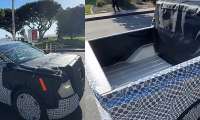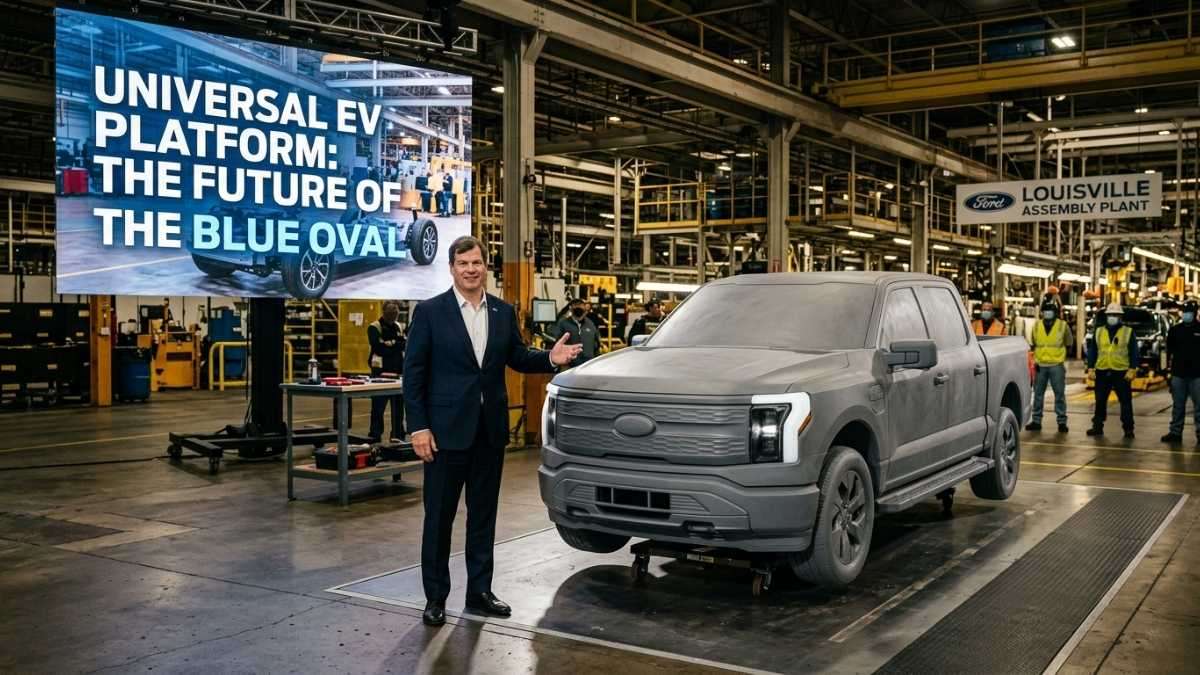

For the better part of a century, Ford Motor Company has thrived on the philosophy that bigger is better. From the F-150 to the Expedition, the "Blue Oval" has mastered the art of the American behemoth. However, as the automotive world shifts toward electrification, that heavy-handed strategy has hit a wall. In early 2026, the industry reality is stark: Ford recently recorded a massive $19.5 billion write-off related to its EV pivot, signaling the end of the "Gen 1" era.
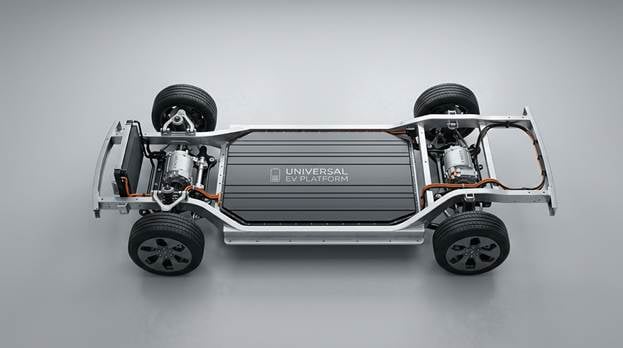
But out of the ashes of the discontinued F-150 Lightning comes something lean, mean, and strategically vital. Ford has officially confirmed that its "Universal EV Platform" (UEV) is in the prototype stage. This isn't just another electric chassis; CEO Jim Farley has dubbed it a "Model T moment," a skunkworks project designed by a dream team of engineers from Tesla, Rivian, and Apple. The goal? A midsize electric pickup—roughly the size of the Maverick—starting at just $30,000.
Competing with the Great Wall of EVs
The primary motivation behind the $30,000 platform isn't just consumer demand—it’s survival. Chinese manufacturers like BYD and Xiaomi have rewritten the rules of EV production. BYD’s vertical integration allows them to produce high-quality electric cars at prices Western legacy automakers can’t touch.
Ford’s UEV platform is a direct response to this "existential threat." To compete, Ford is matching the cost structure of Chinese manufacturers by radically simplifying the build process:
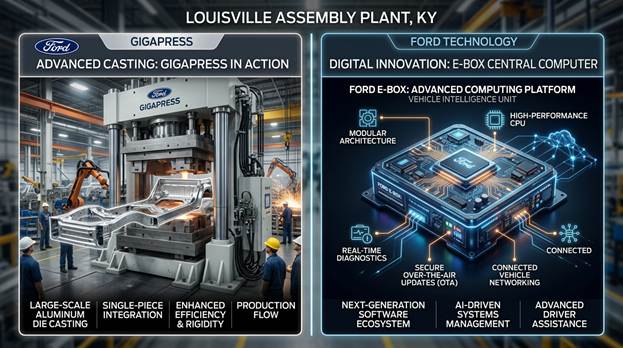
- Unicasting: Replacing 146 separate parts with just two massive cast-aluminum components.
- Wiring Reduction: Shaving 4,000 feet of wiring compared to the Mustang Mach-E.
- LFP Batteries: Utilizing Lithium Iron Phosphate (LFP) chemistry, which is cheaper, more durable, and produced at Ford’s new Michigan plant using licensed tech from CATL.
By targeting a $30,000 MSRP, Ford is moving the goalposts. While Chinese brands are currently held at bay in the U.S. by tariffs, Farley knows those walls won’t last forever. You can see a deep dive into how Ford is reacting to this "awesome" and high-value Chinese competition in this video: Ford's Response to the Chinese EV Wave.
The Race to Catch General Motors
While Ford looks across the Pacific with concern, it also has to look across town with a bit of envy. In 2025, General Motors (GM) officially pulled ahead of Ford in the EV race. GM sold more than double the number of EVs Ford did last year, largely thanks to a multi-segment strategy that includes the affordable Chevrolet Equinox EV and the upcoming sub-$30,000 Bolt EV.
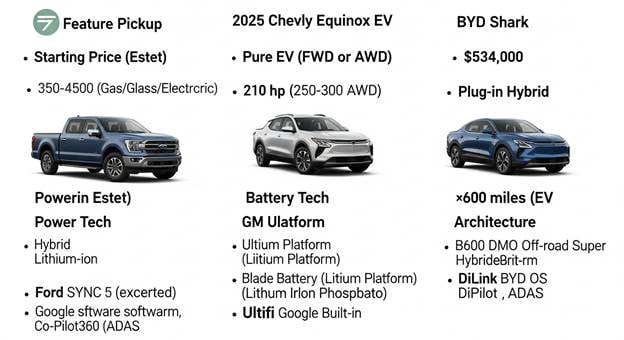
Ford’s "Universal" strategy is the counter-punch. While GM spent years developing the complex "Ultium" platform, Ford is focusing on a hyper-efficient, software-defined architecture that prioritizes low mass and aerodynamic efficiency. To see how Ford's upcoming $30,000 pickup stacks up against its most formidable current rivals, consider the following comparison:
The new $30,000 truck is promised to be as quick as a Mustang EcoBoost while offering more interior room than a Toyota RAV4. If Ford can deliver this midsize pickup in 2027, it will possess the "Goldilocks" vehicle that GM currently lacks: a low-cost, high-performance electric utility vehicle that fits in a standard garage.
Expanding the Playbook: Partnerships and Hybrids
Ford isn't putting all its eggs in the pure-EV basket. Recognizing that the transition is a marathon, the company is leaning heavily into Extended-Range Electric Vehicles (EREV). The next-generation F-150 Lightning will actually pivot to an EREV architecture, featuring a gasoline generator to provide a staggering 700-mile range.
Furthermore, Ford is learning that it doesn't have to go it alone. The company recently partnered with Renault to develop affordable EVs for Europe and is reportedly in deep talks with Geely to share manufacturing space and technology.
Who should Ford partner with next? To secure its future, Ford should look toward software and energy storage leaders. A deeper partnership with a company like Google or Nvidia could help Ford master the "software-defined vehicle" (SDV) aspect where Chinese brands currently lead. Additionally, as Ford launches its new battery energy storage business, a partnership with a major tech firm like Microsoft could turn their battery plants into profit centers even when car sales fluctuate.
The Best Path Forward
The best path to assure Ford’s future isn't just about selling more cars; it’s about becoming a tech-efficient manufacturer. Ford must:
- Execute the 2027 Launch: The $30,000 truck cannot suffer the software delays that plagued earlier models.
- Vertical Integration: Like BYD, Ford needs to own more of the supply chain, particularly in LFP battery production.
- Monetize the Ecosystem: Use the "BlueCruise" hands-free tech and commercial "Ford Pro" services to create recurring revenue.
The UEV platform is designed to underpin at least eight different vehicles, from vans to SUVs. This "Lego-set" approach allows Ford to scale rapidly and pivot between body styles as market tastes shift.
Wrapping Up
Ford’s $30,000 EV platform represents a radical "Apollo mission" to save the company's electric future. By ditching the "big battery" strategy of the F-150 Lightning in favor of a lean, midsize, skunkworks-engineered pickup, Ford is finally speaking the language of the modern market: affordability and efficiency. To beat the looming Chinese threat and reclaim the lead from GM, Ford must flawlessly execute this new architecture, leverage strategic global partnerships, and bridge the gap with its impressive hybrid and EREV lineup. The road to 2027 is paved with high stakes, but for the first time in the EV era, Ford appears to have the right map.
Disclosure: Images rendered by Artlist.io
Rob Enderle is a technology analyst at Torque News who covers automotive technology and battery developments. You can learn more about Rob on Wikipedia and follow his articles on TechNewsWord, TGDaily, and TechSpective.
Set Torque News as Preferred Source on Google
Follow us today...