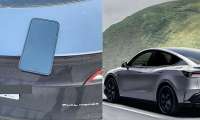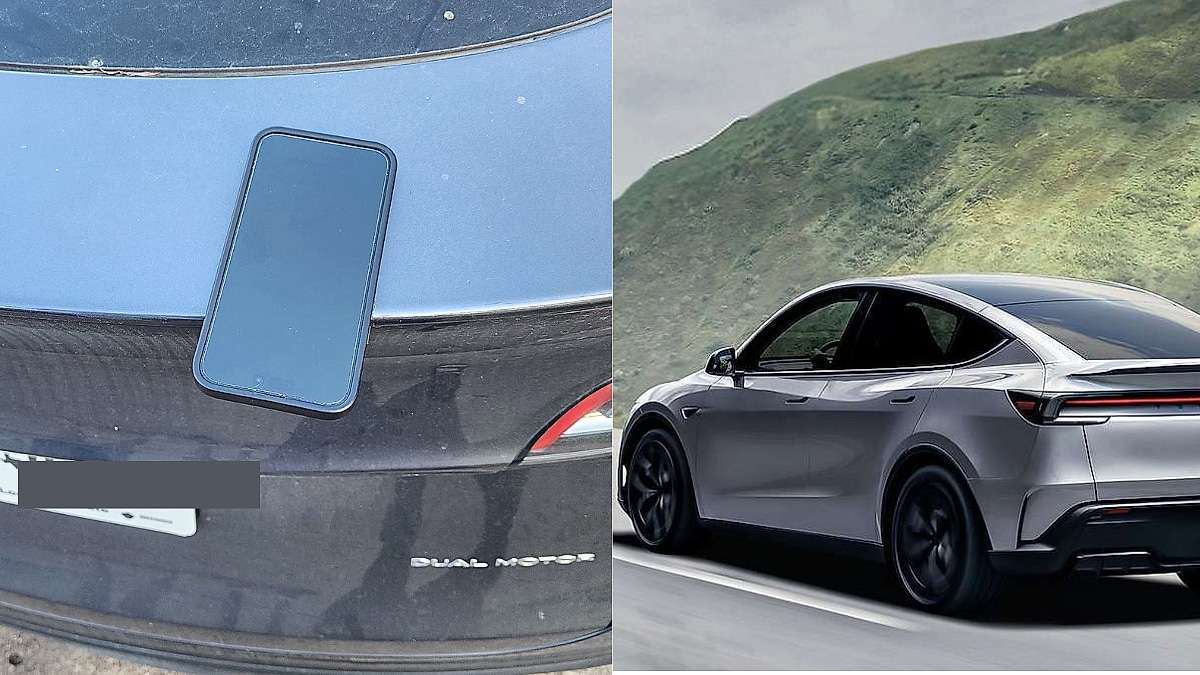

A Tesla owner building a backyard gazebo left his phone on the rear tailgate of the family Model Y while distracted. His wife drove off - first in Chill mode, later switching to Standard - to pick up their son. Roughly 4.3 miles and seven minutes later, including highway speeds, on-ramps, and turns, the phone was still there. The detailed owner account described the heart-stopping realization and the relief when his wife found it exactly where it had been left.
Phone left on Model Y tailgate survives 4.3 miles – including highway speeds – thanks to smooth driving by FSD Supervised https://t.co/iA2lJ1xtCa
— Tesla (@Tesla) July 5, 2026
Tesla’s official account amplified the story with the caption: “Phone left on Model Y tailgate survives 4.3 miles – including highway speeds – thanks to smooth driving by FSD Supervised.” The post quickly gathered thousands of likes and engaged replies from owners sharing similar “it stayed put” anecdotes.
What the Story Actually Demonstrates
This isn’t just a cute “phone didn’t fall” tale. It’s real-world validation of FSD’s ride quality: specifically its low-jerk acceleration, braking, and cornering. The owner noted his wife prefers Chill mode, which likely contributed to the ultra-gentle inputs. Even when switched to Standard, the phone remained stable thanks to a slight magnetic pull from the case and the car’s overall composure.
In an era when many drivers complain about jerky adaptive cruise or abrupt one-pedal driving, this story highlights how refined Tesla’s latest supervised FSD has become for everyday comfort, not just autonomy.
Questions Owners Are Asking (And Straight Answers)
Would this happen in Standard mode or only Chill?
The owner confirmed the phone survived after the mode switch to Standard before highway driving. Chill mode helped, but the underlying smoothness of the current FSD stack did the heavy lifting.
Does this mean I can leave stuff loose in my Tesla?
NO! Not recommended as best practice. Always secure cargo. But it does show FSD’s driving style is gentle enough for real life (coffee cups, phones, light bags). Many owners report similar stability compared with human-driven Teslas or other vehicles.
How does this relate to passenger comfort or motion sickness?
Extremely relevant. Smooth, predictable inputs reduce motion sickness for kids, elderly passengers, or anyone sensitive. This is one reason some long-time owners say FSD actually makes them less tired on long drives. The car drives more consistently than most humans.
What version of FSD was this?
The story doesn’t specify the exact build, but it aligns with recent supervised versions that have focused heavily on refinement and reduced jerk. Tesla continues iterating rapidly.
Does Tesla use stories like this for marketing or data?
Both. Amplifying positive owner experiences builds trust and social proof. At the same time, fleets of FSD vehicles generate massive real-world data on edge cases, smoothness metrics, and passenger comfort that feeds back into training.
Practical takeaway for owners: If you use FSD regularly, you’re already experiencing a driving style that prioritizes composure. Secure important items anyway, but know the system is engineered for more than just “getting there.” It’s getting there smoothly.
Have you ever left something on your Tesla and been surprised it stayed put thanks to FSD? Or has FSD changed how you or your passengers feel on longer drives? Let’s discuss in the comments as real owner stories help everyone.
Return tomorrow, or check our Torque News Home Page for more interesting automotive news articles.
Image source: A mix with a Tesla shared post on X.
About The Author
Armen Hareyan is the founder and Editor-in-Chief of Torque News and an automotive journalist with over 15 years of experience writing car reviews and industry news. Now based in the Charlotte region (Indian Land, SC, he founded Torque News in 2010, which since then has been publishing expert news and analysis about the automotive industry. He can be reached at Torque News on X, Linkedin, Facebook, and Youtube. Armen holds three Masters Degrees, including an MBA, and has become one of the known voices in the industry, specializing in the landscape of electric vehicles and real-world stories of actual car owners. Armen focuses on providing readers with transparent, data-backed analysis bridging the gap of complex engineering and car buyer practicality. Armen frequently participates in automotive events throughout the United States, national and local car reveals and personally test-drives new vehicles every week. Armen has also been published as an automotive expert in publications like the Transit Tomorrow, discussing how will autonomous vehicles reshape the supply chain, and emerging technologies in vehicle maintenance.
Set Torque News as Preferred Source on Google
Follow us today...