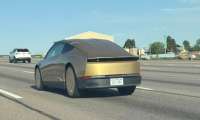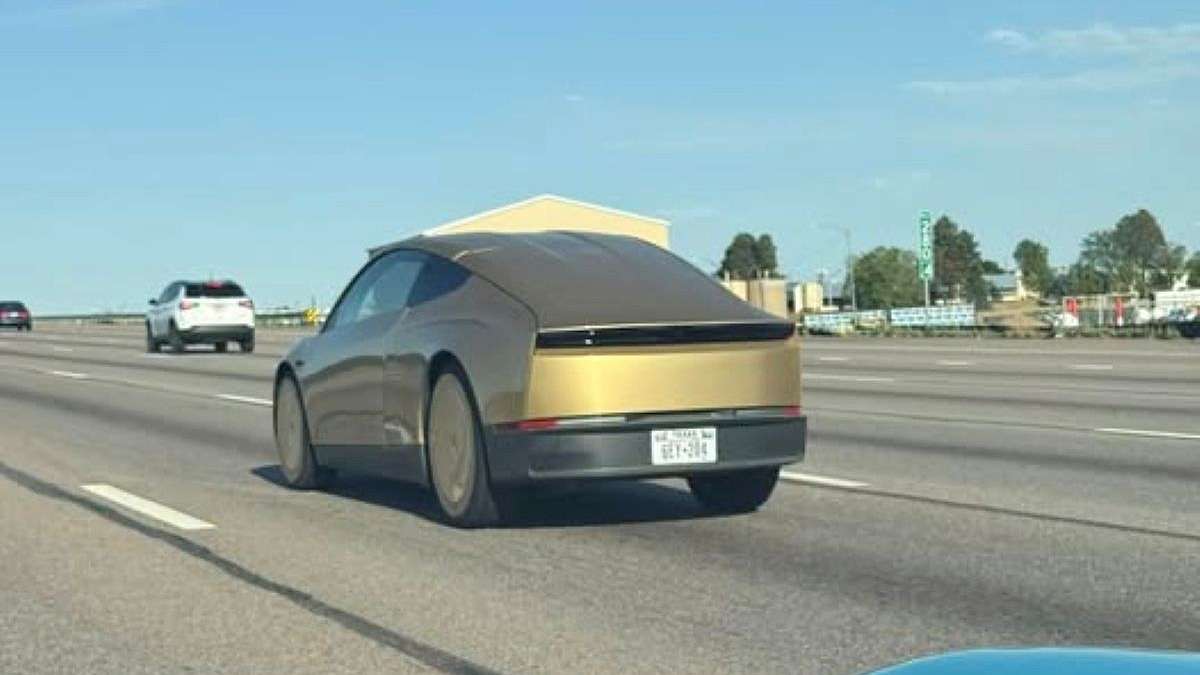

Drivers are reporting seeing Tesla’s two passenger Cybercab test driving around the Denver area. There are at least two of them in the Denver metro, one with Texas license plates and the other with California plates. Giles S. grabbed the photo of the one driving on I-70, but another one was spotted driving in heavy traffic at a stoplight. The Cybercab is Tesla’s latest model and apparently the one that the company is focusing on right now. It is being built at the plant in Texas and is intended to be sold strictly as a self-driving vehicle. It is set up for two passengers and may not have a steering wheel or pedals when it goes on sale.
Driver’s Reactions Ranged from Positive to Very Negative
Just like all of the Tesla vehicles, other drivers have strong opinions. Most of the negativity seems focused on Elon Musk, not the actual vehicles. Many doubt that the Cybercabs will ever make it to market without driver controls. The test vehicles all have steering wheels and pedals. A driver named Adama saw it up close. “Awesome. I heard temporarily they have wheel and pedals because they are still dealing with legality issues to allow them to be removed.” There is a person in the vehicle, usually behind the wheel. Sometimes the person is reportedly using a laptop in the passenger seat.
A woman named Nikki likes the looks of the Cybercab, “Oh she’s perdy. Are they only being built for cabs? Thats the best looking one yet.” Tesla apparently intends to eventually sell the Cybercab to individuals who may not want to drive but would still like to have access to a vehicle. There is also supposed to be a way for individuals to register and allow their vehicles to be used as part of a robotaxi fleet, when the owner isn’t using it. Those plans would be a long way off because federal regulations don’t allow many self-driving robotaxis on the road.
A gentleman named Rob wasn’t impressed with the design. “Saw one in Boulder today. Unnecessarily odd looking IMO.”
A driver named Trevor doesn’t believe any of the robotaxis will end up successful in the long run. “So, I don't know if we're going to see them around for too much longer. Maybe a few more years, and if they don't start actually becoming profitable in the next year or 2, they will be gone shortly after that. Tesla will just take them back in, redo them to have a steering wheel and pedals and sell them as used cars.” Trevor may be correct, especially if the vehicles don’t improve their safety performance. General Motors ended its Cruise experiment after repeated malfunctions. In one of the last incidents, a Cruise vehicle accidentally hit a person and dragged them. Waymo has vehicles on the road in California, Texas and Arizona. It is currently testing the robotaxis here in Colorado.
Another poster named Kris isn’t sold on the technology. “The problem I have is that it definitely isn't "full self driving" as Elon has been pushing for over a decade now, it has problems in a variety of situations especially when involving emergency vehicles, and humans just aren't wired to go from not-paying-attention to extremely attentive in the blink of an eye when FSD is suddenly incapable of handling a situation.”
Tesla Cybercab Experiencing More Crashes Than Human Drivers
Tesla’s own robotaxi data reported to the National Highway Traffic Safety Administration shows a concerning number of crashes. My colleague Rob Enderle summarized it this way. “The fleet is currently experiencing roughly one crash every 57,000 miles. For comparison, the average human driver in the United States experiences a police-reported crash roughly once every 500,000 miles. By these benchmarks, Tesla's Robotaxi fleet is crashing roughly 8 to 9 times more frequently than humans.”
Tesla intended to sell the Cybercabs to drivers for between $25,000 and $30,000. It is a nice idea especially for people, like the elderly or the disabled, who may no longer be able to drive. I had an Aunt that the technology would be perfect for. She lived alone, in a small town that didn’t have taxis or uber. She would have loved the freedom a fully self-driving vehicle could provide. Unfortunately, it doesn’t appear that we are quite there yet. You have to give Tesla points for trying. Hopefully, one day, a manufacturer will be totally successful.
Image from Social Media Post
About the Author
Mary Conway is a professional automotive journalist and has decades of experience specializing in automotive news analysis. She covered the Detroit Three for more than twenty years for the ABC affiliate, in Detroit. Her affection for the Motor City comes naturally. Her father ran a gas station while Mary was growing up, in Wisconsin. Follow Mary at @MaryConwayMedia on X and on Facebook, and send her car news tips for future stories. Mary Conway is an esteemed automotive and business reporter who was inducted into the Michigan Journalism Hall of Fame in 2019. Mary is a member of the Automotive Press Association, Rocky Mountain Automotive Press, Society of Professional Journalists, and NATAS.
Set Torque News as Preferred Source on Google
Follow us today...