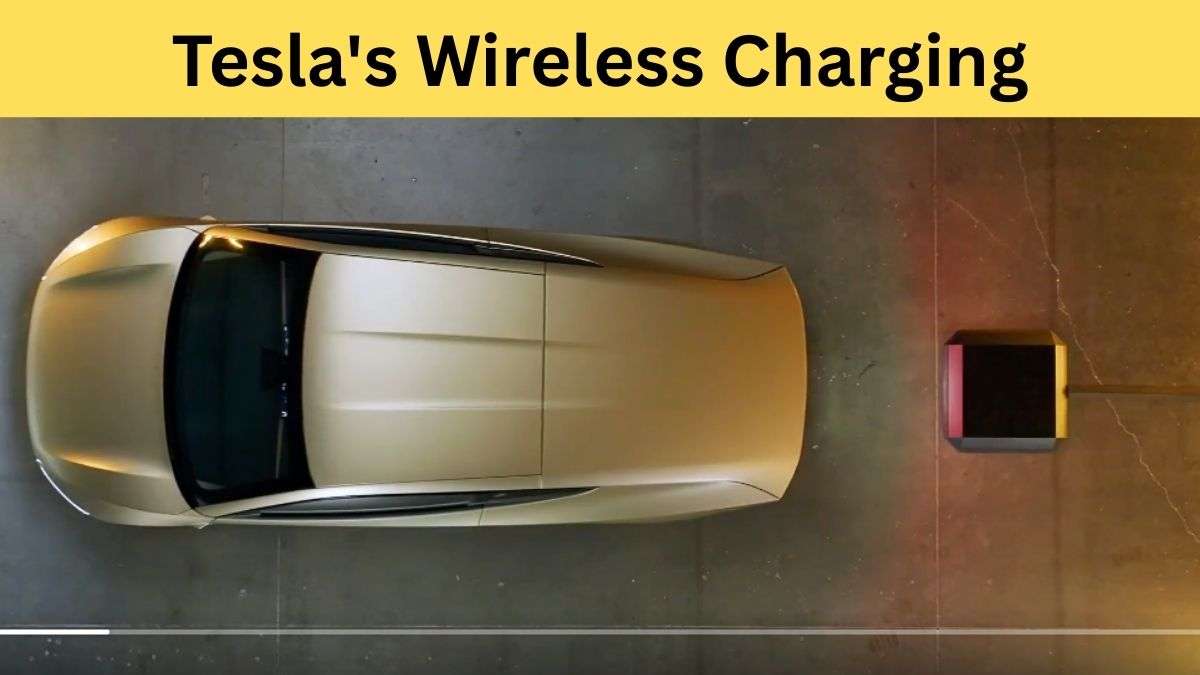

Yesterday, something quietly significant happened in Washington that could shape how autonomous electric vehicles refuel in the future. The Federal Communications Commission granted Tesla, Inc. a waiver to use radio technology as part of a wireless charging system for the upcoming Tesla Cybercab.
If you blinked, you probably missed it. But if you follow the future of EV charging, robotaxis, and Tesla’s long game, this is one of those regulatory approvals that tells you the company is building infrastructure for something much bigger.
The news was first highlighted by Tesla watcher Sawyer Merritt, who wrote on X:
"The FCC has granted Tesla a waiver to use ultra-wideband (UWB) technology for its wireless charging system for the Cybercab."
He didn’t stop there. Sawyer quoted directly from Tesla’s filing, giving us a rare look into how this system is supposed to work. And if you read between the lines, you begin to understand that this is not just about convenience, it’s about autonomy at scale.
You can read the official FCC notice here.
Now let’s unpack what this actually means.
What Did The FCC Approve?
The FCC waiver allows Tesla to use Ultra-Wideband (UWB) radio technology in a way that might otherwise conflict with existing equipment authorization rules. In plain English: Tesla needed regulatory permission to deploy this specific radio-based positioning system as part of a wireless EV charging solution.
Why? Because wireless charging for a vehicle isn’t just about transferring energy inductively. The car must be precisely aligned over a ground pad. Even a small misalignment can dramatically reduce efficiency or prevent charging altogether.
According to Sawyer Merritt’s tweet, Tesla’s filing explains:
“When the vehicle approaches the ground pad, the UWB transceivers will operate to track the position of the vehicle to determine when the optimal position has been achieved over the pad before enabling wireless power charging.”
Read that again.
Tesla isn’t just dropping a car onto a pad and hoping for the best. The system uses UWB transceivers to track positioning with high precision. Only when the vehicle is in the optimal location does the system activate wireless charging.
This is not a gimmick. It’s a prerequisite for autonomy.
Why UWB? Why Not Just Cameras?
This is where things get interesting.
Tesla is famous for its camera-based autonomy approach. But in this case, UWB - a radio-based positioning system - makes more sense than vision alone.
UWB is already used in modern smartphones and car key systems because it allows extremely precise location tracking at short distances. It works in low light, in rain, and in situations where cameras might struggle.
Sawyer also highlighted another key portion of Tesla’s filing:
“In its waiver request, Tesla states that the UWB signals occur only briefly when the vehicle approaches the ground pad; and mostly at ground level between the vehicle and the pad, and that the UWB signals are then significantly attenuated by the body of the vehicle positioned over the pad.”
That’s a crucial detail.
Tesla is essentially telling regulators: don’t worry, these signals are short-lived, localized, and shielded by the vehicle’s own structure once charging begins.
In other words, the UWB isn’t blasting constant radio signals into the environment. It’s a momentary positioning handshake.
That matters for safety, regulatory compliance, and interference concerns.
Why This Matters Specifically For The Cybercab
Let’s zoom out.
The Cybercab is designed to be a fully autonomous robotaxi with no steering wheel and no pedals. If Tesla’s vision plays out, these vehicles will operate 24/7 in dense urban areas.
Now ask yourself: how does a car with no driver plug itself in?
It can’t.
Even a robotic charging arm would add cost, complexity, and maintenance risk. Wireless charging solves that problem elegantly, but only if alignment can be automated with high reliability.
This FCC waiver strongly suggests Tesla is serious about deploying ground-based wireless charging infrastructure for its robotaxi fleet.
Imagine this scenario:
A Cybercab completes a series of rides. It autonomously drives to a designated charging location. As it approaches the pad, UWB transceivers activate. The system precisely aligns the vehicle. Charging begins without human intervention.
No cables. No ports. No vandalism risk from exposed connectors.
That’s not science fiction. That’s what this filing describes.
Is Wireless Charging Efficient Enough?
Now let’s address the elephant in the room.
Wireless charging for EVs has historically lagged behind plug-in charging in terms of efficiency. Inductive charging typically results in slightly higher energy losses compared to a wired DC fast charger.
But here’s the nuance.
For a robotaxi fleet, convenience and uptime may matter more than absolute peak efficiency. If a Cybercab can automatically top off in short bursts throughout the day, rather than waiting for long DC fast charging sessions, overall fleet utilization could improve dramatically.
Fleet economics are different from personal ownership economics.
And Tesla is clearly thinking in fleet terms.
Just as Tesla is charting its own path with UWB-assisted wireless charging for the Cybercab, the broader EV world is also warming up to untethered energy transfer. Porsche - long synonymous with premium performance and engineering depth - recently announced that it will offer factory-installed wireless charging on its upcoming electric Cayenne. As TorqueNews put it in their feature story, “Porsche’s groundbreaking announcement to offer factory-installed wireless charging on its upcoming electric Cayenne marks a pivotal moment for EV convenience, leveraging years of development from tech pioneers to set a new luxury standard.” This isn’t fringe science. Legacy brands are signaling that wireless charging is transitioning from concept to viable consumer reality.
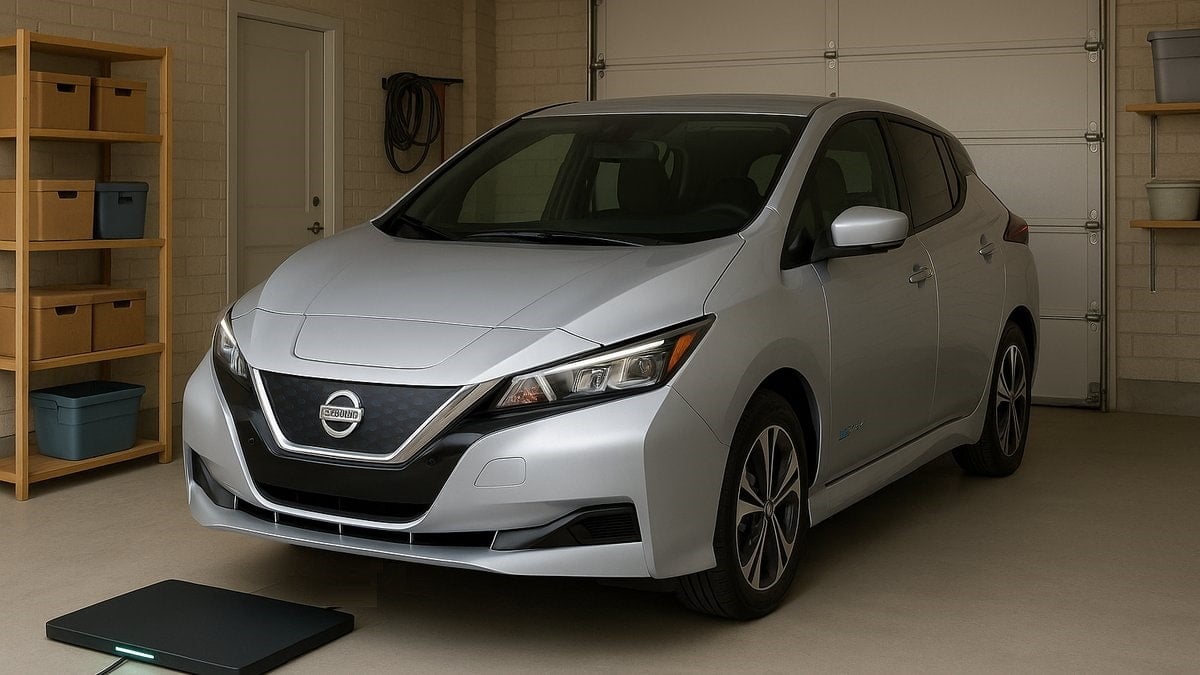
To balance the high-concept vision with real-world experience, it’s worth looking beyond robotaxis and luxury brands to how wireless EV charging performs in everyday use. As TorqueNews explored in a practical review, “we discuss the latest in wireless EV charging, what it can offer and what can happen when you try to charge your Nissan LEAF with it.” That piece stands as a reminder that while wireless charging has obvious convenience advantages, the experience for regular EV owners - from alignment sensitivity to energy transfer realities - can vary widely depending on the setup, environment, and vehicle.
What Questions Should Readers Be Asking?
1. Is This Safe?
The FCC’s involvement is precisely about safety and compliance with radio spectrum rules. Tesla had to demonstrate that UWB signals are limited, localized, and attenuated during operation.
According to the filing excerpt quoted by Sawyer, the signals occur only briefly during approach and are significantly reduced once the vehicle is positioned.
That suggests regulators were satisfied that this system won’t cause harmful interference.
2. Is This For Homeowners Or Only For Fleets?
That’s not explicitly stated. But reading between the lines, this appears optimized for fleet use first.
Installing wireless charging pads in public or semi-public robotaxi hubs makes more sense than rolling this out immediately for residential garages.
However, if the technology proves reliable and cost-effective, it’s not hard to imagine Tesla offering it to homeowners later.
3. Does This Replace Superchargers?
No.
The Tesla Supercharger Network remains Tesla’s backbone for high-speed charging. Wireless charging would likely supplement it, particularly for lower-power, automated top-offs.
Think of it as different tools for different use cases.
4. Why Not Just Use Robotic Plug-In Arms?
Robotic connectors have been demonstrated in the past, even by Tesla years ago. But moving mechanical parts add complexity and failure points. Wireless systems eliminate that entirely.
When you’re deploying tens of thousands of autonomous vehicles, simplicity scales better than robotics.
What This Signals About Tesla’s Long-Term Strategy
Let’s be clear: companies don’t request FCC waivers casually.
This isn’t a marketing stunt. It’s a technical and regulatory step toward deployment.
Tesla is preparing for a world where cars drive themselves, recharge themselves, and operate continuously without human involvement.
And if you think about it strategically, this could be one of the quiet advantages Tesla builds before competitors fully grasp the infrastructure shift required for robotaxis.
Autonomy isn’t just about software.
It’s about charging logistics, uptime optimization, infrastructure integration, and regulatory navigation.
And this FCC waiver touches all of that.
When Will Tesla Actually Deploy Wireless Charging, And Where First?
The FCC waiver is a regulatory green light, but it’s not a launch date. That’s the first distinction readers should keep in mind. When the Federal Communications Commission grants a waiver, it means Tesla has cleared a legal hurdle — not that charging pads are already being poured into concrete tomorrow. Deployment depends on manufacturing readiness, infrastructure partnerships, and most critically, the timeline for the Tesla Cybercab itself.
If Tesla follows its historical pattern, the first rollout will likely be controlled and limited. Think pilot zones rather than nationwide coverage. Logical early deployment locations could include:
- Dedicated robotaxi fleet depots
- Tesla-owned service hubs
- Controlled urban test markets
- Possibly Austin or another autonomy-focused city
In other words, expect strategic density before geographic scale. Tesla doesn’t need thousands of pads on day one — it needs reliability in a few high-utilization hubs.
How Efficient and Cost-Effective Is Wireless Charging Compared to Plug-In Supercharging?
Efficiency remains the elephant in the room. Inductive wireless charging historically loses more energy compared to direct DC fast charging through a cable. Tesla’s existing Tesla Supercharger Network is already highly optimized, widely deployed, and capable of rapid high-kW replenishment. That’s a tough benchmark.
However, the Cybercab use case shifts the equation. For a fleet vehicle operating autonomously, uptime may matter more than peak efficiency. Instead of waiting for a 20–30 minute high-speed session, a robotaxi could:
- Top off between rides
- Charge opportunistically while idle
- Maintain optimal battery levels throughout the day
If wireless charging reduces human labor, connector wear, and vandalism risks, those operational savings could offset efficiency losses. Fleet economics are about total system cost — not just kilowatt transfer efficiency.
What Happens If Alignment Fails or Something Interferes?
Tesla’s filing, as quoted by Sawyer Merritt, explains that UWB transceivers activate briefly to ensure precise positioning before charging begins. That’s elegant in theory. But readers are right to ask: what happens in messy real-world conditions?
Urban environments introduce variables that don’t exist in lab demos. Consider:
- Debris or snow covering the pad
- Physical damage to ground hardware
- Slight vehicle misalignment
- Road grime buildup over time
The reliability standard for autonomous systems must approach near perfection. If charging fails, does the Cybercab attempt repositioning automatically? Does it notify fleet management? Does it reroute to another pad? These are not minor engineering footnotes, but they are central to whether this system scales successfully. The real test will be redundancy and self-correction.
Could This Technology Eventually Come to Personal Tesla Owners?
Even if Tesla positions wireless charging as a fleet-first solution, many readers will wonder whether this eventually lands in home garages. If Tesla perfects precise UWB alignment and integrates ground pads into its ecosystem, the consumer application becomes increasingly plausible.
That said, residential economics are different. Homeowners prioritize:
- Installation cost
- Long-term reliability
- Charging speed
- Simplicity
For now, a wall-mounted Level 2 charger remains affordable and dependable. But if Tesla can reduce pad costs and demonstrate multi-year durability in fleet environments, wireless charging could evolve into a premium convenience feature — especially in luxury segments. The question isn’t whether it’s technically possible. It’s whether the cost curve bends low enough to make it compelling.
My Take After 15 Years Covering This Industry
I’ve watched automakers chase futuristic charging concepts for over a decade. Most stay at concept-stage demos.
What stands out here is that Tesla went to regulators.
That suggests seriousness.
It also aligns with Elon Musk’s broader push to streamline Cybercab manufacturing and eliminate unnecessary complexity. A vehicle designed without pedals logically should not depend on human-plugged charging cables.
The bigger picture? If Tesla can make wireless charging reliable and affordable at scale, it changes how cities think about EV infrastructure.
Imagine embedded pads in fleet depots, airport lots, or even curbside parking zones.
It’s ambitious, but ambition has never been Tesla’s problem.
Execution will be the real test.
The FCC’s waiver may look like a bureaucratic footnote. But in reality, it’s a puzzle piece in Tesla’s robotaxi blueprint.
Sawyer Merritt’s summary captures the technical heart of it - the brief UWB handshake, the precision alignment, and the attenuated signals once charging begins.
It’s elegant engineering on paper.
Now comes the hard part: scaling it in the real world.
If Tesla succeeds, wireless EV charging could shift from niche novelty to foundational infrastructure for autonomous fleets.
And that’s a future worth watching closely.
Now I want to hear from you:
Do you believe wireless charging is the right solution for autonomous robotaxis, or is Tesla overcomplicating something that cables already solve?
And if Tesla deploys this widely, would you want wireless charging in your own garage, or do you prefer the reliability of a physical plug?
Drop your thoughts in the comments. Let’s challenge our assumptions together.
Armen Hareyan is the founder and Editor-in-Chief of Torque News. He founded TorqueNews.com in 2010, which since then has been publishing expert news and analysis about the automotive industry. He can be reached at Torque News Twitter, Linkedin, and Youtube. He has more than a decade of expertise in the automotive industry with a special interest in Tesla and electric vehicles.
Set Torque News as Preferred Source on Google
Follow us today...