
Wouldn’t it be great if we could wirelessly charge our EVs the same way we charge our smartphones? Several companies are making this a reality. There’s a lot of incentive and the race is on, as analysists expect the wireless EV charging systems business to exceed one billion dollars globally by 2030. We see a lot of discussion and demand on social media. For example, here’s a long Reddit thread about the upcoming Porsche Cayenne EV getting wireless charging:
Iqisoverrated started with:
“The charge port is the one wear-and-tear item where I would expect to see additional repair costs over the lifetime of an EV compared to an ICE car, because of its mechanical parts. Similarly, the plug on your home charger could be considered an additional wear-and-tear item…Wireless charging would limit "charge port wear" to long trips and would eliminate charge plug wear completely.”
Fathimir made a comment about pet safety:
“When you think you’re charging up to 100% the night before a road trip, but the neighbor’s cat decided to take a nap under your car on the nice warm pad. You get in and fire it up to find the battery is only at 30%.”
OptimisticNihilism responded with a comment about safety features:
“Safety systems are integrated into the pad. For example, if the neighbor’s cat is drawn to the heat of the pad, its foreign object detection system will cut the magnetic charge field. When the cat moves, the charging will resume.”
How Wireless Charging Technology Works
Wireless charging works because of a phenomenon called resonant electromagnetic induction. A magnetic coil in the ground pad creates a field that transfers energy to a receiver coil on the underside of the electric vehicle. It’s based on the same principles as induction cooking. When aligned properly, this process can achieve efficiencies above 90% and charging power up to 20kW, like Level 2 home charging. Although a small amount of energy is lost as heat during transmission, advances in coil design and smart alignment systems are steadily closing that gap. As the technology matures, wireless charging is proving not only convenient but also capable of delivering near plug-level performance, making it practical for homes, fleets, and autonomous vehicles while eliminating cables.
Why Wireless Charging Matters
The electric vehicle industry faces challenges in expanding the charging network quickly enough to meet demand. Wireless systems solve several pain points. They remove the need for multiple plug types because automakers have agreed on a universal wireless standard. They also prevent vandalism or accidental unplugging and reduce tripping or shock hazards. Drivers can stay inside during bad weather, and cities can integrate the hardware cleanly into roads and parking lots without visible clutter. Wireless EV charging sacrifices a few percentage points of efficiency but allows safe, contact-free charging.
Static Versus Dynamic Wireless EV Charging
Wireless charging comes in two main forms. Static systems work when a vehicle is parked over a pad, such as in a garage or at a public space. Dynamic systems deliver power while the vehicle is in motion, allowing charging during travel. Static charging is commercially available now, while dynamic charging represents the next step toward continuous energy flow for long-distance travel. In this article, we only discuss static wireless EV charging.
The Companies Leading the Charge
Several innovators are shaping this market. Plugless Power pioneered early inductive charging systems and has logged over a million hours of use across North America. WiTricity, an MIT spin-off founded in Massachusetts, focuses on magnetic resonance technology and partners with automakers worldwide. Hevo, founded in 2011, developed a certified and cost-competitive product suite to speed EV adoption. Wave Charging leads in dynamic, high-power solutions for fleets, building 500-kilowatt systems for electric buses, shuttles, ports, and logistics operations.
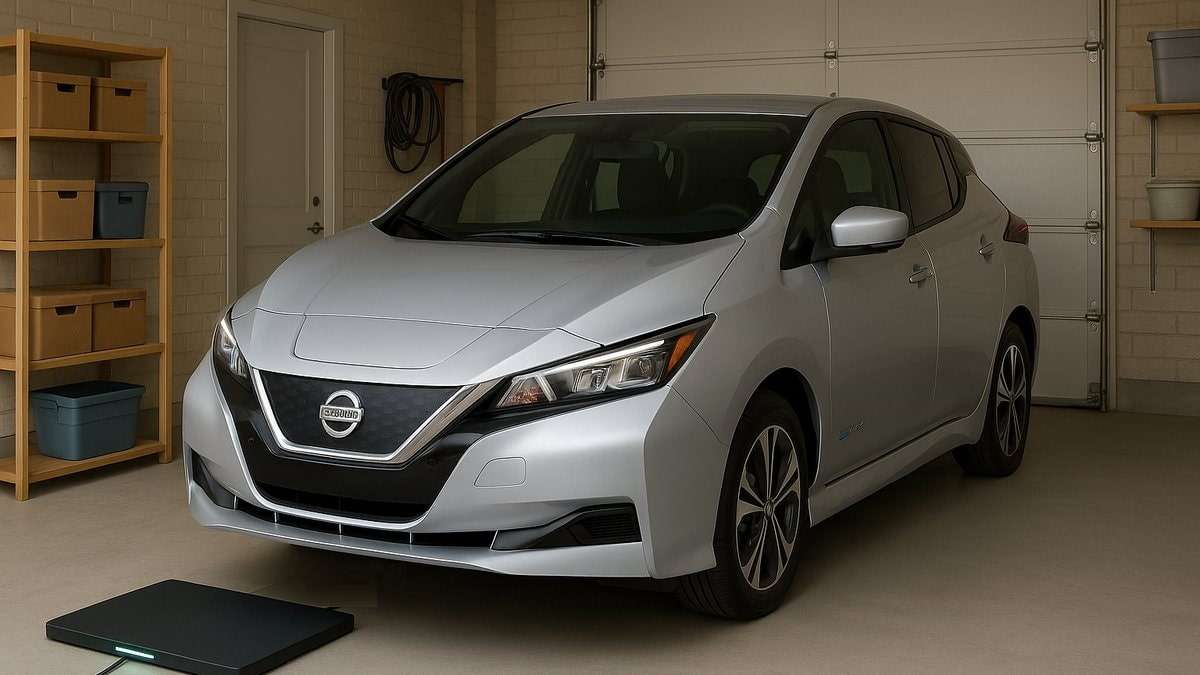
Digging into each company a little deeper, Plugless Power is the consumer brand of Evatran, founded around 2009 in Richmond, Virginia. The company focused early on aftermarket kits that let popular EVs charge wirelessly at home without modifying public infrastructure. Its systems targeted models like the Nissan LEAF, Tesla Model S, and Chevrolet Volt, typically at Level 2 power. Their differentiator is a retrofit approach for existing vehicles, with a floor pad in the garage and a vehicle receiver that enables hands free charging for daily use.
WiTricity was founded in 2007 in Massachusetts as an MIT spinout. It champions magnetic resonance technology that tolerates greater ground clearance and minor misalignment while maintaining efficiency. The company helped drive the SAE J2954 standard for light duty wireless charging and licenses its tech to automakers and tier one suppliers. Its focus is factory grade interoperability, coil designs that work across different vehicle sizes, and control software that keeps power transfer stable in real world parking scenarios.
Hevo was founded in 2011 in New York City, with operations centered in Brooklyn. The company builds a complete wireless charging platform that includes the pad, the vehicle receiver, alignment aids, and software for authentication and billing. Hevo focuses on fleet and shared parking use cases, where hands free operation simplifies daily cycles. Its differentiator is an end-to-end system designed for easy deployment, third party certification, and integrations that support autonomous or driver assisted alignment to the pad.
WAVE Charging, which stands for Wireless Advanced Vehicle Electrification, was founded in 2011 and is based in Utah. It specializes in high power wireless charging for commercial fleets, including buses, yard tractors, and Class 8 trucks. The technology places rugged pads in pavement at layovers or dock doors to deliver fast top ups during scheduled stops. WAVE’s differentiator is scale, with systems that reach hundreds of kilowatts and modular architectures that support route based opportunity charging for long daily duty cycles.
Today, only a handful of EVs can truly accommodate wireless charging, mostly via aftermarket kits or pilots. Plugless Power has sold retrofit systems for the Tesla Model S, Nissan LEAF, Chevrolet Volt, Cadillac ELR, and BMW i3 in the U.S. BMW’s 530e plug-in hybrid offered a limited inductive home-charging pilot in 2019–2020. Fleet pilots have equipped Volvo XC40 Recharge taxis with high-power pads in Gothenburg, Sweeden. Looking ahead to retail, Porsche has announced an 11-kW factory wireless option for the upcoming Cayenne Electric.
Fleet and Commercial Activity
Wireless charging has proven especially useful for large vehicles with frequent stops. Fleet operators across the country are turning to wireless systems to extend range without manual plug-ins. Buses, delivery vans, and port vehicles benefit from automatic top-ups during short stops, improving uptime and efficiency while reducing wear on connectors.
Bottom Line
Wireless EV charging blends convenience, safety, and innovation in one package. It removes cords, simplifies urban design, and enables new models of mobility for both consumers and fleets. With no cable running between the charger and the car, it greatly reduces the possibility of cable theft and vandalism. While dynamic charging remains in early stages, static systems are already practical for daily use. As technology matures and infrastructure grows, wireless power could soon become as ordinary for cars as it is for phones today.
What Do You Think?
If your EV could charge wirelessly, would you pay extra for that convenience?
How much efficiency loss would you tolerate in exchange for not handling a cable every day?
Chris Johnston is the author of SAE’s comprehensive book on electric vehicles, "The Arrival of The Electric Car." His coverage on Torque News focuses on electric vehicles. Chris has decades of product management experience in telematics, mobile computing, and wireless communications. Chris has a B.S. in electrical engineering from Purdue University and an MBA. He lives in Seattle. When not working, Chris enjoys restoring classic wooden boats, open water swimming, cycling and flying (as a private pilot). You can connect with Chris on LinkedIn and follow his work on X at ChrisJohnstonEV.
Set Torque News as Preferred Source on Google
Follow us today...