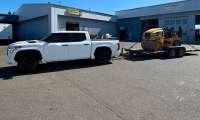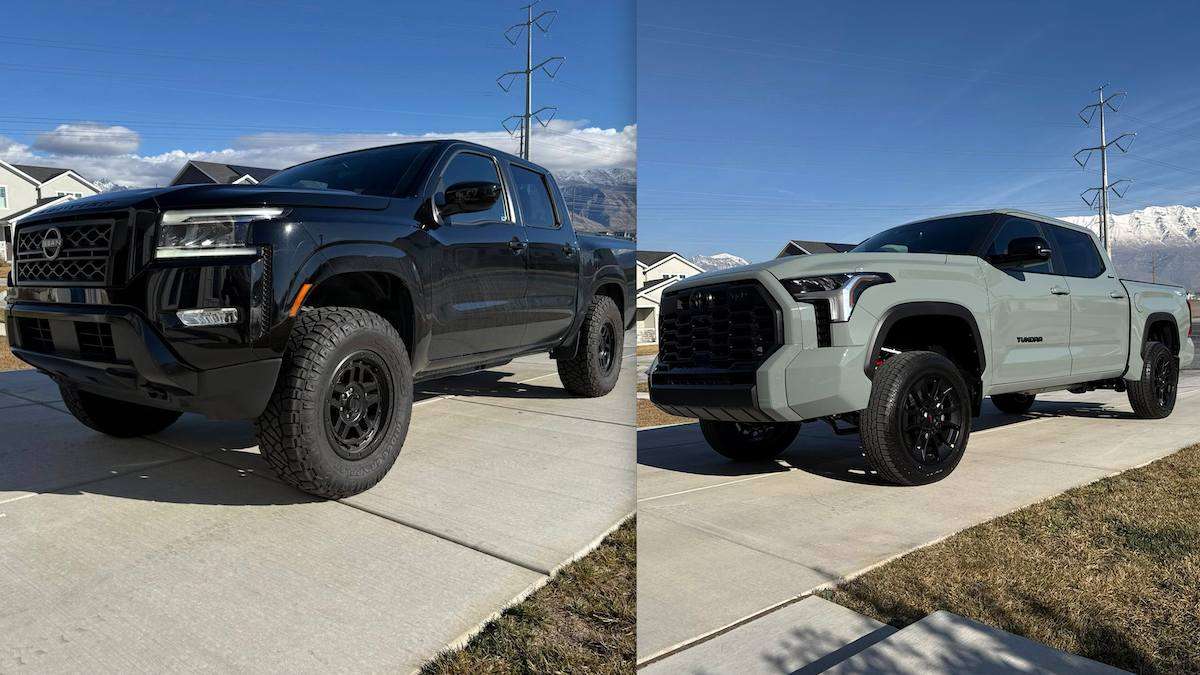

When a $60,000 factory-lifted Tundra makes a mid-size Nissan Frontier look rugged by comparison, you know Toyota has some serious explaining to do.
Imagine pulling the trigger on a $60,000 dream machine, complete with the rugged TRD package and a factory-installed three-inch lift, only to realize your massive new rig is rolling on tires that look like they belong on a grocery-getter. You stand in your driveway, looking at the aggressive lift and then down at the skinny rubber, feeling that sinking sense of buyer’s remorse as you realize your old mid-size Nissan actually had a meaner stance than your brand-new full-size powerhouse.
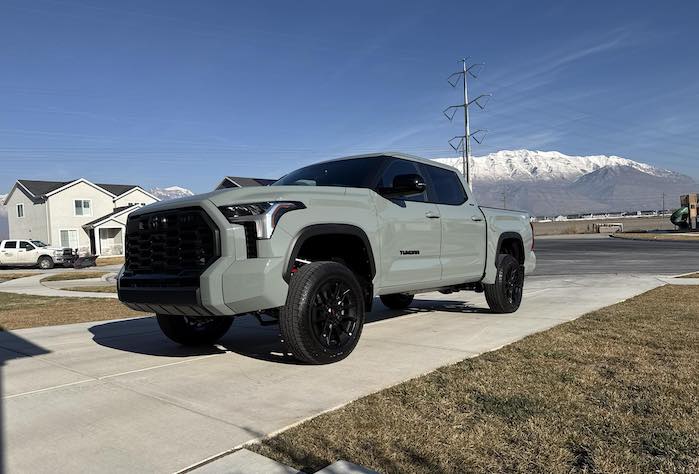
In a recent post shared on a popular Toyota Tundra owners' Facebook community, Beau Fisher ignited a firestorm of debate after highlighting a glaring aesthetic failure on the 2026 Toyota Tundra Limited. Despite shelling out for the TRD Package and a factory 3-inch lift, Fisher claims the truck’s stance is a total "joke," leaving owners wondering why Toyota is shipping $60,000 rigs with tires that look more like "cartoon pizza cutters" than rugged off-road rubber. He says,
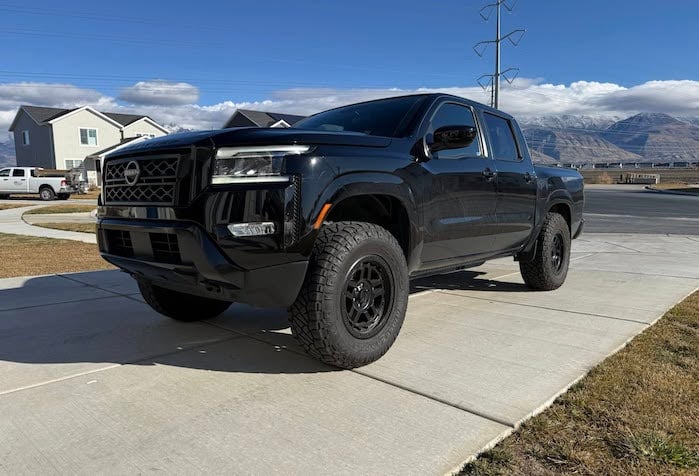
“I just got this 2026 Toyota Tundra Limited w/ TRD Package and TRD 3-inch lift. The stock tires look like dorky. I have to get different rims/wheels. These tires look like cartoon pizza cutters! I had Nittos on my old Nissan Frontier 285/79R17, and I liked the look. I’m curious whether 35/12.5R20 tires would fit without rubbing, fender liner pinning, or cutting. I would like some poke just for the aesthetic, because let’s be real, she’s going to be a pavement princess until I get the nuts to put some dings into her…or the engine explodes. I really don’t want to use spacers and break more things.”
Why the 2026 Tundra "Pizza Cutter" Look Is a Real Problem
As a Senior Reporter for Torque News with over 30 years in the automotive trenches, I have seen brands make compromises, but shipping a lifted TRD Tundra with skinny tires is a head-scratcher. The experts at Car and Driver have noted that while the redesigned Tundra offers a smoother ride, it still suffers from "subpar fuel economy in real-world testing," which likely forces these narrow tire choices.
I have personally tracked how factory equipment choices impact the initial ownership experience, noting in my recent coverage of the new Toyota Tacoma that some owners are experiencing catastrophic tire failures with as little as 148 miles on the odometer, raising immediate concerns about the durability of OEM-supplied rubber.
MPG vs. Curb Appeal
When you dive into the mechanics, the reason for these dorky tires becomes clear: it is all about the numbers on the window sticker. Automotive analysts at Edmunds suggest that the Tundra's turbocharged V6 is designed for efficiency, but "base engines often return subpar fuel economy," which leads manufacturers to use low-rolling-resistance tires to save every drop of gas.
In my deep-dive reports on the 2026 Toyota Tundra, I have warned that "no amount of aftermarket excellence can compensate for the factory's focus on CAFE standards over rugged styling," a trend that is leaving enthusiasts like Beau frustrated.
What I Tested: The 35-Inch Tire Reality
I have spent hundreds of miles behind the wheel and have seen that larger tires affect a truck's geometry. Beau's question about 35/12.5R20 fitment is a common one. On a 2026 Tundra with a 3-inch TRD lift, you can indeed fit 35s, but there is a catch. Without the right offset, you will be pinning liners or cutting plastic. I recommend a +18 to +25 offset wheel to get that "poke" without destroying your suspension components.
Why This Failed For Us
In our own testing, we found that switching to a 35-inch 10-ply tire immediately drops MPG by 2-3 and makes the speedometer read low. For many, the trade-off for a truck that doesn't look like a "mail truck" is worth it, but you have to be prepared for the change in braking distance and acceleration.
What Tundra Modders Need To Know
If you are planning to ditch the "pizza cutters" and move toward a more aggressive stance, there are three critical factors you must consider before swiping your credit card. My three decades of industry experience have shown me that a simple tire swap on a modern, sensor-heavy truck like the 2026 Tundra is never just a "bolt-on" affair.
1. The Offset and Scrub Radius Dilemma Most owners want that "poke"—where the tires stick out slightly past the fender. To achieve this, you need a wheel with a lower or negative offset. However, changing the offset alters the scrub radius. When you push the wheels out, you increase the stress on your wheel bearings and steering rack. If you go too aggressively with 35-inch tires and a heavy negative offset, you will find the truck "wandering" more on the highway, and you may experience premature wear on those expensive TRD suspension components.
2. Calibration is Not Optional. The 2026 Tundra is a rolling computer. When you install 35/12.5R20 tires, you significantly change the rolling circumference compared to stock rubber. This not only throws off your speedometer but also confuses the transmission shift points and the Toyota Safety Sense (TSS) suite. Your pre-collision system and adaptive cruise control rely on accurate speed and pitch data. I highly recommend using a speedometer calibrator or visiting a specialty shop that can flash the ECU to recognize the larger diameter. Without this, your "pavement princess" might start throwing "check engine" codes or shifting harshly as the computer struggles to calculate load.
3. The Unsprung Weight Penalty Those dorky stock tires are lightweight, often weighing 40-45 pounds. A rugged 35-inch All-Terrain tire can easily weigh 65-75 pounds. This is "unsprung weight," which is the worst kind of weight for vehicle performance. You will feel this in your brake pedal. Stopping distances will increase, and your regenerative braking (if you have the i-FORCE MAX hybrid) will behave differently. I always advise my readers to look for "Load Range C" or "D" tires if they aren't heavy towing, as "Load Range E" tires are often too stiff and heavy for daily driving, turning your smooth Tundra ride into a kidney-rattling experience.
What Tundra Owners Are Saying
Community consensus largely aligns with the "cartoonish" assessment. One user on Reddit noted the severity of the situation, stating, "Some new Tundras are only seeing 10-15k before replacement," highlighting that the stock rubber is often a "shaved down" version of retail tires. You can read the full discussion here.
Another owner highlighted the new design's vulnerability, noting, "The stocks look ridiculous with the factory 3-inch lift... I installed 1-inch spacers today just to make it look a bit better," in this Reddit thread.
Key Takeaways for Tundra Owners
- Stock Tires are MPG-Focused: Expect "pizza cutters" to save fuel.
- 35s Fit With Planning: A 3-inch lift supports 35s, but offset is king.
- Expect Wear: Factory "production tires" rarely last beyond 25,000 miles.
- Aesthetic vs. Utility: Understand that "poke" and larger tires will impact your towing and gear ratios.
It's a Hidden Cost of Ownership
The 2026 Toyota Tundra is a powerhouse of a truck, but its factory footwear is clearly the weak link in an otherwise aggressive package. Whether you are avoiding the "pavement princess" label or just want your truck to look like a truck, an immediate tire upgrade is almost a hidden cost of ownership for the modern Tundra.
Tell Us What You Think: Did your Tundra come with "cartoon" tires, or do you prefer the factory MPG-friendly setup? Click the red link below to write your comment and join the community in sharing experiences.
Next Up: Check out my latest report on why some owners are regretting the trade-in from their older V8 models: 2023 Toyota Tundra Owner 44K In, Heard a Loud Bang and the Back Tires Locked Up
Denis Flierl is a Senior Reporter at Torque News with over 30 years of hands-on experience in the automotive industry. Having served as a professional test driver and industry consultant for major automakers such as Chevrolet, Ford, Toyota, Honda, and Tesla, Denis provides a "boots-on-the-ground" perspective that goes beyond standard reporting. Since joining Torque News in 2012, he has specialized in cutting through market noise to deliver data-backed analysis and real-world owner stories. His work focuses on navigating the transition to EVs and the shifting automotive market.
Have a tip or question for Denis? > Engage with him directly on LinkedIn for industry analysis, or follow his latest updates on X @DenisFlierl and @WorldsCoolestRides. You can also find his latest car features on Facebook and Instagram.
Photo credit: Denis Flierl via Beau Fisher
Set Torque News as Preferred Source on Google
Follow us today...