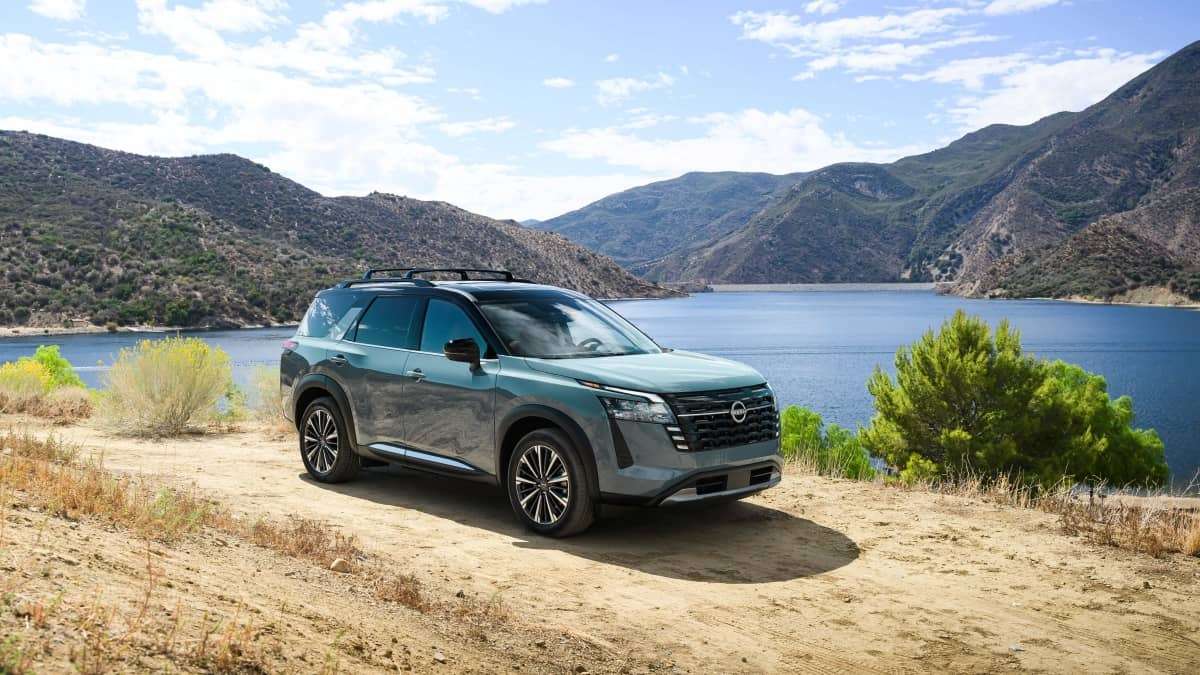

The Nissan Pathfinder has been one of the band’s most popular SUV models on a global scale. It has always been a generously-equipped, more affordable alternative to the Land Cruiser, but in its current iteration, it isn’t quite the direct competitor to Toyota’s rugged SUV. The Nissan Pathfinder is a more on-road-oriented SUV that rides on a unibody platform instead of the traditional body-on-frame structure for off-road vehicles. Nissan recently announced its “Dual Pathfinder” strategy, in which two very different versions of the Pathfinder will be offered to buyers.
I think there is a lot of potential in diversifying the model lineup in such a way, given the popularity of SUVs. However, I also see a missed opportunity if Nissan does not bring back a model name from the past. Toyota is doing it, and it seems to be paying off. In the past, Nissan had a body-on-frame SUV called the Terrano. Japan and Europe got the R20 generation, which was also known as the Mistral in Japan.
It also had a European twin in the form of the Ford Maverick. The rest of the world got the R50 model, which was sold as the Terrano Regulus and Infiniti QX4, but was also rebadged as the Pathfinder for the US market. Later model years were the first to feature Nissan’s VQ35DE V-6 engine, a version of which still powers the current, fifth-generation Pathfinder.
How Nissan can diversify the Pathfinder lineup without diluting the name
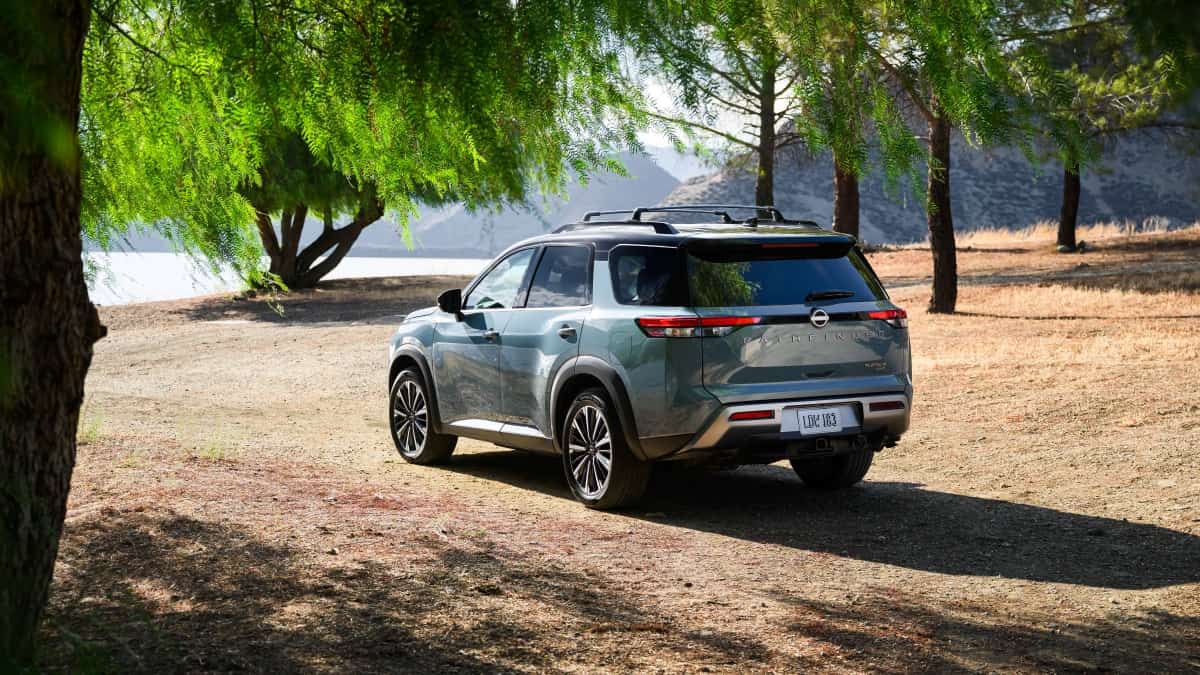
The current Pathfinder rides on a unibody platform, meaning its body and frame are integrated into a single structure. This design favors smoother on-road handling, better ride comfort, and everyday practicality — ideal for families who want space, technology, and light-duty capability. It competes with other car-based midsize SUVs like the Hyundai Palisade, Kia Telluride, and Toyota Grand Highlander, while emphasizing versatility over hardcore off-roading.
However, Nissan is expected to introduce a body-on-frame Pathfinder later in the decade - around 2029. This is also when the current, unibody Pathfinder will be updated, although details are still to come. Unlike the unibody model, a body-on-frame SUV uses a separate truck-style frame underneath the body.
This type of platform is better for towing, hauling, and serious off-road use as it allows for better chassis articulation. It will allow the Pathfinder to be more competitive with the likes of the J250 Land Cruiser, which already showed impressive off-road capabilities even among serious competition from Jeep and Land Rover.
The move would position the new Pathfinder as a more adventure-oriented alternative, potentially appealing to buyers who want something tougher without stepping up to a full-size SUV.
However, there needs to be an important distinction between the unibody and body-on-frame Pathfinders that goes beyond design specifics. Nissan has a chance to bring back the Terrano name, but in a way that makes sense for American buyers. The Terrano nameplate was never present in the US, so the best course of action, in my opinion, would be to keep the unibody model as the Pathfinder and name the more rugged, body-on-frame SUV, the Pathfinder Terrano.
The body-on-frame model will reportedly be called the Pro 4X, hinting at the SUV’s more adventurous character compared to its unibody counterpart. The more rugged Pathfinder will also be slotted above the unibody Pathfinder, which means it will come at a premium.
If the plan moves forward, Nissan would sell both versions side by side. One will be focused on comfort and family use, the other on durability and off-road capability. It is a strategy that allows the brand to broaden the Pathfinder’s appeal while leveraging the strength of an established nameplate.
Competitors like the Land Cruiser J250 offer a hybrid powertrain, so I wouldn’t be surprised if Nissan does something similar with the existing 3.5-liter V-6 or even the 3.8-liter V-6 featured in the Nissan Frontier. Pairing either of these units with a hybrid, e-axle system would make perfect sense, but I still think a non-hybrid variant should be made available for those wanting a simpler setup. The unibody Pathfinder will reportedly remain internal-combustion-powered only, which may be Nissan’s way to push the more rugged, body-on-frame variant onto buyers (if it has any form of electrification).
For now, only the unibody Pathfinder is available. But if Nissan follows through, the future could see the Pathfinder badge covering two very different kinds of SUVs — one built for the suburbs, and one built for the trail. I am curious to know what you make of Nissan’s “Dual Pathfinder” strategy. Has Nissan found the right path forward or do you think the new SUV strategy will only dilute the model lineup. Share your thoughts in the comment section below.
Related stories:
3 Models I Think Nissan Should Bring Back To Survive
Just When Nissan Perfected The Z, It Made It Harder To Get At a Reasonable Price
The Japanese SUV That Offers Better Value For Money Than A Toyota Land Cruiser
Dimitar Angelov's automotive interests made him an expert in a wide variety of vehicles. Over 10 years of experience make him an expert in creating car content. Japanese brands like Toyota and Nissan are closest to his heart, but he is especially passionate about performance cars. Dimitar Angelov's car passion and knack for the written word led him to complete a Master of Arts in Media and Communications, and classic car restoration. Dim is happy to get behind the wheel of any car and share his impressions. You can follow Dimitar on X, LinkedIn, Instagram, and Facebook.
Image source: 2026 Nissan Pathfinder press
Set Torque News as Preferred Source on Google
Follow us today...