
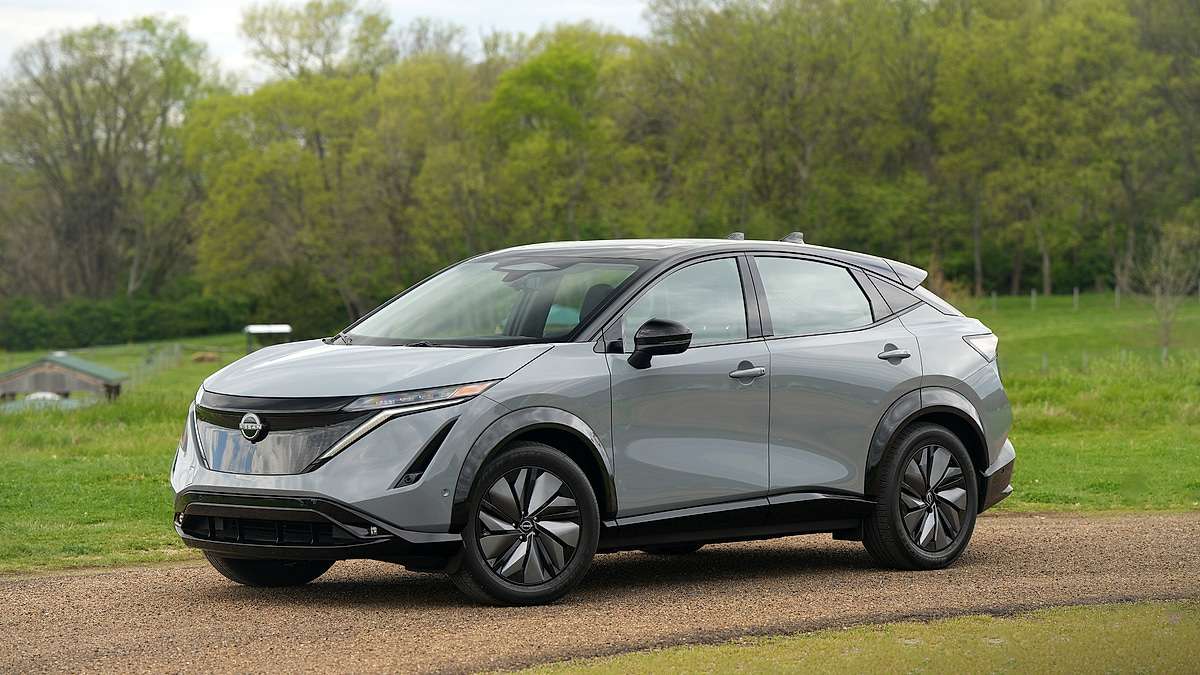

The Nissan Ariya’s used-market problem is not that it is a bad EV. I checked public EV registration sources, current used-Ariya dealer visibility, Nissan’s own U.S. Ariya status, and used-listing price data. Some EVs become competent without becoming familiar enough for secondhand buyers to price confidently. A used Ariya can offer real range, comfort, and value, but the buyer should check whether the local market has enough comparable Ariyas to support resale confidence. In used EVs, local recognition can matter almost as much as the spec sheet.
The surface story is depreciation. The missing layer is model density.
The easy Ariya story is that used examples are cheaper than new ones.
CarGurus currently shows a Nissan Ariya average used price of $24,988, compared with an all-used-vehicle index price of $28,604 on its Ariya price-trend page.
That is useful, but it is not the full story.
The deeper question is why a used buyer should trust the price. With a Toyota RAV4, Honda CR-V, Tesla Model Y, or Ford Mustang Mach-E, buyers can usually find many comps, many owner reviews, many dealer experiences, and many local examples. That density creates confidence.
The Ariya has a different challenge. It may be quiet, comfortable, and capable, but if shoppers rarely see it, dealers rarely appraise it, and local comps are thin, resale confidence becomes harder.

The Nissan Ariya may carry a resale-confidence penalty in markets where buyers and dealers do not see many local examples.
What Torque News Checked
Torque News checked Washington’s official Electric Vehicle Population Data source, which data.gov says shows BEVs and PHEVs currently registered through the Washington State Department of Licensing. The dataset was last updated on April 13, 2026.
Torque News also checked Atlas EV Hub’s state registration data page. Atlas says it works with states through the Open Vehicle Registration Initiative to make EV registration data publicly accessible, ideally with make, model, fuel type, ZIP code, and regular updates.
Torque News checked Autotrader’s used Nissan Ariya listings and found roughly 500 used Ariyas nationally at the time of the check. The more important finding was the uneven city-level visibility. Autotrader’s city list showed 49 used Ariyas in Denver and 38 in San Diego, but only 7 in Houston, 8 in Sacramento, 4 each in Salt Lake City, Boston, Charlotte, and Raleigh, and 3 in Austin. That spread matters because a buyer in Denver can compare multiple Ariyas, while a buyer in Austin may be looking at a much thinner local market.
Finally, Torque News checked Nissan’s own Ariya status. Nissan told InsideEVs it was pausing production of the MY26 Ariya for the U.S. market, while Ariya would remain available through existing inventory, and owners would continue to receive service, parts, and warranty support.
The Ariya is not invisible. It is unevenly visible.
Autotrader’s numbers show the Ariya is not impossible to find. More than 500 used listings across 2023, 2024, and 2025 model years is nothing.
Local distribution is the real takeaway.
A buyer in Denver or San Diego may see enough used Ariyas to compare trims, mileage, battery condition, drivetrain, and price. A buyer in a thinner market may see only a handful. That changes the shopping experience.
When comps are thin, pricing gets less obvious. A buyer may not know whether a discount is a bargain or a warning. A dealer may be more conservative on trade value. A private seller may have fewer local shoppers who understand the vehicle.
That is the resale risk.
Not range. Not comfort. Not whether the Ariya is competent.
Recognition.
Nissan’s production pause adds uncertainty, but not abandonment
This is where we have to be precise.
Nissan did not say Ariya owners are being abandoned. The company’s statement to InsideEVs said Ariya remains available in the U.S. through existing inventory and that Nissan will continue to support Ariya owners with service, parts, and warranty coverage.
A used buyer should not confuse a production pause with a dead battery, a bad warranty, or an unsupported vehicle.
But the pause still affects buyer psychology.
- A used EV shopper may ask:
- Will this model return?
- Will Nissan dealers stay familiar with it?
- Will parts remain easy?
- Will buyers recognize it in three years?
- Will the next Leaf make it look forgotten?
Those questions can pressure resale value even if the vehicle itself is solid.
The spec sheet is not the issue
Nissan’s own Ariya page says the 2025 Ariya delivered an EPA-estimated range of up to 289 miles on a single charge.
That is enough for many drivers. The Ariya also has a crossover body style, available AWD, and the kind of quiet cabin that can make it attractive as a used commuter or family EV.
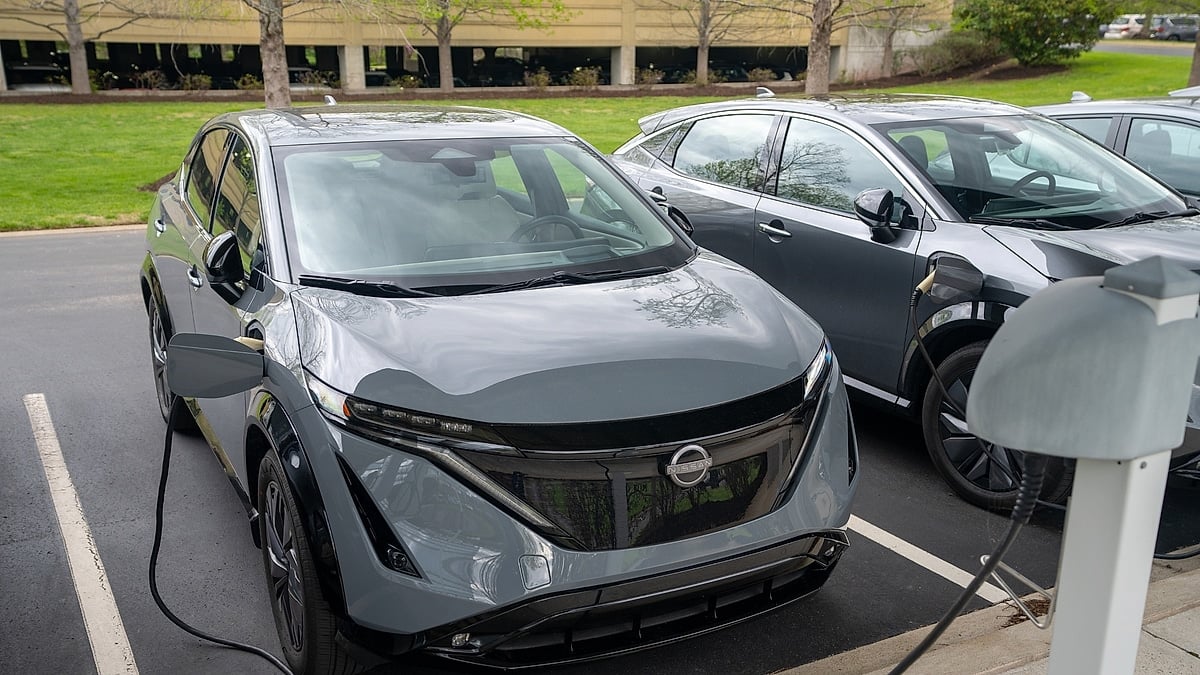
The Ariya’s value comes down to whether the discount is strong enough to offset its lower name recognition.
That is the central calculation in today’s used-EV market.
The dealer consequence
Dealers like predictable comps. Buyers like predictable comps. Lenders and trade-in managers like predictable comps.
A vehicle with thin local density can still sell, but it may need a sharper price, clearer battery-health evidence, or stronger certification to make buyers comfortable.
With state registration data, potential owners can judge if the market has a healthy local Ariya population. Buyers can also see other owners, other listings, dealer familiarity, and comparable prices. If the registration footprint is thin, the Ariya becomes more of a specialist buy.
The car can be good and still be harder to resell.
The practical consequence
Before buying a used Nissan Ariya, do not stop at range, mileage, and price.
Search your local market first. Look for at least three things: how many Ariyas are listed within a realistic driving radius, whether Nissan dealers near you are listing or certifying them, and whether comparable trims have stable prices rather than scattered one-off discounts.
Then ask for battery-health evidence and confirm warranty coverage.
A discounted Ariya may be one of the better used-EV values on the market. But if your local market barely knows the car exists, the discount needs to pay you for that resale risk.
About The Author
Noah Washington is an automotive journalist based in Atlanta, Georgia, covering sports cars, luxury vehicles, and performance culture. His reporting focuses on explaining the engineering, design philosophy, and real-world ownership experience behind modern vehicles.
Noah has been immersed in the automotive world since his early teens, attending industry events and following the enthusiast communities that shape how cars are built and driven today. His work blends industry insight with enthusiastic storytelling, helping readers understand not just what a car is, but why it matters.
Noah is also a member of the Southeast Automotive Media Association (SAMA), a professional organization for automotive journalists and industry media in the Southeast.
His coverage regularly explores sports cars, luxury vehicles, and performance-driven segments of the automotive industry, including the evolving culture surrounding Formula Drift and enthusiast builds.
Read more of Noah's work on his author profile page.
You can also follow Noah here:
Set Torque News as Preferred Source on Google
Follow us today...





Comments
Too ICE-like. No regen…
Permalink
Too ICE-like. No regen paddle or brake hold. Touch climate controls instead of switches, a problem with many vehicles. Otherwise, not bad. Rear window wiper a bonus not found on some others but essential on a hatchback. No frunk.
That part is a bit…
Permalink
In reply to Too ICE-like. No regen… by Duke Woolworth (not verified)
That part is a bit disappointing, but still a great vehicle.